

2010 Jeep & Dodge ECM Failure: Your Guide to VIN Programming, Symptoms, and Replacement
This guide covers the essential, must-know details about replacing the Engine Control Module (ECM) in your 2010 Jeep Wrangler, Liberty, Dodge Ram 1500, Dakota, or Nitro, with a focus on the critical programming required.
- VIN programming is mandatory. A replacement ECM will not work unless it is programmed with your vehicle's specific VIN to sync with the anti-theft system.
- Buying a used ECM that is pre-programmed to your VIN by the seller is the easiest and most cost-effective solution.
- Common failure symptoms include engine stalling, a no-start condition, erratic transmission shifting, and poor performance.
- Internal failures of the ignition coil drivers and alternator control circuits are common and can often be repaired by a specialist.
Symptoms of a Failing Engine Control Module
A failing ECM can cause a wide range of confusing and intermittent problems. Because it controls so many different systems, the symptoms can often be mistaken for other issues. Here are the most common signs that the ECM in your 2010 Jeep Wrangler, Liberty, Dodge Ram 1500, Dakota, or Nitro may be failing:
- Engine Performance Issues: This is the most common category of symptoms. You may experience random engine stalling, misfiring, rough idling, or a noticeable loss of power and acceleration.
- Failure to Start: The vehicle may crank but refuse to start, or it may start only intermittently. A completely dead ECM will prevent the engine from starting at all.
- Erratic Transmission Shifting: Since the module also controls the transmission, you might notice harsh shifts, delayed shifting, or the transmission getting stuck in one gear. 🎬 Watch how an ECU fix can solve common transmission shifting problems.
- Check Engine Light: An illuminated Check Engine Light is a common indicator. 🎬 See two easy ways to check your Jeep's diagnostic codes. If the light stays on even after other potential issues are fixed, the ECM itself could be the culprit.
- Poor Fuel Economy: A sudden and significant drop in your vehicle's gas mileage can be caused by the ECM failing to properly regulate the air-fuel mixture.
- No Communication with Scan Tool: In some cases, a diagnostic scan tool will be unable to communicate with the vehicle, pointing directly to a problem with the main computer.
- Specific DTCs (Diagnostic Trouble Codes): While many codes can be triggered, some are more directly linked to internal ECM faults. These include codes for ignition coil driver circuits (e.g., P2302, P2305) and alternator control circuit malfunctions (e.g., P0622).
Known Issues, TSBs, and Recalls
While there are no widespread recalls specifically for ECM failure on these 2010 models, some common failure points and service bulletins are known.
Common Internal Failures
Repair services frequently see these modules fail in specific ways. Internal components that control the ignition coils can burn out, leading to persistent misfire codes on one or more cylinders. Another common issue is the failure of the internal circuit that controls the alternator, which often triggers a P0622 trouble code and prevents the battery from charging correctly.
Technical Service Bulletins (TSBs)
For some 2010 Dodge models with the 5.7L engine, Chrysler issued TSB #18-018-10. This bulletin addresses an issue where the Malfunction Indicator Lamp (MIL) may illuminate and store the Diagnostic Trouble Code (DTC) U0401-00, which means "Implausible Data Received From ECM/PCM". The fix involves reprogramming or "flashing" the module with updated software. This highlights the importance of ensuring your replacement module has the latest software updates.
Critical Information: VIN Programming is NOT Optional
You cannot simply swap an ECM from another vehicle and expect it to work. The replacement module MUST be programmed to your vehicle’s specific 17-digit Vehicle Identification Number (VIN). This process ensures the ECM can communicate with all other modules on the vehicle. It also syncs the module with your vehicle's anti-theft system, known as the Sentry Key Immobilizer Module (SKIM). Without proper programming, your engine will not start.
Programming and Installation Guide
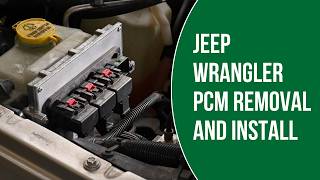
The physical replacement of the ECM is straightforward, but the electronic programming is complex. The module is typically located in the engine bay, often on the firewall or an inner fender, and is held in by 🎬 Watch this tutorial on how to remove and replace your PCM. a few bolts with several large electrical connectors.
Who Can Program the ECM?
- Online Sellers: Many reputable sellers of used and remanufactured ECMs offer a pre-programming service. You provide your vehicle's VIN at the time of purchase, and they flash the module before shipping it to you. This makes the unit "plug and play," meaning no additional programming is required after installation.
- Dealerships: A Chrysler, Dodge, or Jeep dealership can program a new or used ECM to your vehicle using their proprietary wiTECH diagnostic tool.
- Independent Repair Shops & Locksmiths: Some well-equipped independent shops or automotive locksmiths have the necessary J2534 pass-through devices and software subscriptions to perform the programming. However, not all shops have this capability, so you must confirm with them beforehand.
Pro Tip: To avoid anti-theft system conflicts, some specialized services can transfer the immobilizer data directly from your old ECM to the replacement unit. This is one of the most reliable ways to ensure a true plug-and-play experience, as it makes the new module an exact electronic clone of the old one.
Buying a Used Engine Control Module
Purchasing a used OEM module is often the most cost-effective solution, but it's crucial to buy smart. Here’s what to look for:
- Verify the Part Number: Match the OEM part number from your original module exactly. While several part numbers may be compatible or superseded, starting with an exact match is the safest bet. The last two letters of the part number often denote software updates; a later letter is generally a newer, more desirable revision.
- Insist on Pre-Programming: The single most important factor is programming. Only buy from a seller who will program the module to your VIN before shipping. This saves you the significant hassle and potential cost of finding a local shop to do it.
- Check the Warranty: Reputable sellers will offer a warranty on their modules. Given the complexity of these electronics, a warranty provides crucial peace of mind.
- Physical Inspection: When the part arrives, inspect it for any physical damage. Check for bent pins in the connectors, cracks in the casing, or signs of water intrusion.
- Why Used OEM is a Good Choice: Used original equipment (OEM) modules are often more reliable than cheap, new aftermarket units. The OEM hardware was designed specifically for your vehicle, and when paired with the correct, updated software, it provides factory-level performance and reliability.
Cost Comparison
The cost of replacing an ECM can vary significantly based on the source of the part and labor rates.
| Part Type | Estimated Cost |
|---|---|
| New OEM | $670 - $855 |
| Remanufactured / Used OEM (Pre-Programmed) | $250 - $560 |
| Shop Labor (Installation & Programming) | $100 - $250 |
Frequently Asked Questions (FAQ)
Is it an ECM, ECU, or PCM?
The terms are often used interchangeably. ECU stands for Engine Control Unit, ECM for Engine Control Module, and PCM for Powertrain Control Module. For these 2010 Chrysler, Dodge, and Jeep vehicles, PCM is the most accurate term because the module controls both the engine and the automatic transmission. However, most people and parts stores use the terms synonymously.
Can I drive my vehicle with a bad ECM?
It is not recommended. Depending on the failure mode, the vehicle may not start at all, or it could stall unexpectedly in traffic, creating a serious safety hazard. If you suspect your ECM is failing, you should have the vehicle diagnosed and repaired as soon as possible.
Do I need to send in my old ECM (a "core")?
This depends on the seller. Many sellers of used or remanufactured modules do not require you to return your old part. However, some remanufacturers or repair services will require your original module to either rebuild it or to transfer critical data to the replacement unit. Always check the seller's policy before purchasing.
Can my original ECM be repaired?
Yes, in many cases. There are specialized electronics repair companies that can fix common internal faults, such as failed ignition coil drivers or alternator control circuits. The major advantage of repairing your original module is that no reprogramming is needed, as all your vehicle's original data is retained.
Helpful Videos
Technical Specifications
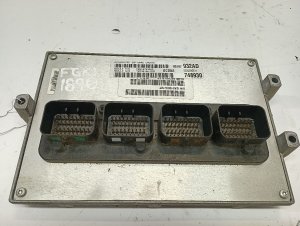
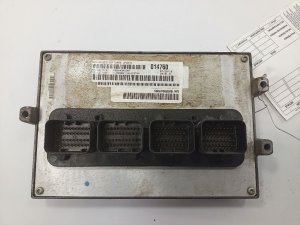
OEM Part Numbers: 05150498AA 68043449AE 68043457AD 68048182AE R5150498AA
The terms ECM (Engine Control Module) and PCM (Powertrain Control Module) are used interchangeably for these vehicles. The module controls both engine and transmission functions.
We Have This Part in Stock

The information in this article is provided for general reference and educational purposes only. Vehicle specifications, procedures, and part compatibility can vary by production date, trim level, and region. Always consult your vehicle's factory service manual and verify part numbers before purchasing or performing repairs. Safety-critical components such as airbags, seat belts, and braking systems should be installed by a qualified professional.
- Jeep Wrangler:
- Jeep Liberty:
- Dodge Ram 1500:
- Dodge Dakota:
- Dodge Nitro:
- 🎬 Helpful Videos
- 🛍️ Shop This Part
- Symptoms of a Failing Engine Control Module
- Known Issues, TSBs, and Recalls
- Common Internal Failures
- Technical Service Bulletins (TSBs)
- Programming and Installation Guide
- Who Can Program the ECM?
- Buying a Used Engine Control Module
- Cost Comparison
- Frequently Asked Questions (FAQ)
- 🎟️ Get 5% Off