

1994 Lincoln Mark VIII ECM: Diagnosing Leaking Capacitors and No-Start Issues
This guide covers the common failure points, symptoms, and replacement requirements for the 1994 Lincoln Mark VIII Engine Control Module (ECM), focusing on the critical Federal vs. California emissions compatibility.
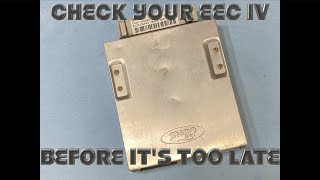
- The most common failure is from internal capacitors leaking corrosive fluid onto the circuit board; inspect any used unit.
- You MUST match the ECM to your vehicle's emissions system (Federal or California) by checking the under-hood sticker.
- A replacement ECM from an identical 1994 Mark VIII does NOT require dealer programming; it is plug-and-play.
- A classic symptom of failure is the fuel pump running continuously with the key on, instead of just priming for a few seconds.
Symptoms of a Failing 1994 Mark VIII ECM
A failing EEC-IV module can produce a variety of symptoms, often starting intermittently and getting progressively worse. Because the ECM controls so many functions, the signs of failure can sometimes be mistaken for other component issues.
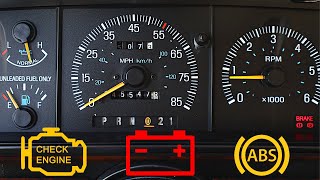
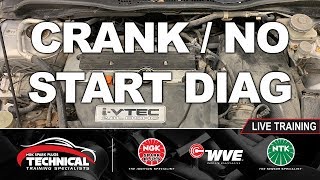
- Crank, No Start: The engine turns over but will not fire up. 🎬 Watch: Troubleshooting common causes for a crank but no start condition. This is one of the most common and definitive signs of a dead ECM.
- Fuel Pump Runs Continuously: When you turn the key to the 'On' position (without starting), you should hear the fuel pump prime for 1-2 seconds and then stop. A classic sign of a failing Ford EEC-IV computer is the fuel pump running continuously as long as the key is on.
- Engine Stalling or Rough Idle: The engine may stall unexpectedly while driving or run very poorly at idle.
- Poor Engine Performance: You may notice a significant loss of power, hesitation during acceleration, or a sudden drop in fuel economy.
- Erratic Automatic Transmission Shifting: The ECM plays a role in controlling the transmission. A failing module can cause harsh, delayed, or incorrect gear shifts.
- Check Engine Light: The Check Engine Light will likely illuminate, but the codes may be misleading or point to multiple sensor failures simultaneously.
- No Communication with Scan Tools: In cases of complete failure, a diagnostic tool may not be able to communicate with the ECM at all.
Common OBD-I Diagnostic Trouble Codes (DTCs)
The 1994 Mark VIII uses the older OBD-I diagnostic system. Codes are retrieved by counting flashes of the Check Engine Light or with a specific OBD-I code reader. Codes are three digits. While many codes exist, an ECM failure might be preceded by codes indicating sensor circuit faults or a code 111 (System Pass) even when symptoms are present, indicating an internal computer fault. A complete failure will often result in no codes being retrievable.
The #1 Cause of Failure: Leaking Capacitors
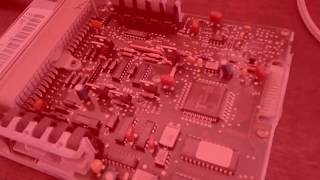
The primary reason these EEC-IV modules fail is not due to a complex software bug, but simple component aging. The circuit boards are populated with several electrolytic capacitors. After decades of heat cycles and vibration, the seals on these capacitors dry out, allowing the corrosive electrolytic fluid inside to leak onto the circuit board. This acidic fluid eats away at the delicate copper traces on the board, causing short circuits, open circuits, and unpredictable behavior. Often, a simple visual inspection of the board is all that's needed to confirm the diagnosis.
🎬 See how to identify and repair leaking capacitors on the board.Pro Tip: If you are buying a used ECM, it is highly recommended to open the metal case and inspect the circuit board for signs of leaking capacitors. Look for black, brown, or crusty residue around the base of the cylindrical capacitors. Also look for any previous repair work, which may appear as sloppy solder joints.
Buying a Used 1994 Lincoln Mark VIII ECM
A used OEM module is often a reliable and cost-effective solution, especially since new units are no longer available and aftermarket options can be of inconsistent quality. However, there are critical details to verify before purchasing.
Crucial: Federal vs. California Emissions
This is the most important compatibility check you must perform. The 1994 Mark VIII was sold with two different emissions systems: Federal (49-state) and California. The ECMs for these systems are programmed differently and are not interchangeable. Installing a Federal ECM on a California-spec car (or vice-versa) will likely result in a Check Engine Light and may cause performance issues because the computer will be looking for sensors or providing outputs that don't match the vehicle's wiring.
- How to Check Your Vehicle: Look for the Vehicle Emission Control Information (VECI) sticker in the engine bay, usually on the underside of the hood or on the radiator support.
- A Federal Emissions vehicle's sticker will state it conforms to 'U.S. EPA' regulations.
- A California Emissions vehicle's sticker will explicitly mention 'California' regulations.
Warning: You MUST match the replacement ECM to your vehicle's original emissions specification. The provided OEM part numbers (F4LF-12A650-AA, F4LFAA, F4LY-12A650-AA) are for Federal emissions vehicles only.
Programming and Installation
The 1994 Mark VIII's EEC-IV system predates the widespread use of integrated vehicle immobilizers (like Ford's PATS system). Therefore, a replacement ECM from a donor vehicle with the same part number and emissions type is typically plug-and-play. It does not require a trip to the dealer for programming or key syncing. When remanufacturers mention 'programming', they are referring to loading the correct factory software for your specific model and emissions type onto the device before shipping, not syncing it to your specific car's anti-theft system.
Replacement Overview
The ECM is located inside the vehicle, under the driver's side dashboard, behind the plastic kick panel. Replacement is straightforward for a DIY mechanic.
- Disconnect the battery. This is a critical safety step.
- Remove the driver's side door sill plate and the kick panel to gain access.
- Unbolt the large wiring harness connector from the ECM. This is typically a 10mm bolt in the center of the plug.
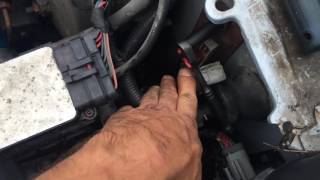
- Unclip or unbolt the ECM from its mounting bracket and remove it from the vehicle. 🎬 Watch this video for a walkthrough of the ECM removal process.
- Installation is the reverse of removal.
Cost Comparison
| Part Type | Estimated Cost |
|---|---|
| New OEM | No longer available |
| Remanufactured | $250 - $350 |
| Used OEM | $50 - $125 |
| Repair Service (re-capping) | $130 - $150 |
| Shop Labor for Replacement | $100 - $150 |
Frequently Asked Questions (FAQ)
Does the 1994 Lincoln Mark VIII ECM need to be programmed?
No, not in the modern sense. It does not need to be synced to the vehicle's keys or anti-theft system by a dealer. A used ECM with the same part number and emissions type (Federal/California) from another 1994 Mark VIII should be plug-and-play.
What is the main cause of failure for these ECMs?
The overwhelming cause of failure is the leakage of electrolytic fluid from the internal capacitors due to age. This fluid corrodes the circuit board, leading to a wide range of electrical faults.
Can I use a California-spec ECM in my Federal-spec car?
It is not recommended. The programming is different, and the computer may set error codes or cause performance problems because it is looking for emissions components that are not present on your vehicle. Always match the replacement part to your car's original emissions system.
Where is the ECM located on a 1994 Lincoln Mark VIII?
The ECM is located inside the car, behind the plastic kick panel by the driver's left foot.
Are there any recalls for the 1994 Mark VIII ECM?
No. While there were recalls for the 1994 Mark VIII for issues like the headlight switch and a speed control deactivation switch, none were issued for the Engine Control Module itself.
Helpful Videos

Technical Specifications
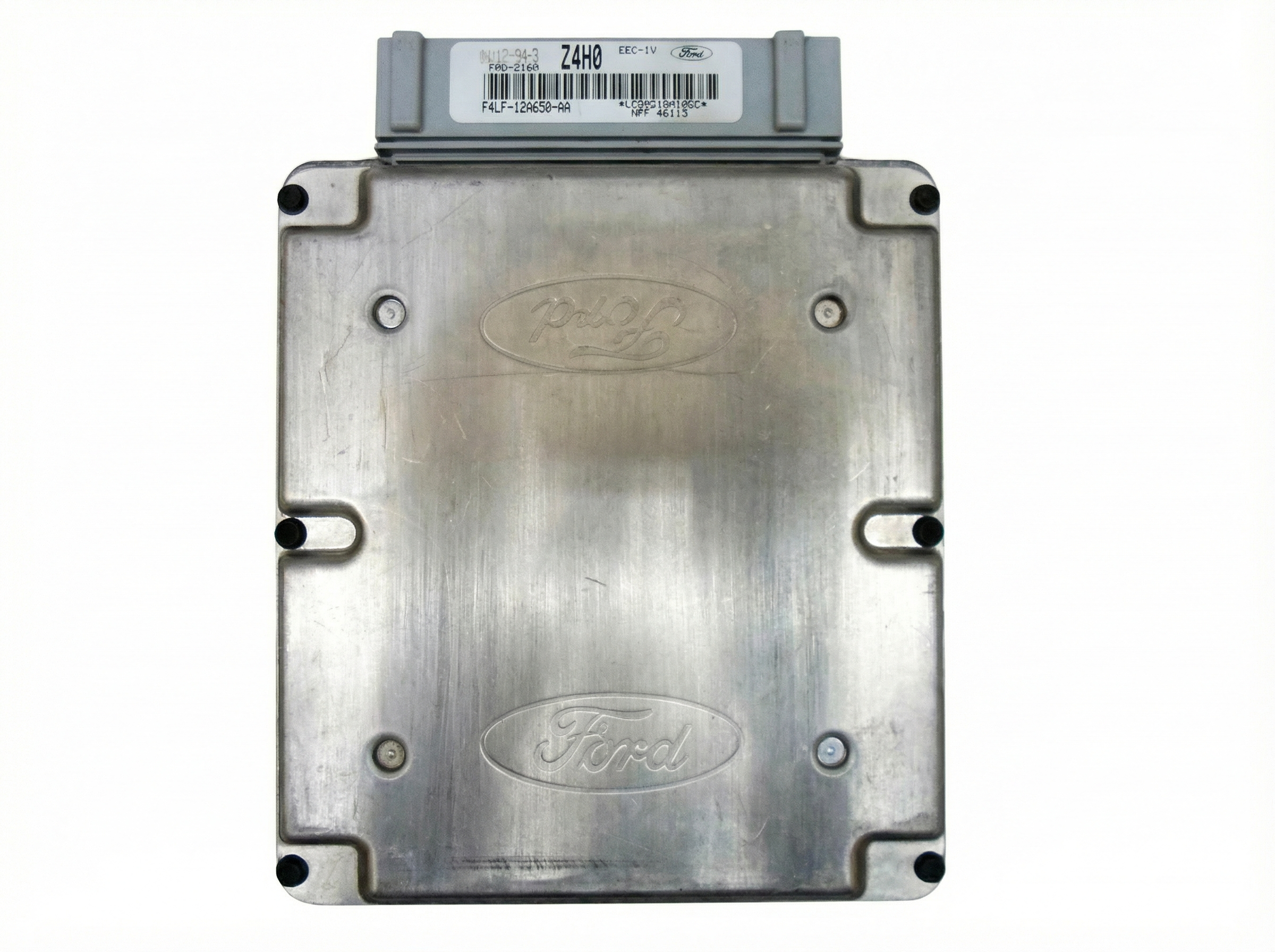
OEM Part Numbers: F4LF12A650AA F4LFAA F4LY12A650AA
This vehicle uses a Ford EEC-IV control module. It is an OBD-I system.
We Have This Part in Stock

The information in this article is provided for general reference and educational purposes only. Vehicle specifications, procedures, and part compatibility can vary by production date, trim level, and region. Always consult your vehicle's factory service manual and verify part numbers before purchasing or performing repairs. Safety-critical components such as airbags, seat belts, and braking systems should be installed by a qualified professional.
- Lincoln Mark VIII:
- 🎬 Helpful Videos
- 🛍️ Shop This Part
- Symptoms of a Failing 1994 Mark VIII ECM
- Common OBD-I Diagnostic Trouble Codes (DTCs)
- The #1 Cause of Failure: Leaking Capacitors
- Buying a Used 1994 Lincoln Mark VIII ECM
- Crucial: Federal vs. California Emissions
- Programming and Installation
- Replacement Overview
- Cost Comparison
- Frequently Asked Questions (FAQ)
- 🎟️ Get 5% Off