

1988-1989 Mazda 626, MX-6 & Ford Probe ECM: Solving Stalling, No-Start, and OBD-I Codes
This guide covers diagnosing, replacing, and finding a compatible used Engine Control Module for your 2.2L non-turbo Mazda 626, MX-6, or Ford Probe.
- No programming is required for this ECM; it is a plug-and-play part.
- You must match the part number to your vehicle's 2.2L non-turbo engine and Federal emissions system.
- The most common cause of failure is leaking capacitors; always inspect the circuit board of a used unit before installation.
- These vehicles use an OBD-I system, which requires jumping terminals in a diagnostic connector to read codes via a flashing light.
Critical Compatibility Warning
Important: This specific Engine Control Module is only for models equipped with the 2.2L non-turbocharged engine and Federal emissions systems. It will not work on vehicles with the 2.2L turbo engine or those originally sold with California emissions packages. Always match the part number from your original ECM to the replacement unit to guarantee compatibility.
Symptoms of a Failing ECM
A failing ECM can cause a wide range of confusing and intermittent problems. Because it controls the core functions of the engine, its failure can mimic other issues. Common symptoms include:
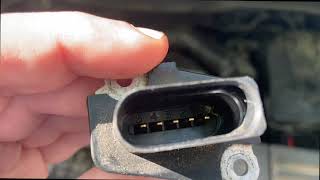
🎬 Watch: 5 common signs of ECU failure and how to fix them.- Check Engine Light: The most obvious sign is an illuminated Check Engine Light on your dashboard.
- Engine Stalling: The engine may stall unexpectedly, either while driving or at idle, and may be difficult to restart.
- No-Start Condition: The engine may crank but refuse to start because the ECM is not firing the fuel injectors or ignition coils.
- Rough Idle or Misfiring: The engine may run poorly, shake, or hesitate during acceleration. 🎬 See how to troubleshoot engine hesitation under heavy throttle.
- Poor Performance and Fuel Economy: You may notice a significant drop in power and an increase in fuel consumption as the ECM loses its ability to efficiently manage the engine.
- Erratic Behavior: Problems may appear intermittently, often getting worse as the engine warms up.
How to Check for Diagnostic Codes (OBD-I)
These vehicles pre-date the modern OBD-II system. They use an older On-Board Diagnostics (OBD-I) system that requires a manual procedure to read codes. You do not need a complex scanner.
- Locate the Diagnostic Connector: Find the small, typically green, diagnostic connector box in the engine bay. On the Ford Probe and Mazda models, it is usually located near the driver's side strut tower.
- Jumper the Terminals: Use a small piece of wire or a paperclip to connect the 'TEN' (Test Engine) and 'GND' (Ground) terminals in the diagnostic connector. The underside of the connector's cap often has a diagram.
- Read the Flashes: Turn the ignition key to the 'ON' position, but do not start the engine. The Check Engine Light will begin to flash.
- Interpret the Codes: The codes are delivered in a series of long and short flashes. Long flashes represent the tens digit, and short flashes represent the ones digit. For example, two long flashes followed by three short flashes indicates code 23.
Common OBD-I Trouble Codes
While a code doesn't automatically condemn the ECM, it can point you in the right direction. A faulty ECM can sometimes send false codes for good sensors.
| Code | Meaning |
|---|---|
| 02 | Crankshaft Position Sensor Signal Fault |
| 08 | Airflow Sensor (VAF) Fault |
| 09 | Engine Coolant Temperature (ECT) Sensor Fault |
| 12 | Throttle Position Sensor (TPS) Fault |
| 15 | Oxygen Sensor Inactive |
The Most Common Cause of Failure: Leaking Capacitors
The most frequent reason for ECM failure in these and many other vehicles from the 1980s and 1990s is leaking electrolytic capacitors. Over decades, the seals on these small electronic components can degrade, allowing the corrosive electrolytic fluid inside to leak onto the circuit board. This can damage the delicate copper traces on the board, causing short circuits and component failure. Often, the initial symptoms are intermittent and may be affected by temperature and humidity before the failure becomes permanent.
Buying a Used Engine Control Module: What to Look For
Given that new OEM modules are no longer available, a quality used ECM is the most practical solution. Here’s how to choose a good one:
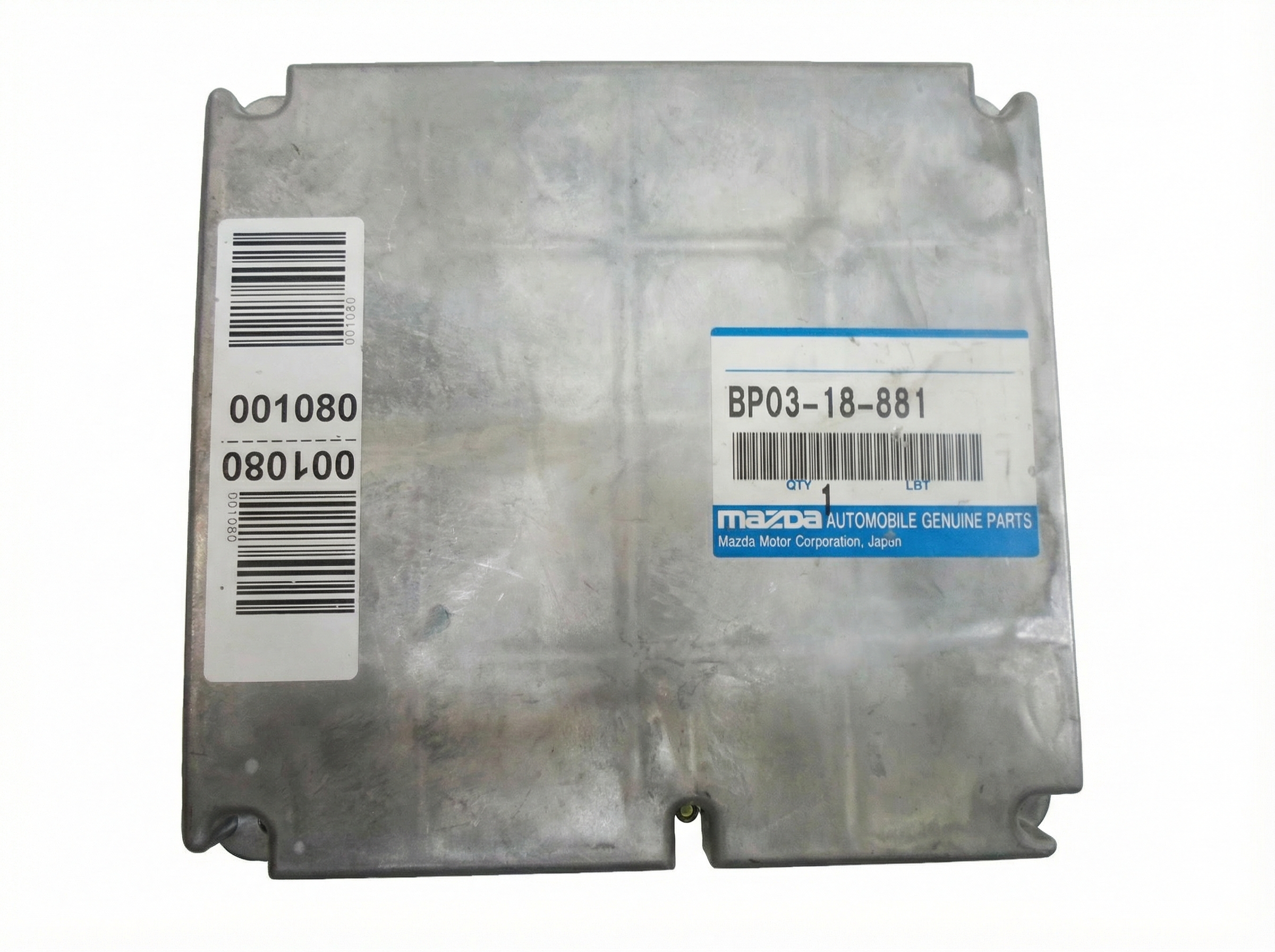
- Match the Part Number EXACTLY: This is the most important rule. Find the part number on the sticker of your original ECM and match it to the used part. The Ford and Mazda part numbers listed below are known to be compatible.
- Inspect the Circuit Board: If possible, ask the seller to open the ECM case and provide clear photos of the circuit board. Look for any signs of capacitor leakage, which appears as a fishy-smelling, often brownish or greenish crust around the base of the cylindrical capacitors. Also look for any burnt spots or damaged traces.
- Check for Water Damage: Look for any signs of corrosion or water lines on the case or the circuit board. Water intrusion is a common cause of ECU failure.
- Source from a Reputable Seller: Purchase from a seller who offers a warranty and a return policy. This gives you protection in case the unit is defective.
Programming and Installation
Pro Tip: Unlike modern vehicles, the ECM in the 1988-1989 Mazda 626, MX-6, and 1989 Ford Probe does not require any programming, flashing, or key relearning. These units are plug-and-play. As long as you have the correct part number for your vehicle's engine, transmission, and emissions type, the installation is purely mechanical.
Replacement Location
The ECM is typically located inside the vehicle's cabin, behind the center console stack, near the floor. Accessing it requires removing the side trim panels in the driver or passenger footwell. On some models, you may need to remove the radio or climate control surrounds to access the mounting bolts for the ECM.
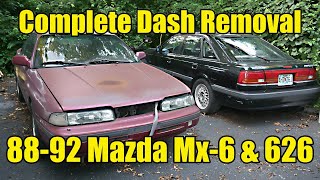
🎬 Watch this complete dash removal guide for Mazda MX-6 and 626 models.Cost of Replacement
The cost of replacing the ECM can vary, but because no programming is needed, you can save significantly on labor compared to modern cars.
| Item | Estimated Cost |
|---|---|
| New OEM ECM | $N/A (Discontinued) |
| New Aftermarket ECM | $N/A (Generally not available) |
| Remanufactured ECM | $200 - $400 |
| Used OEM ECM | $50 - $150 |
| Shop Labor | $150 - $300 (1-2 hours) |
Frequently Asked Questions (FAQ)
Do I absolutely need to program a replacement ECM for my 1989 Ford Probe?
No. These vehicles use an older system that does not require any programming, flashing, or VIN matching. It is a direct plug-and-play replacement, provided you use an ECM with the correct part number for your car's specifications.
Can I use an ECM from a Mazda MX-6 with a turbo engine in my non-turbo 626?
No. The fuel and ignition maps for a turbocharged engine are completely different. Using the wrong ECM will result in extremely poor performance, a no-start condition, or potential engine damage.
Where is the diagnostic connector to check for codes on my 1988 Mazda 626?
The OBD-I diagnostic connector is a small box located under the hood, usually on the driver's side near the shock tower or firewall.
What happens if I ignore a failing ECM?
Ignoring the symptoms of a failing ECM will eventually lead to a complete no-start condition, leaving you stranded. Intermittent stalling can also be a safety hazard if it occurs in traffic. It's best to address the issue as soon as symptoms appear.
OEM Part Numbers
Always verify the number on your specific part, but these are the commonly known compatible part numbers for this application.
- E92Z12A650C (Ford)
- F20118881H (Mazda)
- F26118880C (Mazda)
- F26118880G (Mazda)
Helpful Videos
Technical Specifications
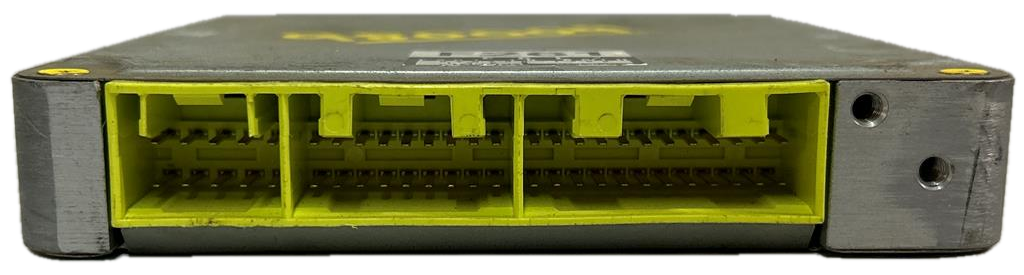
OEM Part Numbers: E92Z12A650C F20118881H F26118880C F26118880G
For 2.2L Non-Turbo Engines with Federal Emissions
We Have This Part in Stock

The information in this article is provided for general reference and educational purposes only. Vehicle specifications, procedures, and part compatibility can vary by production date, trim level, and region. Always consult your vehicle's factory service manual and verify part numbers before purchasing or performing repairs. Safety-critical components such as airbags, seat belts, and braking systems should be installed by a qualified professional.
- Mazda 626:
- Mazda MX-6:
- Ford Probe:
- 🎬 Helpful Videos
- 🛍️ Shop This Part
- Critical Compatibility Warning
- Symptoms of a Failing ECM
- How to Check for Diagnostic Codes (OBD-I)
- Common OBD-I Trouble Codes
- The Most Common Cause of Failure: Leaking Capacitors
- Buying a Used Engine Control Module: What to Look For
- Programming and Installation
- Replacement Location
- Cost of Replacement
- Frequently Asked Questions (FAQ)
- OEM Part Numbers
- 🎟️ Get 5% Off