

2018-2020 Mazda CX-5, CX-3 & Miata ECM Failure: Stalling, No-Start, and Programming Guide
This guide covers the common failure symptoms, recalls, and mandatory programming requirements for the Engine Control Module (ECM) in the 2018 Mazda CX-5, 2019-2020 Mazda CX-3, and 2019 Mazda MX-5 Miata.
- A replacement ECM **must** be reprogrammed by a Mazda dealer or qualified technician to sync with your vehicle's immobilizer system; otherwise, the car will not start.
- Many 2018 Mazda CX-5 models were recalled for a software flaw that could cause stalling. This is fixed with a free software update (reflash), not a hardware replacement.
- Always match the OEM part number PYFB-18-881 exactly when buying a used replacement.
- Symptoms like stalling, no-start, and poor engine performance can indicate ECM failure, but a thorough diagnosis is needed to rule out other sensor or wiring issues.
Symptoms of a Failing ECM
A failing Engine Control Module can cause a wide range of problems, from minor annoyances to critical failures that leave you stranded. Because the ECM controls so many different systems, symptoms can sometimes be mistaken for other issues. Look for these common warning signs:
🎬 Watch: 5 common signs your Mazda's ECM is failing- Check Engine Light: This is the most common indicator. The ECM will store diagnostic trouble codes (DTCs) that can be read with an OBD-II scanner.
- Engine Performance Issues: You may experience stalling, rough idling, engine misfires, hesitation during acceleration, or a general loss of power.
- No-Start or Hard Starting: The vehicle may crank but refuse to start, or it may take an unusually long time to turn over. This can happen if the ECM isn't properly firing the ignition coils or fuel injectors.
- Reduced Fuel Economy: If the ECM cannot correctly manage the air-fuel mixture, your vehicle may start consuming more fuel than usual.
- Shifting Problems (Automatic Transmission): The ECM works with the Transmission Control Module (TCM). A faulty ECM can send incorrect data, leading to rough or erratic shifting.
- Failure to Pass Emissions Test: A malfunctioning ECM can prevent the vehicle's onboard diagnostic systems (monitors) from running, resulting in an automatic failure at an emissions inspection.
Common Diagnostic Trouble Codes (DTCs)
While many codes can point to a sensor or component failure, codes in the P0600-P0699 range often indicate an internal problem with the control module itself. Look for codes such as:
- P0601: Internal Control Module Memory Check Sum Error
- P0602: Control Module Programming Error
- P0603: Internal Control Module Keep Alive Memory (KAM) Error
- P0605: Internal Control Module Read Only Memory (ROM) Error
- P0606: ECM/PCM Processor Fault
Known Issues, Recalls, and Technical Service Bulletins (TSBs)
There are important software-related issues for these vehicles that owners should be aware of. In many cases, the problem is not a physical failure of the ECM, but an error in its programming that can be fixed with a software update from a Mazda dealer.
2018 Mazda CX-5: Engine Stall Recall (Mazda #3719F)
Mazda issued a safety recall for certain 2018-2019 CX-5 and other models due to a software error in the Powertrain Control Module. The software controlling the cylinder deactivation feature could operate improperly, causing an intake valve rocker arm to get out of position. This could lead to a sudden loss of engine power or a complete engine stall while driving, increasing the risk of a crash. The fix for this recall (NHTSA Campaign Number: 19V497000) is a software update performed by a dealer, not a replacement of the ECM itself.
2019 Mazda MX-5 Miata: Transmission Control Module Recall (Mazda #3019A)
While it does not involve the Engine Control Module, owners of 2019 MX-5 Miata models with an automatic transmission should be aware of a recall for the Transmission Control Module (TCM). Incorrect software programming in the TCM could cause the vehicle to unexpectedly downshift, causing abrupt deceleration and increasing the risk of losing control. The remedy is a software reprogram of the TCM by a dealer. This is important to distinguish from an ECM issue, as the symptoms could be confused.
Pro Tip: Before condemning your ECM, always check with a Mazda dealer using your Vehicle Identification Number (VIN) to see if any open recalls or TSBs apply to your car. A simple, free software update may solve the problem.
Programming and Immobilizer Requirements
Warning: This is the most critical step of the replacement process. A replacement ECM, whether new or used, will not work until it is professionally programmed to your specific vehicle.
The ECM is part of the vehicle's anti-theft system, known as the Passive Antitheft System (PATS) or immobilizer. The ECM, the immobilizer module, and the chip in your key all contain unique security codes that must match. When you install a different ECM, these codes will not match, and the immobilizer will prevent the engine from starting as a theft-prevention measure.
Programming a new or used ECM involves several steps:
- Installation: The physical replacement of the module.
- Flashing/Programming: A technician uses specialized diagnostic tools, like the Mazda Diagnostic and Repair Software (MDARS), to download the correct software and calibration files from Mazda's servers and load them onto the replacement ECM.
- Immobilizer Sync: The technician then performs a 'parameter reset' or 'key learning' procedure to sync the newly programmed ECM with your vehicle's existing keys and immobilizer module.
This service can only be performed by a Mazda dealership or a well-equipped independent repair shop that subscribes to Mazda's service information and has a J2534 pass-thru programming device. The average owner or DIY mechanic does not have access to these tools.
Buying a Used Engine Control Module (ECM)
Purchasing a used OEM ECM is a cost-effective way to solve a hardware failure. Because the part's functionality is entirely dependent on being programmed to your car, a used unit from a reputable source is an excellent option. Here’s what to look for:
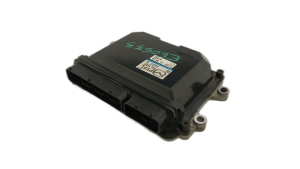
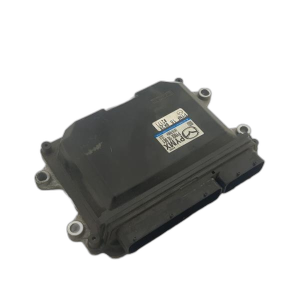
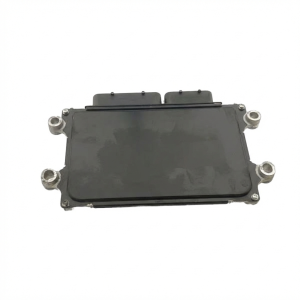
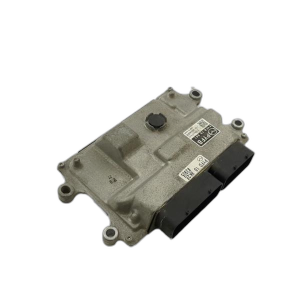
- Match the Part Number: It is essential to match the OEM part number exactly. For these vehicles, the primary part number is PYFB-18-881 (or PYFB18881). Mismatched part numbers can lead to compatibility issues even after programming.
- Inspect for Physical Damage: Check the module's housing for any signs of cracks, corrosion, or water damage. Pay close attention to the connector pins—they should be straight and clean.
- Ignore Mileage: The mileage of the donor vehicle is irrelevant, as the module will be completely reprogrammed with your vehicle's VIN and data.
- Plan for Programming Costs: Remember that the price of the used part is not the final cost. Factor in the labor cost for a dealership or qualified shop to program and install the module.
Cost Comparison
The cost of replacing an ECM can vary significantly. A software reflash to fix a recall issue will be free at a dealer. However, if the module has failed internally, you will need a replacement. Here are typical cost estimates:
| Part Type | Estimated Cost | Notes |
|---|---|---|
| New OEM | $590 - $900 | Purchased from a Mazda dealership. Guarantees the latest hardware version. |
| Used OEM | $75 - $250 | A cost-effective option, but must be reprogrammed. |
| Remanufactured | $200 - $400 | Your original unit or a core is rebuilt. Often comes pre-programmed to your VIN. |
| Shop Labor (Programming & Installation) | $110 - $250 | Typically 1-2 hours of labor. Always confirm the shop's ability to program Mazda modules before starting work. |
Frequently Asked Questions (FAQ)
Can I program a Mazda ECM myself?
No, this is not a DIY job. Programming requires a subscription to Mazda's diagnostic software (MDARS), a proprietary VCM-II interface or a compatible J2534 pass-thru device, and a stable power supply. The equipment and software access are prohibitively expensive for a one-time use. The procedure must be done by a dealer or a specialized independent technician.
Will the car start if I just swap the ECM?
No. Due to the immobilizer system, the engine will crank but will not start until the replacement ECM is properly programmed to the vehicle and its keys.
Does the VIN or mileage on the used ECM need to match my car?
No. The donor vehicle's VIN and mileage are irrelevant. During the programming process, the technician will write your car's specific VIN and configuration data to the replacement module, effectively making it a blank slate for your vehicle.
What is the difference between an ECM 'reflash' and a replacement?
A 'reflash' or 'reprogram' is a software update for your existing, functional ECM. This is the solution for issues like the 2018 CX-5 stalling recall. A replacement is necessary only when the internal hardware of the ECM has failed (e.g., due to a short circuit, water damage, or other physical fault).
Is there a compatibility difference for the 2019 MX-5 Miata?
Yes, there appears to be a production change around March 1st, 2019. Some parts databases indicate that part number PYFB-18-881 fits MX-5 Miata models built on or before this date. It is crucial to verify the part number on your original module or confirm compatibility with a dealer using your VIN before purchasing.
Helpful Videos

Technical Specifications
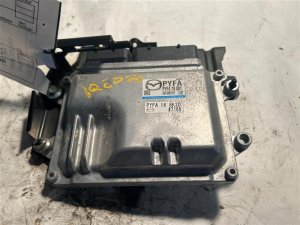
OEM Part Numbers: PYFB-18-881 PYFB18881
Also known as Powertrain Control Module (PCM). Requires vehicle-specific programming and immobilizer synchronization after installation.
We Have This Part in Stock

The information in this article is provided for general reference and educational purposes only. Vehicle specifications, procedures, and part compatibility can vary by production date, trim level, and region. Always consult your vehicle's factory service manual and verify part numbers before purchasing or performing repairs. Safety-critical components such as airbags, seat belts, and braking systems should be installed by a qualified professional.
- Mazda CX-5:
- Mazda CX-3:
- Mazda MX-5 Miata:
- 🎬 Helpful Videos
- 🛍️ Shop This Part
- Symptoms of a Failing ECM
- Common Diagnostic Trouble Codes (DTCs)
- Known Issues, Recalls, and Technical Service Bulletins (TSBs)
- 2018 Mazda CX-5: Engine Stall Recall (Mazda #3719F)
- 2019 Mazda MX-5 Miata: Transmission Control Module Recall (Mazda #3019A)
- Programming and Immobilizer Requirements
- Buying a Used Engine Control Module (ECM)
- Cost Comparison
- Frequently Asked Questions (FAQ)
- 🎟️ Get 5% Off