

2018 Mitsubishi Eclipse Cross ECM 1860D116: Problems, Programming, and Replacement
This guide covers the essential information you need before replacing the Engine Control Module (ECM) in your 2018 Mitsubishi Eclipse Cross, including symptoms, programming requirements, and costs.
- Programming is mandatory. A new or used ECM must be programmed to your vehicle's VIN and immobilizer by a dealer or specialist.
- You must match the OEM part number exactly. For the 2018 Eclipse Cross, this is typically 1860D116.
- Software updates (reflashing) from a dealer may fix certain issues without needing to replace the entire module. Check for TSBs related to your symptoms.
- A failed ECM will likely cause a no-start condition or put the vehicle into a low-power limp mode, making it undrivable.
Symptoms of a Failing 2018 Eclipse Cross ECM
A failing Engine Control Module can cause a wide range of confusing and intermittent issues. Because the ECM controls so many aspects of the vehicle, symptoms can often be mistaken for other problems. Always perform a thorough diagnosis before deciding to replace the ECM.
- Check Engine Light: An illuminated Check Engine Light is the most common symptom. If the light is on, retrieving the Diagnostic Trouble Codes (DTCs) with an OBD-II scanner is the first step.
- Engine Performance Issues: You might experience rough idling, engine stuttering, misfires, or a sudden loss of power. This can happen if the ECM is not correctly managing the air-fuel mixture or ignition timing.
- Car Won't Start: A completely failed ECM can prevent the engine from starting at all. The engine may crank but not fire up, or there may be no crank at all. This can be due to a lack of signal to the fuel injectors or spark plugs.
- Reduced Fuel Economy: If you notice a sudden and significant drop in your gas mileage, a faulty ECM could be the cause. It may be commanding an overly rich fuel mixture.
- Intermittent Stalling: The engine may shut off for no apparent reason while driving or when coming to a stop.
- Limp Mode Activation: In some cases, a detected ECM fault will put the vehicle into a "fail-safe" or "limp" mode, severely restricting engine power and vehicle speed to prevent further damage. A known TSB for the 2018 Eclipse Cross notes that DTC P061A can cause this, limiting speed to 25 mph.
Known Issues, Recalls, and Technical Service Bulletins (TSBs)
While the ECM itself has not been subject to a direct recall, its software has been the focus of several service campaigns and TSBs for the 2018 Eclipse Cross.
- TSB TSB-18-13-002: This bulletin was issued to address an issue where the Malfunction Indicator Lamp (MIL) would illuminate with Diagnostic Trouble Code (DTC) P061A (Torque Monitoring). This could improperly place the vehicle in fail-safe mode, limiting speed. The fix is to reprogram the ECM with updated software. The bulletin notes that software level 1860D11603 or higher addresses this issue.
- TSB TSB-19-13-002: Instructs dealers to reprogram the Engine ECU with updated software to correct an issue with the engine stalling in cold weather.
- Recall SR-18-007 (NHTSA 18V620000): This safety recall involved reprogramming the Forward Collision Mitigation (FCM) ECU. While not the main engine computer, it highlights the importance of software in the vehicle's various control units. The engine ECM software update was often performed at the same time as this recall.
Pro Tip: If you are experiencing issues, it's a good idea to have a Mitsubishi dealer check if all software updates and recalls have been performed on your vehicle. An outdated software version could be the cause of your problems, and a simple reflash might be all that's needed.
Buying a Used 2018 Eclipse Cross ECM
A used OEM ECM is a cost-effective alternative to a brand-new unit from the dealer. However, there are critical details you must get right to ensure a successful repair.
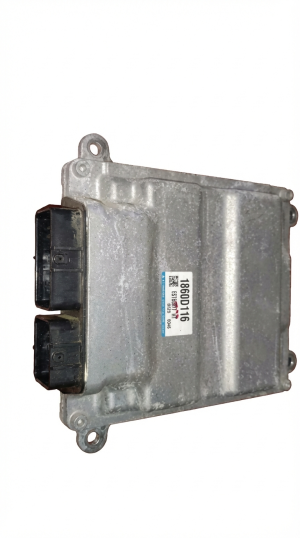
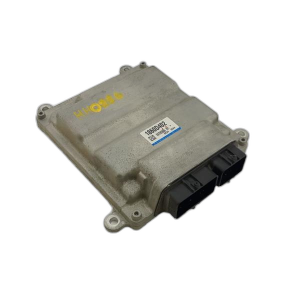
- Match the Part Number Exactly: The most important step is to match the OEM part number from your original module. For the 2018 Eclipse Cross, the primary part number is 1860D116. Do not install a module with a different part number, as it will not be compatible.
- Physical Inspection: When you receive the used module, inspect it for any signs of physical damage, such as cracks in the casing, bent pins on the connectors, or evidence of water intrusion or corrosion.
- Source Matters: Purchase from a reputable seller who offers a warranty and guarantees the part is in good working condition.
- Programming is Required: A used ECM will not be a simple plug-and-play swap. It must be programmed to your vehicle's specific Vehicle Identification Number (VIN) and immobilizer system.
Programming and Installation
Warning: This module absolutely requires programming to function. Installing a new or used ECM without programming will result in a no-start condition due to the vehicle's anti-theft immobilizer system.
The ECM is linked to the vehicle's immobilizer system, which prevents theft by ensuring the engine only starts with a recognized key. When the ECM is replaced, the new unit must be introduced to the immobilizer system and programmed with your vehicle's VIN.
Who Can Program the ECM?
Programming a Mitsubishi ECM typically requires the proprietary MUT-III diagnostic tool and software. This means your options are generally limited:
- Mitsubishi Dealership: A dealership is the most reliable place to have the ECM programmed. They have the correct tools and factory-trained technicians.
- Specialized Independent Shops: Some high-level independent auto repair shops that specialize in diagnostics or Asian vehicles may have the necessary equipment and subscriptions to perform the programming. However, many general mechanics will not be able to do this.
- Mail-In Services: Some companies offer mail-in programming or cloning services. You would send them your original ECM and the replacement unit, and they would transfer the necessary data (VIN, key codes, etc.) to the replacement. This can sometimes make the replacement unit "plug-and-play" upon return.
Cost of Replacement
The cost can vary significantly based on the source of the part and labor rates. All prices are estimates.
| Item | Estimated Cost |
|---|---|
| New OEM (Dealer) | $990 - $1,125 |
| Used OEM | $100 - $300 |
| Remanufactured / Pre-programmed | $300 - $600 |
| Shop Labor (Physical Swap) | $75 - $150 |
| Shop Labor (Programming) | $150 - $300 |
Frequently Asked Questions (FAQ)
Do I have to take my car to the dealer to replace the ECM?
While you can have an independent mechanic physically swap the module, programming is almost always a dealer-only or specialist procedure. This is because it requires Mitsubishi's specific diagnostic tool (MUT-III) to sync the new ECM with the vehicle's immobilizer system.
Can I use an ECM from a 2019 or 2020 Eclipse Cross?
While some dealer part sites show that part number 1860D116 fits 2018-2020 models, it is absolutely critical to match the part number from your original module. There can be subtle hardware or software differences between years that could cause compatibility issues. Always verify the number on your specific part before purchasing a replacement.
What is the difference between an ECM, ECU, and PCM?
The terms are often used interchangeably. ECM (Engine Control Module) and ECU (Engine Control Unit) refer to the same component. PCM (Powertrain Control Module) is a term sometimes used for a module that controls both the engine and the automatic transmission. For the 2018 Eclipse Cross, the component is typically referred to as the ECM or ECU.
Will a used ECM affect my vehicle's mileage reading?
No, the vehicle's mileage is stored in the instrument cluster or another module, not typically in the ECM itself. Replacing the ECM will not change the odometer reading.
Technical Specifications
OEM Part Numbers: 1860D116
Software Version 1860D11603 or higher is recommended to address known TSB issues.
We Have This Part in Stock

The information in this article is provided for general reference and educational purposes only. Vehicle specifications, procedures, and part compatibility can vary by production date, trim level, and region. Always consult your vehicle's factory service manual and verify part numbers before purchasing or performing repairs. Safety-critical components such as airbags, seat belts, and braking systems should be installed by a qualified professional.
- Mitsubishi Eclipse Cross: