

2017 Subaru Forester Engine Control Module: PZEV, Programming, and Part Numbers
This guide covers the critical details for replacing the Engine Control Module (ECM) on a 2017 Subaru Forester, focusing on the specific requirements for PZEV models with CVT transmissions.
- This ECM fits ONLY 2017 Forester models with a 2.5L PZEV engine and automatic (CVT) transmission.
- A replacement ECM, whether new or used, MUST be reprogrammed by a dealer or qualified shop to function.
- You must match the OEM part number exactly. The latest part number is 22765AH864, which supersedes 22765AH860 and 22765AH861.
- Symptoms of failure include a no-start condition, check engine light (especially P06xx codes), poor performance, and bad fuel economy.
Critical Compatibility Warning
Warning: This Engine Control Module is specifically for 2017 Subaru Forester models equipped with a 2.5L non-turbo PZEV engine and an Automatic (CVT) transmission. Part numbers must be matched exactly to ensure compatibility. Installing the wrong ECM will result in a no-start condition or poor performance.
Known Issues, TSBs, and Recalls
While there are no widespread recalls specifically for the 2017 Forester's ECM, it's important to be aware of related service bulletins and recalls for similar models that involve ECM software.
- ECM Reprogramming for Misfire Detection: TSB 11-184-19 was issued for 2017-2018 WRX STI models to enhance misfire diagnosis and prevent false P0300 codes. While not for the Forester, it shows that Subaru uses software updates to fix diagnostic issues.
- ECM Reprogramming for Catalytic Converter Management: A service program (WVN-24R) for older 2007-2008 Forester PZEV models involved reprogramming the ECM to better manage the catalytic converter and prevent degradation.
- Ignition Coil Recall: A recall (Subaru #WRE-21) was issued for 2017-2019 Impreza and 2018-2019 Crosstrek models where the ECM could continue to power the ignition coil after shutdown, potentially causing a short circuit. The fix involved an ECM software update and ignition coil replacement. While this recall does not list the 2017 Forester, it highlights the critical link between the ECM software and other vehicle components.
Symptoms of a Failing ECM
A failing ECM can cause a wide range of problems, from a simple check engine light to a car that won't start at all. Because the ECM controls so many functions, symptoms can often be mistaken for other issues.
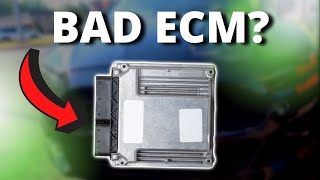
🎬 Watch: A breakdown of common symptoms of a bad ECM.- Check Engine Light: This is often the first and most obvious sign. Codes related to ECM failure itself (P0600-P0607) are a clear indicator. However, a bad ECM can also cause false codes for other sensors that are actually working correctly.
- Engine Performance Issues: A faulty ECM can lead to stuttering, misfires, a sudden loss of power, or poor acceleration. This is because the ECM can no longer accurately control the air-fuel ratio or ignition timing.
- Car Won't Start: If the ECM is completely failed, it cannot give the proper commands for fuel injection and spark, and the engine will not start or will crank without firing.
- Poor Fuel Economy: An ECM that isn't correctly managing the engine will almost always lead to a noticeable drop in fuel efficiency.
- Shifting Problems: The ECM communicates with the Transmission Control Module (TCM). Faulty signals from the ECM can cause hard or delayed shifts in the automatic (CVT) transmission.
Buying a Used Engine Control Module (ECM)
Purchasing a used OEM ECM is a cost-effective solution, but it requires careful attention to detail to ensure you get a functional, compatible part.
- Match the Part Number Exactly: This is the most important rule. The part number on your original ECM must be an exact match to the one you are buying. The primary OEM part numbers for the 2017 Forester 2.5L PZEV with CVT are 22765AH860, 22765AH861, and the latest supersession, 22765AH864. Part number 22765AH864 replaces all previous versions.
- Verify Vehicle Specifications: Double-check that the donor vehicle had the same engine (2.5L PZEV), transmission (AT/CVT), and was a US market vehicle.
- Physical Inspection: When you receive the used ECM, inspect it for any signs of physical damage, corrosion on the pins, or evidence of water intrusion. A corroded connector can cause a host of problems.
- Programming is Required: A used ECM will not be a plug-and-play repair. It must be reprogrammed or 'flashed' to your vehicle's specific VIN and immobilizer system. Failure to do so will result in the vehicle not starting.
Programming and Installation
Important: A replacement ECM, whether new or used, must be programmed to your specific vehicle. This process pairs the module to your car's immobilizer system. Without this step, the engine will not start.
This is not a task that can be done at home with a standard OBD-II scanner. The programming requires specialized equipment.
- Subaru Dealership: A dealership is the most straightforward option. They have the proprietary Subaru Select Monitor (SSM) diagnostic tool and guaranteed access to the correct software.
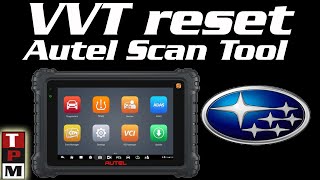
- Independent Repair Shop: Many independent shops that specialize in Subaru or have advanced diagnostic tools (like a high-end Autel or Launch scanner with J2534 🎬 See how an Autel scanner can reset VVT learned values. pass-thru capabilities) can perform the programming. It is crucial to confirm with the shop beforehand that they have the ability to program a Subaru ECM.
- Locksmiths: Some automotive locksmiths have the tools to handle immobilizer and key programming, which may include ECM replacement. Verify their capabilities for a 2017 Subaru specifically.
Pro Tip: Before condemning the ECM, ensure all other possibilities are exhausted. A faulty sensor, damaged wiring, or poor ground connection can mimic ECM failure symptoms. Diagnostic work is critical to avoid replacing a good ECM.
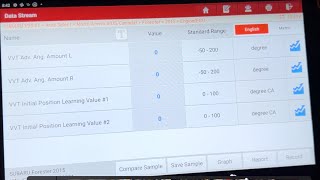
🎬 Watch: How to clear VVT values without replacing the ECM.Cost Comparison
The cost of replacing an ECM can vary significantly based on the part source and labor rates.
| Item | Estimated Cost |
|---|---|
| New OEM (Dealer) | $620 - $950 (Part Only) |
| Used OEM | $35 - $150 |
| Remanufactured / Repair Service | $100 - $300 (Service Only) |
| Shop Labor (Installation & Programming) | $110 - $160 |
Frequently Asked Questions
What is a PZEV engine and why does it matter for the ECM?
PZEV stands for Partial Zero Emission Vehicle. It's a standard, primarily from California, for vehicles with extremely low emissions. For the 2017 Forester, the PZEV model's ECM has specific software programming to meet these stricter standards, such as altering ignition timing to heat the catalytic converter faster. You must use an ECM from a PZEV model if your car is a PZEV.
Can I install the ECM myself and drive to the dealer for programming?
No. Once the replacement ECM is installed, the car's immobilizer will prevent the engine from starting. The vehicle will need to be towed to the dealership or shop for programming unless the technician can come to you with a mobile setup.
What OBD-II codes point to a bad ECM?
Codes in the P06xx range, such as P0600 (Serial Communication Link Malfunction), P0601 (Internal Control Module Memory Check Sum Error), P0603 (Internal Control Module Keep Alive Memory (KAM) Error), P0604 (Internal Control Module Random Access Memory (RAM) Error), and P0605 (Internal Control Module Read Only Memory (ROM) Error), are direct indicators of an internal ECM failure.
Where is the ECM located on a 2017 Subaru Forester?
The Engine Control Module on the 2017 Subaru Forester is typically located in the engine compartment, though some sources suggest it may be inside the cabin beside the glove box. Always verify the location on your specific vehicle before beginning work.
Helpful Videos
Technical Specifications
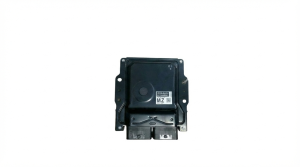
OEM Part Numbers: 22765AH860 22765AH861 22765AH864
For 2017 Subaru Forester with 2.5L H4 PZEV Gas Engine and Automatic (CVT) Transmission.
We Have This Part in Stock

The information in this article is provided for general reference and educational purposes only. Vehicle specifications, procedures, and part compatibility can vary by production date, trim level, and region. Always consult your vehicle's factory service manual and verify part numbers before purchasing or performing repairs. Safety-critical components such as airbags, seat belts, and braking systems should be installed by a qualified professional.
- Subaru Forester: