

2023-2024 Subaru Legacy 2.5L ECM: The Critical Guide to Programming and Replacement
Replacing the Engine Control Module on your 2023-2024 Subaru Legacy is not a simple swap; this guide explains the mandatory programming and immobilizer steps you must know.
- Programming is mandatory. A replacement ECM must be electronically programmed to your car's immobilizer system or the engine will not start.
- You must match the OEM part number exactly. The 2.5L and 2.4L Turbo engines use different ECMs that are not interchangeable.
- Cloning your original ECM's data to the replacement is the easiest option, making it plug-and-play, but requires the original module to be readable.
- Budget for programming costs ($100-$200) in addition to the part itself, and confirm your chosen mechanic can perform the service on a used module before you buy.
Symptoms of a Failing ECM
A failing Engine Control Module can cause a wide range of confusing and intermittent problems. Because the ECM controls so many different systems, symptoms can vary, but here are the most common signs that your module may be at fault.
- Check Engine Light: The most obvious sign is an illuminated Check Engine Light on your dashboard. If the ECM detects an internal fault, it will trigger the light and store a diagnostic trouble code.
- Engine Performance Issues: Problems like engine misfiring, running rough, stalling unexpectedly, or a sudden decrease in fuel economy can all be linked to a faulty ECM.
- No-Start or Cranking No-Start: You may find the engine cranks but refuses to start, or in some cases, it may not crank at all. This can happen if the ECM is not properly managing the fuel and spark, or if it fails to communicate with the immobilizer system.
- Inconsistent or Erratic Behavior: The vehicle may run fine when cold but start having problems once it warms up, or problems may appear and disappear randomly. This can be a sign of failing electronic components or cracked solder joints inside the ECM.
Common Diagnostic Trouble Codes (DTCs)
While many codes can be triggered by a failing ECM, codes in the P0600-P060F range specifically point to internal processor and memory faults within the module itself. If you see any of the following, the ECM is the primary suspect:
- P0600: Serial Communication Link Malfunction
- P0601: Internal Control Module Memory Check Sum Error
- P0602: Control Module Programming Error
- P0603: Internal Control Module Keep Alive Memory (KAM) Error
- P0604: Internal Control Module Random Access Memory (RAM) Error
- P0605: Internal Control Module Read Only Memory (ROM) Error
- P0606: ECM/PCM Processor Fault
- P0607: Control Module Performance
Known Issues, Recalls, and Technical Service Bulletins (TSBs)
While there are no widespread recalls specifically for ECM failure on the 2023-2024 Legacy, it's important to be aware of related service information.
- TSB 11-197-24 (February 2024): Subaru issued this bulletin for 2023-2024 Legacy models with the 2.5L engine. It addresses vehicles that may set Diagnostic Trouble Codes (DTCs) P0016, P0017, P0018, P0019, or P0087. The fix involves reprogramming the ECM with updated software logic to optimize fuel pressure stabilization and enhance the self-diagnosis program. This shows that ECM reprogramming is a standard dealer procedure for fixing certain performance issues.
- Vehicle Recalls: The 2023-2024 Legacy has been subject to a few recalls, including for a faulty inhibitor switch (NHTSA #23V755000) and a driveshaft issue (NHTSA #23V754000). While these do not directly involve the ECM, they are important for owners to be aware of for this vehicle generation.
Warning: The ECM for the 2.5L naturally aspirated engine is NOT interchangeable with the ECM for the 2.4L turbocharged engine. They use different part numbers and have completely different software. Ensure you are purchasing the correct module for your vehicle's specific engine.
Buying a Used Engine Control Module (ECM)
Purchasing a used OEM ECM is a great way to save money, but it's critical to understand the process. Unlike a mechanical part, you cannot simply swap it and start the car.
- Match the Part Number EXACTLY: This is the most important step. The part number on the replacement ECM must be an exact match to your original module. Even a one-digit difference can mean it's for a different model or has different programming. The primary part numbers for this vehicle are 22765AS49A (2023) and 22765AT70B (2024), though other revisions may exist.
- Plan for Programming: A used ECM is not a plug-and-play part. It must be electronically synchronized to your vehicle's immobilizer system. Without this step, the car will not start as a security precaution. You MUST factor in the cost and time for programming.
- Consult Your Technician First: Before buying the part, talk to your mechanic or a Subaru specialist. Confirm they have the tools and ability to program a used ECM. Some shops may only be willing to install and program a new part they source themselves. Ask if they prefer to do the programming themselves or if they recommend a mail-in cloning service.
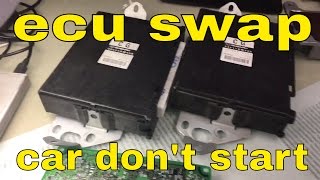
- Inspect the Part: When the used ECM arrives, inspect it for any physical damage. Check for bent pins on the connectors, signs of corrosion from water damage, or any indication that the case has been opened before. 🎬 See this walkthrough on how to swap a Subaru ECU.
Programming & Immobilizer Requirements: The Most Important Step
This is the most critical and often misunderstood part of replacing a Subaru ECM. The ECM, Body Control Module (BCM), and your keys are all part of the vehicle's immobilizer security system. They must all be in sync for the car to start. When you introduce a new or used ECM, you must perform a registration or programming procedure.
Option 1: ECM Cloning (Recommended if possible)
If your original ECM is still communicating, the best method is to "clone" it. This involves using specialized tools to read all the data from your original module (including the VIN, key codes, and immobilizer sync) and writing it directly onto the replacement unit.
- Result: A truly plug-and-play module. No further programming is needed.
- Who Does It: Mail-in services and some high-tech independent shops offer this.
- Limitation: This is only possible if the original ECM is not completely dead or damaged.
Option 2: Dealer or Independent Shop Programming
If cloning isn't an option, the replacement ECM must be registered to the vehicle. This erases the old key data and programs the module to accept your current keys and sync with the rest of the car's security system.
- Result: The new ECM is paired to your vehicle.
- Who Does It: A Subaru dealer using the Subaru Select Monitor (SSM) tool is the official method. Many independent shops with advanced diagnostic tools (like Autel or Snap-on with immobilizer packages) can also perform this function.
- Requirement: You will need all of your car keys present during this procedure.
Pro Tip: You cannot install a used ECM and drive the car to the dealer for programming. The immobilizer will prevent the engine from starting. The vehicle will need to be towed to the shop, or you'll need a mobile technician to come to you.
Cost Breakdown
Prices can vary by location and supplier, but here is a general estimate of what to expect.
| Part or Service | Estimated Cost |
|---|---|
| New OEM ECM (Part Only) | $260 - $430 |
| Used OEM ECM (Part Only) | $100 - $250 |
| ECM Repair/Cloning Service | $150 - $250 |
| Shop Labor (Programming Only) | $100 - $200 (Typically 1 hour) |
Frequently Asked Questions (FAQ)
Can I install the ECM myself and drive it to the dealer?
No. Once you install a different ECM, the vehicle's immobilizer system will be activated, and the engine will not start. The car will need to be towed for programming unless you use a mobile service or have the module cloned beforehand.
🎬 Watch: Why your car won't start after an ECU swap.What's the difference between 'cloning' and 'programming' an ECM?
Cloning is the process of making an exact copy of the software and security data from your old ECM onto the replacement one. If successful, the car won't know the difference, and it will be plug-and-play. Programming (or registration) is the process of teaching a new or used ECM to work with your car's existing keys and security modules, which is typically done at a dealership or qualified shop.
Will an ECM from a 2.4L Turbo Legacy work in my 2.5L Legacy?
No, absolutely not. The ECM for the 2.4L Turbo engine (part number example: 22765AS461) is completely different from the one for the 2.5L engine. They have different hardware and software designed for a different powertrain. You must match the part number to your original module.
Do I need my keys to get a replacement ECM programmed?
Yes. When a technician programs a replacement ECM to your car, they are essentially re-registering your existing keys to the new security system. You should bring all keys for the vehicle to the programming appointment to ensure they all continue to work.
Helpful Videos
![How to Change ECU [Engine Control Unit Swap // Subaru]](https://img.youtube.com/vi/-EmwuYWWbUE/mqdefault.jpg)
Technical Specifications
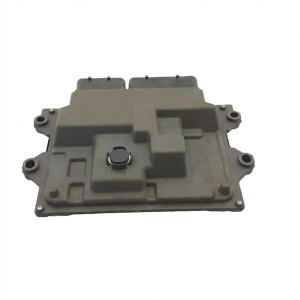
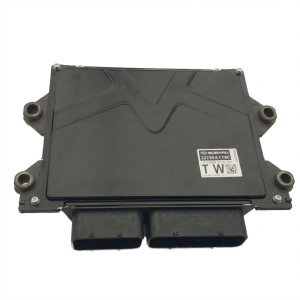
OEM Part Numbers: 22765AS49A 22765AT70B 22765AS49B
This ECM is designed for the 2023-2024 Subaru Legacy Sedan with the 2.5L H4 gasoline engine. It is a DENSO unit. It is not compatible with the 2.4L Turbo engine.
We Have This Part in Stock

The information in this article is provided for general reference and educational purposes only. Vehicle specifications, procedures, and part compatibility can vary by production date, trim level, and region. Always consult your vehicle's factory service manual and verify part numbers before purchasing or performing repairs. Safety-critical components such as airbags, seat belts, and braking systems should be installed by a qualified professional.
- Subaru Legacy:
- 🎬 Helpful Videos
- 🛍️ Shop This Part
- Symptoms of a Failing ECM
- Common Diagnostic Trouble Codes (DTCs)
- Known Issues, Recalls, and Technical Service Bulletins (TSBs)
- Buying a Used Engine Control Module (ECM)
- Programming & Immobilizer Requirements: The Most Important Step
- Option 1: ECM Cloning (Recommended if possible)
- Option 2: Dealer or Independent Shop Programming
- Cost Breakdown
- Frequently Asked Questions (FAQ)
- 🎟️ Get 5% Off