

2010 Toyota Prius Engine Control Module (ECM): The Critical Production Date Split
This guide covers the crucial compatibility differences, programming requirements, and known issues for the 2010 Toyota Prius ECM.
- Compatibility is determined by a production date split: one part for cars built on or before August 2009, and a different part for cars built from September 2009 onwards.
- A replacement ECM MUST be programmed to the car's VIN and synchronized with the immobilizer system; the car will not start without this step.
- Symptoms like stalling and loss of power can also be caused by a well-known Inverter (IPM) recall, which should be investigated before replacing the ECM.
- Buying a used ECM requires matching the part number and production date exactly. Considering a pre-programmed unit can simplify installation.
Critical Compatibility Warning: The August 2009 Production Split
Warning: Compatibility for the 2010 Toyota Prius Engine Control Module depends entirely on your vehicle's production date. This is the single most important factor when purchasing a replacement.
- For vehicles built on or before August 2009 (08/09): You need an early-production ECM, such as OEM part number 89660-47300.
- For vehicles built from September 2009 (09/09) onwards: You need a late-production ECM, such as OEM part number 89661-47262.
Before ordering, you must verify your vehicle's production date. This is printed on a sticker on the driver's side door jamb. Using the wrong ECM will result in a no-start condition or other system failures.
Symptoms of a Failing ECM
A failing ECM can cause a wide range of issues, which can sometimes be mistaken for other problems. Here are the most common signs:
- Check Engine Light: An illuminated Check Engine Light is the most common symptom. Specific trouble codes may point to an internal ECM failure, though often they will be for sensors the ECM controls.
- Engine Performance Issues: You may experience a no-start condition, intermittent stalling, rough idle, 🎬 Watch this diagnostic video for a Prius no-start condition. engine misfires, hesitation, or a noticeable loss of power.
- Poor Fuel Economy: A sudden and unexplained drop in gas mileage can be caused by the ECM commanding an incorrect air-fuel mixture.
- Transmission Problems: The ECM communicates with the transmission controller. A faulty ECM can lead to erratic or harsh shifting.
- Failure to Communicate: If an OBD-II scanner cannot communicate with the ECM, it's a strong sign the module itself has failed.
Associated Diagnostic Trouble Codes (DTCs)
While many codes can result from a bad ECM, certain codes are more directly related. Technical Service Bulletins (TSBs) have been issued for the following ECM-related codes on the 2010 Prius:
- P3190, P3191, P0A0F: These codes relate to "Poor Engine Power" or "Engine Failed to Start" and may require an ECM software update as per TSB T-SB-0205-11.
- P0401: Indicates "Exhaust Gas Recirculation Flow Insufficient," which can be related to carbon buildup and may also require an ECM software update according to TSB T-SB-0027-16.
- P0456: A code for a small evaporative emissions leak that was addressed by an ECM software update in TSB SB-0130-10.
Known Issues, Recalls, and Technical Service Bulletins
It's important to distinguish between a true ECM failure and other well-known Prius issues with similar symptoms.
Recall Confusion: Inverter (IPM) vs. Engine ECM
A major source of confusion is a safety recall (NHTSA Campaign ID: 14V053000, Toyota E0E) for the hybrid system's inverter. The symptoms of this recall—stalling, loss of power, and warning lights—are very similar to ECM failure. However, this issue was with the Intelligent Power Module (IPM) inside the inverter assembly, NOT the main Engine Control Module. The fix involved a software update for the Motor Generator ECU and the Power Management ECU. If you experience sudden stalling, it is crucial to check if your vehicle has had this recall performed before suspecting the main ECM.
Programming and Immobilizer Information
Warning: You cannot simply swap a used ECM into a 2010 Toyota Prius and expect it to work. The ECM is linked to the vehicle's anti-theft system, known as the immobilizer.
A replacement ECM, whether new or used, must be programmed to your vehicle's specific Vehicle Identification Number (VIN) and synchronized with the immobilizer system. Without this step, the car will not start.
- Dealer/Professional Shop: A Toyota dealership or a qualified independent shop with Toyota's Techstream software can program a replacement ECM and register your keys to it.
- Pre-Programmed Modules: Many online sellers offer used or remanufactured ECMs that are pre-programmed with your VIN before shipping. This can make the unit "plug and play," though an immobilizer relearn procedure may still be required.
- DIY Immobilizer Relearn: Some Toyota models allow for a DIY immobilizer reset. After installing the VIN-matched ECM, this involves using a wire to short two specific pins (typically pin 4 and pin 13) in the OBD-II diagnostic port for approximately 30 minutes with the ignition on. 🎬 See how to perform this paperclip immobilizer reset. While this method is reported to work, success is not guaranteed, and the professional solution is using Techstream software.
Buying a Used Engine Control Module (ECM)
Purchasing a used OEM ECM is a cost-effective solution, but careful verification is essential.
- Verify the Production Date: This is the most critical step. Check the sticker on your driver's side door jamb and ensure the donor vehicle's production date range matches yours (before or after 08/09).
- Match the Part Number Exactly: The safest method is to physically inspect your old ECM and match the part number exactly with the replacement unit. Common early-2010 numbers are 89660-47300 and its successors, while late-2010 numbers include 89661-47262.
- Inspect for Damage: Do not buy a module with physical damage, corrosion on the pins, or signs of being opened. Water intrusion is a common cause of electronic failure.
- Consider a Pre-Programmed Unit: For easier installation, consider buying from a reputable recycler who offers VIN programming before shipping. This service adds value and can save you a trip to the dealer.
- Warranty: Purchase from a seller who offers a warranty. This protects you in case the used ECM is defective.
Cost Comparison
The cost of replacing a 2010 Prius ECM can vary significantly based on the part source.
| Part Type | Estimated Cost |
|---|---|
| New OEM | $700 - $1,100 |
| Remanufactured (Pre-Programmed) | $200 - $450 |
| Used OEM | $65 - $150 |
| Shop Labor (Installation & Programming) | $100 - $250 |
Frequently Asked Questions (FAQ)
Do I have to take my car to the dealer for an ECM replacement?
Not necessarily. While a Toyota dealer can always perform the replacement and programming, many independent shops with the proper tools (like Toyota Techstream) can do the job. Alternatively, you can purchase a pre-programmed ECM and install it yourself, though an immobilizer relearn procedure will still be needed.
🎬 Watch a professional immobilizer reset on a 2010 Prius.What is the difference between an ECM, ECU, and PCM?
For most practical purposes, these terms are interchangeable. ECM (Engine Control Module) and ECU (Engine Control Unit) are the most common terms. PCM (Powertrain Control Module) is also used and sometimes implies that the module controls both the engine and transmission. On the 2010 Prius, the part is most commonly referred to as the ECM or ECU.
Where is the ECM located on a 2010 Toyota Prius?
On 2010 and later Prius models, the Engine Control Module is located in the engine compartment. You can find it near the relay block, and you may need to move the coolant reserve tank to access it.
Will a bad ECM cause my hybrid battery to fail?
It is unlikely that a failing ECM will directly cause the high-voltage hybrid battery to fail. The Prius has a separate Battery ECU (or Power Management Control ECU) that is responsible for the health and charging of the hybrid battery pack. However, a faulty ECM can cause a wide range of system communication errors and running problems that may trigger hybrid system warnings.
Helpful Videos

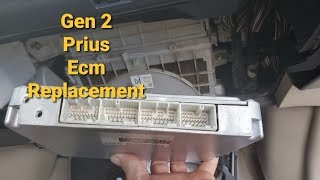
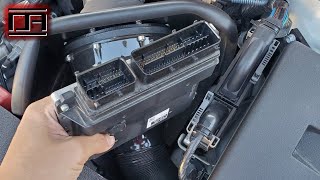

Technical Specifications
OEM Part Numbers: 89660-47300 89660-47301 89660-47302 89660-47306 89661-47261 89661-47262
Location: Engine Compartment (for 2010+ models)
We Have This Part in Stock
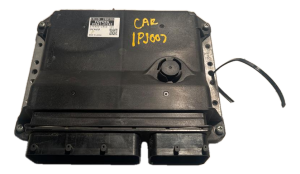
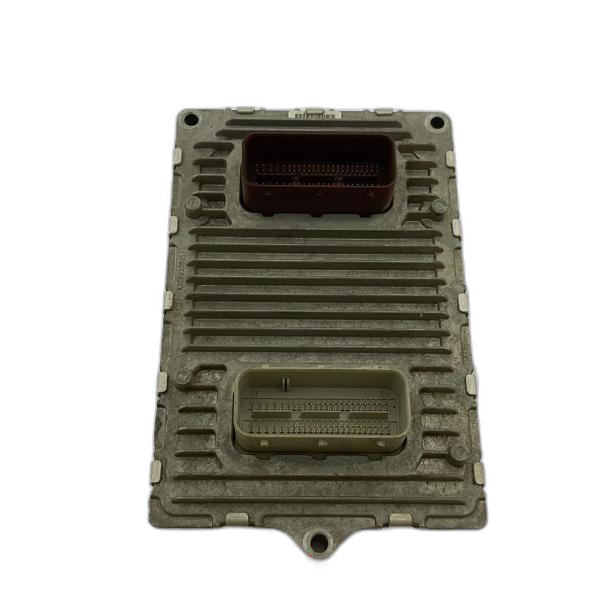

The information in this article is provided for general reference and educational purposes only. Vehicle specifications, procedures, and part compatibility can vary by production date, trim level, and region. Always consult your vehicle's factory service manual and verify part numbers before purchasing or performing repairs. Safety-critical components such as airbags, seat belts, and braking systems should be installed by a qualified professional.
- Toyota Prius:
- 🎬 Helpful Videos
- 🛍️ Shop This Part
- Critical Compatibility Warning: The August 2009 Production Split
- Symptoms of a Failing ECM
- Associated Diagnostic Trouble Codes (DTCs)
- Known Issues, Recalls, and Technical Service Bulletins
- Recall Confusion: Inverter (IPM) vs. Engine ECM
- Programming and Immobilizer Information
- Buying a Used Engine Control Module (ECM)
- Cost Comparison
- Frequently Asked Questions (FAQ)
- 🎟️ Get 5% Off