

Tesla Model S & X Coolant Valve Failure: Leaks, Warnings, and Replacement Guide (2012-2021)
Spot the signs of a failing 3-way or 4-way coolant valve, from dashboard alerts to slow charging, and understand the critical steps for replacement on your Model S or Model X.
- The most common failure is a physical coolant leak from the valve's plastic housing, causing 'Thermal System' warnings on the screen.
- Failure directly leads to reduced power and significantly slower or disabled Supercharging to protect the battery.
- After replacing the valve, a 'Coolant Air Purge' procedure using the car's Service Mode is mandatory to prevent damage from air pockets in the system.
- When buying a used valve, inspect it carefully for hairline cracks and aim for the latest part revision (e.g., 6007370-00-F) for better durability.
What is the Coolant Control Valve and What Does It Do?
In a Tesla Model S or Model X, managing heat is a complex task. The battery, motors, and power electronics all generate heat that must be removed, while the cabin needs heating or cooling on demand. The Coolant Control Valve is a key part of this system. It's an electronically controlled valve that opens and closes different pathways in the cooling circuit. Depending on the need, it can route coolant from the battery to the front radiator, send it through a chiller (which works with the A/C system) for more aggressive cooling, or direct hot coolant to the cabin's heater core. On many of these vehicles, the valve is part of a larger assembly sometimes called the "superbottle," which also includes the coolant reservoir. A failure of this single part can disrupt the entire thermal management system, leading to a cascade of warnings and performance issues.
Symptoms of a Failing Tesla Coolant Valve
A failing coolant control valve typically doesn't cause the car to stop suddenly, but it will trigger a variety of warnings and performance limitations as the vehicle tries to protect its sensitive components.
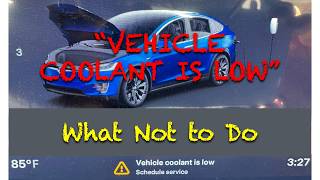
- On-Screen Warning Messages: This is the most common sign. You may see alerts like "Thermal system requires service," "Thermal performance is degraded," "Vehicle may not restart," or "Vehicle Coolant Is Low." 🎬 See what to avoid when you get a low coolant warning. These messages indicate the car's computer has detected a problem with coolant flow or temperature regulation.
- Reduced Performance and Slower Charging: To prevent overheating the battery or drive unit, the vehicle's software will limit motor power, resulting in slower acceleration. It will also significantly slow down or completely disable DC fast charging (Supercharging), as this process generates a large amount of heat.
- Visible Coolant Leaks: The valve body itself is a frequent source of leaks. You may find a puddle of blue or pink/orange fluid under the front of the car. The leak often originates from the plastic housing of the valve, which can crack over time.
- Inconsistent Cabin Heating or A/C: Because the valve also directs coolant for the climate control system, a failure can lead to weak or nonexistent heating in cold weather or poor air conditioning performance.
- Unusual Noises: While more commonly associated with failing coolant pumps, a malfunctioning valve system can contribute to clicking or whirring sounds from the front of the vehicle as pumps struggle against a blockage.
Known Issues and Common Failure Points (2012-2021)
The 4-way coolant valve, part number family 6007370-xx-x, is a known weak point on these models. The primary failure modes are:
- Cracked Plastic Housing: The most common issue is the development of hairline cracks in the valve's plastic body, leading to slow coolant leaks. These leaks can drip onto other components and, if ignored, will eventually lead to low coolant levels that trigger warnings.
- Internal Seizure: The valve can get stuck in one position. This may not cause an external leak, but it prevents the system from properly routing coolant, leading to overheating alerts and performance degradation.
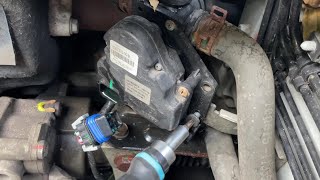
- Part Revisions: Tesla has released several updated versions of this valve, with part numbers ending in different letters (e.g., from -B to -F). 🎬 Watch this step-by-step DIY 4-way valve replacement guide. Later revisions like 'F' are intended to be more durable. When replacing the part, it is always recommended to use the latest available revision.
Related Concern: While not a failure of the control valve itself, owners of 2012-2020 Model S and Model X vehicles with the Large Drive Unit (LDU) should be aware of a more serious potential issue: internal coolant leaks into the drive unit. This is a separate problem caused by a seal failure inside the motor. If you have a persistent, untraceable coolant loss, it is critical to have a qualified technician investigate for an internal leak, as this can lead to catastrophic drive unit failure.
Buying a Used Coolant Control Valve: What to Check
A recycled OEM coolant valve can be a cost-effective solution, as the part itself is relatively simple. However, careful inspection is crucial.
- Verify the Part Number: Double-check that the part number matches one of the compatible numbers for your vehicle. Aim for the latest revision possible (e.g., 6007370-00-F over 6007370-00-B).
- Inspect for Cracks: Meticulously examine the entire plastic housing, especially around the hose connections and the seams where the parts of the valve are joined. Look for any fine lines or visible cracks.
- Check for Leak Residue: Look for white or blue, crusty residue on the outside of the valve. This is a tell-tale sign of a past leak. Pay close attention to the area around the electrical connector, as coolant leaking into the pins can cause electrical faults.
- Examine Hose Connections: Ensure the plastic nozzles where the hoses connect are not brittle, chipped, or cracked. The stress of hose clamps can damage these points.
- Electrical Connector: The electrical connector pins should be clean, straight, and free of any corrosion or moisture.
Replacement Overview & Difficulty
- Difficulty: 3/5 (Moderate)
- Estimated Time: 2-4 hours for a proficient DIY mechanic.
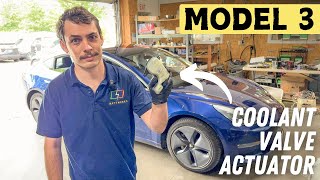
- Process: The valve is located under the front trunk (frunk) tub. Replacement involves removing the frunk liner and tub, clamping off the four coolant hoses to minimize fluid loss, disconnecting the electrical connector, unbolting and swapping the valve, and then reassembling. 🎬 Watch a mechanic replace the 4-way coolant valve.
Critical Step: Coolant Air Purge. After replacing the valve and topping off the coolant, you MUST perform a "Coolant Air Purge" procedure. This is done through the vehicle's Service Mode on the main screen. This procedure cycles all the coolant pumps and valves to force any trapped air out of the system. Failure to do this will leave air pockets, which can prevent proper cooling and lead to serious damage to the battery or drive units.
Cost of Replacement
| Part/Service | Estimated Cost |
|---|---|
| New OEM Part | $75 - $150 |
| New Aftermarket Part | $60 - $190 |
| Used OEM Part | $45 - $100 |
| Shop Labor | $300 - $600 |
| Dealer Replacement (Total) | $800 - $1,600 (may include full system diagnostic) |
Frequently Asked Questions (FAQ)
What type of coolant do I use for a 2012-2021 Model S or Model X?
These vehicles use a blue-colored G-48 ethylene glycol-based coolant. It is important to use the correct specification to ensure compatibility with the system's materials and provide proper corrosion protection. Tesla officially states the coolant should not need replacement for the life of the vehicle, but leaks obviously require a top-off or refill.
Can I drive with a failing coolant valve?
It is not recommended. While the car may be drivable for short distances, you risk overheating the battery and/or drive unit. This can lead to permanent degradation of the battery's capacity and, in a worst-case scenario, complete failure of very expensive components. The car will actively limit performance to protect itself, making it slow and unable to fast charge.
Is the "Coolant Air Purge" procedure really necessary?
Yes, it is absolutely critical. Any time the cooling system is opened and coolant is lost, air gets in. The air purge procedure, accessible in Service Mode, is the only way to properly bleed the complex cooling circuits. Skipping this step will result in air pockets that cause inadequate cooling and can lead to component failure.
My car says the coolant is low, but I don't see a leak. What could it be?
While the control valves are a common leak source, coolant can also leak from hoses, the radiator, or coolant pumps. In older Model S/X vehicles, a more serious possibility is a slow internal leak into the Large Drive Unit (LDU), which will not leave a puddle on the ground. If you are losing coolant but cannot find an external leak, it is essential to have the vehicle inspected by a qualified technician.
Helpful Videos


Technical Specifications
OEM Part Numbers: 6007370-00-A 6007370-00-B 6007370-00-E 6007370-00-F 6007370-50-E 600737000B 103081600E 147414200C 147661800C 147934400B 148648900B 148649000B
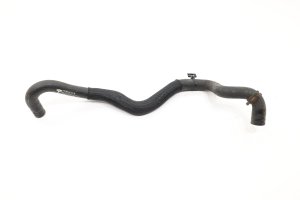
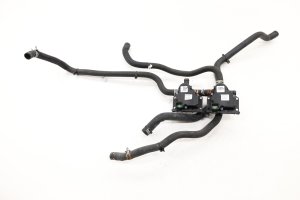
4-way electronically actuated valve for directing coolant flow. Uses blue G-48 specification coolant.
We Have This Part in Stock

The information in this article is provided for general reference and educational purposes only. Vehicle specifications, procedures, and part compatibility can vary by production date, trim level, and region. Always consult your vehicle's factory service manual and verify part numbers before purchasing or performing repairs. Safety-critical components such as airbags, seat belts, and braking systems should be installed by a qualified professional.
- Tesla Model S:
- Tesla Model X:
- TESLA TESLA MODEL S:
- 🎬 Helpful Videos
- 🛍️ Shop This Part
- What is the Coolant Control Valve and What Does It Do?
- Symptoms of a Failing Tesla Coolant Valve
- Known Issues and Common Failure Points (2012-2021)
- Buying a Used Coolant Control Valve: What to Check
- Replacement Overview & Difficulty
- Cost of Replacement
- Frequently Asked Questions (FAQ)
- 🎟️ Get 5% Off