

2004-2009 LaCrosse, Impala, Grand Prix Coolant Reservoir: Leaks, Cracks & Replacement
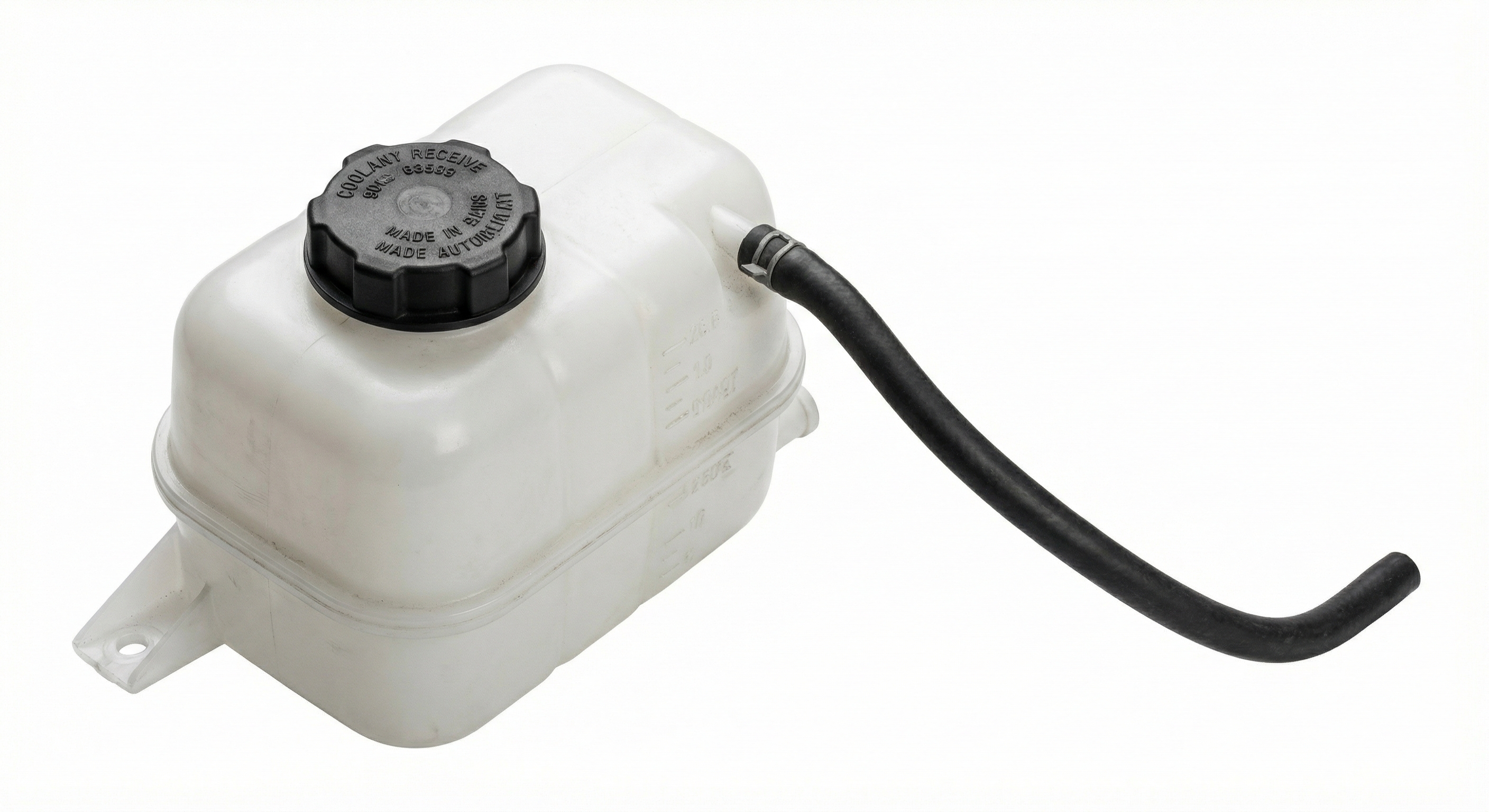
This guide covers the common failure points, symptoms, and replacement costs for the engine coolant reservoir in the Buick LaCrosse, Buick Allure, Chevrolet Impala, Chevrolet Monte Carlo, and Pontiac Grand Prix.
- The most common failure is the plastic tank cracking from age and heat, causing coolant leaks and potential overheating.
- On vehicles with the 3.8L V6, check for leaking plastic coolant elbows near the alternator before condemning the reservoir, as this is a very common issue.
- Replacement is a simple DIY job, typically requiring only a 10mm socket and pliers, taking less than an hour.
- Always use a DEX-COOL compatible coolant and consider replacing the reservoir cap along with the tank to ensure the system holds pressure correctly.
Symptoms of a Failing Coolant Reservoir
When the coolant reservoir fails, it can lead to serious engine problems. The signs are usually clear and should be addressed immediately to prevent overheating. Here are the most common symptoms for the 2005-2009 Buick LaCrosse, 2005-2009 Buick Allure, 2004-2005 Chevrolet Impala, 2004-2005 Chevrolet Monte Carlo, and 2004-2008 Pontiac Grand Prix.
- Visible Coolant Leaks: This is the most obvious sign. You may find puddles of green, orange, or pink fluid under the front of your car. The plastic tank can develop hairline cracks from age and constant exposure to heat and pressure, causing slow or fast leaks.
- Constantly Low Coolant Level: If you have to add coolant frequently, but can't see a large puddle, you may have a small crack in the reservoir or a faulty cap that is allowing coolant to evaporate as steam.
- Engine Overheating: A leaking reservoir means less coolant in the system. When the coolant level drops too low, the engine can't cool itself effectively, causing the temperature gauge to climb into the red zone. 🎬 Watch: How to stop your 3800 engine from overheating. This is a critical symptom that can lead to severe engine damage if ignored.
- Sweet Smell of Antifreeze: When coolant leaks onto hot engine components, it burns off and produces a distinct sweet smell. If you notice this odor around your car, it's a strong indicator of a coolant leak.
- Visible Cracks or Stains on the Tank: Over time, the plastic of the reservoir becomes brittle and can turn yellow or brown. Look closely for hairline cracks, especially around the hose connections and seams. You might also see dried coolant residue or stains on the outside of the tank.
Pro Tip: A faulty reservoir cap can cause similar symptoms to a cracked tank. If the cap's seal is worn, it won't hold pressure, lowering the coolant's boiling point and allowing it to escape as steam. Always inspect the cap and consider replacing it when you replace the reservoir.
Vehicle-Specific Known Issues & TSBs
While the reservoir itself is a common failure point, these vehicles, particularly those with the 3.8L V6 engine, have other well-known coolant leak sources that can be mistaken for a bad reservoir.
Pontiac Grand Prix, Buick LaCrosse/Allure, Chevy Impala/Monte Carlo with 3.8L V6
A very common issue on the GM 3.8L V6 engine is the failure of the plastic coolant elbows. These two small plastic pipes connect the alternator bracket/tensioner assembly to the lower intake manifold. Over time, they become brittle and crack, causing a significant coolant leak. The leak is often located on the passenger side of the engine, and coolant may drip down the front of the engine or onto the subframe, making it seem like a reservoir or water pump leak. Upgraded aluminum elbows are available and are a highly recommended replacement.
These engines are also known for intake manifold gasket leaks, which can cause coolant to leak externally or, more seriously, internally into the engine oil.
Buick LaCrosse (2006)
General Motors issued Technical Service Bulletin (TSB) #3794 for some 2006 Buick LaCrosse models regarding a coolant leak at the rear of the engine. While not directly related to the reservoir, it's another potential leak point to be aware of during diagnosis.
Recalls
There are no specific recalls issued by the NHTSA for the engine coolant reservoir on these models. However, several recalls exist for other issues, including potential engine oil leaks onto the exhaust manifold on the 2004-2008 Pontiac Grand Prix and 2004-2005 Chevrolet Impala and Monte Carlo, which could pose a fire risk.
Buying a Used Engine Coolant Reservoir
A used OEM coolant reservoir can be a reliable and cost-effective alternative to a new part, especially since the original GM parts are largely discontinued. However, careful inspection is key to getting a good part.
- Inspect for Cracks: Thoroughly check the entire surface for hairline cracks, paying close attention to the seams, mounting points, and the necks where the hoses connect. Hold it up to a light to make any fractures more visible.
- Check for Brittleness and Discoloration: Avoid reservoirs that are excessively yellowed, brown, or feel brittle. Healthy plastic will have some minor discoloration but should not be dark or feel like it could snap easily.
- Verify Hose Connections: Ensure the hose connection points are not chipped, cracked, or warped. A poor seal here will cause a leak.
- Check the Cap Sealing Surface: Make sure the threaded area for the cap is in perfect condition with no damage, so the new or existing cap can seal properly and hold pressure.
- Engine Compatibility: Double-check that the reservoir is from a vehicle with the same engine. As noted, fitment varies by engine size for these models.
Why Used OEM vs. New Aftermarket? While new aftermarket reservoirs are inexpensive, they can sometimes be made from lower-quality plastic that may not withstand under-hood heat and pressure cycles as well as the original OEM part. A good-condition used OEM reservoir often provides a better fit and greater long-term durability.
Installation Guide
Replacing the coolant reservoir is a straightforward job suitable for a DIY mechanic with basic tools. The process is very similar across all listed vehicles.
Difficulty: 1 out of 5
Estimated Time: 30-45 minutes
- Let the Engine Cool:
Warning: Never open the cooling system when the engine is hot. The system is under pressure and can spray scalding coolant, causing serious burns.
- Drain Some Coolant (Optional): To minimize spillage, you can use a siphon or turkey baster to remove some coolant from the reservoir before you begin. Alternatively, place a drain pan under the reservoir to catch any spills.
- Disconnect Hoses: There are typically two hoses connected to the reservoir. Use pliers to squeeze the spring clamps and slide them down the hose, then carefully twist and pull the hoses off the reservoir connections.
- Unbolt the Reservoir: The reservoir is usually held in place by two 10mm bolts at the top. Remove these bolts. The bottom of the reservoir may sit on a stud or clip into a bracket on the strut tower.
- Remove the Old Reservoir: Lift the reservoir straight up and out of the engine bay.
- Install the New Reservoir: Place the new or used reservoir into position, ensuring it is properly seated at the bottom. Reinstall and tighten the mounting bolts.
- Reconnect Hoses: Attach the hoses to the new reservoir and secure them with the spring clamps.
- Refill and Bleed the System: Fill the reservoir to the 'COLD' fill line with a 50/50 mix of DEX-COOL approved coolant and distilled water. Leave the cap off, start the engine, and turn the heater on high. Let the engine run until it reaches operating temperature, adding more coolant as the level drops and air bubbles escape. Once the level is stable and no more bubbles appear, replace the cap. Check the level again after the engine has cooled completely.
Cost Breakdown
The cost to replace the coolant reservoir is relatively low, especially if you do the work yourself.
| Part/Service | Estimated Cost | Notes |
|---|---|---|
| New OEM | $90 - $150+ | Most original part numbers are discontinued. Price is an estimate based on similar GM parts. |
| New Aftermarket | $35 - $50 | Widely available from brands like Dorman (part #603-109). |
| Used OEM | $25 - $45 | A cost-effective option, but requires careful inspection before purchase. |
| Shop Labor | $60 - $125 | Typically 0.5 to 1.0 hours of labor. |
Frequently Asked Questions (FAQ)
Can I repair a cracked coolant reservoir?
No, it is not recommended to repair a cracked coolant reservoir. Adhesives and epoxies will not hold up to the constant pressure and temperature changes within the cooling system. Replacement is the only safe and reliable solution.
What kind of coolant should I use in these vehicles?
These GM vehicles require a coolant that meets the DEX-COOL specification. It is typically orange or pink. Always mix it 50/50 with distilled water unless you are using a pre-mixed formula.
Is a leaking coolant reservoir dangerous to drive with?
Yes, but the risk depends on the severity of the leak. A small leak can be managed by topping off the coolant daily while you wait for a new part, but a large leak can cause the engine to overheat quickly, leading to catastrophic damage like a blown head gasket. It is best to replace it as soon as possible.
How do I know if the reservoir cap is bad and not the tank?
Visually inspect the cap's rubber gasket for cracks or damage. If you are losing coolant but see no visible leaks from the tank or hoses, a faulty cap is a likely culprit. A pressure test of the cooling system can confirm if the cap is failing to hold its rated pressure. Since caps are inexpensive, it's good practice to replace the cap whenever you replace the reservoir.
Helpful Videos
Technical Specifications
OEM Part Numbers: 10336881 10349231 10353392 15219341 15820110 15913154 25924048
Pressurized reservoir with a cap rating of 15 PSI. Material: Plastic.
We Have This Part in Stock

The information in this article is provided for general reference and educational purposes only. Vehicle specifications, procedures, and part compatibility can vary by production date, trim level, and region. Always consult your vehicle's factory service manual and verify part numbers before purchasing or performing repairs. Safety-critical components such as airbags, seat belts, and braking systems should be installed by a qualified professional.
- Buick LaCrosse:
- Chevrolet Impala:
- Buick Allure:
- Chevrolet Monte Carlo:
- Pontiac Grand Prix:
- 🎬 Helpful Videos
- 🛍️ Shop This Part
- Symptoms of a Failing Coolant Reservoir
- Vehicle-Specific Known Issues & TSBs
- Pontiac Grand Prix, Buick LaCrosse/Allure, Chevy Impala/Monte Carlo with 3.8L V6
- Buick LaCrosse (2006)
- Recalls
- Buying a Used Engine Coolant Reservoir
- Installation Guide
- Cost Breakdown
- Frequently Asked Questions (FAQ)
- 🎟️ Get 5% Off