

1996-2007 Taurus & Sable Coolant Reservoir: The Critical DOHC vs. OHV Engine Guide
This guide details the common failure points and explains the crucial difference between coolant reservoirs for the DOHC Duratec and OHV Vulcan engines in the Ford Taurus and Mercury Sable.
- You MUST correctly identify your engine as either the 3.0L OHV (Vulcan) or 3.0L DOHC (Duratec) to get the correct reservoir.
- Failure is caused by age-brittled plastic; common symptoms are leaks, overheating, and a sweet coolant smell.
- When buying a used reservoir, inspect it meticulously for hairline cracks and discoloration, as it is prone to failure.
- Replacement is a simple DIY job, but always replace the radiator cap at the same time for best results.
Key Compatibility Warning: DOHC vs. OHV Vulcan Engines
Warning: The single most important factor when replacing the coolant reservoir on a 1996-2007 Ford Taurus or 1996-2005 Mercury Sable is identifying your engine. There are two different 3.0L V6 engines, and they use different coolant reservoirs. Installing the wrong one will lead to leaks, improper fit, and potential engine damage.
These vehicles were available with two distinct 3.0L V6 engines:
- 3.0L OHV (Overhead Valve) "Vulcan" V6: This was the standard engine in most models. It is a 12-valve pushrod engine.
- 3.0L DOHC (Dual Overhead Cam) "Duratec" V6: This was an optional, more powerful 24-valve engine.
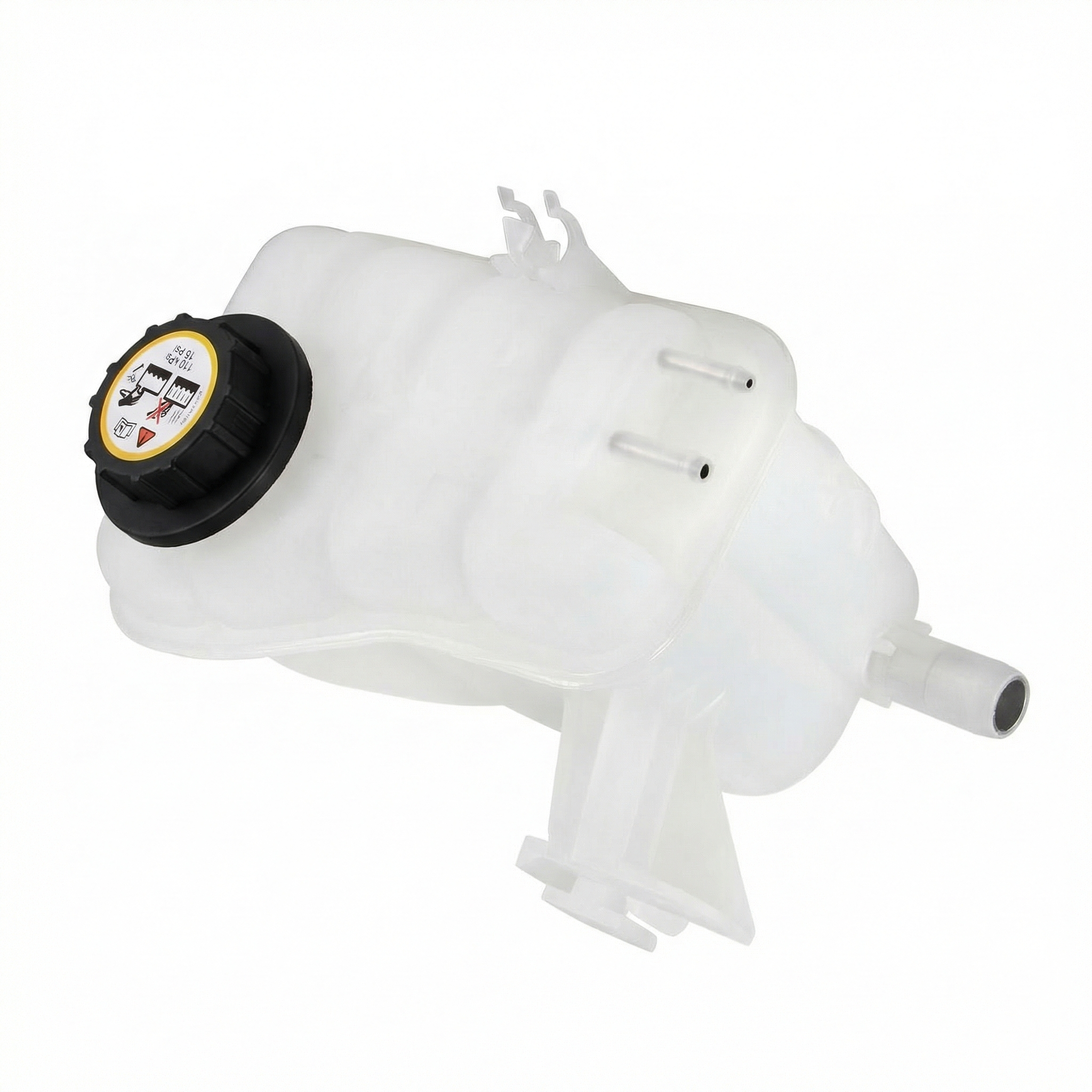
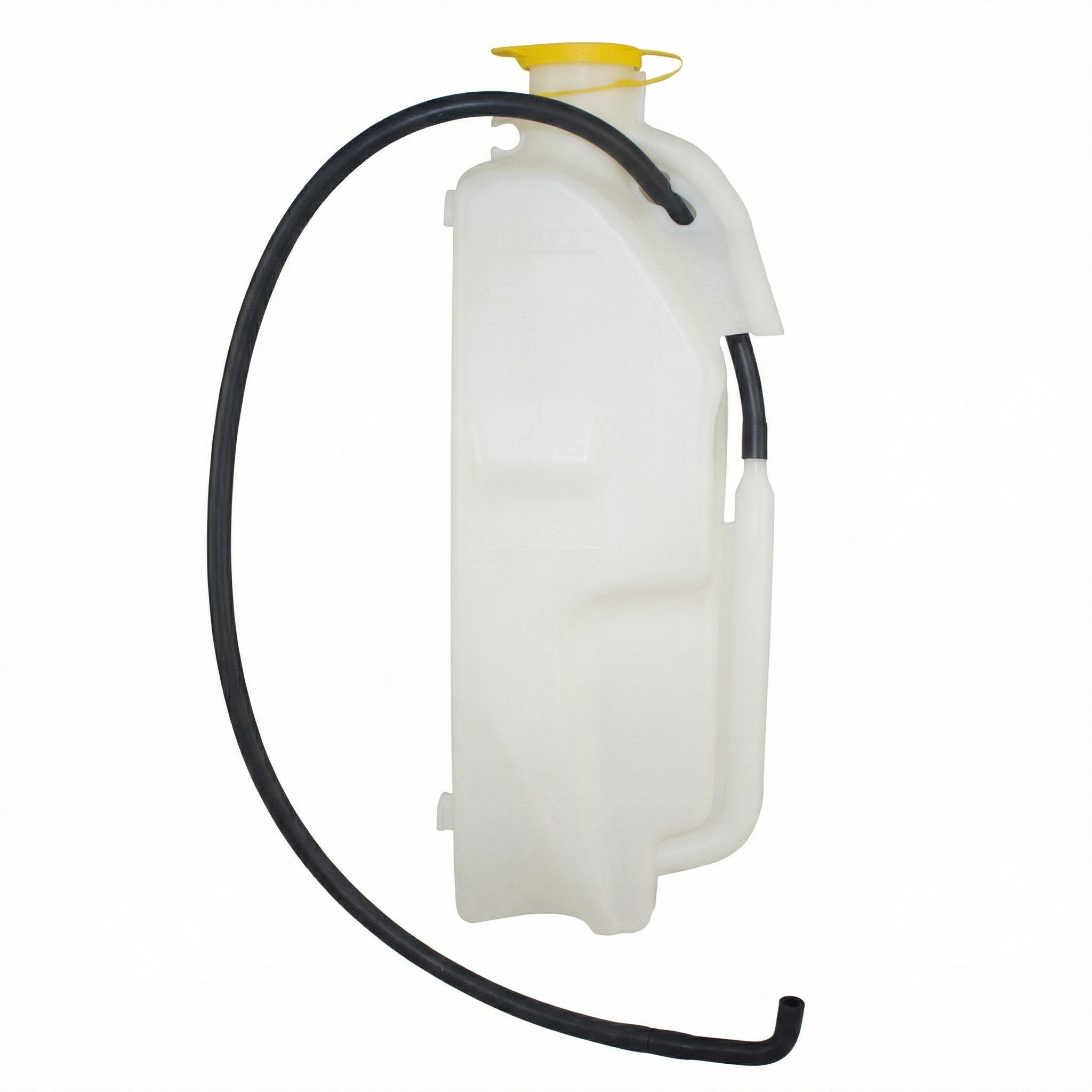
The reservoirs have different shapes and hose connection points. You MUST buy the part that matches your specific engine.
How to Tell Which Engine You Have
The easiest way to identify your engine is by looking at the top of it:
- The DOHC Duratec engine typically has a large plastic engine cover that says "DOHC 24-VALVE" or "Duratec" on it. The intake manifold is prominent and often made of aluminum or composite material. 🎬 See a Duratec V6 engine and common leak points.
- The OHV Vulcan engine has a much simpler, older-looking design. The top of the engine is dominated by a cast metal intake manifold, and it does not have a large plastic cover advertising the valve train.
If you are still unsure, the 8th digit of your Vehicle Identification Number (VIN) can also identify the engine. A Ford dealer or an online VIN decoder can confirm this for you.
Symptoms of a Failing Coolant Reservoir
The plastic used for these reservoirs becomes brittle over time due to thousands of heat cycles. Failure is common and usually presents with one or more of these symptoms:
- Visible Coolant Leaks: This is the most obvious sign. You may see puddles of green, yellow, or orange fluid under the front passenger side of the car. Leaks often start as hairline cracks in the plastic body of the tank or at the hose connection nipples. 🎬 Watch a quick video on fixing a Taurus coolant leak.
- Constant Low Coolant Level: If you have to add coolant frequently but can't find an obvious leak, the reservoir may have a small crack that only leaks when the system is hot and pressurized.
- Engine Overheating: A leaking reservoir will lead to a loss of coolant, which will cause the engine to overheat. This can cause severe and expensive engine damage if not addressed immediately.
- Sweet Smell: The distinct, sweet smell of antifreeze around the car, especially after driving, is a sure sign of a coolant leak.
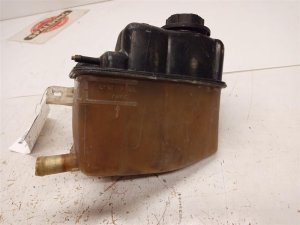
- Visible Cracks or Discoloration: The original light-colored plastic will often turn yellow or brown with age. You may also see small, web-like cracks forming, especially around the seams and hose connections.
Buying a Used Engine Coolant Reservoir: What to Check
Because new aftermarket parts for this application are inexpensive, buying used is only recommended if you can inspect the part carefully. A high-quality used OEM part can still be a better choice than a cheap, poorly made aftermarket one. Here's what to look for:
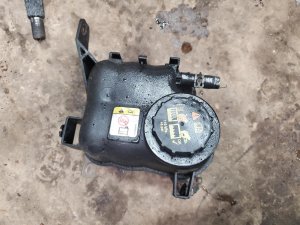
- Check for Cracks: This is the most critical inspection. Hold the tank up to a light and meticulously inspect all surfaces, especially the seams where the top and bottom halves are joined, and around each hose nipple. Flex the tank slightly to reveal any hidden hairline cracks.
- Inspect the Plastic Quality: Avoid any reservoir that is dark brown, heavily yellowed, or feels chalky. This indicates the plastic is old, brittle, and likely to fail soon. A good used part should be closer to its original off-white color.
- Verify Mounting Points: Ensure all mounting tabs and bolt holes are intact and not cracked or broken.
- Check the Sensor Connector: Look at the electrical connector for the coolant level sensor. Make sure the pins are not corroded, bent, or broken.
- Confirm Engine Type: Double and triple-check that the used reservoir came from a vehicle with the exact same engine (OHV Vulcan or DOHC Duratec) as yours. Compare the hose connection locations to your old part.
Replacement Overview
Replacing the coolant reservoir is a relatively simple job that most DIY mechanics can complete in about an hour.
- Difficulty: 2/5
- Tools Needed: Pliers (spring clamp pliers recommended), 10mm socket and ratchet, drain pan, funnel.
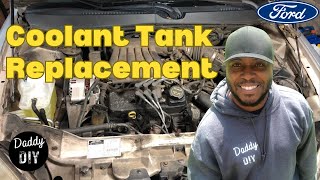
- Process: When the engine is completely cool, place a drain pan underneath. Use pliers to loosen the clamps and remove the two or three hoses connected to the tank. Unbolt the two 10mm bolts holding the tank to the chassis and lift it out. Installation is the reverse of removal. 🎬 Watch this step-by-step guide to replacing your coolant reservoir. After installing the new tank, you will need to refill and bleed the cooling system to remove any air pockets.
Known Issues, Recalls, and TSBs
Searches of the National Highway Traffic Safety Administration (NHTSA) database did not find any specific recalls or technical service bulletins (TSBs) directly related to the engine coolant reservoir for the 1996-2007 Ford Taurus or 1996-2005 Mercury Sable. Failures of this part are typically attributed to age and normal wear and tear on the plastic materials.
Cost Comparison
| Part Type | Estimated Price Range |
|---|---|
| New OEM | $45 - $75 |
| New Aftermarket | $20 - $70 |
| Used OEM | $25 - $50 |
| Shop Labor | $95 - $140 |
Part Number Reference
The following OEM part numbers are associated with these vehicles. Always verify fitment with a dealer or trusted parts supplier using your VIN before purchasing.
- 1F1Z-8A080-AA: Fits 2000-2007 Taurus and 2000-2005 Sable with the 3.0L OHV (Vulcan) engine.
- F6DZ-8A080-B: Fits 1996-1999 Taurus and Sable. It is critical to confirm if this is for the OHV or DOHC engine for these years.
- Other associated numbers include: YF1Z-8A080-AA, YF1Z-8A080-AD, 1F128A080BA, 3F138A080BA, 3F1Z8A080EA, F6DZ8100A, YF128A080BB.
Frequently Asked Questions (FAQ)
Can I just repair or patch a crack in my coolant reservoir?
No. The cooling system is under pressure (typically 13-16 PSI), and no adhesive or sealant is designed to provide a safe, permanent repair on this type of aged plastic. Attempting a repair will fail and risks sudden coolant loss, which can lead to severe engine overheating. Replacement is the only safe and reliable solution.
Does the new reservoir come with a cap?
Typically, no. Both OEM and aftermarket reservoirs are usually sold without a new radiator cap. The cap is a critical pressure-regulating component. If your old cap is more than a few years old, it is highly recommended to replace it at the same time as the reservoir to ensure the system operates at the correct pressure.
Is the coolant level sensor included?
Most new reservoirs, both OEM and quality aftermarket, include a new, integrated coolant level sensor. When buying, especially a used part, always verify that the sensor and its connector are present and in good condition.
What type of coolant should I use to refill the system?
For these model years, Ford specified a conventional green or yellow coolant. Always check your owner's manual or a reliable service guide for the exact specification. Use a 50/50 mix of the specified antifreeze and distilled water. Using the wrong type of coolant can cause corrosion and other system problems.
Helpful Videos
Technical Specifications
OEM Part Numbers: 1F1Z-8A080-AA F6DZ-8A080-B YF1Z-8A080-AA YF1Z-8A080-AD 1F128A080BA 3F138A080BA 3F1Z8A080EA F6DZ8100A YF128A080BB
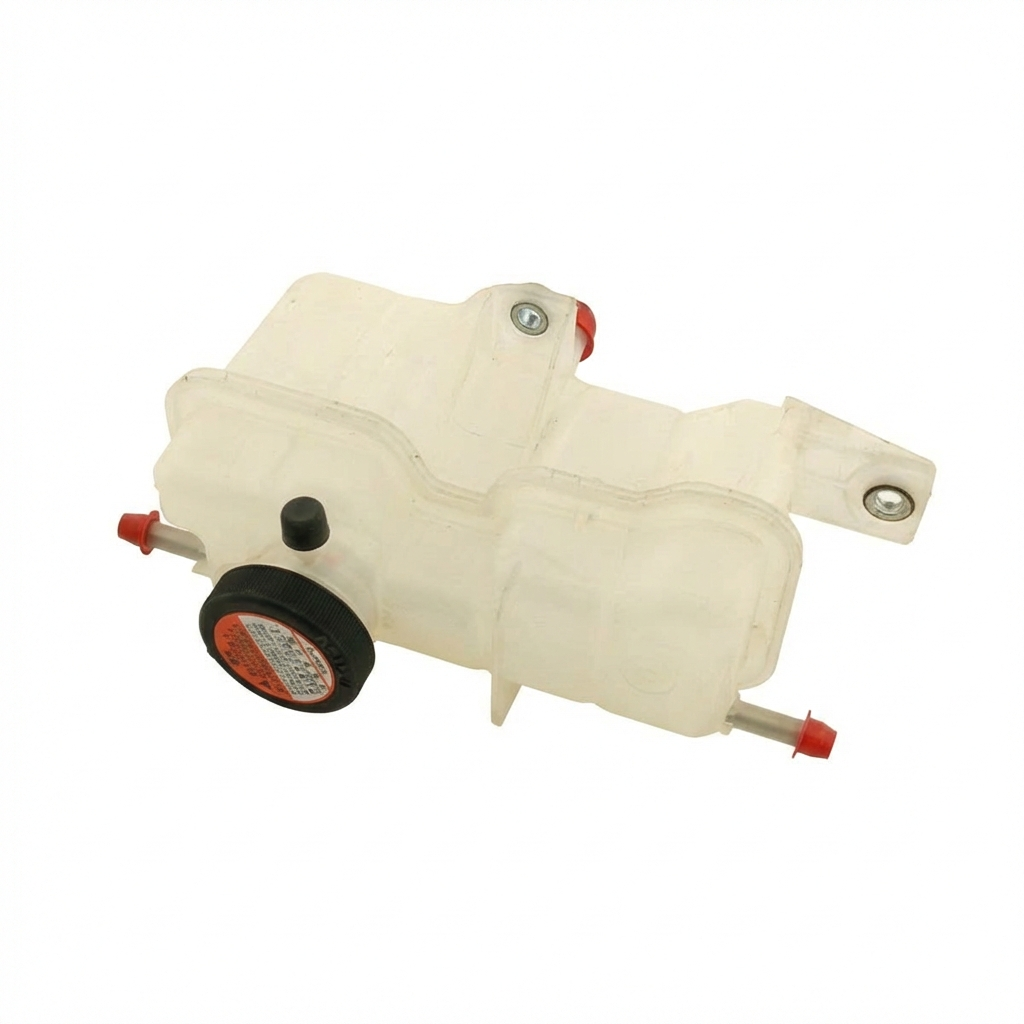
Material: Plastic. Includes integrated coolant level sensor. Pressurized design (Degas Bottle).
We Have This Part in Stock

The information in this article is provided for general reference and educational purposes only. Vehicle specifications, procedures, and part compatibility can vary by production date, trim level, and region. Always consult your vehicle's factory service manual and verify part numbers before purchasing or performing repairs. Safety-critical components such as airbags, seat belts, and braking systems should be installed by a qualified professional.
- Ford Taurus:
- Mercury Sable:
- 🎬 Helpful Videos
- 🛍️ Shop This Part
- Key Compatibility Warning: DOHC vs. OHV Vulcan Engines
- How to Tell Which Engine You Have
- Symptoms of a Failing Coolant Reservoir
- Buying a Used Engine Coolant Reservoir: What to Check
- Replacement Overview
- Known Issues, Recalls, and TSBs
- Cost Comparison
- Part Number Reference
- Frequently Asked Questions (FAQ)
- 🎟️ Get 5% Off