

2011-2012 Liberty & 2011 Nitro Fan Clutch Failure: Diagnosing Overheating and Fan Roar
This guide covers the common failure symptoms, diagnosis, and replacement of the engine cooling fan clutch for the 2011-2012 Jeep Liberty and 2011 Dodge Nitro.
- The most common failure symptom is engine overheating at idle or in slow traffic.
- This part fits the 3.7L V6 in the Jeep Liberty, but both the 3.7L and 4.0L V6 in the Dodge Nitro.
- A seized clutch causes a constant loud roar; a non-engaging clutch causes overheating.
- Replacement requires a special fan clutch wrench set to remove the large 36mm nut.
Symptoms of a Failing Fan Clutch
A bad fan clutch can fail in two primary ways: it can either fail to engage (leading to overheating) or seize and stay permanently engaged (leading to excessive noise and reduced power). Here are the most common symptoms to watch for.
- Engine Overheating at Low Speeds or Idle: This is the most critical symptom. If the fan clutch doesn't engage when the engine is hot, it won't pull enough air through the radiator in low-airflow situations like city traffic or while idling. The temperature gauge may climb steadily when stopped but cool down once you get back to highway speeds.
- Loud, Roaring Fan Noise: If the fan clutch seizes, it will be locked to the engine's speed at all times. This creates a loud roar that gets louder with engine RPM and doesn't go away even when the engine is cold. This constant load also hurts fuel economy and acceleration.
- Poor Air Conditioning Performance at Idle: The A/C condenser sits in front of the radiator and also needs airflow to work effectively. A fan clutch that isn't engaging at idle will cause poor A/C performance, but it may improve once the vehicle is moving.
- Visible Fluid Leakage: The clutch is filled with a thick silicone fluid. If the internal seal fails, this fluid will leak out. Look for an oily, dusty residue on the body of the clutch housing. Radial streaks of dirt and oil slung outwards from the center are a clear sign of a leak.
- Excessive Fan Wobble: With the engine off, grab the top and bottom of the fan blade and try to wiggle it back and forth. More than a very slight amount of play (about 1/8 inch) indicates the bearing inside the clutch is worn out and the part needs to be replaced.
Diagnosing the Fan Clutch
Before buying a replacement, you can perform a few simple tests with the engine off to confirm the fan clutch is the problem.
- The Cold Spin Test: When the engine is completely cold, try to spin the fan by hand. It should turn with some smooth resistance. If it spins more than 1-3 times freely, the clutch has likely lost its fluid and failed. If it's very stiff and hard to turn, it may be seized.
- The Hot Spin Test: Warm the engine to its normal operating temperature, then shut it off. Carefully (the engine will be hot!) try to spin the fan again. It should now have significantly more resistance and be very difficult to turn by hand. If it spins as easily as it did when cold, it is not engaging and has failed.
- The Shutdown Test: Have a helper shut the engine off while you watch the fan. A good fan clutch should cause the fan to stop spinning almost immediately (within 1-2 seconds). If the fan freewheels for several seconds after the engine is off, it is bad.
Compatibility Warning: This fan clutch (Mopar part #68088545AA) fits all 2011 Dodge Nitro models (with either the 3.7L or 4.0L V6 engine). However, for the 2011-2012 Jeep Liberty, it ONLY fits models with the 3.7L V6 engine. Additionally, some base model Libertys may have been equipped only with an electric fan from the factory; the mechanical fan clutch was often part of a heavy-duty cooling or tow package. Always verify if your vehicle has a mechanical fan clutch before ordering parts.
Buying a Used Engine Cooling Fan Clutch
Since the original Mopar part is often listed as discontinued, a quality used OEM fan clutch is an excellent alternative to a new aftermarket part. Aftermarket clutches can have issues with incorrect temperature engagement or premature failure. Here’s what to inspect on a used part:
- Check for Leaks: The most important check. Look for any signs of oily residue on the clutch body. A clean, dry clutch is a good sign. A dirty, greasy clutch indicates the internal silicone fluid has leaked out, rendering it useless.
- Check for Bearing Play: Hold the main body of the clutch and try to wiggle the threaded mounting hub. There should be no side-to-side or in-and-out play. Any wobble means the internal bearing is shot.
- Perform the Spin Test: Even off the vehicle, you can feel for resistance. The clutch should not spin freely like a skateboard wheel. It should have a smooth, viscous drag.
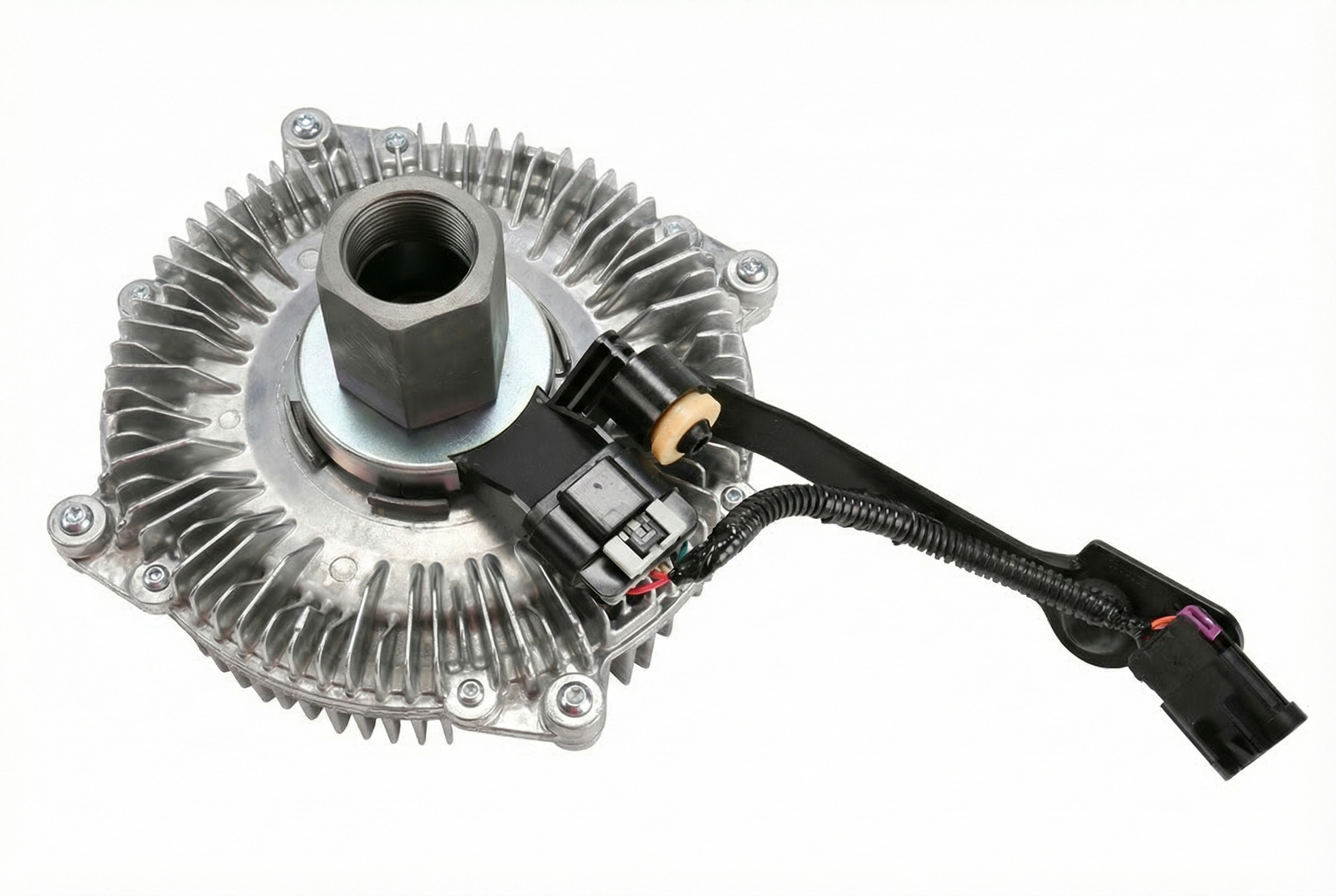
- Inspect the Bi-Metallic Strip: Look at the small, coiled spring on the front of the clutch. Ensure it is intact, not damaged, and free of corrosion or debris that could prevent it from sensing temperature correctly.
Replacement Overview & Difficulty
- Difficulty Rating: 3 out of 5
- Estimated Time: 1.5 - 2.5 hours
- DIY Feasible: Yes, for those with the right tools.
Replacing the fan clutch is straightforward but can be challenging due to one specific step: removing the large nut that secures it to the water pump pulley. This nut is often extremely tight or seized.
Required Special Tools:
- Fan Clutch Wrench Set: This includes a large, thin 36mm wrench and a holding tool that fits into the bolts on the water pump pulley to keep it from turning. These can often be rented from auto parts stores.
- Hammer: Used to strike the wrench to break the nut loose.
The nut has standard right-hand threads, so you will turn it counter-clockwise (to the left when facing the engine) to loosen. The most difficult part is applying enough force while keeping the pulley from spinning. In severe cases, mechanics have had to use air hammer attachments or even heat from a torch to remove a seized clutch.
Pro Tip: After removing the old fan clutch, do not lay the new or used replacement part down horizontally. Keep it in a vertical position to ensure the internal fluid stays where it belongs and doesn't contaminate the bearing assembly.
Cost Comparison
| Part Source | Estimated Price Range |
|---|---|
| New OEM (Mopar) | $270 - $395 (May be discontinued) |
| New Aftermarket | $50 - $150 |
| Used OEM | $35 - $75 |
| Shop Labor Cost | $100 - $170 |
Frequently Asked Questions (FAQ)
Can I drive with a bad fan clutch?
It is not recommended. If the clutch has failed to engage, you risk severe engine overheating and damage, especially in stop-and-go traffic. If the clutch is seized, it puts a constant strain on the engine and water pump bearing, which can lead to other failures.
Are there any recalls for the fan clutch on the 2011-2012 Liberty or 2011 Nitro?
No. As of early 2026, there are no specific recalls or technical service bulletins (TSBs) from NHTSA for the engine cooling fan clutch on these vehicles. Recalls for these models typically involve airbags or other safety systems.
Why is my fan so loud all the time?
A fan that is constantly loud and sounds like a jet engine is a classic symptom of a seized fan clutch. The clutch is locked in the fully engaged position, causing the fan to spin at maximum speed continuously, even when the engine is cold and doesn't need that much cooling.
Is a heavy-duty fan clutch better?
For most users, the standard OEM clutch is sufficient. A heavy-duty or severe-duty clutch is designed to engage more aggressively and provide more cooling, which can be beneficial for vehicles that do a lot of heavy towing or operate in very hot climates. However, it may also create more fan noise and slightly reduce fuel economy due to the increased load on the engine.
Technical Specifications
OEM Part Numbers: 68088545AA
Thread Direction: Right-Hand (Counter-clockwise to loosen), Nut Size: 36mm
We Have This Part in Stock

The information in this article is provided for general reference and educational purposes only. Vehicle specifications, procedures, and part compatibility can vary by production date, trim level, and region. Always consult your vehicle's factory service manual and verify part numbers before purchasing or performing repairs. Safety-critical components such as airbags, seat belts, and braking systems should be installed by a qualified professional.
- Jeep Liberty:
- Dodge Nitro: