

2013-2018 Mazda Engine Cover Guide: CX-5, CX-3, Mazda 3 & 6
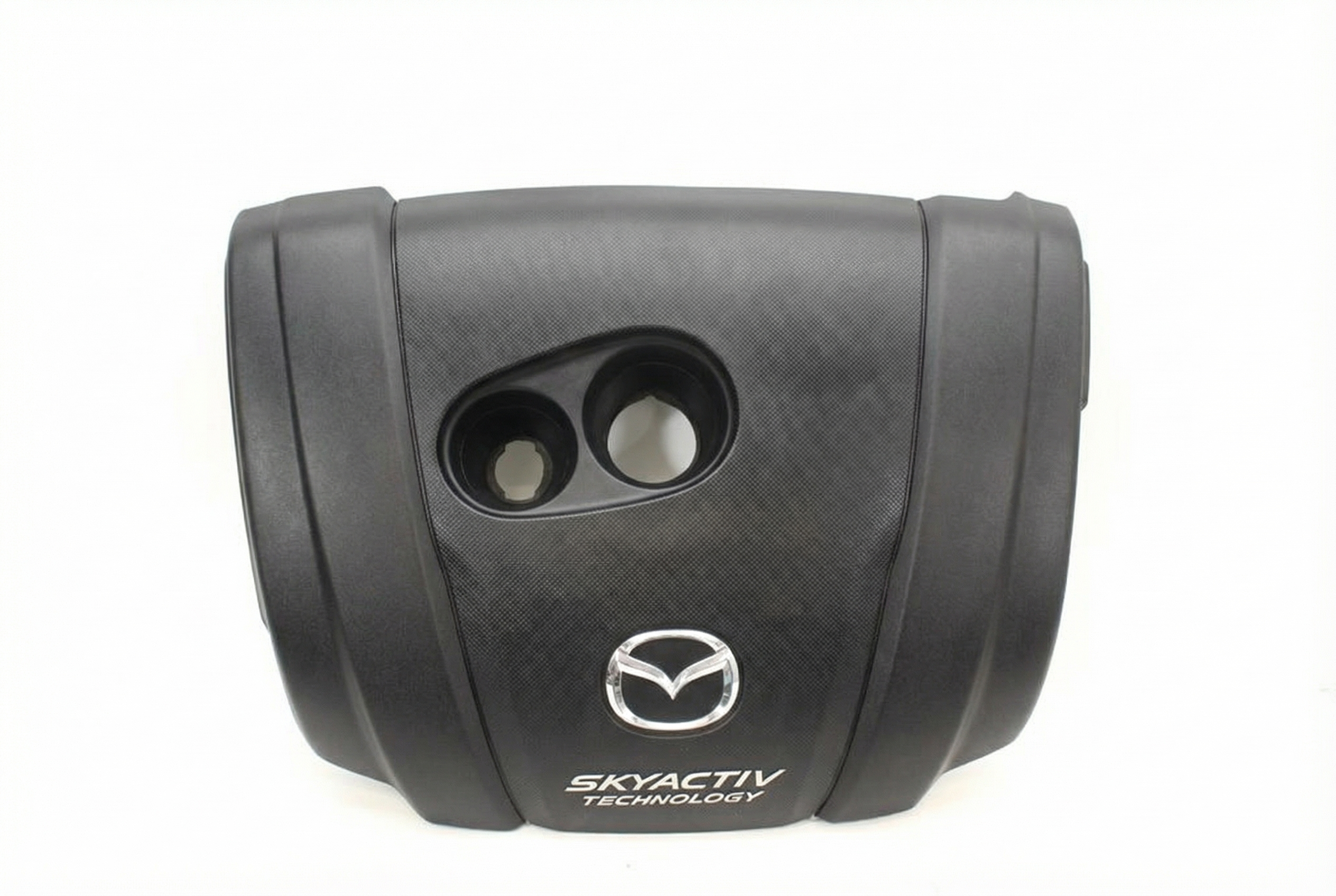
This guide covers the common issues, inspection points, and replacement facts for the Skyactiv engine cover on the Mazda CX-5, CX-3, Mazda 3, and Mazda 6.
- The most common failure is a rattling noise caused by broken mounting posts or deteriorating insulation.
- This cover is for 2.0L/2.5L non-turbo engines WITHOUT cylinder deactivation. It will not fit other engine types.
- Replacement is extremely easy, requiring no tools and taking less than a minute.
- A used OEM cover is a cost-effective option, but inspect the four mounting posts for cracks before buying.
Identifying Your Mazda Engine Cover

This guide applies to the plastic engine cover, sometimes called a "beauty cover," that sits on top of the engine. It is often confused with the more critical and expensive "valve cover" (the metal cover it attaches to) or the "timing cover" (on the side of the engine). This plastic cover is held on by four posts that press into rubber grommets and can be removed by hand without tools.
Compatibility Warning: This specific engine cover, part numbers PE11102F0 and PEAR-10-2F0, fits a range of Mazda vehicles equipped with the 2.0L or 2.5L non-turbo Skyactiv engine. Crucially, it does not fit models with cylinder deactivation, which was introduced on some models in later years, or the 2.5L Turbo engine, as these have different valve cover shapes and component layouts.
Symptoms of a Failing or Loose Engine Cover

Failure of a plastic engine cover is typically related to physical damage or age-related deterioration rather than mechanical or electrical issues.
- Rattling or Buzzing Noises: The most common symptom is a rattling or buzzing sound from the engine bay, especially noticeable at idle or certain RPMs. This is usually caused by a broken mounting post on the cover itself or a loose fit in the rubber grommets on the valve cover.
- Crumbling Insulation: Over time, the foam insulation on the underside of the cover can become brittle from engine heat and break down. You may find black or gray foam debris or dust on top of the engine when you remove the cover.
- Visible Cracks or Damage: The plastic can become brittle with age and may crack, especially if handled roughly during maintenance. Cracks often form around the mounting points.
Pro Tip: An engine rattle can have many causes, from a simple loose cover to more serious internal engine problems. Mazda has issued Technical Service Bulletins (TSBs) for tapping noises related to the valvetrain in these engines. If you hear a persistent tapping or rattling, remove the engine cover (it just pulls off) and start the engine. If the noise is gone, the cover was the culprit. If the noise remains, further diagnosis by a technician is recommended.
Buying a Used Engine Cover: What to Check

Since this is a durable, non-mechanical part, a used OEM engine cover is an excellent alternative to an expensive new one. Here’s what to inspect before buying:
- Check All Four Mounting Posts: Flip the cover over. Inspect the four plastic posts that stick out. Ensure none are cracked, broken off, or have been repaired with glue. A broken post is the most common reason for a cover to be replaced.
- Inspect the Plastic Body: Look for hairline cracks, especially around the mounting posts and the oil filler cap cutout. Minor scuffs are cosmetic, but deep cracks can worsen over time.
- Examine the Foam Insulation: Check the condition of the sound-deadening foam on the underside. It's normal for it to be slightly discolored, but it should be intact. If it's crumbling to the touch or large pieces are missing, you may want to find a better example, though the cover will still function without it.
- Verify the Part Number: If possible, check for the part number, typically molded into the plastic on the underside. Look for PE11102F0 or PEAR-10-2F0 to ensure you have the correct part for non-turbo, non-cylinder deactivation models.
Known Issues, TSBs, and Recalls

There are no recalls or specific Technical Service Bulletins (TSBs) for the plastic engine cover itself. However, owners should be aware of related issues that can be confused with a bad engine cover:
- TSB 01-006/20 & 01-002/21: These bulletins address a "tapping noise from the engine" on various Mazda models. The cause is identified as potential air bubbles in the hydraulic lash adjusters (HLAs). A DIYer might mistake this for a simple cover rattle.
- Valve Cover Gasket Leaks: The engine cover sits on top of the valve cover. A common maintenance item is replacing a leaking valve cover gasket. During this repair, the engine cover is removed. A mechanic might note that the engine cover's insulation is deteriorating.
- Timing Cover Leaks: Some newer Mazda models, particularly those with cylinder deactivation, have noted issues with oil leaks from the timing cover seal. This is a much more serious and expensive repair and should not be confused with the simple plastic engine cover.
Installation Procedure & Difficulty
- Difficulty: 1 out of 5 (Extremely Easy)
- Estimated Time: Less than 1 minute
- Tools Needed: None
Replacement is one of the simplest tasks you can perform on your vehicle.
- Removal: Firmly grip the sides of the engine cover and pull straight up. It will pop off the four rubber grommets holding it in place.
- Installation: Align the four posts on the new cover with the four rubber grommets on the valve cover. Make sure the cutout for the oil filler cap is aligned. Press down firmly on each corner until you feel or hear it snap into place.
Cost Comparison
The cost for an "Engine Front Cover Replacement" can be over $2,000, but this refers to the metal timing cover, a complex repair. The plastic engine cover discussed here is significantly cheaper.
| Part Type | Estimated Price Range |
|---|---|
| New OEM | $190 - $290 |
| New Aftermarket | $70 - $120 |
| Used OEM | $50 - $100 |
| Shop Labor (Installation) | $0 - $20 (Often done for free during other service) |
Frequently Asked Questions (FAQ)
Is it safe to drive without the engine cover?
Yes, it is completely safe. The engine cover is primarily for cosmetic and sound-dampening purposes. Driving without it will not harm your engine, though you may notice slightly more engine noise.
My cover's insulation is falling apart. What should I do?
This is a very common issue. You have a few options: you can remove the crumbling foam and run the cover without it, replace the insulation with a universal heat/sound-proof mat, or purchase a new/used cover. Simply removing the old foam is the easiest and most common solution.
Will this cover fit my 2018+ Mazda with cylinder deactivation?
No. Models with cylinder deactivation or turbocharging have a different engine and valve cover design, and this part will not fit. You must source the specific cover for your engine type.
I replaced my cover, but I still hear a rattle. What could it be?
If the noise persists after removing or securing the engine cover, the source is elsewhere. Check for loose heat shields around the exhaust manifold, or consider the possibility of an internal engine noise as described in Mazda's TSBs for valvetrain tapping. If the noise is a deeper knock or changes with engine speed, have it inspected by a professional immediately.
Helpful Videos
Technical Specifications
OEM Part Numbers: PE11102F0 PEAR-10-2F0
Material: Molded plastic with foam sound/heat insulation pad on the underside. Mounting: Four press-fit posts.
We Have This Part in Stock

The information in this article is provided for general reference and educational purposes only. Vehicle specifications, procedures, and part compatibility can vary by production date, trim level, and region. Always consult your vehicle's factory service manual and verify part numbers before purchasing or performing repairs. Safety-critical components such as airbags, seat belts, and braking systems should be installed by a qualified professional.
- Mazda CX-5:
- Mazda 3:
- Mazda CX-3:
- Mazda 6: