

Audi R8 & RS5 4.2L V8 Crankshaft: Rod Knock, Seizure, and Replacement Costs (2008-2015)
This guide covers the causes of catastrophic crankshaft failure in the high-revving 4.2L V8 and why a full engine replacement is often the only realistic solution.
- Crankshaft failure in the 4.2L V8 is almost always caused by oil starvation, not a defect in the part itself.
- The most common symptoms are a deep engine knock that increases with RPM or a completely seized engine that will not turn over.
- Due to extreme labor costs, replacing the entire engine with a good used assembly is usually more economical than replacing just the crankshaft.
- Known engine issues like timing chain guide wear and oil consumption can lead to the oiling problems that destroy the crankshaft if not addressed proactively.
Understanding Crankshaft Failure in the 4.2L V8
The crankshaft in the 4.2L V8 engine used in the 2008-2015 Audi R8 and 2013-2015 Audi RS5 is an incredibly robust, forged component. It very rarely fails due to a manufacturing defect. Instead, crankshaft damage is almost always a consequence of another problem, most commonly a lack of oil lubrication. When the oil pressure drops or the oil level is too low, the protective film of oil between the crankshaft journals and the connecting rod bearings is lost. This causes metal-on-metal contact, which rapidly overheats, melts, and destroys the bearings. This is known as a "spun bearing." Once the bearing fails, the connecting rod can hammer directly against the crankshaft, leading to catastrophic damage and engine seizure.
Compatibility Warning: This crankshaft fits the 4.2L V8 engine only. It does not fit the 5.2L V10 engine available in the Audi R8. Always verify your vehicle's engine before purchasing parts.
Symptoms of Crankshaft Failure
The signs of a failing crankshaft or related bearing issue are severe and should not be ignored. Continuing to drive the vehicle will cause further, irreparable engine damage.
- Deep Engine Knocking (Rod Knock): The most common symptom is a deep, rhythmic knocking or hammering sound coming from the lower part of the engine. This sound will increase in speed and volume as engine RPMs increase. This is often the sound of a failed connecting rod bearing hammering against the crankshaft.
- Engine Seizure: The engine may refuse to turn over at all, or it may crank very slowly and then stop abruptly. This happens when a failed bearing has welded itself to the crankshaft or when a broken connecting rod has jammed the engine's rotating assembly.
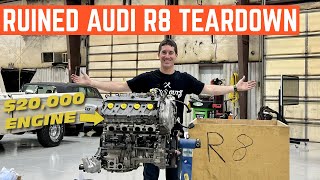
- Metal Shavings in Oil: When changing the oil, a clear sign of terminal engine failure is the presence of metallic glitter. 🎬 Watch: Tearing down a ruined R8 engine to see the damage. This is material from the destroyed bearings and potentially the crankshaft itself.
- Low Oil Pressure Warning Light: A flickering or constantly illuminated oil pressure light is a critical warning. It indicates that the engine is not receiving enough oil, which is the primary cause of bearing and crankshaft failure.
Known Vehicle-Specific Issues Leading to Failure
While the crankshaft itself is strong, other known issues with the 4.2L FSI V8 can lead to the oiling problems that cause crankshaft failure. Awareness of these issues is key to prevention.
Timing Chain System Wear
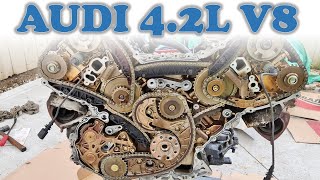
A widely documented issue with the 4.2L V8 is the wear of timing chain components, particularly the plastic guides and hydraulic tensioners. 🎬 See why these Audi V8 engines can be a disaster. The timing chain assembly is located at the back of the engine, requiring engine removal for service. If the plastic guides break, pieces can fall into the oil pan, get sucked into the oil pump pickup tube, and restrict oil flow. This starves the main and rod bearings of oil, leading directly to the type of failure that destroys a crankshaft.
Excessive Oil Consumption
Some 4.2L V8 engines are known to consume oil, sometimes as much as a quart every 1,000-3,000 miles, often due to piston ring design. If an owner does not check the oil level frequently and top it off, the level can drop low enough to cause oil starvation during cornering or acceleration, leading to bearing failure.
Pro Tip: Regularly check your engine oil level—at least every other fuel fill-up. Using the correct specification of high-quality synthetic oil and adhering to strict oil change intervals can help mitigate wear on timing components and ensure proper lubrication.
Buying a Used Engine Crankshaft
Because replacing just the crankshaft is an enormous job, it's rare to buy one separately unless you are a professional engine builder. If you do, extreme care must be taken during inspection. A damaged or out-of-spec used crankshaft will destroy a rebuilt engine instantly.
- Professional Inspection is a Must: Do not buy a used crankshaft unless it has been professionally inspected by a machine shop. This is not something that can be reliably checked by eye alone.
- Magnetic Particle Inspection (Magnaflux): This is the most important test. It uses a magnetic field and fluorescent particles to reveal microscopic cracks that are invisible to the naked eye. A cracked crankshaft is scrap metal and cannot be used.
- Journal Surface Inspection: Visually inspect all main and rod bearing journals. They should be perfectly smooth and polished. Run your fingernail across the surface; you should not be able to feel any grooves or scratches. Any discoloration (blue or black) indicates overheating and likely means the crank's hardness has been compromised.
- Measure for Runout and Size: A machine shop must mount the crankshaft on V-blocks and use a dial indicator to check for straightness (runout). Micrometers should be used to measure every journal's diameter to ensure they are within factory specifications and are not tapered or out-of-round.
- Source Matters: Purchase only from a reputable automotive recycler that can guarantee the part has been tested and inspected. A crankshaft pulled from a low-mileage vehicle that suffered a collision is a better bet than one from an engine that failed due to unknown causes.
Replacement Difficulty & Cost Analysis
Replacing the crankshaft is one of the most difficult and labor-intensive repairs possible on any vehicle. It is not a DIY job for even an advanced home mechanic.
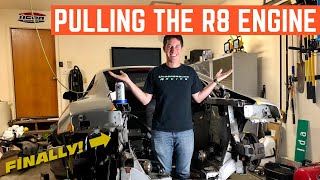
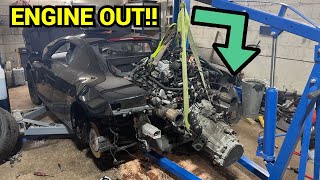
🎬 Watch: Pulling an Audi R8 engine in a home garage.- Installation Difficulty: 5 out of 5.
- Feasibility: Requires complete engine removal from the vehicle, followed by a full teardown on an engine stand. Specialized tools for measuring clearances (Plastigage, micrometers, dial indicators) and reassembly (torque wrenches, piston ring compressors) are mandatory.
The primary reason crankshaft replacement is uncommon is the cost. The labor involved in removing, disassembling, cleaning, inspecting, reassembling, and reinstalling the engine is immense, often exceeding the cost of a complete, tested, used engine.
| Part / Service | Estimated Cost | Notes |
|---|---|---|
| New OEM Crankshaft | $4,500 - $6,200 | Part only. |
| Used OEM Crankshaft | $800 - $1,500 | Part only, requires thorough inspection. |
| New Aftermarket Crankshaft | $300 - $500 | Not recommended for this high-performance application due to questionable quality and metallurgy. |
| Shop Labor (Crankshaft Replacement) | $7,000 - $12,000+ | Includes engine removal, full teardown, and reassembly. This is a rough estimate and can vary widely. |
| Complete Used Engine Assembly | $11,000 - $15,000 | A complete, tested, low-mileage used 4.2L V8 engine is often the most economical and reliable solution. |
Recalls and Technical Service Bulletins (TSBs)
There are no active recalls or TSBs from Audi for crankshaft failure on the 2008-2015 R8 or 2013-2015 RS5. Other recalls for these models exist for issues like airbags or fuel/transmission lines, but they are unrelated to this specific part. The issues that lead to crankshaft failure, such as timing chain wear and oil consumption, are considered maintenance or wear-and-tear items.
Frequently Asked Questions (FAQ)
Can I drive my car if the engine is knocking?
No. An engine knock signifies severe internal mechanical damage. Continuing to drive will cause the failure to cascade, likely resulting in a seized engine and potentially a connecting rod punching a hole in the engine block, making a rebuild impossible. The vehicle should be shut off immediately and towed to a repair facility.
If my bearings failed, can I just replace them without removing the crankshaft?
No. Once a bearing has failed, it has almost certainly damaged the polished surface of the crankshaft journal it was riding on. Simply installing new bearings on a scored crankshaft will result in immediate failure of the new bearings. The crankshaft must be removed, measured, and either polished, machined undersize, or replaced.
Is a used engine a better option than replacing the crankshaft?
In almost all cases, yes. Given the extremely high labor cost to properly replace a crankshaft and rebuild the engine, purchasing a complete, tested, low-mileage used engine assembly is typically faster, more reliable, and more cost-effective.
Are there any differences in the crankshaft between the R8 and RS5?
No. The 2008-2015 Audi R8 with the 4.2L V8 and the 2013-2015 Audi RS5 use the same high-revving V8 engine and share the same crankshaft, confirmed by the OEM part numbers 079105101CB and its successor, 079105101CL.
Helpful Videos
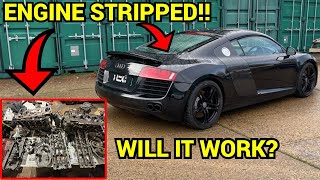
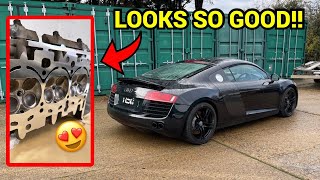
Technical Specifications
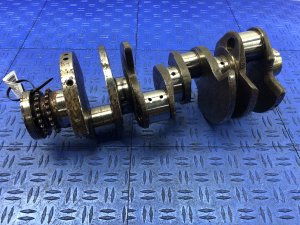
OEM Part Numbers: 079105101CB 079105101CL
Fits 4.2L FSI V8 engines in specified Audi R8 and RS5 models. Material: Forged Steel.
We Have This Part in Stock

The information in this article is provided for general reference and educational purposes only. Vehicle specifications, procedures, and part compatibility can vary by production date, trim level, and region. Always consult your vehicle's factory service manual and verify part numbers before purchasing or performing repairs. Safety-critical components such as airbags, seat belts, and braking systems should be installed by a qualified professional.
- Audi R8:
- Audi RS5:
- 🎬 Helpful Videos
- 🛍️ Shop This Part
- Understanding Crankshaft Failure in the 4.2L V8
- Symptoms of Crankshaft Failure
- Known Vehicle-Specific Issues Leading to Failure
- Timing Chain System Wear
- Excessive Oil Consumption
- Buying a Used Engine Crankshaft
- Replacement Difficulty & Cost Analysis
- Recalls and Technical Service Bulletins (TSBs)
- Frequently Asked Questions (FAQ)
- 🎟️ Get 5% Off