

2017-2020 Toyota 86 Right Cylinder Head: Auto-Only Fitment and FA20 Engine Flaws
This guide covers the critical differences between automatic and manual cylinder heads for the 2017-2020 Toyota 86 and common FA20 engine issues you must know before buying.
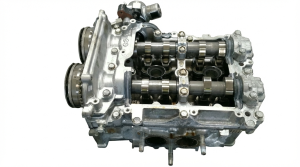
- This right-side cylinder head (SU003-00111 / 11039AC390) ONLY fits 2017-2020 models with an AUTOMATIC transmission due to a provision for a vacuum pump.
- When buying a used head, you must check it for warpage with a straightedge and inspect the camshaft journals for scoring, a sign of oil starvation.
- The FA20 engine has a known flaw where valve rocker arms can fall out, potentially causing catastrophic engine damage. Aftermarket retainers are a recommended preventative upgrade.
- Driving with a failed cylinder head is not recommended as it can lead to rapid and irreversible engine damage from overheating or fluid contamination.
Key Compatibility Warning: Automatic Transmission ONLY
Warning: This right (passenger side) cylinder head, identified by OEM part numbers SU003-00111 (Toyota) and 11039AC390 (Subaru), is for 2017-2020 Toyota 86 and Subaru BRZ models equipped with an AUTOMATIC transmission ONLY. It will not work on models with a manual transmission.
The reason for this specific fitment is due to differences in the engine's auxiliary systems. The cylinder head for the automatic model is machined to accommodate a vacuum pump that is not present on manual transmission cars. Additionally, there are internal oil passages specific to the automatic transmission version's valvetrain. Attempting to install a manual transmission head on an automatic vehicle (or vice-versa) will result in incompatible connections and likely engine failure. Always verify the part number and the transmission type of the donor vehicle before purchasing.
Symptoms of a Failing Cylinder Head
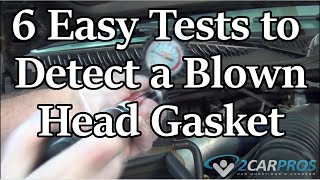
🎬 See this guide on how to check for a blown head gasket.Cylinder head failure often presents symptoms similar to a blown head gasket, as one problem can quickly lead to the other. Be aware of the following signs:
- Engine Overheating: This is the most common and critical symptom. A cracked head or failed gasket can allow coolant to leak out or combustion gases to enter the cooling system, reducing its efficiency and causing the engine temperature to spike.
- White Smoke from Exhaust: Thick, sweet-smelling white smoke from the tailpipe indicates that coolant is leaking into the combustion chambers and being burned off as steam.
- Milky or Frothy Engine Oil: If you check the oil dipstick or oil filler cap and find a milky, mayonnaise-like sludge, it's a classic sign that coolant is mixing with your engine oil. This contaminated oil cannot lubricate properly and can quickly destroy the engine.
- Unexplained Coolant Loss: Constantly needing to top off the coolant reservoir with no visible external leaks is a strong indicator of an internal leak through a cracked head or bad gasket.
- Poor Engine Performance: A loss of compression from a damaged head can cause a rough idle, engine misfires (which may trigger codes like P0300-P0304), hesitation, and a noticeable loss of power.
- Bubbling in Radiator: With the engine cool, removing the radiator cap and starting the engine may reveal bubbles in the coolant. This is caused by high-pressure exhaust gas being forced into the cooling system.
Known Issues for 2017-2020 Toyota 86 / Subaru BRZ
The FA20 engine is generally robust, but it has well-documented weaknesses that can lead to cylinder head damage or failure. Understanding these is crucial when diagnosing problems or buying a used part.
Issue 1: Rocker Arm Ejection (The "Fatal Flaw")
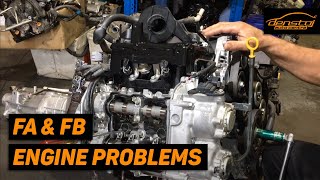
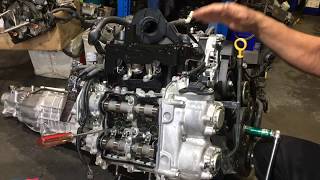
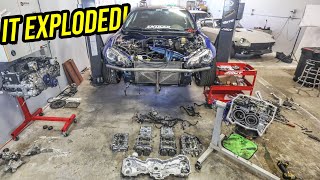
🎬 Watch: How to identify and fix this fatal valvetrain flaw.The FA20 engine's valvetrain design does not use retaining clips on the valve rocker arms (also called followers). During certain events, like a slight valve float at high RPM, a misfire, or if a valve momentarily sticks, a rocker arm can become dislodged from its pivot. Because this is a boxer engine, the rockers are oriented sideways, and gravity can cause the dislodged part to fall. It may land harmlessly in a cavity, or it could be struck by the spinning camshaft, getting violently ejected through the thin valve cover. This can cause a massive oil leak directly onto the hot exhaust manifold, creating a significant fire risk. If the rocker falls, the corresponding valve may also drop into the cylinder, causing catastrophic piston and engine damage.
Pro Tip: When rebuilding an FA20 engine or replacing a cylinder head, many specialists recommend installing an aftermarket rocker arm retainer kit. These kits add clips or a brace to prevent the rockers from falling out, providing a layer of protection against this specific failure mode.
Issue 2: RTV Sealant Clogging Oil Passages
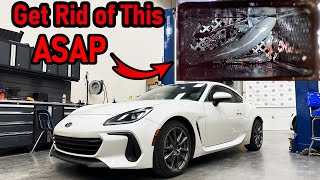
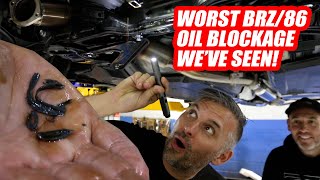
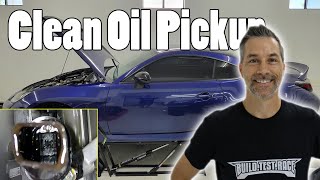
🎬 Watch: Step-by-step guide to cleaning RTV from your oil pickup.A class-action lawsuit has been filed concerning the excessive use of RTV (Room Temperature Vulcanizing) sealant on the oil pan and timing cover from the factory. Over time, pieces of this sealant can break off and get sucked into the oil pickup tube in the oil pan, potentially clogging it. This restricts oil flow to the entire engine, a condition known as oil starvation. The camshafts and their journals inside the cylinder head are highly dependent on a steady supply of clean oil. Oil starvation can quickly cause scoring and heat damage (visible as blueing) to these precise surfaces, ruining the cylinder head.
Buying a Used Engine Cylinder Head: Inspection Guide
A used OEM cylinder head is often a cost-effective and reliable alternative to expensive new parts, provided you inspect it carefully. Given the known issues with the FA20 engine, a thorough inspection is mandatory.
- Verify the Part Number: First and foremost, confirm you are buying the correct part for an automatic transmission: SU003-00111 or 11039AC390. Do not trust a seller who says it "should fit."
- Check for Warpage: This is the most critical check. Overheating is a primary cause of head failure. Place a precision straightedge across the mating surface of the head in an 'X' pattern and from end to end. Try to slide a feeler gauge under the straightedge. If you can fit a gauge thicker than 0.05mm (0.002 inches) underneath, the head is warped and will need to be resurfaced by a machine shop. If it's severely warped, it may be unusable.
- Inspect Camshaft Journals: Remove the cam cradles and inspect the journals (the smooth surfaces where the camshafts spin). Look for deep scratches, scoring, or any blue/purple discoloration. Any of these are signs of severe oil starvation. A head with scored cam journals is junk—do not buy it.
- Look for Cracks: Visually inspect the entire head for cracks. Pay close attention to the area between the valve seats and the spark plug hole, as this is a common weak point on many engines, though less so on the FA20. A machine shop can pressure test the head to find hidden cracks.
- Check the Valvetrain: Ensure all rocker arms and pivots are present and in their correct positions. Check the tips of the valves and the cam lobes for any signs of unusual wear or damage.
Cost Comparison for Cylinder Head Replacement
Replacing a cylinder head is a labor-intensive job. Prices can vary significantly based on location and the extent of any related damage found during the repair.
| Part or Service | Estimated Cost |
|---|---|
| New OEM Cylinder Head (Bare) | $510 - $760 |
| Remanufactured OEM Cylinder Head | $400 - $800 (Often sold in pairs) |
| Used OEM Cylinder Head | $250 - $500+ (Varies by condition and seller) |
| Shop Labor | $1,200 - $2,500+ (Typically 8-15 hours) |
| Total Professional Replacement | $2,000 - $3,500+ |
Note: These costs do not include related parts that are almost always replaced during this job, such as the head gasket set, new head bolts (which are torque-to-yield and cannot be reused), timing components, coolant, and oil.
Frequently Asked Questions (FAQ)
Can I use a cylinder head from a Subaru BRZ on my Toyota 86?
Yes, as long as the model years and transmission types match. The 2017-2020 Toyota 86 and Subaru BRZ use the identical FA20 engine and its core components, including the cylinder heads. The Subaru OEM part number is 11039AC390, and the Toyota number is SU003-00111, but they are the same part.
Why does the automatic transmission require a different cylinder head?
The right-side cylinder head on automatic models is machined to support a vacuum pump that is not used on manual transmission cars. It also has unique internal oiling passages. Using the wrong head will lead to fitment issues and improper engine function.
What is the main cause of cylinder head failure on these cars?
Like most cars, the primary cause is engine overheating, which can warp or crack the aluminum head. However, on the FA20 engine, oil starvation from issues like clogged RTV in the oil pickup can also lead to head damage by destroying the camshaft journals. Catastrophic failure can also result from the known rocker arm ejection issue.
Is it better to replace the cylinder head or the entire engine?
This depends on the cause and extent of the damage. If the failure was due to a simple head gasket leak caught early and the head is not warped or cracked, a repair may be sufficient. However, if the head is severely damaged or if the failure was caused by oil starvation or debris (like a dropped valve), there is a high probability of damage to the engine block, pistons, and bearings. In such cases, replacing the entire engine with a known-good used unit is often more reliable and cost-effective in the long run.
Helpful Videos
Technical Specifications
OEM Part Numbers: SU003-00111 11039AC390
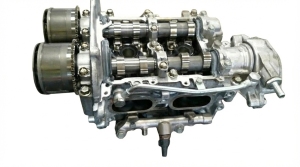
Fits 2.0L FA20 Engine, Right (Passenger) Side, For Automatic Transmission models only.
We Have This Part in Stock

The information in this article is provided for general reference and educational purposes only. Vehicle specifications, procedures, and part compatibility can vary by production date, trim level, and region. Always consult your vehicle's factory service manual and verify part numbers before purchasing or performing repairs. Safety-critical components such as airbags, seat belts, and braking systems should be installed by a qualified professional.
- Toyota 86:
- 🎬 Helpful Videos
- 🛍️ Shop This Part
- Key Compatibility Warning: Automatic Transmission ONLY
- Symptoms of a Failing Cylinder Head
- Known Issues for 2017-2020 Toyota 86 / Subaru BRZ
- Issue 1: Rocker Arm Ejection (The "Fatal Flaw")
- Issue 2: RTV Sealant Clogging Oil Passages
- Buying a Used Engine Cylinder Head: Inspection Guide
- Cost Comparison for Cylinder Head Replacement
- Frequently Asked Questions (FAQ)
- 🎟️ Get 5% Off