

2GR-FE V6 Cylinder Head Guide: Camry, Highlander, Sienna, Avalon, RAV4 & More
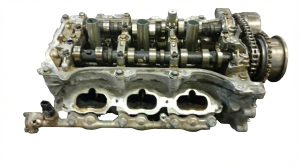
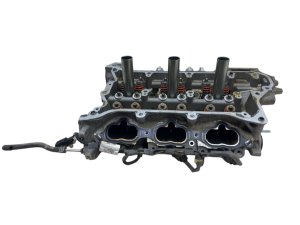
This guide covers common failure symptoms, diagnostic procedures, and buying advice for the rear cylinder head used on Toyota's popular 3.5L V6 engine.
- Cylinder head failure is a major repair; diagnosis must be confirmed with a chemical block test or leak-down test before starting work.
- This is a 5/5 difficulty job that requires removing the entire engine and transmission assembly from the vehicle; it is not recommended for DIY.
- Any used cylinder head MUST be taken to a machine shop to be checked for warpage and cracks before installation.
- Overheating is the primary cause of failure. While the engine is out, it's critical to replace other cooling system components like the water pump and thermostat to prevent a repeat failure.
Symptoms of a Failing Cylinder Head
Cylinder head problems often stem from a failure of the head gasket, which seals the head to the engine block, or from the head itself cracking or warping due to overheating. Symptoms can be subtle at first but will become severe. Ignoring them can lead to catastrophic engine failure.
- Overheating Engine: This is the most common cause and symptom. A warped or cracked head, or a failed head gasket, can allow combustion gases to enter the cooling system, or coolant to leak out, leading to the engine running hot. An engine temperature gauge that fluctuates rapidly is a bad sign, often indicating air pockets in the cooling system from a head gasket leak.
- White Smoke from Exhaust: Sweet-smelling white smoke from the tailpipe, especially on startup, is a classic sign that coolant is leaking into the combustion chambers and being burned off.
- Milky or Foamy Engine Oil: If you check the oil dipstick or oil filler cap and see a milky, frothy, or light-brown substance that looks like a coffee milkshake, it means coolant is mixing with the engine oil. This is a serious condition that compromises the oil's ability to lubricate, leading to rapid engine wear.
- Unexplained Coolant Loss: If you're constantly having to top off the coolant reservoir but can't find any visible external leaks (like puddles under the car or drips from hoses), the coolant may be leaking internally into the cylinders or oil passages.
- Engine Misfires and Rough Idle: When coolant leaks into a cylinder, it can foul the spark plug, preventing proper ignition and causing a misfire. This will often trigger a Check Engine Light with codes like P0300 (Random Misfire) or P0301-P0306 for specific cylinders.
- Bubbling in Radiator or Coolant Reservoir: With the engine running, you may see bubbles in the coolant reservoir. This is caused by high-pressure exhaust gases being forced into the cooling system past a failed head gasket.
Diagnosing a Bad Cylinder Head
Because replacement is such a major and expensive job, it's critical to be 100% certain the cylinder head or gasket is the problem. A professional mechanic will use several tests to confirm the diagnosis:
- Chemical Block Test: A special tool with blue chemical fluid is used to sample the air in the radiator. If exhaust gases are present, the fluid will turn yellow or green, confirming a combustion leak into the cooling system. This is a definitive test for a blown head gasket.
- Cooling System Pressure Test: A pump is attached to the radiator to pressurize the system. If the pressure drops over time with no visible external leaks, it points to an internal leak.
- Cylinder Leak-Down Test: This test measures how well each cylinder holds air pressure. Air is pumped into a cylinder at top-dead-center, and the mechanic listens for where the air escapes. Bubbling in the radiator indicates a leak into the cooling jacket.
- Borescope Inspection: A small camera is inserted into the spark plug holes to visually inspect the inside of the cylinders. A cylinder with a coolant leak will often be steam-cleaned and look unnaturally clean compared to the others.
Warning: Cylinder head replacement on the 2GR-FE engine is a very complex job. In most of these vehicles, the engine and transmission assembly must be removed from the vehicle to gain access. This is not a DIY job for a beginner.
Buying a Used Engine Cylinder Head
For a part this complex, a quality-inspected, used OEM cylinder head can offer significant savings over a new or remanufactured unit. However, careful inspection is critical before installation.
- Verify Compatibility: Double-check the part number and vehicle application. Pay close attention to the VIN-specific requirements listed for the Camry, Highlander, and ES350. While the head may be physically identical across many models, small casting or port differences can exist. The RX450h uses a 2GR-FXE engine, and while some parts interchange, you must verify fitment with a trusted mechanic before purchasing a 2GR-FE head for it.
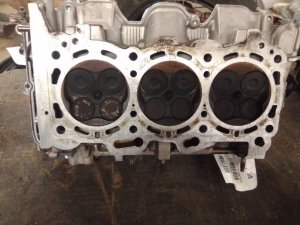
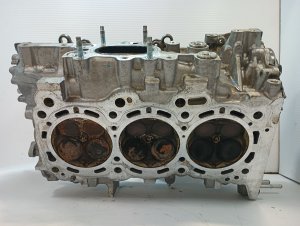
- Thorough Visual Inspection: Look for any visible cracks, especially around the combustion chambers, spark plug holes, and valve seats. Check for signs of corrosion or pitting in the coolant passages.
- Check for Warpage: This is the most important check. Place a precision straightedge across the mating surface of the head in several diagonal and straight patterns. Try to slide a feeler gauge underneath. According to Toyota specifications, the maximum allowable warpage is just 0.07 mm (0.0028 in.). Any head that is warped beyond this specification must be professionally resurfaced (decked) by a machine shop.
- Machine Shop Evaluation: It is highly recommended to have any used cylinder head professionally inspected and serviced by an automotive machine shop before installation. They can pressure test it for cracks, check the valve guides and seats, and resurface the head to ensure a perfect seal. This is a mandatory step for a reliable repair.
- Mileage and Source: Purchase from a reputable recycler that provides information about the donor vehicle's mileage. A lower-mileage head is preferable, but the condition is more important than the mileage alone. A head from a vehicle that suffered a collision is often a better bet than one from a vehicle that was junked due to engine failure.
Pro Tip: When a head gasket fails due to overheating, there's a high risk the cylinder head has warped. Attempting to install a new gasket on a warped head will result in the new gasket failing very quickly. Always have the head checked for flatness by a machine shop.
Vehicle-Specific Information & Known Issues
While the 2GR-FE is a very reliable engine, it has a few known issues. Cylinder head failure is not common but can happen, often as a result of another component failing first, like a water pump or a leaking coolant hose.
- All Models (Early Years): Early 2GR-FE engines (approx. 2005-2010) used a rubber and metal hybrid VVT-i oil line that could degrade and leak oil. A severe oil leak can lead to oil starvation and engine damage. Most of these have been updated to an all-metal line under a warranty enhancement program, but it's worth checking.
- All Models: Water pump failure is a known wear item on the 2GR-FE. If the water pump fails, the engine can overheat quickly, leading to head gasket failure and a warped cylinder head.
- High-Mileage/Corrosion Belt Areas: Some technicians report seeing external coolant leaks from the rear head gasket on higher-mileage 2GR-FE engines, particularly in areas where road salt is used. This is thought to be caused by corrosion building up between the head and the block over many years.
- Camry (2007-2017), Highlander (2010), ES350 (2013-2018): These models require a head from a vehicle with a VIN where the 5th digit is 'K'.
- Highlander (2008-2009): Requires a head from a vehicle with a VIN where the 5th digit is 'S'.
- RAV4 (2006-2012): This guide only applies to V6 models. The 4-cylinder engine uses a different cylinder head.
- Lexus RX450h (2010-2015): This model uses the 2GR-FXE Atkinson-cycle hybrid engine. While it shares its basic architecture with the 2GR-FE, there are differences. Always confirm part compatibility with a specialist before purchasing.
Cost & Replacement Overview
Cylinder head replacement is one of the most labor-intensive repairs a vehicle can undergo. The cost is driven primarily by the high number of labor hours required.
| Item | Estimated Cost |
|---|---|
| New OEM Cylinder Head (Part Only) | $1,500 - $2,500 |
| New Aftermarket Cylinder Head (Part Only) | $700 - $1,200 |
| Used OEM Cylinder Head (Part Only) | $300 - $800 |
| Machine Shop Services (for used head) | $250 - $600 (inspection, pressure test, resurfacing) |
| Shop Labor for Replacement | $2,500 - $4,000+ |
| Total Estimated Job Cost (with Used Head) | $3,000 - $5,400+ |
Note: Prices are estimates and can vary significantly based on location, shop, and the specific parts needed. Labor costs are high because the engine must be removed from the vehicle for this repair.
Frequently Asked Questions
Is it worth fixing a blown head gasket on a 2GR-FE engine?
It depends on the vehicle's overall condition and mileage. Because the repair cost can be several thousand dollars, you must weigh it against the value of the car. However, the 2GR-FE is a robust engine capable of lasting for well over 200,000 miles, so if the rest of the vehicle is in good shape, the repair can be a worthwhile investment.
Can I replace just the head gasket without replacing the cylinder head?
Yes, if the cylinder head is not cracked and is not warped beyond the service limit. However, it is absolutely critical to have the head inspected and measured by a machine shop. Installing a new gasket with a warped head will lead to immediate failure of the new gasket. Given the high labor cost, it's a risk not worth taking.
Should I replace both cylinder heads at the same time?
While only one head may have failed, it is often recommended to service both while the engine is out. The cost of the second head and the machine shop work is relatively small compared to the total labor cost. If one head failed due to a systemic issue like a cooling system problem, the other head was subjected to the same stress and may be prone to failure in the future.
What other parts should be replaced during a cylinder head job?
Since the engine will be removed and extensively disassembled, it is the perfect time to replace other wear items. This includes the water pump, thermostat, timing chain and tensioners, spark plugs, all related gaskets and seals, and drive belts. Addressing these items at the same time saves significant future labor costs.
Technical Specifications
OEM Part Numbers: 11101-09260 1110109262 1110139537
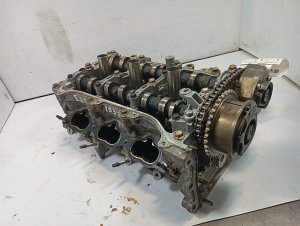
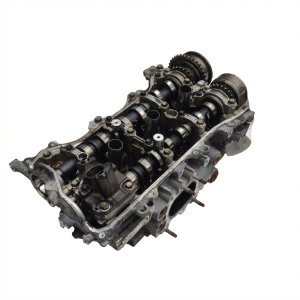
Engine: 3.5L V6 2GR-FE (and 2GR-FXE for RX450h). Head Location: Rear Bank (RH), cylinders closest to the firewall. Maximum allowable warpage: 0.07 mm (0.0028 in).
We Have This Part in Stock

The information in this article is provided for general reference and educational purposes only. Vehicle specifications, procedures, and part compatibility can vary by production date, trim level, and region. Always consult your vehicle's factory service manual and verify part numbers before purchasing or performing repairs. Safety-critical components such as airbags, seat belts, and braking systems should be installed by a qualified professional.
- Toyota Camry:
- Toyota Highlander:
- Toyota Sienna:
- Lexus ES350:
- Lexus RX350:
- Toyota Avalon:
- Lexus RX450h:
- Toyota RAV4:
- Toyota Venza: