

BMW N63 & S63 V8 Harmonic Balancer Issues: Vibration, Noise & Replacement (2017-2025)
A detailed guide to diagnosing, inspecting, and replacing the engine harmonic balancer on BMW's 4.4L twin-turbo V8 found in the X5, X7, M5, 750i, and more.
- Failure is often caused by the high-heat environment of the N63/S63 'hot-vee' twin-turbo V8 engine, which degrades the rubber element.
- The primary symptom is engine vibration, but a definitive diagnosis involves a visual inspection for cracks in the rubber, as outlined in BMW TSB SI B11 01 19.
- Driving with a failed balancer is unsafe; it can separate and cause catastrophic damage to the radiator, fan, and other engine components.
- Replacement is difficult (4/5) and requires a special crankshaft holding tool and a new, single-use torque-to-yield (TTY) center bolt.
Is Your BMW V8 Shaking? It Could Be the Harmonic Balancer
An unusual vibration felt through the cabin, a new rattling noise from the front of the engine, or a visible wobble from the main engine pulley at idle are all classic signs of a failing engine harmonic balancer. On the high-performance 4.4L twin-turbo V8 engines (N63 and S63 variants) used across a wide range of 2017-2025 BMW models, this part is subjected to immense heat and stress, making the rubber element prone to failure over time.
This guide covers the harmonic balancer for the following vehicles, which share the same V8 engine platform:
- 2020-2025 BMW X7
- 2020-2025 BMW X5
- 2020-2022 BMW 750i
- 2018-2025 BMW M5
- 2020-2025 BMW X6
- 2017-2022 BMW Alpina B7
- 2020-2025 BMW X5 M
- 2022-2022 BMW Alpina B8 Gran Coupe
- 2021-2025 BMW Alpina XB7
- 2020-2023 BMW M550i xDrive
Known Issues and Technical Service Bulletins (TSBs)
BMW is aware of vibration issues on these engines. Technical Service Bulletin SI B11 01 19 specifically addresses complaints of "ENGINE VIBRATIONS OR NOISE." The bulletin instructs technicians to remove the drive belt and visually inspect the vibration damper's rubber insulator for cracks or separation. If damage is found, the part must be replaced. This indicates that balancer failure is a recognized source of these symptoms.
While many issues can cause vibrations on the complex N63/S63 engines—including ignition coils, fuel injectors, and engine mounts—the harmonic balancer should be a primary suspect, especially if the vibration is accompanied by noise from the front of the engine or a visible pulley wobble.
Symptoms of a Failing Harmonic Balancer
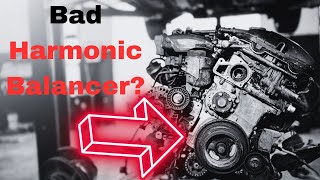
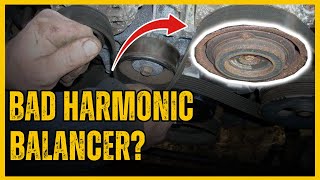
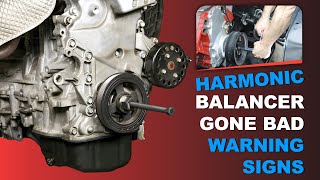
A failing balancer will provide several warning signs. Addressing 🎬 Watch: 5 common signs of a failing harmonic balancer them early is critical to prevent catastrophic engine damage.
- Engine Vibration: The most common symptom is a new or worsening vibration, often felt at idle and changing with engine RPM. You might feel it in the steering wheel, seats, or floor.
- Unusual Noises: You may hear a rattling, knocking, or squealing sound from the front of the engine that corresponds with engine speed. This can be caused by the outer ring of the balancer coming loose and moving independently of the hub.
- Visible Wobble: With the engine running, look at the main pulley at the bottom front of the engine. If it appears to wobble or oscillate instead of spinning perfectly true, the rubber has likely failed.
- Shredded or Thrown Serpentine Belts: A wobbling balancer can cause the serpentine belt to misalign, leading to premature wear, squealing, or the belt being thrown off the pulleys entirely. This will cause an immediate loss of power steering, alternator charging, and engine cooling.
Warning: Do not continue to drive a vehicle with a severely wobbling or noisy harmonic balancer. If the balancer separates completely, the outer ring can be thrown at high velocity, destroying the radiator, cooling fan, hoses, and other components in its path, leading to immediate engine shutdown and thousands of dollars in damage.
Buying a Used Engine Harmonic Balancer: What to Check
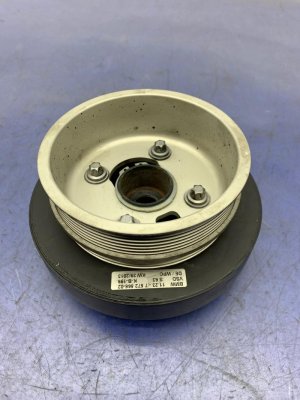
Given the high cost of a new OEM harmonic balancer, a used OEM part is an excellent value. However, a thorough inspection is crucial before purchase. The rubber element is the key failure point.
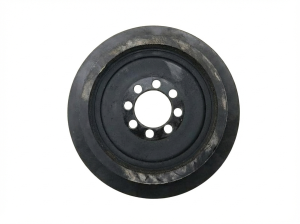
- Inspect the Rubber Ring: Closely examine the rubber layer between the inner hub and the outer pulley ring. Look for any cracks, even small ones. Reject any balancer with visible cracks, as this is the beginning of failure.
- Check for Separation: Try to twist the inner and outer rings by hand. There should be absolutely no movement between them. Check the front and back faces for any signs that the rubber is pulling away or separating from the metal.
- Look for Bulging or Leaking: Inspect the rubber for any areas that look swollen, bulging, or appear to be 'melting' or 'spilling out'. This indicates the rubber has broken down.
- Check for Oil Contamination: A balancer that is soaked in engine oil from a front crankshaft seal leak should be viewed with caution. Oil degrades the rubber and can accelerate failure. Clean the part and inspect the rubber carefully.
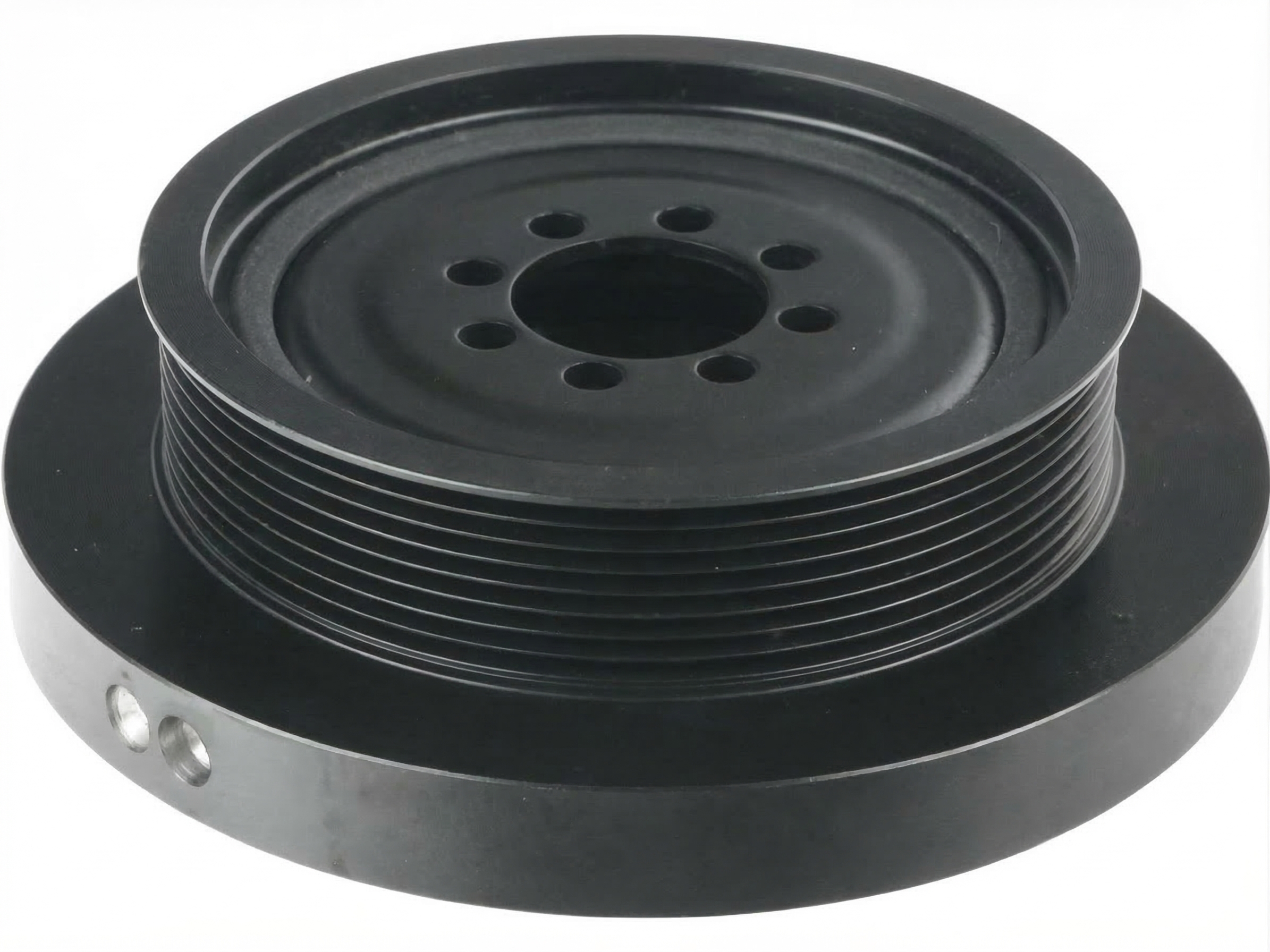
- Examine the Pulley Grooves: Check the grooves for the serpentine belt. They should be clean and free of significant damage or corrosion that could shred the belt.
Pro Tip: A good used OEM balancer from a lower-mileage vehicle is often a safer bet than a cheap, new aftermarket part from an unknown brand. The OEM part was designed and tested by BMW for the specific harmonics of the N63/S63 engine.
Replacement Cost Breakdown
The cost to replace the harmonic balancer can vary significantly based on the parts you choose and your approach to labor.
| Item | Estimated Cost | Notes |
|---|---|---|
| New OEM (Dealer) | $940 - $1,250 | Genuine BMW part. Includes manufacturer warranty. |
| New Aftermarket | $270 - $560 | From brands like Dorman or others found on sites like RockAuto. Quality can vary. |
| Used OEM | $100 - $200 | A cost-effective option if the part passes a thorough inspection. |
| Shop Labor | $450 - $800 | Estimated 3-4 hours at an independent shop rate of $150-$200/hr. Requires special tools. |
Installation and Replacement Guide
Replacing the harmonic balancer on the N63/S63 engine is a complex job recommended for experienced DIY mechanics or professionals.
- Difficulty: 4 out of 5.
- Special Tools Required: A crankshaft holding tool (BMW #118090 or equivalent) is mandatory. This tool bolts to the front of the engine and holds the crankshaft stationary while you remove and tighten the central bolt. A torque angle gauge is also required for the final tightening sequence.
- Central Bolt: The main crankshaft bolt is a torque-to-yield (TTY) bolt and is single-use only. A new bolt (Part #11238648148) MUST be used for installation. Reusing the old bolt can lead to it backing out or breaking, causing catastrophic engine failure.
- Torque Specification: The torque procedure is critical. For the N63, the specification is an initial torque to 100 Nm (74 ft-lbs), followed by three separate 60-degree rotations. This requires significant leverage and a secure way to hold the engine from turning.
The general procedure involves removing the engine air intakes, electric radiator fan and shroud, and serpentine belts to gain access. The crankshaft holder is then installed, and the old bolt and balancer are removed. The new balancer is installed, and the new bolt is torqued to specification using the multi-step angle torque method.
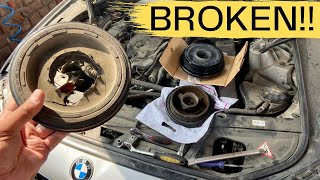
🎬 See this step-by-step guide on replacing a BMW crankshaft pulleyFrequently Asked Questions (FAQ)
Can I drive my BMW with a bad harmonic balancer?
It is strongly recommended not to. A slightly noisy or wobbly balancer can fail completely and without warning. When it fails, the outer ring can detach and destroy the radiator, fan, belts, and hoses, leaving you stranded with a very expensive repair bill.
Is engine vibration always caused by the harmonic balancer?
No. On the N63 and S63 engines, vibrations can also be caused by failing ignition coils, faulty fuel injectors, worn engine or transmission mounts, or even carbon buildup. However, if the vibration is accompanied by a front-engine noise or a visible pulley wobble, the balancer is the most likely culprit.
Why do I have to replace the big bolt in the middle?
The central crankshaft bolt is a torque-to-yield (TTY) or 'stretch' bolt. During the angle-torque tightening process, it is permanently stretched to achieve a very specific and high clamping force. Once stretched, it cannot be reused. Attempting to reuse it will result in improper clamping force, and the bolt will likely loosen or break.
Why is the new OEM part so expensive compared to a used one?
The OEM harmonic balancer is a precisely engineered and balanced component designed to handle the specific vibration frequencies of a high-output twin-turbo V8. The manufacturing process is complex, leading to a high cost for a new part. A used OEM part offers the same engineering at a fraction of the price, provided it is inspected carefully for wear.
Helpful Videos
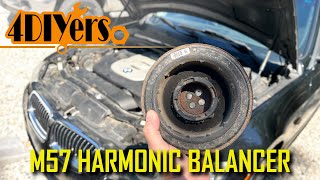
Technical Specifications
OEM Part Numbers: 11237852253 7852253 7852125
Fits 4.4L N63 and S63 twin-turbocharged V8 engines. Requires single-use TTY central bolt (Part #11238648148). Torque spec: 100 Nm + 60° + 60° + 60°.
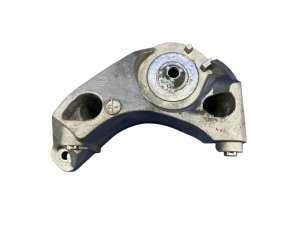
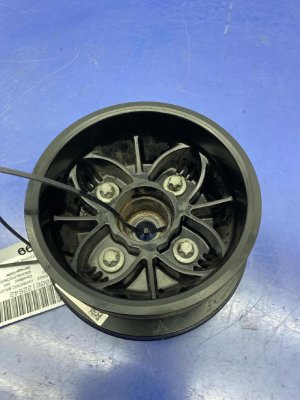
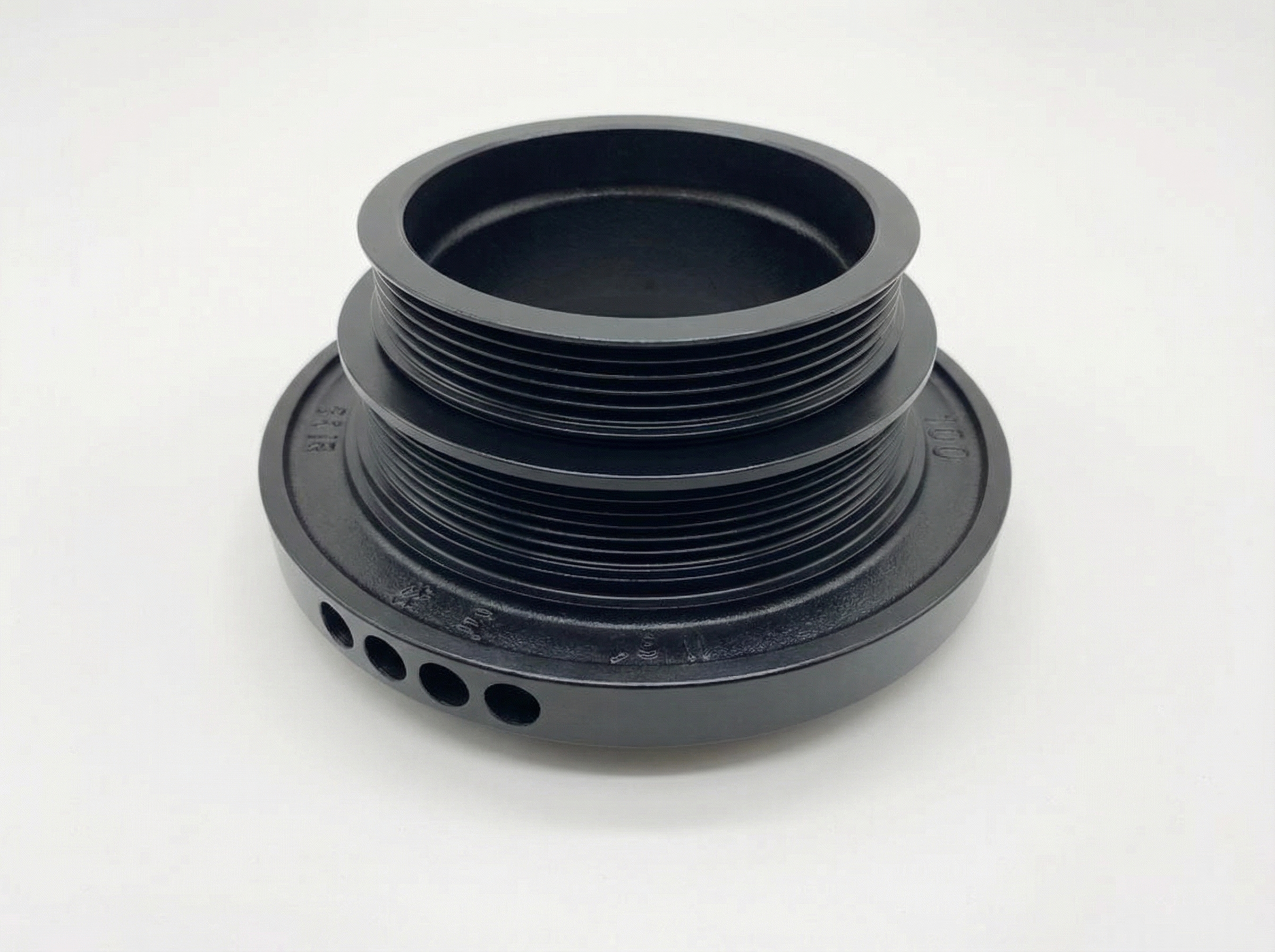
We Have This Part in Stock

The information in this article is provided for general reference and educational purposes only. Vehicle specifications, procedures, and part compatibility can vary by production date, trim level, and region. Always consult your vehicle's factory service manual and verify part numbers before purchasing or performing repairs. Safety-critical components such as airbags, seat belts, and braking systems should be installed by a qualified professional.
- BMW X7:
- BMW X5:
- BMW 750i:
- BMW M5:
- BMW X6:
- BMW Alpina B7:
- BMW X5 M:
- BMW Alpina B8 Gran Coupe:
- BMW Alpina XB7:
- BMW M550i xDrive:
- BMW M8:
- BMW M850i xDrive:
- 🎬 Helpful Videos
- 🛍️ Shop This Part
- Is Your BMW V8 Shaking? It Could Be the Harmonic Balancer
- Known Issues and Technical Service Bulletins (TSBs)
- Symptoms of a Failing Harmonic Balancer
- Buying a Used Engine Harmonic Balancer: What to Check
- Replacement Cost Breakdown
- Installation and Replacement Guide
- Frequently Asked Questions (FAQ)
- 🎟️ Get 5% Off