

2024-2025 Mustang & Explorer 2.3L Intake Manifold: Part Numbers and the New Dual-Injection Engine Explained
This guide covers the unique intake manifold for the updated 2.3L EcoBoost engine, including critical part number and production date information for buyers.
- This manifold fits the updated 2.3L EcoBoost engine in the 2024-25 Mustang & Explorer, which features dual (port and direct) fuel injection to prevent carbon buildup.
- For 2024 models, this part (PB5Z-9424-A) is for vehicles built on or after May 13, 2024. Always verify your build date before buying.
- The number stamped on the part (PB5E-9424-AB) is the engineering number; the orderable service part number is PB5Z-9424-A.
- Failure symptoms are typically related to vacuum leaks, such as a rough idle, hissing noises, and lean-related Check Engine Light codes (P0171, P0174).
Key Compatibility & Part Number Information
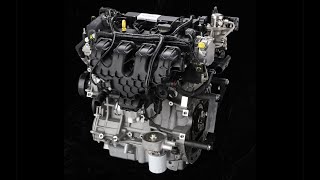
This intake manifold fits 2024-2025 Ford Mustang and 2024-2025 Ford Explorer models equipped with the updated 2.3L EcoBoost (turbocharged 4-cylinder) engine. 🎬 Watch: Everything you need to know about the 2.3L EcoBoost engine. It is crucial to verify your vehicle's specifications before purchasing.
Warning: This part is only for the 2.3L EcoBoost engine. It will NOT fit Ford Mustang models equipped with the 5.0L V8 engine.
Important Production Date for 2024 Models
For 2024 models, this specific intake manifold (part number PB5Z-9424-A) was used on vehicles manufactured on or after May 13, 2024. If you have a 2024 model, it is essential to verify your vehicle's production date or check the part number stamped on your original manifold before ordering a replacement.
Engineering vs. Service Part Numbers
You may find different numbers on the part itself versus what is in a dealership's catalog. This can be confusing, but it's normal.
- PB5E-9424-AB: This is a common engineering or casting number that is physically stamped on the plastic manifold itself.
- PB5Z-9424-A: This is the official Ford service part number used for ordering a replacement.
When buying a replacement, you should order using the service number PB5Z-9424-A to ensure you receive the correct and most current version of the part.
Symptoms of a Failing Intake Manifold
Because the 2024-2025 Mustang and Explorer are so new, widespread failures of this specific manifold are not yet common. However, the symptoms of a failing intake manifold are consistent across most modern vehicles. A failure can be a crack in the manifold body itself or, more commonly, a leak from the gaskets that seal it to the cylinder head.
- Rough or Unstable Idle: A vacuum leak from a cracked manifold or bad gasket allows unmetered air into the engine, disrupting the air-fuel ratio and causing the engine to shake or surge at idle.
- Hissing or Whistling Noises: A significant vacuum leak can create a noticeable sucking or hissing sound from the engine bay, which may get louder during acceleration.
- Check Engine Light: The most common sign. A vacuum leak will cause the engine to run lean (too much air, not enough fuel), triggering diagnostic trouble codes (DTCs) like P0171 (System Too Lean Bank 1) or P0174 (System Too Lean Bank 2). 🎬 See how to diagnose and fix Ford System Too Lean codes. Misfire codes (P0300-P0304) are also possible.
- Reduced Power and Fuel Economy: If the engine can't maintain the correct air-fuel mixture, both performance and efficiency will suffer.
- Engine Overheating: Some intake manifolds have passages for engine coolant. If a crack or gasket leak occurs in one of these areas, you may lose coolant, leading to overheating. You might also notice a sweet smell from the engine bay.
Known Issues & Recalls
As of late 2024, there are no specific recalls or Technical Service Bulletins (TSBs) for the intake manifold on the 2024-2025 Ford Mustang or Explorer with the 2.3L engine.
Recall Notice: Fuel Line (2024 Mustang)
There is a safety recall (NHTSA 24V-220 / Ford 24S19) for some 2024 Ford Mustangs with the 2.3L engine concerning a low-pressure fuel supply line that may be damaged, potentially causing a fuel leak. While this does not involve the intake manifold directly, it is a critical issue in the engine bay that owners should be aware of. A dealer will replace the fuel line free of charge.
A Major Improvement: The New Dual-Injection System
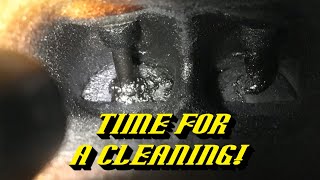
Previous generations of the 2.3L EcoBoost engine used only direct injection, which sprayed fuel directly into the cylinder. This design was known to cause carbon deposits to build up on the back of the intake valves over time, as there was no fuel to wash them clean. This buildup could eventually restrict airflow, causing rough idling, misfires, and a loss of performance. The fix often required a labor-intensive 'walnut blasting' service where the intake manifold is removed to clean the valves, a job that can cost between $350 and $500.
🎬 Watch: How the intake valve carbon cleaning procedure is performed.Pro Tip: The updated 2.3L EcoBoost engine in the 2024+ Mustang and 2025+ Explorer features a new dual-fuel-injection system. It has both direct injectors and port injectors. The port injectors spray fuel into the intake runners, which effectively cleans the intake valves during operation. This design should significantly reduce or eliminate the carbon buildup issue seen on older models, making the new engine architecture more reliable in the long term.
Buying a Used Engine Intake Manifold
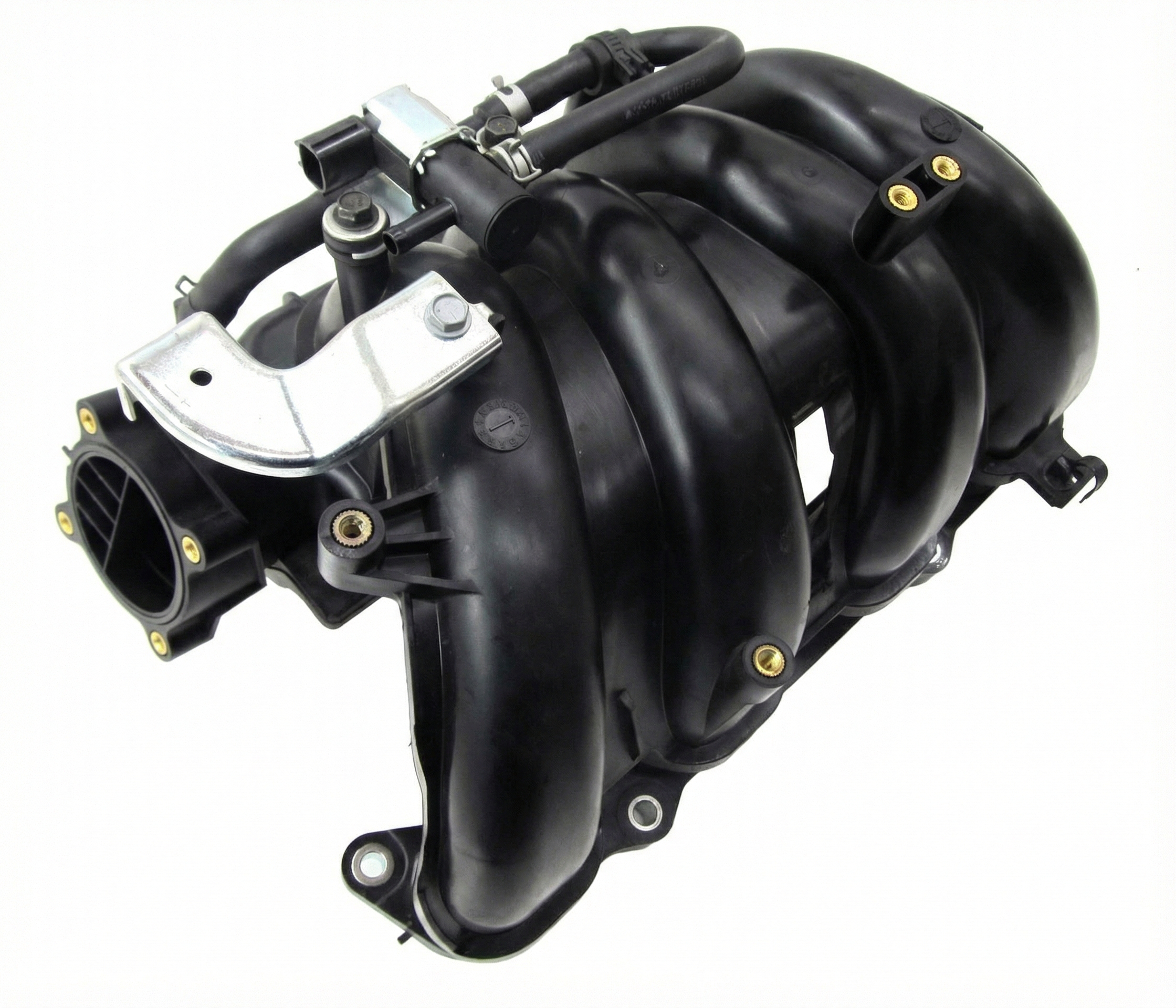
Buying a used OEM intake manifold can be a great way to save money, especially since these vehicles are new and aftermarket options are not widely available. Because this is a modern plastic part, a careful inspection is key.
What to Inspect Before You Buy
- Check for Cracks: Carefully inspect the entire manifold, especially around the mounting flanges and sensor ports, for any hairline cracks. Pay close attention to the seams where different plastic pieces are bonded together.
- Inspect Mounting Points: Ensure all bolt holes are intact and not cracked or broken. Check any threaded brass inserts to make sure they are not stripped or pulling out of the plastic.
- Verify Flatness: Place the manifold on a known flat surface to check the cylinder head mating surfaces for any signs of warpage. A warped manifold will not seal properly, causing an immediate vacuum leak.
- Confirm Part Numbers: Double-check that the engineering number stamped on the part (like PB5E-9424-AB) matches what is expected for your vehicle. When possible, buy based on the service number (PB5Z-9424-A).
- Look for Heat Damage: Check for any melted or discolored areas, which could indicate a past engine fire or severe overheating.
Replacement Overview
Replacing the intake manifold on the 2.3L EcoBoost is a moderately difficult job that requires careful work around fuel lines and electrical connectors.
- Difficulty: 3 out of 5
- Estimated Time: 1.5 - 2.5 hours
- DIY Feasible: Yes, for experienced DIY mechanics with the right tools.
The general process involves disconnecting the battery, relieving fuel system pressure, unplugging various sensors (like the MAP sensor), disconnecting vacuum and fuel lines, removing the throttle body, and finally unbolting the manifold from the cylinder head. Always use a torque wrench to tighten the manifold bolts to factory specifications in the correct sequence to ensure an even seal. It is highly recommended to replace the intake manifold gaskets any time the manifold is removed.
Cost of Replacement
Prices can vary by region and supplier, but here is a general cost estimate.
| Part or Service | Estimated Cost |
|---|---|
| New OEM Manifold | $85 - $130 |
| Used OEM Manifold | $50 - $90 |
| New Aftermarket | Not widely available |
| Shop Labor | $180 - $325 (based on 1.3-2.5 hours at $120-$130/hr) |
Frequently Asked Questions (FAQ)
Will this intake manifold fit my 5.0L V8 Mustang?
No. This intake manifold is specifically designed for the 2.3L 4-cylinder EcoBoost engine and is not compatible with the 5.0L V8 engine, which has a completely different architecture.
Why is the production date of May 13, 2024 important for this part?
Ford part listings specify that this part number, PB5Z-9424-A, is for vehicles built on or after that date. This indicates a running change was made during production. To ensure compatibility with a 2024 model, you must verify your vehicle's build date or match the part number from your original manifold.
Do I need to get my valves 'walnut blasted' on my 2024+ Mustang or 2025+ Explorer?
It is highly unlikely. The updated 2.3L EcoBoost engine in these vehicles includes a port fuel injection system that continuously cleans the intake valves, a feature designed to prevent the carbon buildup that affected earlier EcoBoost engines.
Should I replace the intake manifold gaskets at the same time?
Yes. The intake manifold gaskets are single-use, crush-style gaskets. Reusing them will almost certainly result in a vacuum or coolant leak. Always install new gaskets whenever the intake manifold is removed for any reason.
Helpful Videos



Technical Specifications
OEM Part Numbers: PB5Z-9424-A PB5E-9424 PB5E-9424-AB
Material: Molded Plastic Composite. Engine Application: 2.3L EcoBoost I-4 with Dual Fuel Injection.
We Have This Part in Stock

The information in this article is provided for general reference and educational purposes only. Vehicle specifications, procedures, and part compatibility can vary by production date, trim level, and region. Always consult your vehicle's factory service manual and verify part numbers before purchasing or performing repairs. Safety-critical components such as airbags, seat belts, and braking systems should be installed by a qualified professional.
- Ford Mustang:
- Ford Explorer:
- 🎬 Helpful Videos
- 🛍️ Shop This Part
- Key Compatibility & Part Number Information
- Important Production Date for 2024 Models
- Engineering vs. Service Part Numbers
- Symptoms of a Failing Intake Manifold
- Known Issues & Recalls
- Recall Notice: Fuel Line (2024 Mustang)
- A Major Improvement: The New Dual-Injection System
- Buying a Used Engine Intake Manifold
- What to Inspect Before You Buy
- Replacement Overview
- Cost of Replacement
- Frequently Asked Questions (FAQ)
- 🎟️ Get 5% Off