

1990-1991 Honda Civic 1.5L Intake Manifold: DPFI vs. MPFI and Leak Guide
This guide covers the critical differences in intake manifolds for the 1990-1991 Honda Civic, focusing on diagnosing leaks and buying the correct used part for your 1.5L engine.
- This manifold is for 1.5L Dual-Point Fuel Injection (DPFI) engines only and is NOT interchangeable with the 1.6L Si (MPFI) manifold.
- Most failures are not the manifold itself, but the gaskets and vacuum hoses connected to it, which cause vacuum and coolant leaks.
- Symptoms like a rough idle, hissing sounds, and a lean code (P0171) are strong indicators of a leak.
- When buying a used manifold, use a straight edge to check the mating surface for warping to ensure it will seal properly.
Understanding the 1990-1991 Civic 1.5L DPFI Intake Manifold
The most important factor when replacing the intake manifold on a 1990-1991 Honda Civic is understanding which fuel system your car has. Most non-Si models, including the DX and LX trims with the 1.5L engine, use a system called Dual-Point Fuel Injection (DPFI). This system's intake manifold, including OEM part number 17000PM9A02, is fundamentally different from the Multi-Point Fuel Injection (MPFI) manifold found on the sportier Si models with the 1.6L engine.
The DPFI manifold is designed to accept a throttle body that houses two fuel injectors. The manifold runners then carry only air to the engine's cylinders. In contrast, an MPFI manifold has ports for a fuel injector on each individual runner. The two types are not interchangeable without a significant and complex conversion of the entire fuel and engine management system. Misidentifying the manifold is the single most common and costly mistake for buyers.
Warning: This intake manifold is specifically for 1990-1991 Honda Civic models with a 1.5L DPFI engine, typically found in Sedan, Hatchback, and Wagon models with manual or automatic transmissions. It will NOT fit the 1.6L Si model.
Symptoms of a Failing Intake Manifold or Gasket
On a vehicle of this age, the cast aluminum manifold itself is very durable and unlikely to fail. The most common issues arise from the gaskets that seal it to the engine or from cracked vacuum hoses connected to it. Symptoms are almost always related to vacuum or coolant leaks.
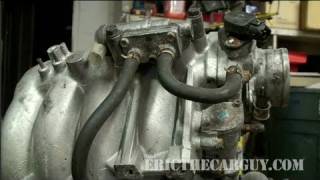
- Rough or Unstable Idle: This is the most common symptom. A leak in the intake gasket allows unmetered air into the engine, disrupting the air-fuel ratio and causing the engine's idle speed to surge or dip erratically. 🎬 Watch: EricTheCarGuy explains how to solve common Honda idle problems.
- Hissing Sounds: A distinct hissing or sucking noise from the engine bay, especially when the engine is running, points to a vacuum leak where air is being pulled through a crack in a hose or a gap in the gasket.
- Check Engine Light: A vacuum leak will cause a lean air-fuel mixture, which can trigger the Check Engine Light. Common codes include P0171 (System Too Lean).
- Poor Acceleration and Reduced Power: The incorrect air-fuel mixture from a leak prevents the engine from producing its full power, leading to sluggish performance.
- Coolant Leaks or Overheating: The intake manifold on the D15B2 engine has coolant passages. A failed gasket can cause coolant to leak externally onto the engine block or, in severe cases, internally into the intake ports. This can lead to unexplained coolant loss and potential engine overheating.
How to Diagnose a Vacuum Leak
If you suspect a vacuum leak, you can perform a simple diagnostic test. With the engine idling, carefully spray a flammable fluid like carburetor cleaner or a propane torch (unlit) around the edge of the intake manifold where it meets the cylinder head. If the engine's idle speed suddenly changes or smooths out, you've found the location of your leak as the engine has momentarily sucked in the combustible spray. A more professional method is a smoke test, where a machine fills the intake tract with smoke, making any leaks easy to see.
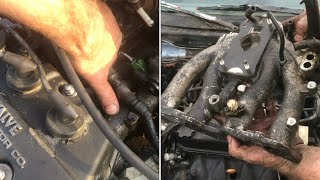
🎬 See this quick tip for finding vacuum leaks in a minute.Buying a Used 1990-1991 Civic Intake Manifold
Since new OEM manifolds are discontinued, a used part is the most common and cost-effective option. Given the age of these vehicles, the used market is primarily composed of parts from dismantled vehicles. Here’s what to inspect:
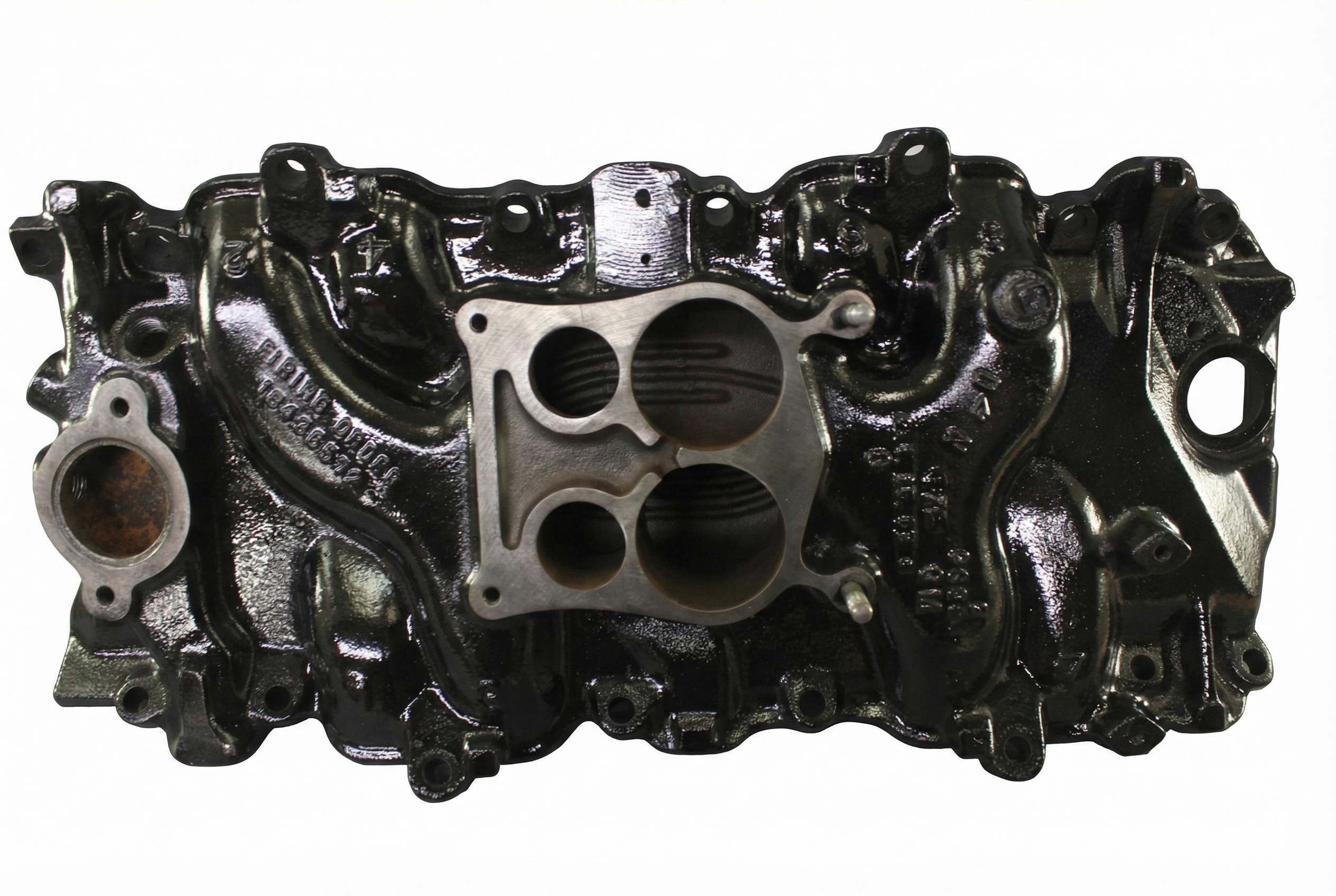
- Verify It's a DPFI Manifold: This is the most critical step. Look for the large, single opening on top where the two-injector throttle body mounts. An MPFI manifold will have four smaller holes for individual injectors on the runners. Ask the seller for clear photos of the top and the runner ports if you are unsure.
- Check for Warping: Overheating can cause the manifold's mating surface to warp. Lay a straight edge or ruler across the surface that bolts to the engine. There should be no significant gaps. A warped manifold will never seal properly, even with a new gasket.
- Inspect for Cracks: Carefully check the entire casting for hairline cracks, especially around bolt holes and the mating surfaces. While rare on these cast aluminum parts, a crack renders the manifold useless.
- Examine Threaded Holes: Make sure all threaded holes for the throttle body, sensors, and mounting brackets are clean and not stripped. Repairing threads can be difficult and costly.
- Check Coolant Passages: Look inside the coolant ports for heavy corrosion or pitting. Excessive corrosion can compromise the gasket's ability to seal.
Pro Tip: Whenever you replace an intake manifold, it is essential to also replace the intake manifold gasket, throttle body gasket, and any brittle or cracked vacuum hoses. These items are inexpensive and are the most likely points of failure.
Cost & Replacement Information
Replacing the intake manifold or its gasket on a 1990-1991 Civic is a straightforward job for a DIY mechanic with basic tools.
Installation Details
- Difficulty Rating: 2.5 out of 5
- Estimated DIY Time: 2-4 hours
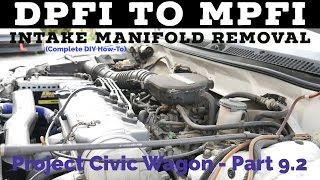
- Is DIY Feasible?: Yes, this is a common DIY repair. Key steps involve draining the coolant, disconnecting fuel lines, sensors, and vacuum hoses, and unbolting a support bracket from underneath the manifold. 🎬 Watch this walkthrough for removing the 88-91 Civic intake manifold.
Cost Comparison
| Part/Service | Estimated Cost | Notes |
|---|---|---|
| New OEM Manifold | N/A | Part is discontinued by Honda. |
| New Aftermarket Manifold | $150 - $250+ | Availability is limited and often geared toward performance MPFI conversions. |
| Used OEM Manifold | $50 - $100 | Commonly found on eBay or at salvage yards. Price depends on condition and included components. |
| Intake Manifold Gasket Set | $10 - $30 | Essential for any replacement. Available from brands like Fel-Pro and Beck/Arnley. |
| Shop Labor (Gasket Replacement) | $285 - $537 | Based on an estimated 2-4 hours of labor. Prices vary by location. |
Recalls and Technical Service Bulletins (TSBs)
As of this writing, there are no specific recalls or TSBs from the National Highway Traffic Safety Administration (NHTSA) that directly address a systemic failure of the intake manifold itself for the 1990-1991 Honda Civic. Any issues are typically related to the age of the gaskets and vacuum lines rather than a manufacturing defect.
Frequently Asked Questions (FAQ)
Can I use an intake manifold from a Civic Si on my DX or LX model?
No, not without extensive modification. The Si uses a Multi-Point Fuel Injection (MPFI) system, while the DX/LX uses a Dual-Point (DPFI) system. You would need to change the wiring harness, ECU, distributor, fuel lines, and other components to perform an MPFI swap.
What else should I replace when changing the intake manifold gasket?
It is highly recommended to replace the throttle body gasket, the thermostat and its O-ring (as the housing is part of the manifold assembly), and all connected vacuum hoses. These hoses become brittle with age and are a common source of vacuum leaks.
Is a coolant leak from the intake manifold area serious?
Yes. A coolant leak can lead to engine overheating, which can cause severe damage like a warped cylinder head. If you see coolant leaking from the gasket area, you should address it immediately.
Will a bad intake manifold gasket always cause a Check Engine Light?
Not always. A very small leak might cause a rough idle or slight hesitation without being significant enough for the engine's computer to trigger a light. However, a moderate to large leak will almost certainly cause a lean condition code and illuminate the light.
Helpful Videos


Technical Specifications
OEM Part Numbers: 17000PM9A02 17000-PM5-A02
Material: Cast Aluminum. Fuel System Compatibility: Dual-Point Fuel Injection (DPFI). Engine Application: Honda D15B2 1.5L.
We Have This Part in Stock

The information in this article is provided for general reference and educational purposes only. Vehicle specifications, procedures, and part compatibility can vary by production date, trim level, and region. Always consult your vehicle's factory service manual and verify part numbers before purchasing or performing repairs. Safety-critical components such as airbags, seat belts, and braking systems should be installed by a qualified professional.
- Honda Civic:
- 🎬 Helpful Videos
- 🛍️ Shop This Part
- Understanding the 1990-1991 Civic 1.5L DPFI Intake Manifold
- Symptoms of a Failing Intake Manifold or Gasket
- How to Diagnose a Vacuum Leak
- Buying a Used 1990-1991 Civic Intake Manifold
- Cost & Replacement Information
- Installation Details
- Cost Comparison
- Recalls and Technical Service Bulletins (TSBs)
- Frequently Asked Questions (FAQ)
- 🎟️ Get 5% Off