

2007-2017 Nissan Altima Intake Manifold: Leaks, Runner Control Issues & Fitment Guide
Diagnose vacuum leaks and rough idling, and learn how to choose the right used intake manifold for your specific Altima generation and production date.
- Pay close attention to compatibility; the 2013 Altima Coupe and Sedan use different manifolds, and 2016 models have a mid-year part change.
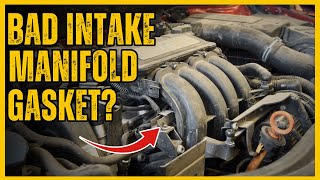
- The most common failure is not the manifold itself, but the intake gasket, especially on 2007-2012 models, causing vacuum leaks and lean codes (P0171).
- On 2013-2017 models, check for code P2004, which points to a faulty Intake Manifold Runner Control sensor, a known issue covered by a TSB.
- When buying used, physically inspect for cracks and warping, and always verify the OEM part number matches your vehicle's specific year and model.
- An Idle Air Volume Learning procedure is usually required after replacement to ensure a smooth idle.
Compatibility Warnings: Critical Model Year Differences
Warning: The 2007-2017 Nissan Altima spans two distinct generations with different intake manifolds. There are also mid-year production changes that make compatibility tricky. Verifying your vehicle's production date and original part number is essential before ordering.
- 2013 Model Year Split: The 2013 Altima Coupe is part of the 4th generation and uses the older style manifold. The 2013 Altima Sedan is the first year of the 5th generation and uses a completely different manifold. These parts are not interchangeable.
- 2016 Model Year Split: For the 2016 Altima, a change was made mid-production. Part number 14001-3TA0G fits models manufactured on or after February 1, 2016. Earlier 2016 models use a different part. Check your vehicle's driver-side door jamb sticker for the production date.
Symptoms of a Failing Intake Manifold
A failing intake manifold, or more commonly a leaking intake manifold gasket, will typically cause a vacuum leak. This means unmetered air is entering the engine, throwing off the air-fuel ratio. Symptoms include:
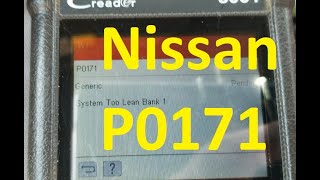
- Check Engine Light: Often with lean codes like P0171 (System Too Lean Bank 1) or P0174 (System Too Lean Bank 2). This is the most common sign. 🎬 See this guide on diagnosing P0171 lean codes
- Rough Idle: The engine may shake, stumble, or have an unstable RPM at idle because of the incorrect air-fuel mixture.
- Hissing or Sucking Noises: A distinct vacuum noise may be heard coming from the engine bay, especially when the engine is running.
- Poor Engine Performance: You may notice a loss of power, hesitation during acceleration, and decreased fuel economy.
- Engine Stalling: In severe cases, the vacuum leak can be large enough to cause the engine to stall, particularly at idle.
- Code P2004 (5th Gen): On 2013-2017 models with the 2.5L engine, a failure of the intake manifold runner control valve position sensor can trigger a P2004 code.
Vehicle-Specific Known Issues, TSBs, and Recalls
4th Generation (2007-2012 Sedan, 2008-2013 Coupe)
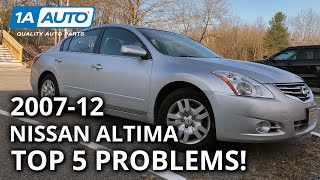
🎬 Watch: Top 5 common problems for 4th Gen AltimasThe most prevalent issue for this generation is the failure of the intake manifold gasket. It is a very common source of vacuum leaks, leading to the symptoms listed above. While the manifold itself is generally durable, the gasket is a frequent wear item. There are no major recalls specifically for the intake manifold itself, but an emissions recall (PC130) for some 2009 models involved inspecting the exhaust manifold, which is connected to the engine head near the intake manifold.
5th Generation (2013-2017 Sedan)
For the 5th generation Altima (and 2014-2017 Rogue) with the 2.5L QR25DE engine, Nissan issued a Technical Service Bulletin (TSB), NTB17-091, for a Check Engine Light with code P2004. This code points to a problem with the Intake Manifold Runner Control (IMRC) valve position sensor. The bulletin advises technicians to replace the sensor, which is bolted to the intake manifold, rather than replacing the entire manifold assembly. This suggests the sensor is a potential point of failure on these models.
Buying a Used Engine Intake Manifold: What to Check
A used OEM intake manifold can be a cost-effective and reliable alternative to an expensive new part, especially since many aftermarket versions can have quality and fitment issues. Here’s what to inspect:
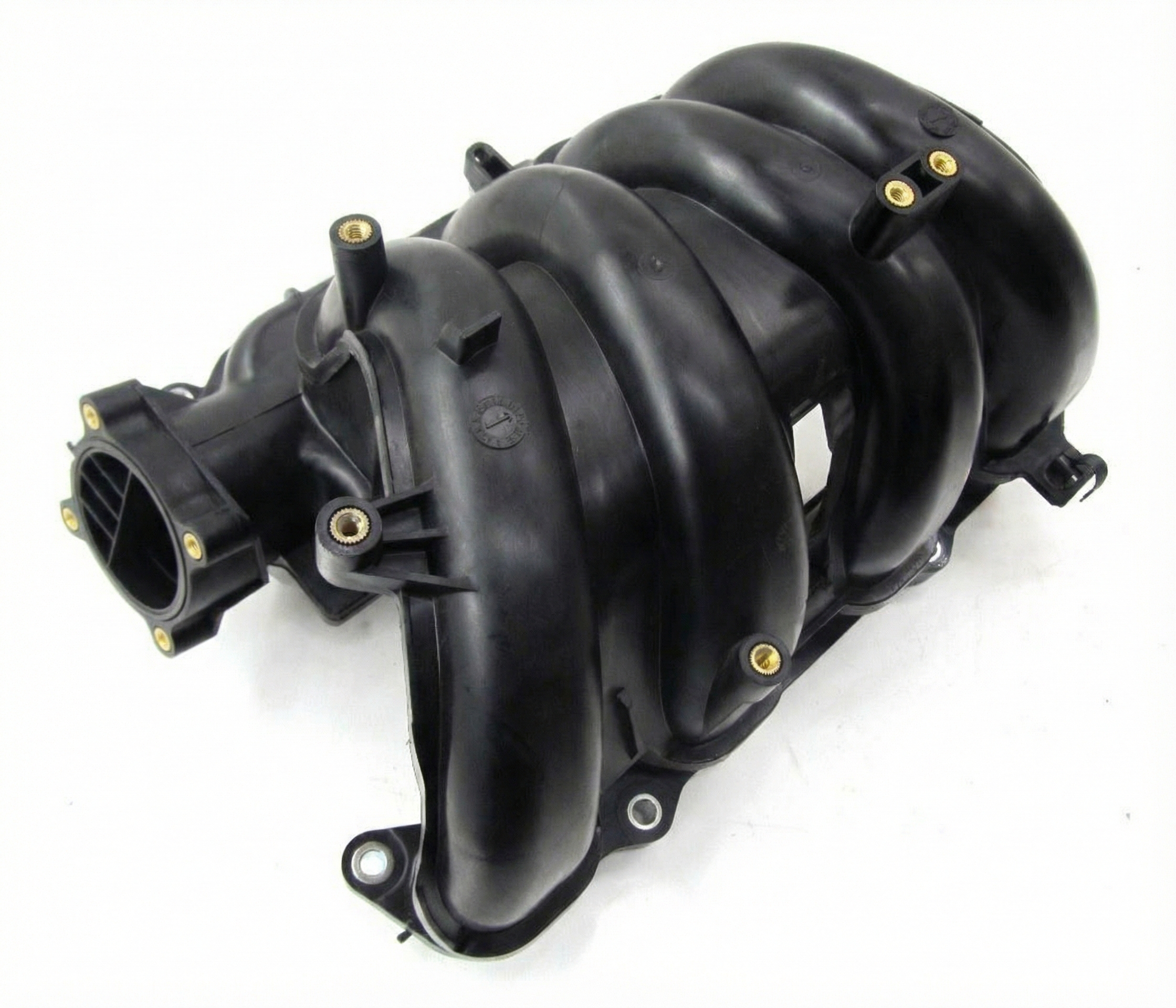
- Check for Cracks: Carefully inspect the entire plastic body of the manifold for hairline cracks, especially around the bolt holes and the seams where the manifold was molded together. Stress from heat cycles and engine vibration can cause the plastic to become brittle over time.
- Inspect Mating Surfaces: Lay a straight edge across the gasket surfaces where the manifold meets the cylinder head and the throttle body. There should be no significant warping or distortion. A warped surface will not seal properly, even with a new gasket.
- Verify Part Numbers: This is the most critical step. Match the part number from your old manifold to the used one you are considering. Key part numbers include 14001-JA00A for the 4th generation (2.5L) and 14001-3TA0G / 14001-3TA1E for the 5th generation (2.5L).
- Check Threaded Inserts: Make sure all metal threaded inserts for mounting the throttle body, fuel rail, and other components are intact and not stripped or pulling out of the plastic.
- Included Components: See if the used manifold includes the throttle body or the IMRC sensor (for 5th gen models). However, always plan on using new gaskets for the manifold-to-head and throttle body connections. Never reuse old gaskets.
Pro Tip: When diagnosing a suspected leak, a mechanic will often use a smoke machine. This tool fills the intake system with visible smoke under low pressure, and any leaks will be immediately obvious as smoke pours out of the cracked manifold or bad gasket.
Replacement Overview & Difficulty
Replacing the intake manifold on a 2007-2017 Altima is a moderately difficult job that requires some patience and mechanical skill. The basic process involves relieving fuel pressure, disconnecting the battery, removing the air intake ducting and throttle body, disconnecting various electrical connectors and vacuum hoses, unbolting the fuel rail, and finally, unbolting the manifold itself. Cleaning the cylinder head surface where the new gasket will sit is critical for a good seal. It is also crucial to tighten the manifold bolts in the correct sequence and to the proper torque specification to avoid cracking the new manifold or creating a leak.
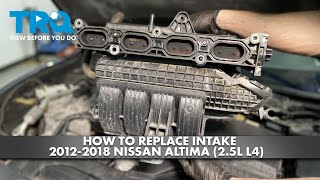
🎬 Watch: Step-by-step intake manifold replacement walkthroughPost-Installation Procedure: After replacing the manifold or throttle body, you will likely need to perform an "Idle Air Volume Learning" procedure. This recalibrates the engine's idle speed. This can be done with a capable OBD-II scan tool or through a specific sequence of turning the key and pressing the accelerator pedal. Failure to do this can result in a high or unstable idle.
Cost Comparison
| Part/Service | Estimated Cost |
|---|---|
| New OEM Manifold | $440 - $680 |
| New Aftermarket Manifold | $150 - $300 |
| Used OEM Manifold | $75 - $150 |
| Shop Labor (Manifold Gasket Replacement) | $250 - $400 |
Frequently Asked Questions (FAQ)
Is it the intake manifold or just the gasket that's bad?
Most of the time, the issue is a failed gasket, which is a common problem on the 4th generation Altima. A visual inspection for cracks on the manifold body or using a smoke test can confirm if the manifold itself is leaking. If there are no visible cracks, simply replacing the gasket is often the correct repair.
Can I reuse my old intake manifold gaskets?
No. Gaskets are single-use parts. They are designed to crush and deform to create a seal. Once they have been compressed and exposed to heat cycles, they will not seal properly a second time. Always install new gaskets when replacing or reinstalling an intake manifold.
What is an Intake Manifold Runner Control (IMRC) valve?
Found on some engines, including the 5th generation 2.5L Altima, the IMRC system uses butterfly valves inside the manifold to change the length of the air's path to the cylinders. This optimizes engine torque at low RPMs and horsepower at high RPMs. A failure in this system can cause a check engine light and may affect performance.
Do I need to do an idle relearn after replacing the intake manifold?
Yes, it is highly recommended. Because you have to disconnect the throttle body and battery, the computer's memory for idle control is often lost. Performing the Idle Air Volume Learning procedure ensures the engine idles smoothly and at the correct RPM after the repair.
Helpful Videos

Technical Specifications
OEM Part Numbers: 14001-JA00A 14001-3TA0G 14001-3TA1E 140013TA0C
Primarily plastic composite construction. Some models feature an integrated Intake Manifold Runner Control (IMRC) system.
We Have This Part in Stock

The information in this article is provided for general reference and educational purposes only. Vehicle specifications, procedures, and part compatibility can vary by production date, trim level, and region. Always consult your vehicle's factory service manual and verify part numbers before purchasing or performing repairs. Safety-critical components such as airbags, seat belts, and braking systems should be installed by a qualified professional.
- Nissan Altima:
- 🎬 Helpful Videos
- 🛍️ Shop This Part
- Compatibility Warnings: Critical Model Year Differences
- Symptoms of a Failing Intake Manifold
- Vehicle-Specific Known Issues, TSBs, and Recalls
- 4th Generation (2007-2012 Sedan, 2008-2013 Coupe)
- 5th Generation (2013-2017 Sedan)
- Buying a Used Engine Intake Manifold: What to Check
- Replacement Overview & Difficulty
- Cost Comparison
- Frequently Asked Questions (FAQ)
- 🎟️ Get 5% Off