

Audi 4.0T Engine Piston Failure: The Link to Turbo Oil Starvation (2013-2018 S6, S7, S8, RS7 & More)
This guide explains how a clogged turbo oil screen leads to piston damage in the 4.0L TFSI V8 and covers symptoms, recalls, and what to check when buying a used piston.
- Piston failure in the 4.0T V8 is almost always secondary damage caused by a clogged turbo oil screen (Recall 21H7), which leads to turbo failure.
- Piston replacement is an engine-out rebuild (5/5 difficulty) with extremely high labor costs, often making a complete used engine replacement more practical.
- Key failure symptoms include severe oil consumption, blue exhaust smoke, engine knocking, and misfire codes (P0300-P0308).
- Before any major repair, a compression test and cylinder leak-down test are essential to confirm internal engine damage.
Understanding Piston Failure in the Audi 4.0T Engine
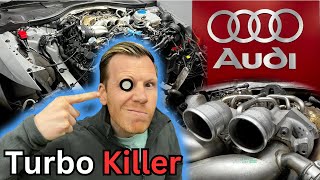
🎬 Watch: A complete reliability breakdown of the 4.0T engine.

Critical Warning: Problems in the Audi 4.0T V8 are often interconnected. Piston failure is rarely an isolated event. It is most often a secondary consequence of turbocharger failure caused by a clogged oil strainer. When a turbo fails from oil starvation, it can send metal debris through the engine, damaging cylinder walls and pistons. It is critical to diagnose the entire system, not just one component.
The Real Culprit: Turbocharger Oil Screen (Recall 21H7)
The single most important issue to understand on the 4.0T engine is the lubrication system for the turbochargers. A small, fine-mesh oil screen filters the oil supplied to the turbos. Over time, this screen can become clogged with carbon deposits and sludge.
This blockage starves the turbos of lubrication, causing their bearings to fail catastrophically. This can lead to an engine stall, increasing the risk of a crash. Audi issued a safety recall (NHTSA ID: 22V178000, Audi Recall Code: 21H7) for many 2013-2017 models to address this. The fix involves replacing the original screen with an updated part that has a larger mesh, along with an oil change. 🎬 See this DIY walkthrough for replacing the turbo oil strainer. If you own one of these vehicles, it is imperative to ensure this recall has been performed.
Symptoms of Engine Piston Failure
Piston or piston ring failure leads to a loss of compression and allows oil to enter the combustion chamber. Watch for these specific symptoms:
- Excessive Oil Consumption: This is a primary indicator. If you are adding a quart of oil every 1,000-2,000 miles, it's a major red flag for worn piston rings or scored cylinders.
- Blue or Gray Exhaust Smoke: Smoke coming from the tailpipe, especially during acceleration, is a clear sign that oil is being burned in the combustion chamber.
- Engine Knocking or Tapping Sounds: A rhythmic tapping or knocking noise that changes with engine speed can indicate 'piston slap' against a scored cylinder wall or a problem with the connecting rod.
- Loss of Power and Rough Idle: Damaged pistons or rings reduce cylinder compression, leading to poor performance, a rough idle, and hesitation during acceleration.
- Check Engine Light (CEL): A loss of compression will often cause misfires, triggering a flashing Check Engine Light and storing diagnostic trouble codes. Common codes include P0300 (Random/Multiple Cylinder Misfire) and P0301-P0308 (for specific cylinders).
Pro Tip: If you experience these symptoms, a professional technician should perform a compression test and a cylinder leak-down test. These tests measure each cylinder's ability to hold pressure and can confirm internal engine damage before you begin any costly disassembly.
Buying a Used Engine Piston: A Buyer's Guide

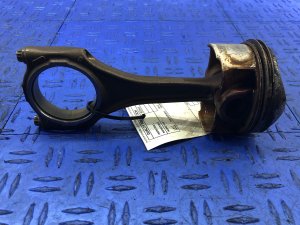
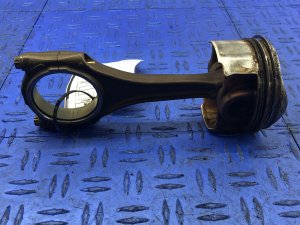
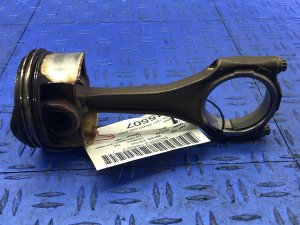
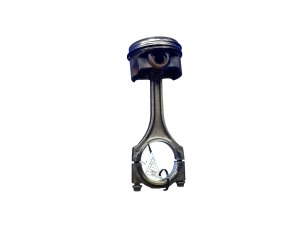
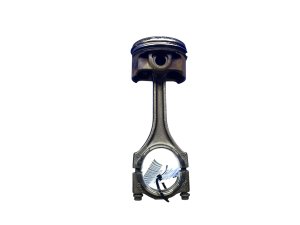
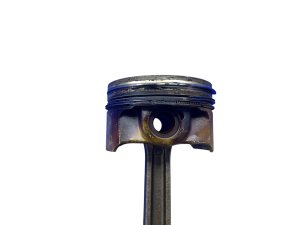
Replacing a single piston in a 4.0T engine is a massive undertaking that requires a full engine rebuild. Due to the extremely high labor costs, it is often more practical to replace the entire engine with a verified, low-mileage used unit. However, if you are committed to a rebuild, here is what to look for in a used piston and connecting rod assembly.
Physical Inspection Checklist:
- Piston Skirt: Carefully inspect the sides of the piston (the skirt) for any vertical scoring or scuff marks. Deep scratches indicate it was running in a damaged cylinder and should be rejected.
- Piston Crown: Look at the top of the piston. Check for any signs of melting, pitting, or impact marks from valves. This could indicate tuning issues, overheating, or timing failure.
- Ring Lands: The grooves that hold the piston rings must be clean and free of cracks. Any damage here means the piston is unusable.
- Connecting Rod: Check the connecting rod for any signs of discoloration (from heat) or bending. A bent rod is a sign of severe internal trauma like hydrolock (fluid in the cylinder).
- Wrist Pin: The wrist pin should move freely within the piston but the connecting rod should have no up-and-down play.
Compatibility Verification:
Warning: Audi used different pistons across the 4.0T engine family. High-output versions found in the S8 Plus or RS7 Performance may have different pistons with a lower compression ratio than standard models. Always verify compatibility using the OEM part number and the engine code (e.g., CRDB, CWUB, CEUA, DDTA) from the donor vehicle. Installing the wrong piston can lead to catastrophic engine failure.
| Vehicle | Years | Common Engine Codes |
|---|---|---|
| Audi A8 / A8 Quattro | 2013-2018 | CEUA, CGTA |
| Audi S6 | 2013-2018 | CEUC, CTGE |
| Audi S7 | 2013-2018 | CEUC, CTGE |
| Audi S8 | 2013-2018 | CGTA, CTFA, DDTA |
| Audi RS6 | 2013-2018 | CRDB, CWUB |
| Audi RS7 | 2014-2018 | CRDB, CWUB |
Note: This list is not exhaustive. Always confirm your specific engine code before ordering parts.
Cost Breakdown for Piston Replacement
Replacing engine pistons is not a simple repair; it is a complete engine rebuild. The costs reflect the extremely high labor involved.
| Item | Estimated Cost | Notes |
|---|---|---|
| New OEM Piston (Single) | $400 - $650 | Price for one piston and ring set from a dealer. |
| New Aftermarket Piston Set (8) | $450 - $2,500+ | Varies from standard replacement to high-performance forged sets. |
| Used OEM Piston (Single) | $30 - $100 | A cost-effective option for a rebuild if the part is thoroughly inspected. |
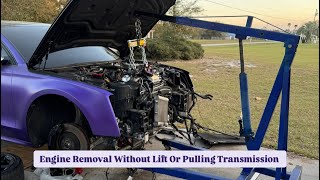
| Shop Labor for Piston Replacement | $8,000 - $15,000+ | This is the dominant cost. The engine must be removed and completely disassembled. | 🎬 Watch: How to remove a 4.0T engine without a lift.
| Used Complete Engine | $6,000 - $12,000 | Often a more practical and economical solution than rebuilding the original engine. |
Frequently Asked Questions (FAQ)
What is the main cause of piston failure in the 2013-2018 Audi 4.0T engine?
The most common cause is not a defect in the piston itself, but secondary damage resulting from turbocharger failure. A clogged oil screen starves the turbos of oil, causing them to break apart and send metal fragments into the cylinders, which damages the pistons and cylinder walls.
Can I just replace one bad piston in my S6, S7, or A8?
While technically possible, it is almost never recommended. The labor cost to remove the engine and tear it down is so high that it makes little financial sense to replace just one piston. If one piston failed due to debris, other cylinders are likely damaged as well. A complete, inspected used engine is often a safer and more economical choice.
How do I know if my Audi has the faulty turbo oil screen?
The issue primarily affects 2013-2017 models. Audi issued a recall (code 21H7). You can contact any Audi dealer with your Vehicle Identification Number (VIN) or use the NHTSA's website to check if your specific vehicle is part of the recall and if the service has been completed.
Is a used 4.0T engine a better option than rebuilding mine?
In many cases, yes. Given that labor for a rebuild can exceed $10,000, purchasing a warrantied, low-mileage used engine for a similar price can be a faster and more reliable solution. This is especially true if the failure was catastrophic and damaged the engine block or crankshaft in addition to the pistons.
Helpful Videos


Technical Specifications
OEM Part Numbers: 079107066DT 079107066EG 079107066EJ 079107066EL 079107066EM 079107066EN 079107066EP 079107104CJ 079198401L
Standard Bore Diameter: 84.5mm. Wrist Pin Diameter: 22mm. Compression ratios vary between standard and high-output models (e.g., 10.1:1 vs 9.3:1).
We Have This Part in Stock

The information in this article is provided for general reference and educational purposes only. Vehicle specifications, procedures, and part compatibility can vary by production date, trim level, and region. Always consult your vehicle's factory service manual and verify part numbers before purchasing or performing repairs. Safety-critical components such as airbags, seat belts, and braking systems should be installed by a qualified professional.
- Audi A8:
- Audi RS7:
- Audi S8:
- Audi S6:
- Audi S7:
- Audi A8 Quattro:
- Audi RS6:
- 🎬 Helpful Videos
- 🛍️ Shop This Part
- Understanding Piston Failure in the Audi 4.0T Engine
- The Real Culprit: Turbocharger Oil Screen (Recall 21H7)
- Symptoms of Engine Piston Failure
- Buying a Used Engine Piston: A Buyer's Guide
- Physical Inspection Checklist:
- Compatibility Verification:
- Cost Breakdown for Piston Replacement
- Frequently Asked Questions (FAQ)
- 🎟️ Get 5% Off