

Audi & VW 3.0T Supercharged Piston Failure: The Real Story Behind Excessive Oil Consumption (2010-2019)
This guide explains why the 3.0T engine in the Audi A6, A7, A8, S4, S5, Q5, Q7, and VW Touareg can suffer from oil consumption, and how to diagnose if the pistons are truly the cause.
- Excessive oil consumption is the primary symptom, but always diagnose the PCV valve first, as its failure can mimic piston ring issues.
- The root cause is often not a broken piston, but rather carbon buildup causing the oil control rings to stick in their grooves.
- Piston replacement is an engine-out procedure, making shop labor the most significant expense by far.
- When buying a used piston, carefully inspect the skirts for scoring and the ring lands for cracks or heavy carbon deposits.
The Connection Between 3.0T Oil Consumption and Piston Problems
The 3.0L TFSI Supercharged V6 engine, used across a wide range of Audi and Volkswagen models, is generally robust. However, a significant number of owners of the 2014-2017 Audi A8, 2014-2017 Audi S5, 2012-2018 Audi A6, 2010-2019 Audi Q7, 2010-2017 Audi S4, 2012-2018 Audi A7, 2011-2018 Volkswagen Touareg, and 2012-2017 Audi Q5 have reported issues with excessive oil consumption. While several factors can contribute to this, the primary internal engine cause often traces back to the piston rings.
Over time, carbon deposits can build up in the piston's ring lands (the small grooves the rings sit in). This buildup can cause the oil control rings to become stuck, preventing them from properly scraping oil from the cylinder walls. This excess oil is then burned during combustion, leading to a gradual but steady drop in the engine oil level. In severe cases, this can lead to low compression, fouled spark plugs, and eventually, catastrophic engine damage.
Symptoms of a Failing Engine Piston
A failing piston or, more commonly, failing piston rings will present several distinct symptoms. It's crucial to address these early to prevent further engine damage.
1. Excessive Oil Consumption
This is the most common and earliest symptom. You may find yourself needing to add a quart of oil every 800-1,500 miles, or even more frequently in advanced cases. While Audi has historically stated that some oil consumption is normal, a rapid increase or consumption exceeding one quart every 2,000 miles warrants investigation.
🎬 Watch: Common causes for oil consumption in the 3.0T engine2. Blue or Gray Exhaust Smoke
When oil enters the combustion chamber and burns with the fuel, it produces a distinct blue or gray smoke from the exhaust pipe. This may be most noticeable on a cold start or during heavy acceleration. A single puff of blue smoke on a cold start can sometimes be attributed to valve stem seals, but persistent smoke points towards a piston ring issue.
3. Loss of Power and Poor Compression
Worn or stuck piston rings fail to create an effective seal in the cylinder. This allows combustion gases to leak past the piston (a condition known as "blow-by"), reducing the engine's compression. The result is a noticeable loss of power, sluggish acceleration, and poor fuel economy. A compression test is a definitive way to diagnose this problem.
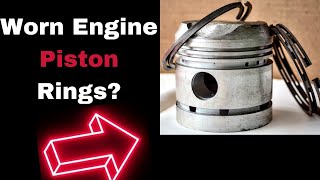
🎬 See this breakdown of the 7 signs of worn piston rings4. Engine Knocking or Pinging
In cases of severe wear, the piston may start to move excessively within the cylinder bore, creating a rattling or knocking sound. This is known as piston slap. More severe failure, such as a damaged connecting rod bearing, will produce a much louder, deeper knocking sound that increases with engine RPM.
5. Misfire-Related Check Engine Light
Excessive oil burning can foul the spark plugs, leading to incomplete combustion and engine misfires. This will trigger a Check Engine Light with codes ranging from P0300 (Random/Multiple Cylinder Misfire) to P0301-P0306, indicating a misfire in a specific cylinder.
Pro Tip: Before condemning the pistons, always diagnose the PCV (Positive Crankcase Ventilation) system. A failed PCV valve is a very common issue on the 3.0T engine and can cause symptoms nearly identical to failing piston rings, including high oil consumption and a rough idle. Replacing the PCV is significantly cheaper and easier than an engine teardown.
Buying a Used 3.0T Engine Piston
Given that a new OEM piston assembly can be expensive, a quality used OEM piston is a viable option, especially since the labor to replace it is the most significant part of the cost. Careful inspection is key to getting a reliable part.
What to Physically Inspect
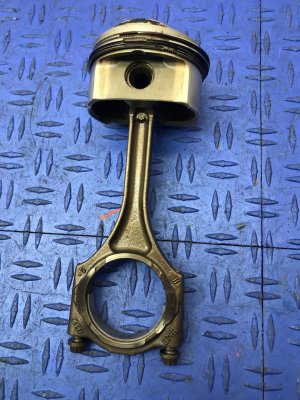
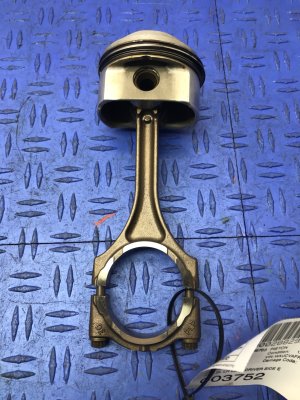
- Piston Skirt: Look for any deep scratches or scoring on the sides of the piston (the skirt). A smooth, even surface is ideal. Minor scuffing can be normal, but deep vertical grooves indicate it was run in a damaged cylinder.
- Ring Lands: Check the grooves where the piston rings sit. Ensure they are clean, free of heavy carbon buildup, and not cracked or broken. The rings should move freely in their grooves.
- Piston Crown: The top of the piston should be free of any pitting, melting, or cracks. These are signs of detonation or running lean, which could have compromised the piston's integrity.
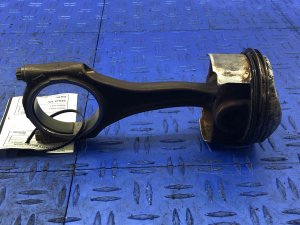
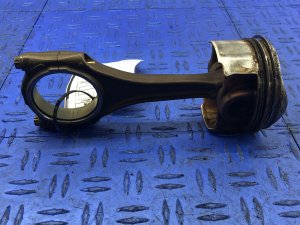
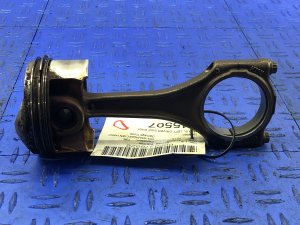
- Connecting Rod: Ensure the connecting rod is straight and not discolored from heat. Check the wrist pin (which connects the piston to the rod) for smooth movement. The big end of the rod, where it connects to the crankshaft, should be perfectly round.
Compatibility and Part Numbers
This piston is specifically for the right (passenger side) bank of the engine, which contains cylinders 1-3. The left (driver side) bank uses a different part number. Always verify the OEM part number you are purchasing. The part number 06E107066DM is a common revision that supersedes older numbers like 06E107066CJ, 06E107066CL, and 06E107066CN.
Mileage and Red Flags
Mileage is less important than the physical condition of the piston. A part from a 100,000-mile engine that shows no signs of scoring or heat damage is a better choice than a part from a 50,000-mile engine that has visible damage. The biggest red flag is any sign of overheating, such as blueish discoloration on the connecting rod, or pitting on the piston crown.
Known Issues, TSBs, and Recalls
While there are no specific recalls for piston failure on these models, Audi has issued Technical Service Bulletins (TSBs) for earlier 3.0T models related to excessive oil consumption. TSB 17-15-61 (for 2009-2012 models) acknowledges that certain driving conditions could increase oil consumption and outlines a procedure involving the replacement of the crankcase pressure regulating valve (PCV) and a software update. This highlights that the manufacturer is aware of oil consumption issues with this engine platform. A class action investigation was also initiated regarding oil consumption in 2015-2019 models with the 3.0T engine.
Replacement Information
Warning: Piston replacement is one of the most intensive and complex automotive repairs. It requires the complete removal of the engine from the vehicle and a full teardown. This is not a DIY project for a home mechanic and should only be performed by an experienced professional technician with the correct tools.
- Difficulty Rating: 5 out of 5 (Expert level)
- Estimated Time: 25 - 40 hours
- DIY Feasible: No
Cost Comparison
The cost of the part itself is small compared to the extensive labor required for installation. This is why a thoroughly inspected used OEM part can provide significant value.
| Part Type | Estimated Cost |
|---|---|
| New OEM (Single Piston) | $290 - $430 |
| New Aftermarket (Often sold in sets) | $150 - $500 (for a set of 6) |
| Used OEM (Single Piston) | $30 - $75 |
| Shop Labor | $3,500 - $6,000+ |
Frequently Asked Questions (FAQ)
Why do the piston rings on the 3.0T engine fail?
The primary cause is typically carbon buildup on the oil control rings. This can be exacerbated by extended oil change intervals, the type of oil used, and short-trip driving cycles where the engine doesn't reach optimal temperature for long enough to burn off deposits. The stuck rings can no longer effectively manage the oil on the cylinder walls, leading to consumption.
Can I just replace the piston rings instead of the whole piston?
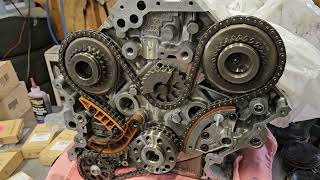
Yes, piston ring sets are available. However, the labor involved is identical to replacing the entire piston assembly, as the engine must still be completely disassembled. For this reason, it is often recommended to replace the piston and rings together, 🎬 Watch: A look at the 3.0T OEM piston rebuild kit especially if the old piston shows any signs of wear on the skirt or in the ring lands.
What is a "piston soak" and can it fix my oil consumption?
A "piston soak" is a DIY procedure where a chemical solvent (like Berryman B-12 Chemtool or Sea Foam) is poured directly into the cylinders through the spark plug holes and left to sit for several hours or days. The goal is for the solvent to dissolve the carbon buildup and free the stuck piston rings. Many owners have reported a significant reduction in oil consumption after performing this procedure, followed by an immediate oil change. While not a guaranteed fix, it is often considered a worthwhile first step before committing to an expensive engine teardown.
Why is this part specific to the right (passenger side) bank?
In a "V" engine like the 3.0T, the pistons for each bank can have slight differences in their design, such as the offset of the wrist pin, to account for the geometry of the connecting rods and crankshaft. The right bank consists of cylinders 1, 2, and 3, while the left (driver's side) bank has cylinders 4, 5, and 6. Using the wrong piston can lead to improper engine balance, noise, and premature wear.
Helpful Videos
Technical Specifications
OEM Part Numbers: 06E107066CJ 06E107066CL 06E107066CN 06E107066DM 06E107066DS 06E107066EC
For Right (Passenger Side) Cylinder Bank of 3.0L Supercharged V6 Gasoline Engine. Standard Bore Size: 84.5mm.
We Have This Part in Stock

The information in this article is provided for general reference and educational purposes only. Vehicle specifications, procedures, and part compatibility can vary by production date, trim level, and region. Always consult your vehicle's factory service manual and verify part numbers before purchasing or performing repairs. Safety-critical components such as airbags, seat belts, and braking systems should be installed by a qualified professional.
- Audi A8:
- Audi S5:
- Audi A6:
- Audi Q7:
- Audi S4:
- Audi A7:
- Volkswagen Touareg:
- Audi Q5:
- 🎬 Helpful Videos
- 🛍️ Shop This Part
- The Connection Between 3.0T Oil Consumption and Piston Problems
- Symptoms of a Failing Engine Piston
- 1. Excessive Oil Consumption
- 2. Blue or Gray Exhaust Smoke
- 3. Loss of Power and Poor Compression
- 4. Engine Knocking or Pinging
- 5. Misfire-Related Check Engine Light
- Buying a Used 3.0T Engine Piston
- What to Physically Inspect
- Compatibility and Part Numbers
- Mileage and Red Flags
- Known Issues, TSBs, and Recalls
- Replacement Information
- Cost Comparison
- Frequently Asked Questions (FAQ)
- 🎟️ Get 5% Off