

Audi & VW 4.2L V8 Engine Piston Guide: Oil Consumption, Failure Symptoms, and Replacement Costs
This guide covers the common piston and ring failures causing excessive oil consumption in the 4.2L FSI V8 found in the Audi R8, RS5, RS4, S5, A6, A8, Q7, and VW Touareg.
- The primary issue with these 4.2L V8 engines is excessive oil consumption caused by faulty piston ring design.
- Piston replacement is an expert-level, engine-out job with labor costs often exceeding $5,000. It is not a DIY task.
- These engines use different part numbers for pistons in the left bank (cylinders 5-8) versus the right bank (cylinders 1-4). Verify the correct part before ordering.
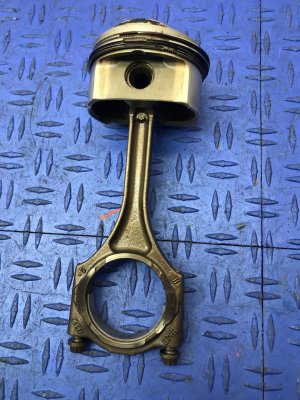
- When buying a used piston, the most critical inspection is for cracks in the ring lands (the grooves that hold the rings), as this is a common failure point.
Known Issues with the 4.2L V8 FSI Engine Piston
The most significant and widely documented issue with the 4.2L V8 FSI engine used across the 2007-2015 AUDI R8, 2010-2015 AUDI RS5, 2006-2008 AUDI RS4, 2008-2012 Audi S5, 2008-2012 Audi A6/A8 Quattro, 2007-2010 Audi Q7, and 2009-2017 Volkswagen Touareg is excessive oil consumption. This problem is most often traced back to the design of the factory piston rings. Over time, these rings can become stuck or fail to properly seal against the cylinder walls, allowing engine oil to seep into the combustion chamber and burn along with the fuel. While many high-performance engines consume some oil, consumption rates of one quart every 1,000-1,500 miles are commonly reported with these engines, indicating a clear problem.
Other related issues include:
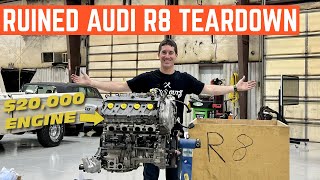
- Cylinder Bore Scoring: In severe cases, a failed piston or broken piston ring can cause deep scratches, known as scoring, on the cylinder walls. The engine block in the 4.2L V8 uses an Alusil lining, which is a special silicon-crystal surface. If this surface is deeply scored, it often requires expensive machine work or even sleeving 🎬 Watch: Tearing down a ruined R8 engine to inspect damage the cylinder to repair.
- Carbon Buildup: As a Fuel Stratified Injection (FSI) engine, fuel is injected directly into the cylinder, meaning it doesn't wash over and clean the intake valves. This leads to carbon deposit buildup on the valves over time, which can restrict airflow and cause performance issues. While not a piston failure itself, it's a common maintenance item on these engines.
- Timing Chain Component Wear: The 4.2L V8's timing chains, guides, and tensioners are located at the rear of the engine, against the firewall. Replacing them is an engine-out procedure. Because piston replacement also requires removing the engine, it is standard practice to replace all timing components at the same time to avoid a similarly massive labor bill in the future.
Compatibility Warning: The 4.2L V8 engine uses different pistons for each cylinder bank. Part numbers ending in '65' (e.g., 079107065AS) are for the left bank (cylinders 5, 6, 7, and 8). Part numbers ending in '66' (e.g., 079107066CS) are for the right bank (cylinders 1, 4, 3, and 2). You must order the correct piston for your specific cylinder.
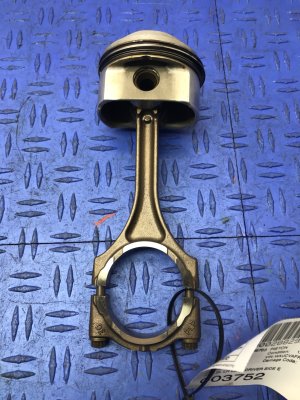
Vehicle-Specific Fitment: This piston fits the 2008-2012 Audi S5 Coupe only. It does NOT fit the S5 Cabriolet (convertible) or Sportback models from the same years, as they used a different 3.0L supercharged V6 engine.
Symptoms of a Failing Engine Piston
A failing piston or worn piston rings in the 4.2L V8 will produce several noticeable symptoms. The most common are related to oil consumption and loss of compression.
- Excessive Oil Consumption: The most common sign is the need to frequently add engine oil. You may see the low oil warning light illuminate far more often than normal, sometimes as frequently as every 1,000 miles.
- Blue or Gray Exhaust Smoke: When oil enters the combustion chamber, it burns with the fuel, producing a distinct blue- or gray-tinted smoke from the exhaust. This is often accompanied by a noticeable smell of burning oil.
- Engine Knocking or Piston Slap: A worn piston can rock inside the cylinder, creating a metallic tapping or knocking sound. This noise, often called "piston slap," can be more pronounced when the engine is cold but may persist when warm if wear is severe.
- Loss of Power and Sluggish Acceleration: Worn rings or a damaged piston leads to a loss of compression in that cylinder. This results in reduced engine performance, poor acceleration, and a feeling that the engine is struggling or misfiring.
- Check Engine Light (CEL): A loss of compression often leads to incomplete combustion, triggering a misfire. This will illuminate the Check Engine Light. Common codes include P0300 (Random/Multiple Cylinder Misfire) or cylinder-specific codes from P0301 to P0308.
Buying a Used Engine Piston: What to Check
Since piston replacement is so labor-intensive, saving money on the part itself is a smart move. A used OEM piston is preferable to a cheap aftermarket alternative because it will match the weight, material, and thermal expansion properties of the other pistons in your engine, which is critical for maintaining balance in a high-performance V8. Here is a detailed checklist for inspecting a used piston before purchase:
Pro Tip: Before inspecting, clean the piston with a solvent and a soft brush. Do not use a wire wheel or abrasive scraper, as this can damage the soft aluminum surfaces.
| Inspection Area | What to Look For | Red Flag (Do Not Buy) |
|---|---|---|
| Piston Crown (Top Surface) | Check for an even layer of carbon. Some carbon is normal. | Any signs of melting, pitting, holes, or impact marks. This indicates severe detonation or foreign object damage in the donor engine. |
| Ring Lands (Grooves for Rings) | Ensure the grooves are clean and sharp-edged. | Any visible cracks between the grooves. This is the most common failure point and makes the piston completely unusable. |
| Piston Skirt (Sides) | Look for the original gray anti-friction coating. Light vertical scuffing or wear is acceptable. | Deep vertical scratches (scoring) that you can catch a fingernail on. Also, any areas where the aluminum appears smeared or melted (galling). |
| Pin Bore & Boss | The hole for the wrist pin should be smooth and round. Check the surrounding support structure (the boss) for integrity. | Cracks originating from the pin bore. Any signs of heat discoloration (blueing) around the pin, which suggests lubrication failure. |
Replacement Difficulty & Labor Costs
Difficulty: 5 out of 5 (Expert Level)
Replacing an engine piston is one of the most complex and labor-intensive jobs that can be performed on a vehicle. It is not a feasible DIY project for a home mechanic. The procedure requires removing the engine and transmission from the vehicle, complete disassembly of the engine, specialized tools for honing the cylinders and pressing wrist pins, and meticulous reassembly following precise torque specifications.
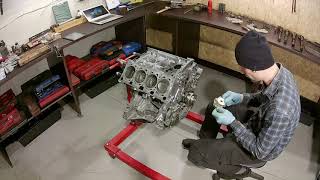
🎬 See a time-lapse of a complete 4.2 FSI engine rebuild- Estimated Time: 40-60 hours
- DIY Feasible: No
- Estimated Shop Labor Cost: $5,000 - $9,000+
The labor cost can vary significantly based on shop rates and the extent of the work. A dealer quote can be substantially higher, potentially exceeding $15,000 when including related parts. Because the labor is so extensive, it is highly recommended to perform a full rebuild, including new piston rings on all cylinders, all bearings, seals, gaskets, and a complete timing chain service.
Cost Comparison
| Part or Service | Estimated Cost |
|---|---|
| New OEM Piston (Single) | $200 - $300 |
| New Aftermarket Forged Piston (Single) | $90 - $150 |
| Used OEM Piston (Single) | $30 - $90 |
| Shop Labor (Piston Replacement) | $5,000 - $9,000+ |
| Complete Engine Rebuild Kit (Aftermarket) | $600 - $2,000+ |
| Low-Mileage Used Engine | $4,000 - $8,000+ |
Frequently Asked Questions (FAQ)
Can I just replace one bad piston?
Yes, it is physically possible to replace a single piston, and using a good used OEM piston is the best way to do this to maintain engine balance. However, due to the massive labor cost to get to the piston, it is almost always more cost-effective to at least replace the piston rings and connecting rod bearings on all eight cylinders while the engine is disassembled.
Will replacing the pistons and rings fix the oil consumption?
In most cases, yes. The excessive oil consumption in the 4.2L V8 is primarily attributed to the piston ring design. Replacing the pistons with new rings (especially if using an updated ring design from an aftermarket supplier) should resolve the problem, provided the cylinder walls are not scored or out of round. It is crucial to have a machine shop inspect and properly hone the cylinder walls during the rebuild.
Is a used engine a better option than rebuilding?
It can be. You should compare the total estimated cost of a professional engine rebuild (parts + machine shop labor + assembly labor) with the price of a warrantied, low-mileage used engine. A used engine can be a faster solution, but it carries the risk of having the same inherent piston ring issues unless it's from a very low-mileage vehicle.
What other parts MUST be replaced during a piston job?
Since the engine is fully disassembled, you must replace all single-use torque-to-yield bolts, including head bolts and connecting rod bolts. You should also replace all gaskets, seals, and bearings (main bearings, rod bearings). Given the labor involved, it is extremely wise to also replace the complete timing chain system (chains, tensioners, guides), water pump, and thermostat.
What are the torque specs for the connecting rod bolts?
According to a service manual for the similar BHF 4.2L V8 engine, the connecting rod bolts are torque-to-yield and should be replaced. The tightening procedure is a multi-step process: torque to 30 Nm (22 ft-lbs), then tighten an additional 90 degrees (1/4 turn). Always verify the correct specification for your exact engine code before assembly.
Helpful Videos
Technical Specifications
OEM Part Numbers: 079107065AS 079107065CS 079107065CT 079107065T 079107066AD 079107066CL 079107066CS 079107066CT 079107066DC 079107066T 07L107066AC 7L107066AC
Engine: 4.2L V8 FSI (Fuel Stratified Injection) Cylinder Bore: 84.5 mm Piston Stroke: 92.8 mm Compression Ratio: ~12.5:1 Cylinder Banks: Right (1-4), Left (5-8) Connecting Rod Bolt Torque (BHF engine reference): 30 Nm + 90° turn (replace bolts)
We Have This Part in Stock

The information in this article is provided for general reference and educational purposes only. Vehicle specifications, procedures, and part compatibility can vary by production date, trim level, and region. Always consult your vehicle's factory service manual and verify part numbers before purchasing or performing repairs. Safety-critical components such as airbags, seat belts, and braking systems should be installed by a qualified professional.
- AUDI R8:
- AUDI RS5:
- AUDI RS4:
- Audi S5:
- Audi A6 Quattro:
- Audi A8 Quattro:
- Audi Q7:
- Volkswagen Touareg: