

Engine Piston Guide: 2015-2025 Genesis, Hyundai & Kia Models
This guide covers common piston failures, symptoms, and replacement costs for the 2.5L Turbo, 3.5L Turbo, and 5.0L V8 engines found in many popular Genesis, Hyundai, and Kia vehicles.
- This guide covers multiple engines (2.5T, 3.5T, 5.0L V8); you must correctly identify your engine before buying parts.
- Symptoms of piston failure include high oil consumption, blue/gray exhaust smoke, loss of power, and engine knocking.
- Piston replacement is an expert-level job requiring a full engine teardown; the labor cost will far exceed the part cost.
- For the 5.0L V8, pistons are specific to the left or right bank and are graded for balance. Always verify the correct part for your application.
Engine & Vehicle Application Guide
The vehicles covered in this guide use several different engines, each with its own specific piston design. It is crucial to identify your vehicle's engine before sourcing a replacement piston. The initial part numbers provided span multiple engine families, highlighting the importance of correct identification.
| Engine | Displacement | Commonly Found In | Known Piston Part Numbers |
|---|---|---|---|
| Smartstream 2.5L Turbo (Theta III) | 2.5L I-4 | 2022-2025 Genesis G70, 2022-2025 Genesis GV70, 2021-2025 Hyundai Santa Fe, 2022-2025 Hyundai Santa Cruz, 2021-2025 Hyundai Sonata, 2021-2024 Kia K5 | 23410-2S000, 23410-2S001 |
| Lambda II 3.5L Twin-Turbo | 3.5L V6 | 2021-2025 Genesis G80, 2021-2025 Genesis GV80, 2022-2025 Genesis GV70 | (Varies by application) |
| Tau 5.0L V8 | 5.0L V8 | 2015-2016 Hyundai Genesis, 2017-2020 Genesis G80, 2017-2022 Genesis G90 | 23041-3FAA0 (Grade A, Left), 23041-3FAB0 (Grade B, Left) |
Warning: The 5.0L V8 engine uses different pistons for the left and right cylinder banks. Additionally, pistons are often factory-graded (e.g., Grade A, Grade B) for precise balancing. Always verify the correct side and grade for your specific engine before purchasing.
Symptoms of Piston or Piston Ring Failure
Piston-related failures can cause significant engine problems. The symptoms are often related to a loss of compression or improper oil control. Here are the most common signs:
- Excessive Oil Consumption: One of the most common symptoms is a noticeable increase in oil consumption. Worn or damaged piston rings can no longer effectively scrape oil from the cylinder walls, allowing it to enter the combustion chamber and burn off. You may find yourself needing to add oil between scheduled changes.
- Blue or Gray Exhaust Smoke: When oil enters the combustion chamber and burns with the fuel, it produces a distinct blue-gray smoke from the exhaust pipe, often accompanied by a burning oil smell. This is a strong indicator of piston ring or valve seal issues.
- Loss of Engine Power and Poor Acceleration: Piston rings are essential for sealing the combustion chamber to build compression. When they fail, compression is lost, leading to a noticeable decrease in engine power, sluggish acceleration, and difficulty climbing hills.
- Engine Knocking or Pinging: A damaged piston can move excessively within the cylinder, creating a metallic knocking or slapping sound. This condition, known as piston slap, is often more pronounced when the engine is cold. Severe knocking can also be caused by bearing failure, which is a related issue in some of these engines.
- Engine Misfires and Rough Idle: Loss of compression in one or more cylinders can lead to incomplete combustion, causing the engine to misfire. This can trigger a flashing Check Engine Light and result in a rough or unstable idle. Common diagnostic trouble codes (DTCs) include P0300 (Random Misfire) or P0301-P0308 (for specific cylinders).
Known Issues, TSBs, and Recalls
While not all models have piston-specific recalls, several engine-related issues and recalls are relevant to owners of these vehicles.
For 2.5L Turbo Engines (Sonata, Santa Fe, Santa Cruz, K5, G70, GV70)
- PCV System Issues: Technical Service Bulletin TSB 21-EM-012H notes that a misassembled PCV check valve can cause engine oil to contaminate the air cleaner and intake system on some 2021-2022 Sonata, Santa Fe, and 2022 Santa Cruz models. This can lead to oil consumption and other performance issues.
- Fuel Pipe Leaks: Several recalls (NHTSA ID: 21V519000) were issued for 2021-2022 Santa Fe, Sonata, Sorento, and K5 models with the 2.5L turbo engine due to a fuel pipe connection that may not have been torqued sufficiently, creating a risk of a fuel leak and engine fire.
For 5.0L V8 Engines (Genesis, G80, G90)
- Coolant Leaks: TSB 18-AT-017-1 addresses a coolant leak at the ATF warmer connector on 2014-2018 Genesis, G80, and G90 models with the 5.0L engine. Another known issue is a coolant leak from a connector at the rear of the intake manifold. Overheating from coolant loss can cause severe engine damage, including to pistons.
General Engine Concerns
Hyundai and Kia have faced extensive recalls and class-action lawsuits related to engine failures, particularly concerning the older "Theta II" engines, which are predecessors to the engines in this guide. These issues often involved manufacturing debris leading to bearing wear, which can cause engine seizure and potential fires. While the engines in this guide are newer designs, a history of engine-related recalls across the brands warrants attention to any unusual noises or performance changes.
Buying a Used Engine Piston: What to Check
Replacing a piston is a major repair, so ensuring the quality of a used part is critical. A recycled OEM piston is often a better choice than a cheap aftermarket alternative due to superior materials and exact factory specifications. Here’s what to inspect:
- Check the Piston Face (Crown): The top of the piston should be free of cracks, pits, or signs of melting. Look for even carbon buildup; uneven patterns could suggest injector or combustion issues.
- Inspect the Skirt for Scoring: The piston skirt is the side of the piston. It should be smooth and free of deep vertical scratches or scoring. Minor scuffing might be acceptable, but deep grooves indicate significant wear or lubrication problems.
- Examine the Ring Lands: The ring lands are the grooves where the piston rings sit. Check them carefully for cracks or damage. The rings should move freely in their grooves.
- Verify Part Numbers and Markings: For engines like the 5.0L V8, ensure you have the correct piston for the correct cylinder bank (left or right). Also, check for any grade markings (e.g., 'A', 'B') and try to match them to your existing pistons for proper engine balance.
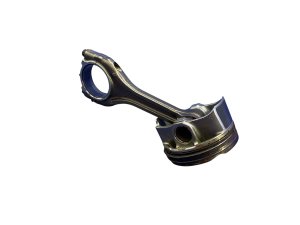
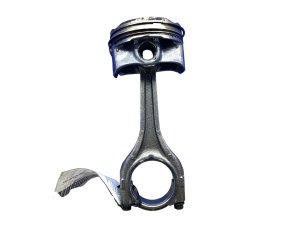
- Inspect the Wrist Pin and Bore: The wrist pin connects the piston to the connecting rod. It should rotate smoothly within the piston. Check the pin and the bore for any signs of galling or heat discoloration.
- Ask About the Donor Vehicle: Inquire about the mileage and history of the vehicle the piston came from. A piston from a low-mileage engine that did not suffer from overheating or oil starvation is a much safer bet.
Pro Tip: For optimal performance and engine longevity, it is highly recommended to replace all pistons as a balanced set, even if only one has failed. Installing a single used piston can create an imbalance that leads to vibrations and premature wear on other components.
Installation Difficulty & Labor Costs
Difficulty Rating: 5/5 (Expert Level)
Replacing an engine piston is one of the most intensive repairs possible. It is not recommended for DIY mechanics without extensive engine rebuilding experience. The process requires a complete engine teardown, specialized tools for measuring clearances (micrometers, bore gauges), and a deep understanding of internal engine mechanics.
- Engine Removal: The engine must be removed from the vehicle.
- Complete Disassembly: The cylinder head, oil pan, and crankshaft must be removed to access the pistons.
- Honing and Measurement: The cylinder walls must be inspected and likely honed to ensure a proper seal with the new rings. Clearances must be meticulously measured.
- Reassembly: The engine must be reassembled using new gaskets, seals, and often new bearings, following precise torque specifications.
Due to the complexity, this job is almost always performed by professional machine shops or experienced technicians.
Cost Comparison
The cost of the piston itself is a small fraction of the total repair cost, which is dominated by labor.
| Part/Service | Estimated Cost |
|---|---|
| New OEM Piston (Single) | $50 - $120 |
| New Aftermarket Piston (Single) | $40 - $90 |
| Used OEM Piston (Single) | $25 - $75 |
| Shop Labor for Single Piston Replacement | $2,500 - $5,000+ |
Pro Tip: Given the high labor cost, if a piston has failed, it is often more cost-effective to replace the entire engine with a low-mileage used or remanufactured unit rather than paying for a full teardown and rebuild of the original engine.
Frequently Asked Questions (FAQ)
Can I replace just one piston?
While it is physically possible, it is not recommended. Pistons and connecting rods are balanced as a set from the factory. Replacing a single piston, especially with one of a different weight or grade, can cause engine imbalance, vibrations, and accelerated wear on engine bearings.
What causes piston failure?
Common causes include overheating (which can cause the piston to expand and seize), oil starvation (lack of lubrication), detonation (improper fuel/air ignition), or a foreign object entering the cylinder. On some engines, manufacturing defects in the piston rings or connecting rod bearings can also lead to failure.
Is a compression test the best way to diagnose a bad piston?
A compression test is an excellent first step. Low compression in a cylinder points to a problem with the piston rings, valves, or head gasket. A follow-up leak-down test can help pinpoint the issue. If air is heard escaping through the oil fill cap during a leak-down test, it's a strong indication of failed piston rings.
Do I need to replace the piston rings when replacing a piston?
Absolutely. You should never reuse old piston rings. A new or used piston should always be installed with a brand new set of piston rings to ensure proper sealing against the cylinder wall.
Technical Specifications
OEM Part Numbers: 23041-3FAA0 23041-3FAB0 23041-3FAC0 23041-3FAP0 23410-2S000 23410-2S001 23410-2T000 23410-2T001 23410-2T010 23410-2T011 23410-2T020 23410-2T021 23510-2T010 23510-3F401
Pistons are specific to engine type (2.5L Turbo, 3.5L Turbo, 5.0L V8). 5.0L V8 pistons are bank-specific (Left/Right) and may have grade markings (A, B, etc.) for balancing.
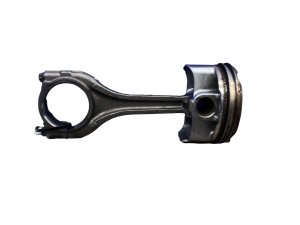
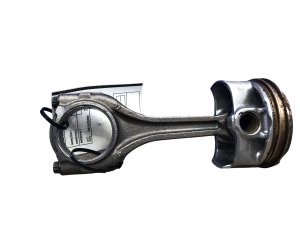
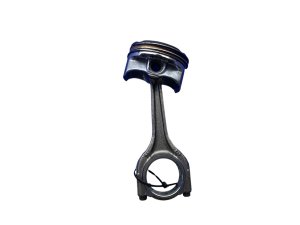
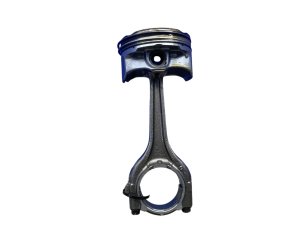
We Have This Part in Stock

The information in this article is provided for general reference and educational purposes only. Vehicle specifications, procedures, and part compatibility can vary by production date, trim level, and region. Always consult your vehicle's factory service manual and verify part numbers before purchasing or performing repairs. Safety-critical components such as airbags, seat belts, and braking systems should be installed by a qualified professional.
- Genesis G80:
- Genesis G90:
- Genesis GV70:
- Genesis GV80:
- Hyundai Santa Cruz:
- Hyundai Santa Fe:
- Hyundai Sonata:
- Genesis G70:
- Kia K5:
- Hyundai Genesis:
- 🛍️ Shop This Part
- Engine & Vehicle Application Guide
- Symptoms of Piston or Piston Ring Failure
- Known Issues, TSBs, and Recalls
- For 2.5L Turbo Engines (Sonata, Santa Fe, Santa Cruz, K5, G70, GV70)
- For 5.0L V8 Engines (Genesis, G80, G90)
- General Engine Concerns
- Buying a Used Engine Piston: What to Check
- Installation Difficulty & Labor Costs
- Cost Comparison
- Frequently Asked Questions (FAQ)
- 🎟️ Get 5% Off