

2018-2025 Audi 2.9L & 3.0L V6 Pulley Noise: Diagnosing Tensioner & Idler Failure
A guide to identifying and fixing the squealing, grinding, and rattling noises from the accessory drive belt system on the Audi A6, A7, A8, S4, S5, and RS5.
- The most common symptom of failure is a squealing or grinding noise from the front of the engine that changes with RPM.
- When buying a used pulley, check for any side-to-side wobble and spin it; it should be smooth and stop within 1-2 rotations, not spin freely.
- It is critical to distinguish accessory pulley noise from the internal timing chain rattle common on other Audi V6 engines.
- Always replace the tensioner, idler pulleys, and serpentine belt together as a set to avoid repeat labor costs.
Symptoms of a Failing Pulley or Tensioner


Failure in the accessory drive system typically starts with noise. Identifying the specific sound can help you pinpoint the problem before a pulley seizes and shreds the serpentine belt, which would leave you stranded.
- Squealing or Chirping Noises: This is the most common symptom. A high-pitched squeal or chirp, especially on a cold start or during acceleration, often points to a worn bearing in an idler pulley or a weak tensioner allowing the belt to slip.
- Grinding or Rumbling Sounds: A lower-pitched grinding or rumbling noise that increases with engine RPM is a serious sign that a pulley's bearing is failing and about to seize. This sound indicates a lack of grease and imminent failure.
- Visible Wobble or Vibration: With the engine running, look at the front of the engine. If you see the tensioner arm vibrating erratically or a pulley wobbling on its axis, the component is worn out.
- Accelerated or Uneven Belt Wear: A bad pulley or tensioner can cause the serpentine belt to fray along its edges or develop cracks and glazing prematurely.
- Accessory Malfunctions: If the belt snaps, all belt-driven accessories will stop working instantly. This will trigger a battery warning light on the dash (alternator failure), cause the engine to overheat rapidly (water pump failure), and make the steering very heavy (power steering failure).
- Burning Rubber Smell: In some cases, a failing tensioner can cause the belt to slip excessively, generating friction and a distinct burning rubber smell.
Is It the Accessory Belt or the Timing Chain?
Many Audi V6 engines have a known issue with timing chain tensioners, which can cause a brief rattling sound on cold startups. It is critical to distinguish between these two different problems. The accessory belt, tensioner, and pulleys are all located on the front exterior of the engine and are visible when you open the hood. The timing chain and its tensioners are internal to the engine, with the noise typically coming from the back of the engine, near the firewall. Accessory pulley noise is usually a squeal or grind, while timing chain tensioner noise is a distinct metallic rattle that lasts for only a few seconds after starting the engine.
Pro Tip: Check the Alternator Pulley. Many modern Audi engines use an overrunning alternator pulley (OAP), also called a decoupler. This pulley has an internal one-way clutch. When it fails, it can cause the belt to flap and the tensioner to vibrate excessively, creating a chattering noise that is often misdiagnosed as a bad tensioner. Before replacing the tensioner, a mechanic should check if the alternator pulley spins freely in one direction and locks in the other.
🎬 Watch: How to diagnose a chattering alternator pulleyKnown Issues, TSBs, and Recalls
As of early 2026, there are no active recalls or Technical Service Bulletins (TSBs) from Audi specifically for the accessory belt tensioner or idler pulleys on the 2018-2025 Audi A6, A7, A8, S4, S5, or RS5. However, owner forums report that squealing noises from the belt area can begin as early as 50,000 miles on some models like the B9 S5, often traced back to a worn tensioner or idler pulley. The water pump on these engines is also a known failure point and can produce similar grinding or whining noises when its bearing fails.
Buying a Used Engine Pulley Kit: What to Check

Purchasing a used OEM pulley or tensioner can be a cost-effective option, as they are often more durable than cheap aftermarket alternatives. However, a thorough inspection is crucial, as these are wear-and-tear items. Here’s what to look for:
- Physical Inspection: Check the pulley's surface for any cracks, chips, or deep grooves. The plastic or metal should be smooth and intact. Look for signs of discoloration from excessive heat.
- Check for Bearing Play: Hold the mounting point of the pulley or tensioner firmly and try to rock the pulley wheel side-to-side. There should be absolutely no wobble or play. Any looseness indicates a worn bearing.
- The Spin Test: Spin the pulley wheel with your fingers. A good bearing should feel smooth and quiet, coming to a stop within one or two revolutions.
- RED FLAG: If the pulley spins freely for many rotations, the grease has washed out of the bearing and it will fail soon.
- RED FLAG: If the pulley feels gritty, makes a grinding noise, or is seized and won't spin at all, it has already failed.
- Tensioner Spring Action: If inspecting a complete tensioner assembly, check the spring-loaded arm. It should provide strong resistance when moved and snap back into place firmly. If it feels weak or limp, it will not provide adequate belt tension. 🎬 See this guide on testing and replacing the tensioner
Pro Tip: It is highly recommended to replace the tensioner and all idler pulleys at the same time, along with the serpentine belt. These components have a similar service life, and replacing only one failed part often leads to another one failing shortly after, requiring you to pay for the same labor twice.
Cost to Replace Engine Pulleys & Tensioner
Repair costs will vary by location and which parts are replaced. Accessing these components often requires putting the vehicle's front end into a "service position," which adds to the labor time.
| Part/Service | Estimated Cost | Notes |
|---|---|---|
| New OEM (Tensioner & Idler Set) | $250 - $400 | Parts from an Audi dealership. |
| New Aftermarket (Tensioner & Idler Set) | $150 - $250 | Prices from brands like Gates, Dayco, or Continental. Quality can vary. |
| Used OEM (Tensioner & Idler Set) | $75 - $150 | Cost from a recycled parts retailer. Inspection is critical. |
| Shop Labor | $200 - $450 | Labor costs can range from 1.5 to 3 hours depending on the model and whether service position is required. |
Frequently Asked Questions (FAQ)
Can I drive my Audi with a noisy pulley?
It is not recommended. A noisy pulley is a sign of impending failure. If the pulley seizes, it can shred the serpentine belt, causing an immediate loss of power to the alternator, water pump, and power steering. This will leave you stranded and can lead to engine overheating. It's best to have it inspected and repaired as soon as possible.
Should I replace just the pulley or the entire tensioner assembly?
For a belt tensioner, it is always best to replace the entire assembly. The spring mechanism inside the tensioner wears out over time and is just as likely to fail as the pulley itself. Replacing only the pulley is a temporary fix that often leads to another failure down the road.
Do I need to replace the serpentine belt at the same time?
Yes. The labor to access the pulleys is the same as the labor to replace the belt. A failing pulley can also cause hidden damage or premature wear to the belt. Installing a new belt with new pulleys ensures the entire system will operate reliably for its full service life.
Is replacing the engine pulleys a DIY job?
This job is recommended for experienced DIY mechanics. While the steps are straightforward, access is tight on these vehicles. Many models require placing the front bumper and radiator support into "service position" to create enough room to work. Special tools like a long serpentine belt tool and triple-square sockets are also required.
🎬 Watch: Step-by-step auxiliary belt replacement on an Audi B9Helpful Videos

Technical Specifications
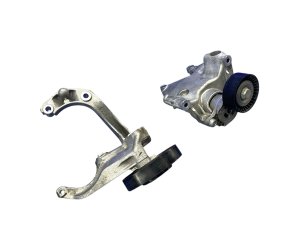
OEM Part Numbers: 06M260885 06M260885AF 06M260885M 06M903143 06M903143AJ 06M903341D
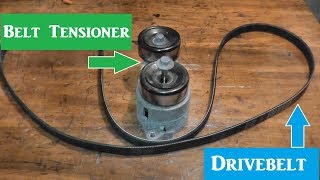
The accessory drive system consists of a spring-loaded belt tensioner and one or more fixed idler pulleys. The system uses a single serpentine belt to drive all accessories.
We Have This Part in Stock

The information in this article is provided for general reference and educational purposes only. Vehicle specifications, procedures, and part compatibility can vary by production date, trim level, and region. Always consult your vehicle's factory service manual and verify part numbers before purchasing or performing repairs. Safety-critical components such as airbags, seat belts, and braking systems should be installed by a qualified professional.
- Audi A6:
- Audi A7:
- Audi A8:
- Audi RS5:
- Audi S4:
- Audi S5: