

BMW & Mini 1.5L/2.0L Timing Cover Oil Leaks: A Guide for X1, X2, Cooper, Clubman, Countryman & i8
This guide details the common engine timing cover oil leak affecting 2014-2024 BMW and Mini models with the B38 and B48 engines, covering diagnosis, repair, and parts.
- The most common failure is an oil leak from the lower corners of the timing cover due to insufficient factory sealant.
- Proper diagnosis is key, as leaks from the valve cover or oil filter housing gasket are also common and can be mistaken for a timing cover leak.
- Successful repair depends on meticulous cleaning and applying a specific oil-resistant sealant at the junction of the cover, block, and oil pan.
- A used OEM cover is a great value, but inspect it for cracks. The installation procedure is more critical than the part itself.
- Access for the mid-engine BMW i8 is significantly more difficult and costly than for the front-engine BMW X1, X2, and Mini models.
Symptoms of a Failing Timing Cover

The most common failure for the timing cover on the 2016-2019 BMW X1, 2018-2019 BMW X2, 2014-2019 Mini Cooper, 2016-2022 Mini Cooper Clubman, 2017-2024 Mini Cooper Countryman, and 2014-2020 BMW i8 is a persistent oil leak. Unlike some parts that fail suddenly, this is typically a slow weep that worsens over time.
- Oil Drips Under the Car: The most obvious sign is finding spots of fresh engine oil on your driveway or garage floor. On these front-wheel-drive-based platforms (except the i8), the leak is most often visible on the passenger side of the vehicle.
- Visible Oil Residue: You may see an accumulation of oily dirt and grime on the lower passenger side of the engine, the subframe, and the plastic underbody panels.
- Burning Oil Smell: If the leaking oil drips onto hot exhaust components, it will burn off, creating a distinct and unpleasant smell that can enter the cabin.
- Low Oil Warning Light: As the leak progresses, the engine oil level will drop, eventually triggering the low oil level warning on the dashboard. It is critical to address this immediately to prevent engine damage.
- Knocking or Rough Running: In severe cases of oil loss, the engine may run rough or develop knocking sounds due to inadequate lubrication. This indicates a critical problem that requires you to stop driving immediately.
Is it the Timing Cover, Valve Cover, or Oil Filter Housing?
The B38 and B48 engines are known for several common oil leak locations. It is crucial to correctly identify the source before buying parts. A leak from a higher point on the engine can drip down and mimic a leak from a lower component.
- Valve Cover Gasket: Leaks often start at the top of the engine and run down the sides. A Mini Technical Service Bulletin (TSB), SB-10058466-4337, was issued for leaking valve cover gaskets on some B38 engines.
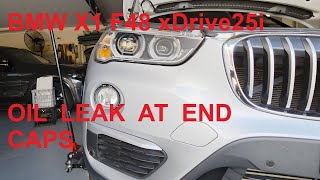
- Oil Filter Housing Gasket: This is another very common leak point. A failing gasket here can cause oil to run down the front and side of the engine, often mistaken for a timing cover leak. 🎬 Watch: How to replace a leaking B48 oil filter housing.
- Timing Cover: A true timing cover leak typically originates from the lower corners of the cover, specifically where the cover meets the engine block and the oil pan. Cleaning the engine thoroughly with a degreaser and then inspecting for fresh oil after a short drive is the best way to pinpoint the exact source.
Known Issues and Vehicle-Specific Differences

The primary known issue is a design and assembly flaw. Technicians have noted that from the factory, there is often insufficient sealant applied at the T-junctions where the timing cover, engine block, and oil pan meet. Over many heat cycles, this allows oil to eventually seep past the integrated gasket.
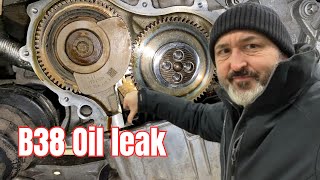
🎬 Watch: Why these B38 leaks happen and how to fix them.Warning: The 2014-2020 BMW i8 uses the same core B38 3-cylinder engine, but its mid-engine layout means engine access is completely different and significantly more complex than the other vehicles listed. While the leak cause is the same, the labor involved in a replacement is much higher due to the need to remove many more components to reach the front of the engine.
Buying a Used Engine Timing Cover

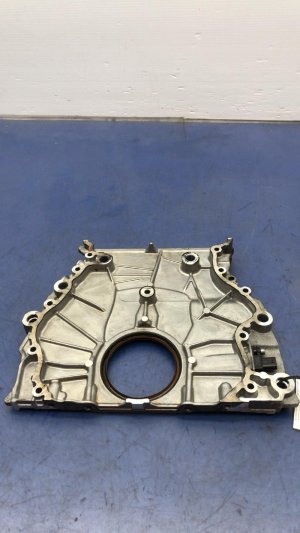
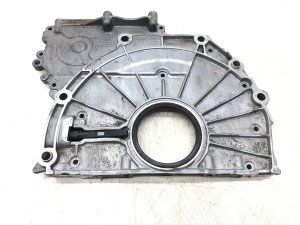
For a part like this, where the OEM component is a high-quality plastic or aluminum casting, a used OEM part is an excellent, cost-effective alternative to a new dealer part. Cheap aftermarket covers may have issues with fitment or material quality, leading to immediate or premature leaks. A used OEM cover guarantees perfect fitment.
When inspecting a used timing cover before purchase, check for the following:
- No Cracks or Fractures: Carefully inspect the entire cover, especially around the bolt holes and corners, for any signs of cracking from impact or improper removal.
- Flat Sealing Surfaces: Place the cover on a known flat surface to check for warping. A warped cover will never seal properly.
- Clean Gasket Channels: Ensure the channels where the gasket sits are clean and free of damage.
- Front Crank Seal: The cover has an integrated front crankshaft seal. While it's best practice to install a new seal, inspect the used one to ensure it's not obviously torn or damaged. The success of the repair depends more on the installation technique than the seal itself.
Pro Tip: The success of this repair lies in the installation, not just the part. A perfect new cover will leak if installed improperly. A good used cover will provide a permanent seal if the surfaces are meticulously cleaned and the correct sealant is applied in the critical corners.
Replacement Overview and Difficulty
Replacing the timing cover on these engines is a labor-intensive job.
- Difficulty: 4 out of 5 (for DIY)
- Procedure (X1, X2, Mini): The job involves removing the passenger-side wheel and fender liner, serpentine belt and tensioner, and the crankshaft pulley (harmonic balancer). 🎬 See this step-by-step timing cover and engine mount replacement walkthrough.
- Special Tools: A special installation tool is highly recommended to guide the cover onto the crankshaft, ensuring the new, fragile Teflon-style front main seal is not damaged.
- Critical Steps: The engine block and oil pan surfaces must be perfectly clean. A bead of high-quality, oil-resistant sealant (e.g., Loctite SI 5970) must be applied at the corners where the block, pan, and cover meet. It is also vital to prevent oil from the balance shaft from dripping onto the fresh sealant during installation.
- Related Parts: The crankshaft pulley bolts are torque-to-yield and must be replaced. It is also a good time to inspect the serpentine belt and tensioner for wear.
| Item | Estimated Cost | Notes |
|---|---|---|
| New OEM Cover | $320 - $400 | Part only, from a BMW/Mini dealership. |
| New Aftermarket Cover | $250 - $350 | Less common; quality and fit can vary. |
| Used OEM Cover | $50 - $100 | A cost-effective option if inspected for damage. |
| Shop Labor Cost | $800 - $1,200+ | Labor is the largest expense. Varies by shop and location. |
Frequently Asked Questions (FAQ)
Can I just re-seal my original timing cover instead of replacing it?
Yes. In most cases, the cover itself is not damaged. The leak is from the seal. The repair procedure is the same: remove the cover, thoroughly clean all surfaces, and reinstall using new gaskets and the proper application of sealant in the corners. This is the standard professional repair.
What sealant should I use for the timing cover?
Do not use standard RTV silicone. You must use a specific oil-resistant flange sealant. Technicians recommend products like Loctite SI 5970 or an equivalent OEM-approved sealant. The key is applying a small, precise bead only at the junction points between the engine block, oil pan, and timing cover as per the updated repair instructions.
What else should I replace while doing this job?
Since you have to remove the crankshaft pulley and serpentine belt, it is wise to replace the serpentine belt, the belt tensioner, and the idler pulley if they show signs of age or wear. You MUST replace the single-use, torque-to-yield crankshaft pulley bolts.
How urgent is a timing cover leak?
A small weep is not an immediate emergency, but it should not be ignored. The main risk is running the engine low on oil, which can lead to catastrophic engine failure. Monitor your oil level closely and get the leak repaired as soon as possible. A flashing oil pressure light means you should stop the engine immediately.
Helpful Videos
Technical Specifications
OEM Part Numbers: 11148573136 11148573980 8573137 8576351 11148576066
Fits BMW/Mini vehicles with the 1.5L B38 3-cylinder and 2.0L B48 4-cylinder turbocharged engines.
We Have This Part in Stock

The information in this article is provided for general reference and educational purposes only. Vehicle specifications, procedures, and part compatibility can vary by production date, trim level, and region. Always consult your vehicle's factory service manual and verify part numbers before purchasing or performing repairs. Safety-critical components such as airbags, seat belts, and braking systems should be installed by a qualified professional.
- BMW X1:
- BMW X2:
- Mini Cooper:
- Mini Cooper Clubman:
- Mini Cooper Countryman:
- BMW i8: