

2003-2011 Saab 9-3, 9-3X & 9-5 2.0T Valve Cover and Gasket Guide
This guide covers common oil leaks from the valve cover gasket and distinguishes them from the critical B207 engine intake valve issue affecting these models.
- The most common failure is the gasket, not the cover itself, causing oil leaks and a burning smell.
- Hard starting and rough idle when cold are likely due to a known intake valve wear issue (TSB), not the valve cover gasket.
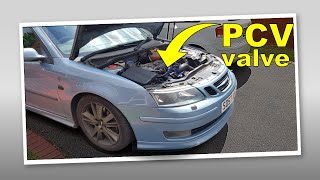
- The PCV valve is NOT integrated into the cover; it's a separate part in the intake manifold that can cause similar symptoms if it fails.
- When replacing the gasket, it is critical to torque the bolts to 88 in-lbs to avoid cracking the plastic cover.
Symptoms of a Failing Valve Cover or Gasket
Problems with the valve cover on the 2003-2011 Saab 9-3, 2010-2011 Saab 9-3X, and 2011 Saab 9-5 with the 2.0L B207 engine almost always trace back to a failed gasket rather than the cover itself. However, issues with the separate PCV system can also cause symptoms that appear related to the valve cover.
1. Burning Oil Smell
This is the most common symptom. The valve cover gasket becomes hard and brittle over time from engine heat cycles. When it fails, oil seeps out and drips onto the hot exhaust manifold or turbocharger located directly below, burning off and creating a distinct, unpleasant smell that is noticeable inside and outside the car.
2. Visible Oil Leaks and Grime
A leaking gasket will leave a trail of fresh oil on the side of the cylinder head and down the engine block. Over time, this oil attracts dirt and road grime, forming a thick, greasy buildup around the valve cover seam and on components below it.
3. Oil in Spark Plug Wells
The valve cover gasket kit includes four round seals for the spark plug tubes. When these seals fail, oil leaks into the spark plug wells. This can cause the ignition coil boots to swell and degrade, leading to engine misfires, a rough idle, and a Check Engine Light with codes like P0300 (Random Misfire) or P0301-P0304 for specific cylinders.
🎬 Learn how to safely remove oil from your spark plug wells.4. Hissing or Whistling Noises
A loud hissing or whining sound from the engine bay at idle can point to a failed PCV valve, which is located in the intake manifold on these engines. This creates a strong vacuum leak. Because a bad PCV valve can also cause crankcase pressure issues that lead to oil leaks, this sound can sometimes accompany a gasket leak.
Known Issues for Saab 2.0L Turbo (B207) Engines
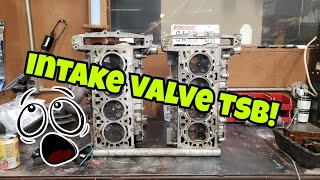
TSB: Premature Intake Valve Wear (2007-2011 Models)
Important: A widespread and serious issue affects the 2.0L B207 engine in the 2007-2011 Saab 9-3, 2010-2011 9-3X, and 2011 Saab 9-5. It is often misdiagnosed.
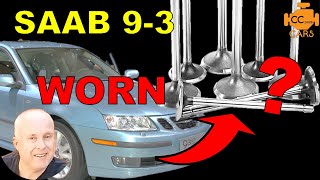
According to a Saab Technical Service Bulletin (TSB), the intake valves on these engines can wear prematurely. The valve material was found to be too soft, causing the sealing face of the valve to wear down over time, especially on vehicles with over 50,000 miles.
This wear prevents the valve from sealing properly, resulting in a loss of engine compression. The problem is most apparent during a cold start (e.g., sitting overnight), as the metal parts have contracted. Symptoms include:
- Very rough running or stumbling immediately after a cold start.
- Hard starting or no-start condition in cold weather.
- Engine misfire codes (P0300, P0301, P0302, P0303, P0304).
- The engine starts and runs normally once it has warmed up.
Diagnosis: The definitive way to diagnose this is with a cold engine compression test. A healthy engine should have compression readings of 150-175 PSI when hot. An affected engine might show readings as low as 75-90 PSI when cold. If you are experiencing these symptoms, it is crucial to perform a cold compression test before assuming the issue is with ignition coils 🎬 See how to diagnose intake valve wear and cold start issues. or the valve cover gasket.
PCV Valve Failure
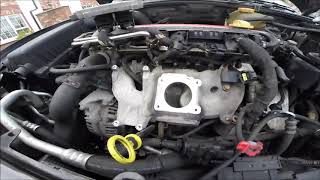
The Positive Crankcase Ventilation (PCV) valve on the B207 engine is not part of the valve cover. It is a separate plastic valve located inside the intake manifold. Replacing it is an involved job that requires removing the manifold. The valve can get stuck or its internal diaphragm can rupture, leading to boost pressure leaking into the crankcase. Symptoms include a rough idle, oil leaks from various seals (including the valve cover gasket), and increased oil consumption.
Recalls
There have been no recalls issued by the NHTSA for the engine valve cover on the 2003-2011 Saab 9-3, 9-3X, or 2011 9-5. Recalls for these vehicles were related to airbags and fuel pumps.
Buying a Used Engine Valve Cover
Since the valve cover itself is a simple plastic component without an integrated PCV system, buying a used OEM cover is a very safe and cost-effective option if your original is damaged.
What to Inspect Before Buying
- Check for Cracks: Carefully inspect the entire cover, paying close attention to the bolt holes and the PCV hose nipple. Overtightening the bolts can easily cause hairline cracks. A cracked cover will not seal properly, even with a new gasket.
- Look for Warping: Place the cover on a known flat surface (like a piece of glass or a workbench) and check that the gasket rail sits perfectly flat all the way around. Any warping will cause persistent leaks.
- Examine the PCV Nipple: Ensure the plastic nipple where the ventilation hose connects is not cracked, brittle, or broken.
- Condition of Baffles: The underside of the cover has baffles for oil separation. Make sure they are intact and not full of heavy sludge, which could indicate poor maintenance on the donor vehicle.
Pro Tip: A used OEM valve cover is often a better choice than a cheap, new aftermarket one. The fit and material quality of the original GM/Saab part are proven, whereas some aftermarket plastics can warp or crack more easily under engine heat.
Replacement Information
Replacing the valve cover gasket is a common DIY task for many Saab owners. The process is straightforward but requires careful attention to detail to avoid damaging the cover or creating new leaks.
Difficulty: 2.5 out of 5
Estimated Time: 1.5 - 2.5 hours
Tools Needed: T30 Torx bit, 10mm socket and wrench, torque wrench (in-lbs), flathead screwdriver, hose clamp pliers.
Key Replacement Steps
- Disconnect the battery.
- Remove the plastic engine cover, ignition coil cover, and air filter box assembly.
- Disconnect ignition coils, the PCV hose, and move wiring harnesses out of the way.
- Remove the 14 10mm bolts holding the valve cover to the cylinder head.
- Gently pry the cover off. Do not use excessive force.
- Thoroughly clean the gasket surfaces on both the cylinder head and the valve cover. Ensure no old gasket material or oil remains.
- Install the new gasket and spark plug tube seals into the valve cover. A small dab of RTV silicone at the sharp corners (near the timing chain) is recommended.
- Carefully place the valve cover back onto the head, ensuring the gasket stays in place.
- Hand-tighten the bolts, then torque them in a criss-cross pattern to 88 in-lbs (approximately 7.3 ft-lbs). Do not overtighten, as this will crack the plastic cover.
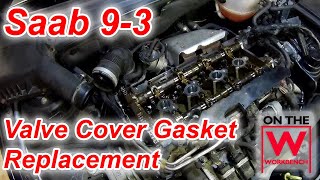
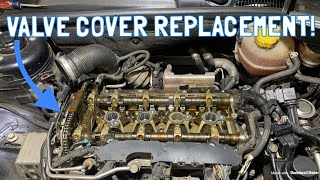
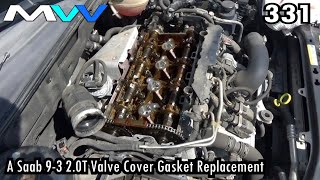
- Reassemble all other components in the reverse order of removal. 🎬 Watch this step-by-step guide to replacing your valve cover gasket.
Cost Comparison
Replacing a leaking valve cover gasket is far more common than replacing the entire cover. Here are the typical costs:
| Part / Service | Estimated Cost | Notes |
|---|---|---|
| New OEM Valve Cover | $320 - $400 | Part number 55564395 or 55555825. Typically only needed if the original is cracked. |
| New Aftermarket Valve Cover | $150 - $250 | Quality can vary. May or may not include a new gasket. |
| Used OEM Valve Cover | $50 - $120 | A good value if inspected carefully for cracks and warping. |
| New Gasket Kit (OEM or quality aftermarket) | $40 - $75 | This is the most common repair. Includes main gasket and spark plug tube seals. |
| Shop Labor (Gasket Replacement) | $100 - $170 | Typically 1-1.5 hours of labor. |
Frequently Asked Questions (FAQ)
Is the PCV valve located in the valve cover on the Saab 2.0L B207 engine?
No, it is not. The valve cover has a hose connection for the PCV system, but the actual PCV valve is a separate part located inside the intake manifold. A failing PCV valve requires removing the intake manifold to replace and is a much more complex job than replacing the valve cover gasket.
My Saab 9-3 runs rough when cold but is fine when warm. Is it the valve cover gasket?
It is highly unlikely. A rough start that improves as the engine warms is a classic symptom of the premature intake valve wear issue covered by a Technical Service Bulletin for 2007-2011 models. You should have a cold engine compression test performed to check for low compression before pursuing other repairs.
Can I just replace the valve cover gasket instead of the whole cover?
Yes. In over 95% of cases, only the gasket has failed. The plastic valve cover itself only needs to be replaced if it is physically cracked or warped, which is usually caused by impact or improper (over-tightened) installation.
Is it difficult to replace the valve cover gasket myself?
For a DIY mechanic with basic tools, it is a manageable job. The difficulty is about a 2.5 out of 5. The most critical steps are cleaning the surfaces properly and torquing the bolts to the correct, low specification (88 in-lbs) in a criss-cross pattern to avoid cracking the cover.
Helpful Videos



Technical Specifications
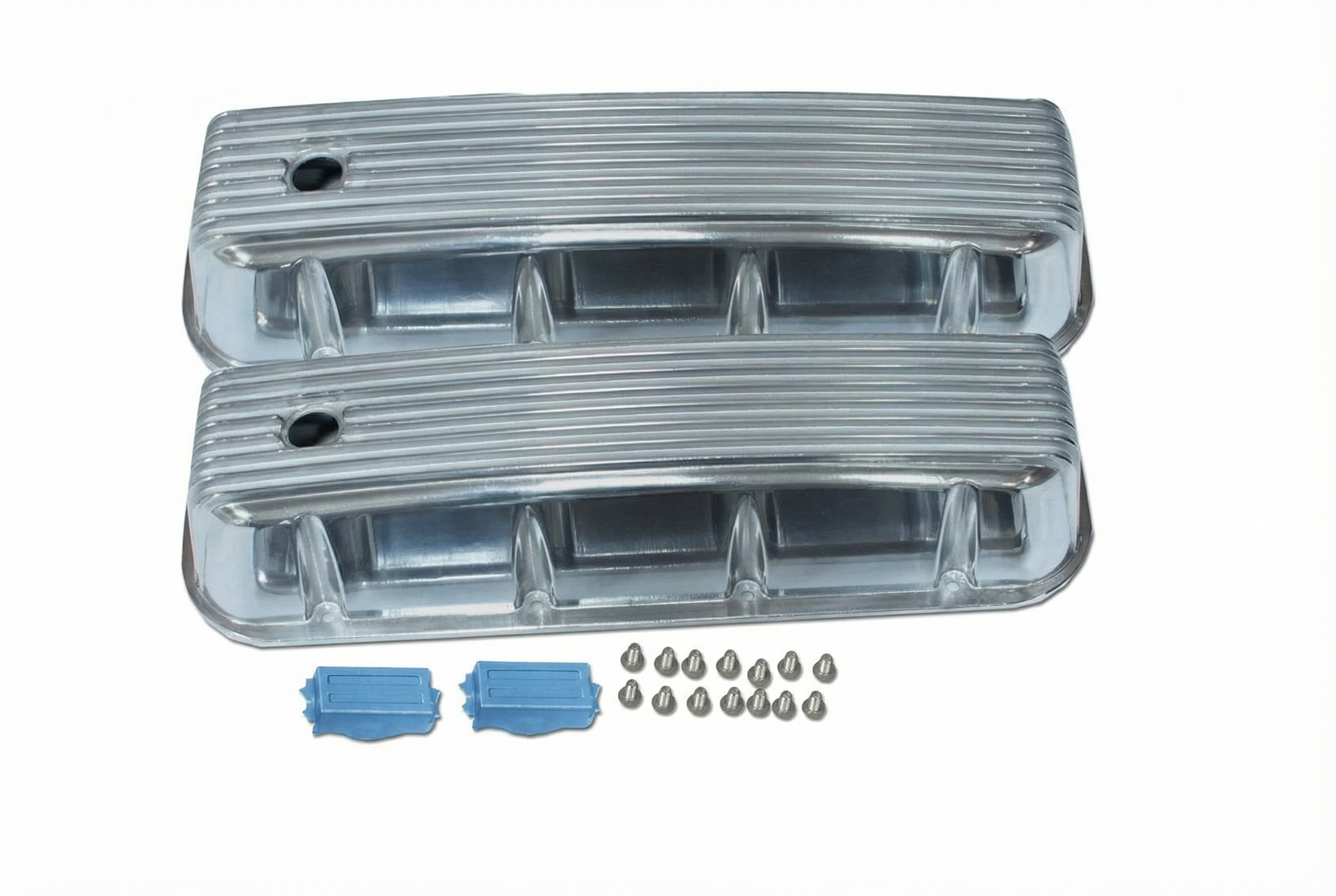
OEM Part Numbers: 55564395 55555825 90537687
Bolt Torque: 88 in-lbs (7.3 ft-lbs or ~10 Nm)
We Have This Part in Stock

The information in this article is provided for general reference and educational purposes only. Vehicle specifications, procedures, and part compatibility can vary by production date, trim level, and region. Always consult your vehicle's factory service manual and verify part numbers before purchasing or performing repairs. Safety-critical components such as airbags, seat belts, and braking systems should be installed by a qualified professional.
- Saab 9-3:
- Saab 9-3X:
- Saab 9-5:
- 🎬 Helpful Videos
- 🛍️ Shop This Part
- Symptoms of a Failing Valve Cover or Gasket
- 1. Burning Oil Smell
- 2. Visible Oil Leaks and Grime
- 3. Oil in Spark Plug Wells
- 4. Hissing or Whistling Noises
- Known Issues for Saab 2.0L Turbo (B207) Engines
- TSB: Premature Intake Valve Wear (2007-2011 Models)
- PCV Valve Failure
- Recalls
- Buying a Used Engine Valve Cover
- What to Inspect Before Buying
- Replacement Information
- Key Replacement Steps
- Cost Comparison
- Frequently Asked Questions (FAQ)
- 🎟️ Get 5% Off