

2004-2019 Audi, Bentley & VW Auxiliary Water Pump: Supercharger, Turbo & Heater Problems
This small electric pump is critical for supercharger cooling, turbo protection, and cabin heat; its failure can cause performance loss, warning lights, or a cold cabin.
- This is an auxiliary electric pump, NOT the main engine water pump. It serves different roles depending on your engine.
- Primary functions include supercharger cooling (3.0T), turbo after-run cooling (Bentley 4.0T), and cabin heater support (TDI models).
- Failure symptoms vary by function: loss of power (supercharged cars), no cabin heat at idle, or potential long-term turbo damage.
- When buying a used replacement, it is critical to match the OEM part number exactly, as similar-looking pumps may not be compatible.
Symptoms of a Failing Auxiliary Water Pump
Because this pump serves different functions on different engines, the symptoms of failure can vary. You may not get a specific warning light for the pump itself, but you will notice the failure of the system it supports.
- Inconsistent or No Cabin Heat: This is the most common symptom across many models, especially those with TDI engines. If you only get warm air when the engine is revving high, but it turns cool at a stoplight, the auxiliary pump for the heater circuit has likely failed.
- Reduced Engine Power or EPC Light: On supercharged 3.0T engines (Audi A6, A7, Q7, etc.), this pump cools the supercharger. If it fails, the supercharger can overheat. The engine computer will detect this and cut power, putting the car into a 'limp mode' to prevent damage. You may see an EPC (Electronic Power Control) or Check Engine light.
- High-Pitched Buzzing or Whining Noise: An electrical short or failing motor bearing can cause the pump to run erratically or make a constant, high-pitched buzzing sound, sometimes even after the car is off.
- Window Defroster Not Working: If the pump is responsible for cabin heat, a failure can also mean the defroster is unable to clear your windows effectively.
- Coolant Leaks: While less common than an electrical failure, the plastic housing can crack or the seals can fail, causing a coolant leak. You may find a small puddle of pink or purple coolant under the car.
Diagnosing the Problem
Testing the auxiliary water pump is straightforward. If you suspect it has failed, you can try these diagnostic steps.
- Listen for Operation: On some models, particularly those with turbo after-run cooling, the pump should run for a few minutes after a hot shutdown. Listen for a faint whirring or humming sound from the pump's location. If it's silent, it may have failed.
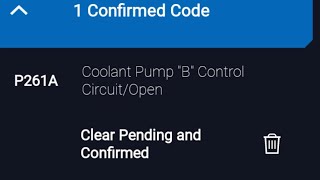
- Scan for Fault Codes: A VCDS or other advanced diagnostic scanner can often communicate with the pump's module. You may find fault codes like P261A, which points to a problem in the auxiliary pump circuit. The scanner may also allow you to perform an output test to command the pump to turn on.
- Check for Voltage: With the system active (e.g., heater on full blast), carefully unplug the electrical connector and use a multimeter to check for 12V at the harness. If you have voltage but the pump isn't running, the pump is bad. If you have no voltage, the problem may be a fuse, relay, or wiring issue.
- Bench Test the Pump: If you remove the pump, you can test it directly by applying 12V power from a battery or power probe to its electrical terminals. The polarity usually doesn't matter for a quick test. If it doesn't spin, it's confirmed dead.
Pro Tip: On many of these vehicles, you can feel the small hoses going to and from the pump. If the pump is running, you should feel a slight vibration and the flow of coolant through them.
Known Issues & Vehicle-Specific Information
While the pump is used across many platforms, its location and primary function can differ.
Audi 3.0T Supercharged (A6, A7, A8, Q7)
For these models, the pump is primarily for the supercharger's cooling circuit. Failure is a common issue that leads to 'heat soak,' where the supercharger gets too hot and can't cool the incoming air, drastically reducing engine performance. The pump is often located in a relatively accessible area in the engine bay.
VW Touareg & Audi Q7 3.0L TDI
On these diesel SUVs, the auxiliary pump is often for the cabin heater circuit. A common complaint is no heat at idle. The pump is frequently located inside the front passenger-side wheel well, behind the fender liner, making replacement more involved.
Bentley Continental (GT, GTC) & Flying Spur (4.0L V8 / 6.0L W12)
On these high-performance models, the auxiliary pump's most critical role is after-run cooling for the twin turbochargers. Failure won't leave you stranded, but it can cause accelerated wear and eventual failure of the very expensive turbos due to heat damage over time. There may be more than one auxiliary pump on these complex vehicles.
Buying a Used Auxiliary Water Pump
A used OEM pump can be a smart value compared to an expensive new dealer part, especially since many aftermarket versions have questionable reliability. Here’s what to look for:
- Verify the Part Number: This is the most important step. While many pumps look identical, they can have different flow rates or mounting brackets. Match the OEM part number from your original pump exactly. The list of compatible numbers is long and includes 06E121601C, 4H0965567A, 059121012A, and many others. When in doubt, match the number.
- Inspect the Electrical Connector: The pins should be clean, straight, and free of any green or white corrosion. A corroded connector indicates it was exposed to moisture and may have internal damage.
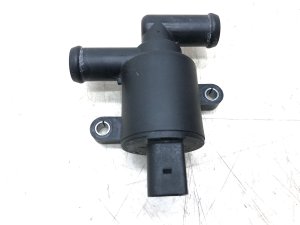
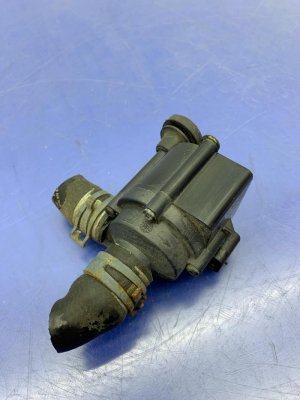
- Check the Housing: Inspect the black plastic housing for any hairline cracks, especially around the hose inlet/outlet nozzles and mounting tabs. Check for signs of previous leaks, like white or pink crusty residue.
- Consider the Source: A pump from a lower-mileage, newer vehicle is always preferable. Age and heat cycles are just as damaging as mileage to the internal electric motor and plastic components.
Warning: Do not buy a pump that shows any signs of physical damage to the connector or housing, even if it's a good deal. The integrity of the system is not worth the risk.
Cost Comparison
| Part Type | Estimated Price Range |
|---|---|
| New OEM (Dealer) | $250 - $450 |
| New Aftermarket | $50 - $150 |
| Used OEM | $40 - $120 |
| Shop Labor Cost | $120 - $300 |
Prices are estimates and will vary based on your vehicle, location, and the specific part number required. Labor costs can vary significantly depending on the pump's location.
Frequently Asked Questions (FAQ)
Is this the same as the main engine water pump?
No. This is a small, secondary, electrically-powered pump. The main water pump is a much larger, mechanical component driven by the engine's serpentine belt or timing belt. Its failure will cause the engine to overheat rapidly.
Can I drive my car if the auxiliary water pump is broken?
It depends on its function in your car. If it's for cabin heat, you can drive it indefinitely but you won't have heat. If it's for the supercharger, your engine will have significantly reduced power. If it's for turbo cooling, driving won't cause immediate issues but you risk expensive, long-term damage to the turbochargers.
Why are there so many different part numbers for what looks like the same pump?
Over the long production run of these vehicles, Volkswagen/Audi group updated the pump design multiple times. Some numbers may refer to pumps with slightly different mounting brackets, connector types, or internal flow rates for different applications (e.g., heater vs. supercharger). This is why it is critical to match your original part number.
Do I need to drain all my coolant to replace it?
No. You will lose some coolant, but you can minimize the loss. Before starting, make sure the engine is cold. Have the new pump ready to go. You can use hose clamp pliers to pinch off the rubber hoses leading to the pump before disconnecting them. Work quickly to swap the hoses to the new pump to reduce spillage. Always top off the coolant reservoir with the correct G12 or G13 coolant afterward and properly bleed the system of air.
Helpful Videos
Technical Specifications
OEM Part Numbers: 06E121601C 4H0965567A 4H0965569A 4M0965567 8K0965567 8K0965569A 059121012A 3D0965561A 0392020073 95510656100 95510656101 1J0965561A 3D0965561D 7L0965561L
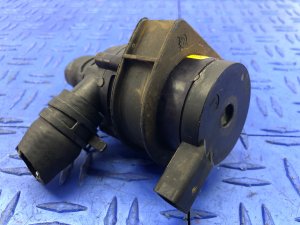
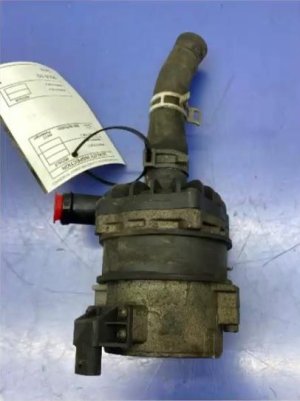
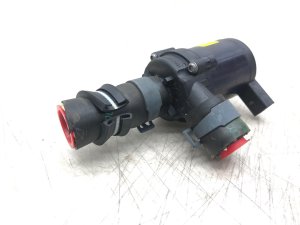
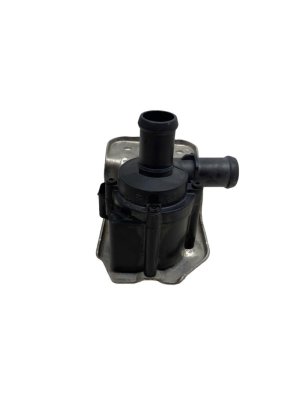
12V Electric Coolant Pump with plastic housing and a 2-pin electrical connector.
We Have This Part in Stock

The information in this article is provided for general reference and educational purposes only. Vehicle specifications, procedures, and part compatibility can vary by production date, trim level, and region. Always consult your vehicle's factory service manual and verify part numbers before purchasing or performing repairs. Safety-critical components such as airbags, seat belts, and braking systems should be installed by a qualified professional.
- Audi Q7:
- Audi A7:
- Audi A6:
- Audi A8:
- Volkswagen Touareg:
- Audi R8:
- Bentley Continental:
- Bentley Continental GT:
- Bentley Continental GTC:
- Bentley Flying Spur:
- Lamborghini Gallardo:
- Porsche Cayenne:
- 🎬 Helpful Videos
- 🛍️ Shop This Part
- Symptoms of a Failing Auxiliary Water Pump
- Diagnosing the Problem
- Known Issues & Vehicle-Specific Information
- Audi 3.0T Supercharged (A6, A7, A8, Q7)
- VW Touareg & Audi Q7 3.0L TDI
- Bentley Continental (GT, GTC) & Flying Spur (4.0L V8 / 6.0L W12)
- Buying a Used Auxiliary Water Pump
- Cost Comparison
- Frequently Asked Questions (FAQ)
- 🎟️ Get 5% Off