

2021-2025 Tesla Model S & X Coolant Pump: Failure Warnings and Replacement Guide
Understand the critical role of the battery and drive unit coolant pump in your 'Refresh' Model S or Model X, how to spot failure, and what to check when buying a used replacement.
- This is a coolant pump for the battery and motors, not a traditional engine water pump.
- On-screen warnings about thermal performance are critical and should not be ignored; driving can cause catastrophic battery damage.
- Replacement requires a special software-driven 'Coolant Air Purge' procedure using the vehicle's Service Mode.
- When buying used, you must verify the part number is 1600870-00-A or a valid substitute for 2021+ models.
- A failing pump can also cause a loss of cabin heat in these models due to the integrated heat pump system.
Understanding the 'Engine Water Pump' in a Tesla
While often searched for as an 'engine water pump' by those familiar with gasoline cars, the part in a 2021-2025 Tesla Model S and Model X is correctly termed a battery and drive unit coolant pump. These vehicles, known as the 'Refresh' or 'Palladium' generation, feature a sophisticated thermal management system that relies on one or more of these pumps to keep the high-voltage battery and powerful electric motors from overheating. Failure to maintain proper temperatures can lead to reduced performance, disabled fast charging, and in severe cases, permanent damage to the battery pack.
Symptoms of a Failing Coolant Pump
Coolant pump failures in a Tesla often present as on-screen warnings rather than the traditional leaks or noises you might expect from a gasoline car. Here are the most common signs:
- On-Screen Vehicle Alerts: The most direct symptom is a warning on the center touchscreen. You may see messages like "Coolant Pump Fault," "Service Required," "Vehicle shutting down - pull over safely," or alerts indicating the thermal management system requires service. These should be treated with urgency.
- Reduced Performance and 'Limp Mode': To protect the battery and drive units from heat damage, the vehicle will automatically limit power output. You'll notice sluggish acceleration and a lower top speed.
- Slow or Disabled Supercharging: Fast charging generates a significant amount of heat. If the car cannot cool the battery effectively, it will dramatically slow down or completely disable DC fast charging to prevent damage.
- Unusual Noises: While less common, a failing pump can sometimes produce a noticeable whirring, grinding, or clicking sound from the front of the vehicle, often heard when the car is stationary or charging.
- Loss of Cabin Heat: On these 'Refresh' models with a heat pump system, the coolant loops are integrated. A failing pump can disrupt the system's ability to provide cabin heat, which is a major symptom.
Warning: Do not ignore thermal management warnings. Continuing to drive with a failed coolant pump risks catastrophic and extremely expensive damage to the high-voltage battery. The vehicle will likely enter a protective state to prevent this, but it should be serviced immediately.
Known Issues, Recalls, and Service Bulletins
As of early 2026, there are no direct recalls for the coolant pump part number 1600870-00-A itself. However, the thermal system on these vehicles has been subject to related recalls and service actions.
- NHTSA Recall 22V-050: This recall affected some 2021-2022 Model S and Model X vehicles. A software error could cause a valve in the heat pump system to open incorrectly, leading to a loss of cabin heating and defrosting. This was corrected via an over-the-air (OTA) software update and was not a failure of the pump hardware itself, but highlights the complexity of the system.
Buying a Used Coolant Pump
A used OEM coolant pump can be a cost-effective alternative to a new part from Tesla. Given the high cost of new components, a recycled part from a low-mileage vehicle is a practical choice. Here’s what to look for:
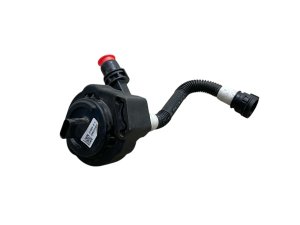
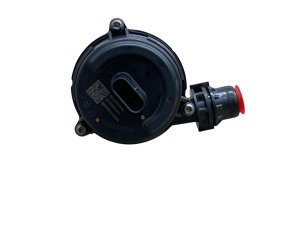
- Verify the Part Number: This is the most critical step. You must match the part number exactly. For the 2021-2025 Model S and Model X, the primary part number is 1600870-00-A or a superseding number like 1600870-00-B. Do not attempt to use a pump from a pre-2021 vehicle, as the systems are completely different.
- Physical Inspection:
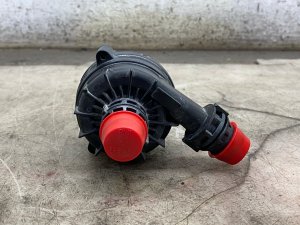
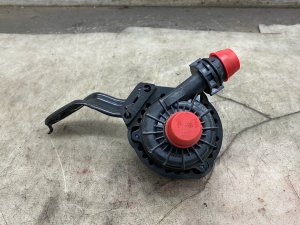
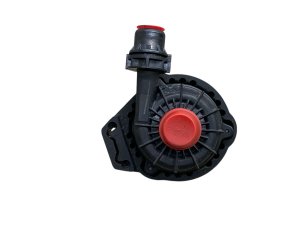
- Housing: Check the black plastic housing for any cracks, deep scratches, or signs of heat warping.
- Electrical Connector: The pins inside the connector should be clean, straight, and free of any green or white corrosion.
- Inlet/Outlet Ports: Look inside the ports for any debris or signs of unusual residue. The plastic should be intact with no cracks where the hoses connect.
- Mounting Points: Ensure the rubber isolator and any mounting brackets are intact and not torn.
- Source Vehicle Information: If possible, get the mileage of the vehicle the pump was removed from. A pump from a vehicle with under 50,000 miles is an ideal candidate. Avoid parts with unknown history or from vehicles with major front-end collision damage.
- Red Flags: Avoid any pump that shows signs of being submerged in water, has heavy corrosion on its metal components, or has melted plastic near the electrical connector.
Pro Tip: When purchasing a used pump, also acquire the small rubber isolator it sits in if possible. These can become brittle or get damaged during removal, and having a spare is good practice.
Replacement Overview
Replacing the coolant pump on a 2021-2025 Model S or X is a moderately difficult job best suited for experienced DIY mechanics or professional technicians.
- Access: The pump is typically located in the front of the vehicle and requires removing the large underhood storage unit (frunk tub) for access.
- Draining Coolant: The cooling system must be partially drained or hoses must be clamped to minimize coolant loss. Tesla uses a specific G-48 or similar coolant; do not mix with other types.
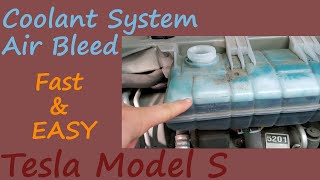
- The Air Purge Procedure: This is the most critical part of the job. After the new pump is installed, you cannot simply refill the coolant and drive. Air pockets in the system can cause the new pump to run dry or lead to overheating. The system must be bled using a specific software routine. This is done by putting the vehicle into 'Service Mode' through the touchscreen and running the 'Coolant Air Purge' or similar thermal system utility. 🎬 Watch: How to run the coolant air purge in Service Mode This process can take 10-15 minutes as it cycles the pumps and valves to force all air out of the lines and into the reservoir.
| Item | Estimated Cost |
|---|---|
| New OEM (from Tesla) | $350 - $500 |
| New Aftermarket | $150 - $250 (Limited availability) |
| Used OEM | $80 - $200 |
| Shop Labor | $400 - $700 |
Frequently Asked Questions (FAQ)
Can I drive my Tesla if the coolant pump has failed?
No. The vehicle will likely enter a severely restricted power mode or instruct you to pull over and stop. Driving with a failed coolant pump can cause thousands of dollars in damage to the battery pack. It is not safe or recommended.
Is this the same pump that cools the computer screen (MCU)?
No. While the main coolant pump is part of the overall thermal system, the infotainment screen's CPU has its own cooling management. An overheating screen is a separate issue, which was also subject to a recall for some models where a software update was issued to manage CPU temperatures during fast charging.
Do I need special tools to replace this pump?
Aside from standard mechanic's tools, you will need hose clamp pliers. The most important 'tool' is access to the vehicle's Service Mode via the touchscreen to perform the mandatory coolant air purge procedure after installation. Some professional procedures also call for a vacuum fill tool to prevent air from entering the system in the first place.
Is a coolant pump failure covered under the Tesla warranty?
Yes, if the vehicle is still within the Basic Vehicle Limited Warranty (typically 4 years/50,000 miles) or the Battery and Drive Unit Limited Warranty (8 years with mileage limits depending on model), this repair should be covered by Tesla.
Helpful Videos
Technical Specifications
OEM Part Numbers: 1600870-00-A 1600870-00-B 160087000A
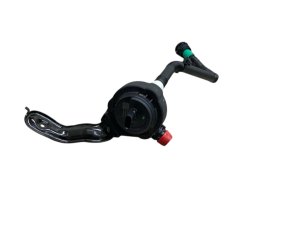
Electric coolant pump for the high-voltage battery and drive unit thermal management system. Uses Tesla G-48 coolant (blue or pink).
We Have This Part in Stock

The information in this article is provided for general reference and educational purposes only. Vehicle specifications, procedures, and part compatibility can vary by production date, trim level, and region. Always consult your vehicle's factory service manual and verify part numbers before purchasing or performing repairs. Safety-critical components such as airbags, seat belts, and braking systems should be installed by a qualified professional.
- Tesla X:
- TESLA X:
- Tesla S:
- TESLA S: