

2014-2020 Jaguar F-Type Muffler: Solving Active Exhaust Valve Failures and V6 vs. V8 Fitment
This guide details the common failure points of the 2014-2020 F-Type's exhaust, focusing on the active valve system, and explains how to choose the correct used part for your V6 or V8 model.
- Fitment is vehicle-specific: You must match the muffler to your engine (3.0L V6 or 5.0L V8) and exhaust type (Active or Standard).
- The active exhaust valves are the most common failure point. They can seize open, closed, or squeak, requiring lubrication or replacement.
- When buying a used muffler, physically inspect the valve actuators to ensure they are present and move freely.
- A buzzing noise from the rear is likely the vacuum pump and is addressed by a Technical Service Bulletin (TSB JTB00365NAS2).
Variant Differences: V6 vs. V8 and Active vs. Standard Exhaust

Before purchasing a replacement muffler for a 2014-2020 Jaguar F-Type, it is critical to identify your vehicle's engine and exhaust type. Using the wrong muffler will lead to fitment issues and potential loss of functionality.
Warning: The V6 and V8 mufflers are not interchangeable without significant modification. The primary difference is the exhaust tip configuration, which corresponds to a different rear bumper valance.
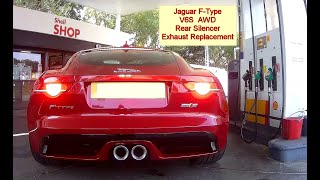
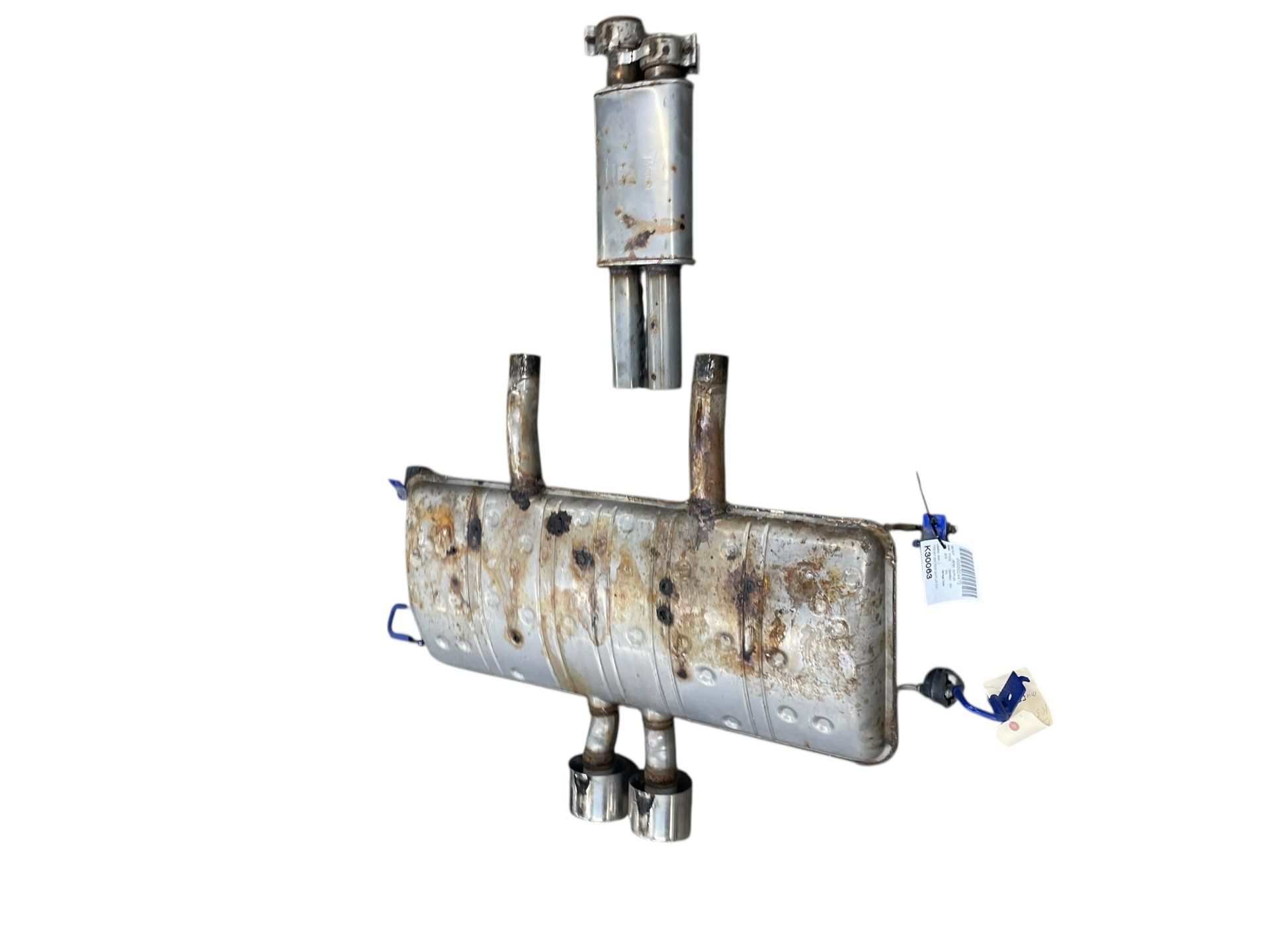
- 3.0L V6 Models: These vehicles feature a distinctive dual-tip exhaust located in the center of the rear valance.
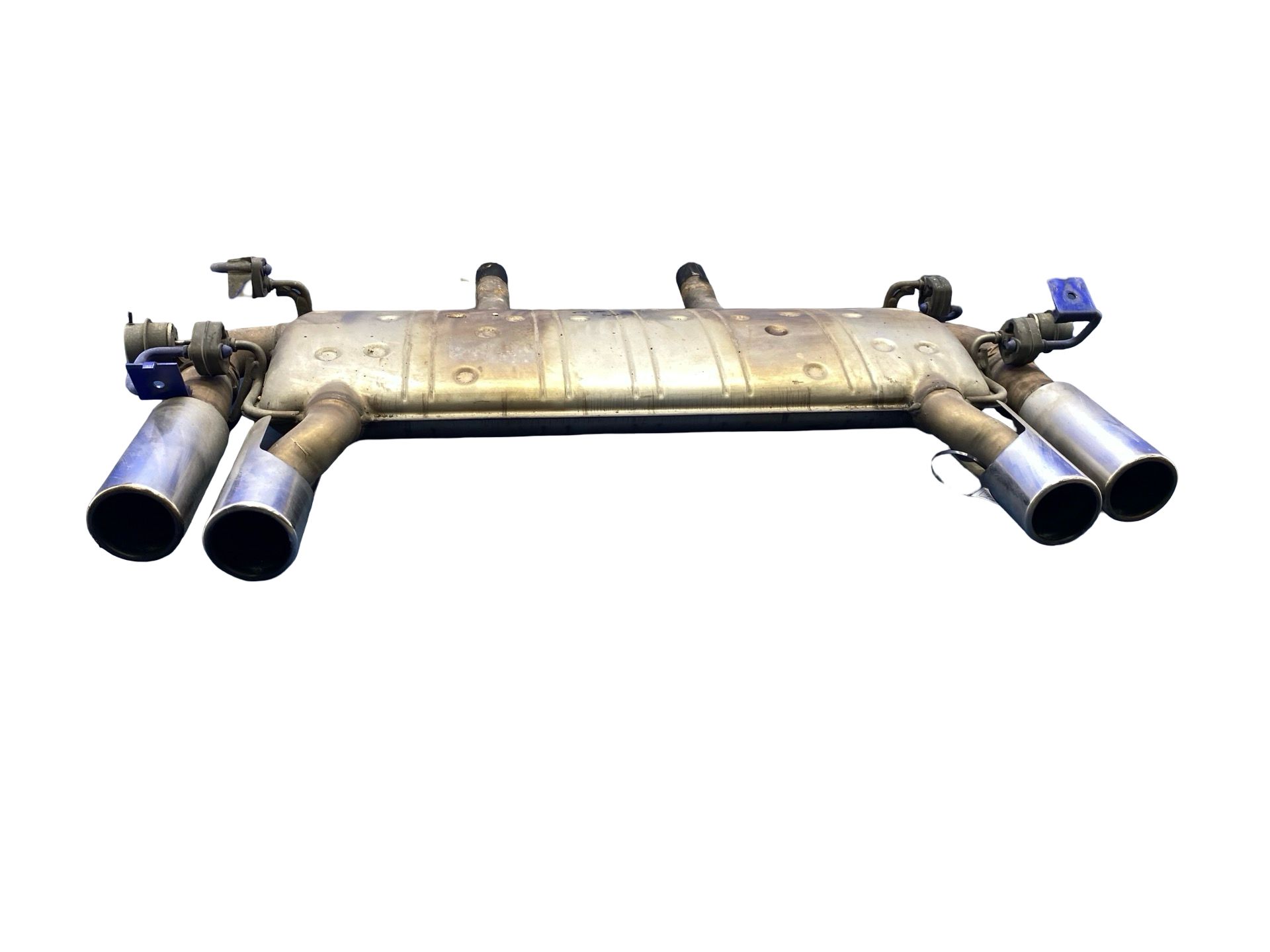
- 5.0L V8 Models: These vehicles have a quad-tip exhaust, with two tips on each side of the rear valance. 🎬 Watch: Hear the difference between the V6 and V8 exhaust notes.
- Active vs. Standard Exhaust: Many F-Types, particularly the 'S' and 'R' models, came with a Switchable Active Exhaust system. This system includes valves inside the mufflers that open or close to change the sound. You can identify this system by the presence of an exhaust icon button on the center console. Standard (or passive) exhaust systems do not have this button or the internal valves. When buying a used muffler for an active system, ensure it has the valve actuators present.
Common Symptoms of Muffler Failure

Failure symptoms on the F-Type muffler range from simple noises to functional problems with the active exhaust system.
- Rattling or Banging Noises: A rattle from the rear of the car, especially at idle or low speeds, can indicate a loose heat shield or, more commonly, a failing or seized active exhaust valve. A deeper banging or clunking could mean a broken exhaust hanger.
- Loud Roaring or Hissing: A sudden increase in exhaust volume that doesn't go away could be a sign of a crack in the muffler body or a rusted-out pipe connection.
- Active Exhaust Stuck Open: If the car is permanently loud regardless of the active exhaust switch position, the valves may be seized or stuck in the open position. Some owners intentionally do this by removing a fuse (F43 in the passenger footwell) to keep the valves open.
- Active Exhaust Stuck Closed: If the exhaust note never gets louder when you press the active exhaust button or enter Dynamic Mode, the valves are likely seized shut or the actuator has failed. This can make the car feel slightly less responsive at high RPM.
- High-Pitched Squeaking: A persistent, high-pitched squeak at low speeds and RPMs is a well-documented issue. It is often mistaken for a suspension problem but is caused by the pivot points for the active exhaust valves needing lubrication.
- Buzzing Noise from Rear Left: On earlier models, a constant buzzing from the rear left of the vehicle at low speeds is caused by the active exhaust's dedicated vacuum pump vibrating against the car's body.
Known Issues, TSBs, and Recalls

While there are no major NHTSA recalls for the muffler itself on US-market F-Types, there is a key Technical Service Bulletin (TSB) and several widely-discussed issues.
TSB for Buzzing Vacuum Pump
Jaguar issued TSB JTB00365NAS2 for 2014 and later models experiencing a buzzing noise from the rear left of the vehicle. This was caused by vibrations from the active exhaust vacuum pump. The official fix involves either repositioning the pump or, in a later procedure, removing the pump and its reservoir entirely and rerouting a vacuum line directly from the engine bay to control the valves. This updated design was implemented on later production models.
Seizing and Squeaking Active Exhaust Valves
The most common complaint among owners is the failure of the active exhaust valves. The valve spindles are prone to corrosion and carbon buildup, causing them to seize. Sometimes they can be freed with penetrating oil and manual force, but often the actuator or the entire muffler assembly needs replacement. A squeaking noise from the valve pivots can often be temporarily fixed by applying high-temperature grease.
🎬 See how to lubricate the pivots to stop that annoying squeak.Buying a Used 2014-2020 F-Type Muffler: What to Check

Due to the high cost of new OEM mufflers, a used part is an excellent value. However, careful inspection is crucial, especially for Active Exhaust models.
Physical Inspection Checklist
- Check for Cracks and Rust: Thoroughly inspect the muffler body, welds, and inlet/outlet pipes for cracks or severe rust. Pay close attention to the areas around the mounting hangers.
- Inspect the Active Exhaust Valves: This is the most important step. If possible, manually move the valve actuator arm to ensure it is not seized. The arm should move smoothly with some spring resistance. On vacuum-operated systems, check that the vacuum actuator diaphragm is not torn and holds a vacuum.
- Verify Actuators are Included: Ensure the electronic actuator motors or vacuum pods are present and undamaged. These are often the point of failure and can be difficult to source separately.
- Look at the Tips: Check the condition of the exhaust tips. While they can be cleaned, look for deep scrapes, dents, or damage that cannot be easily polished out.
Verifying Compatibility
Double-check the part number and visually confirm the tip configuration. A V6 center-exit muffler will not fit a V8 car with a quad-exit valance, and vice-versa. Ensure you are buying the correct muffler for your engine and exhaust type (Active or Standard).
Replacement Overview & Difficulty
- Difficulty Rating: 3 out of 5.
- DIY Feasible: Yes, for an experienced DIYer with the right tools.
- Estimated Time: 1.5 - 2.5 hours.
Replacing the rear muffler section is a manageable task. The vehicle must be safely raised on a lift or jack stands. The muffler is typically held on by two clamps connecting it to the center section and several rubber exhaust hangers.
Pro Tip: It is often easier to unbolt the exhaust hanger brackets from the car's frame rather than trying to pry the stubborn rubber hangers off the muffler itself. Apply anti-seize compound to the clamp bolts during reassembly to make future removal easier.
The muffler assembly can be heavy and awkward, so having a helper or a transmission jack is recommended. Rusted clamp bolts are the most likely complication and may need to be cut off.
🎬 Watch this step-by-step guide to replacing the rear muffler assembly.Cost Comparison: New vs. Used F-Type Mufflers
| Part Type | Estimated Cost |
|---|---|
| New OEM | $2,700 - $4,200+ |
| New Aftermarket | $2,500 - $9,000+ |
| Used OEM | $400 - $1,200 |
| Shop Labor | $150 - $300 |
Technical Specifications & Part Numbers
Part numbers for the F-Type vary by engine, model year, and whether the vehicle has active exhaust. Always verify with the seller or a dealer using your VIN.
- Known V8 Part Numbers: EX53-5K244-CE, T2R47475
- Known V6 Part Numbers: T2R17354 (supersedes to T2R47476)
- System Type: Vacuum-actuated valves (early models) or electronically-actuated valves (later models).
Frequently Asked Questions (FAQ)
Can I fix a stuck active exhaust valve?
Sometimes. If the valve is only lightly seized due to carbon buildup, it can sometimes be freed by applying penetrating oil to the pivot point and manually working the actuator arm back and forth. If the actuator itself has failed or the valve is severely seized, the muffler assembly may need to be replaced or repaired by a specialist who can weld in a new valve.
Can I upgrade my standard exhaust to an Active Exhaust?
It is complex. It involves replacing the muffler, installing the console switch, and running wiring and vacuum lines. While possible, it is generally more cost-effective to use an aftermarket valved exhaust system that comes with its own controller.
Why did my exhaust get quieter after a dealer service?
The pops and crackles on overrun are programmed into the engine's computer (ECU). In some cases, dealers have applied software updates that reduce or eliminate this feature, sometimes to comply with noise regulations. If your active exhaust valves are also stuck closed, this will further contribute to a quieter sound.
Is a loud exhaust note on startup normal?
Yes. On models with Active Exhaust, the system defaults to having the valves open on startup for a few seconds to produce a louder, more dramatic sound before closing to the 'quiet' mode (unless Dynamic mode is selected). If the car stays loud, the valves may be stuck open.
Helpful Videos


Technical Specifications
OEM Part Numbers: EX53-5K244-CE T2R17354 T2R47475 T2R47476
Material: Stainless Steel. Control System: Vacuum-actuated or electronically-actuated valves for Active Exhaust models.
We Have This Part in Stock

The information in this article is provided for general reference and educational purposes only. Vehicle specifications, procedures, and part compatibility can vary by production date, trim level, and region. Always consult your vehicle's factory service manual and verify part numbers before purchasing or performing repairs. Safety-critical components such as airbags, seat belts, and braking systems should be installed by a qualified professional.
- Jaguar F-Type:
- 🎬 Helpful Videos
- 🛍️ Shop This Part
- Variant Differences: V6 vs. V8 and Active vs. Standard Exhaust
- Common Symptoms of Muffler Failure
- Known Issues, TSBs, and Recalls
- TSB for Buzzing Vacuum Pump
- Seizing and Squeaking Active Exhaust Valves
- Buying a Used 2014-2020 F-Type Muffler: What to Check
- Physical Inspection Checklist
- Verifying Compatibility
- Replacement Overview & Difficulty
- Cost Comparison: New vs. Used F-Type Mufflers
- Technical Specifications & Part Numbers
- Frequently Asked Questions (FAQ)
- 🎟️ Get 5% Off