

2004-2008 Lamborghini Gallardo Exhaust: Rattling Cats, Fire Risk, and Replacement Guide
This definitive guide covers the critical failure points of the 5.0L Gallardo exhaust, including catastrophic catalytic converter failure, a major fire-risk recall, and what to inspect before buying a used system.
- The most critical issue is the failure of original ceramic catalytic converters, which can destroy the engine. Any used part MUST be checked for rattling by shaking it.
- A recall exists for 2004-2006 models where a power steering fluid leak can drip on the hot exhaust and cause a fire (NHTSA #12V442000).
- Replacement is a complex job (4/5 difficulty) requiring removal of the rear bumper and heat shields, and is not recommended for DIY beginners.
- This exhaust only fits 2004-2008 models with the 5.0L V10; it will not fit the later 5.2L V10 cars.
Symptoms of a Failing Gallardo Exhaust Pipe
A leak or failure in the exhaust system can present several distinct symptoms. Ignoring them can lead to reduced performance, failed emissions tests, and potential harm to the engine.
Rattling or Clunking Noises
This is the most critical symptom. A rattling sound, like rocks or sand shaking around inside the exhaust, almost always means the ceramic core of the catalytic converter has broken apart. If these ceramic pieces get sucked back into the engine (a process called reversion), they can score cylinder walls and cause catastrophic engine failure, requiring a rebuild that can cost over $20,000. If you hear any rattling from your exhaust, stop driving the vehicle immediately and have it inspected.
Loud or Raspy Engine Noise
The most common symptom of a simple leak is a change in the exhaust sound. A crack or failed gasket will often cause a louder, rougher, or raspier sound than usual. You may also hear distinct hissing or tapping noises, especially when the engine is cold before the metal has expanded to seal small cracks.
Exhaust Fumes
Smelling exhaust fumes in the cabin or around the car is a serious sign of a leak. These fumes contain carbon monoxide and are dangerous to inhale. This symptom indicates a significant leak that needs to be addressed immediately for safety reasons.
Reduced Performance and Fuel Economy
An exhaust leak disrupts the engine's backpressure and can cause incorrect readings from the oxygen (O2) sensors. This can confuse the engine control unit (ECU), leading to a noticeable loss of power, sluggish acceleration, and increased fuel consumption.
Check Engine Light
A leak, especially one located before the O2 sensors, can cause the sensors to send incorrect data to the car's computer, triggering a Check Engine Light. On early 2004-2005 models, clogged or rusted 'misfire tubes' can also cause a persistent, but false, misfire code.
Known Issues, Recalls, and TSBs
Safety Recall: Power Steering Line Fire Hazard
A critical recall was issued for 2004-2006 Gallardo models (NHTSA Campaign Number: 12V442000) for a high-pressure power steering line that could leak. The leaking fluid, which is flammable, could drip onto hot exhaust components, creating a significant risk of an engine fire. While not a defect of the exhaust itself, it's a critical safety issue where the exhaust system is the heat source for ignition. Any owner of these model years should verify this recall has been performed.
Catalytic Converter Disintegration
As mentioned, the single biggest issue with the stock 2004-2008 Gallardo exhaust is the failure of the internal ceramic substrate in the catalytic converters. This is a well-documented problem that can lead to complete engine destruction. For this reason, many owners preemptively switch to aftermarket exhausts with more durable metallic sport catalysts or cat-bypass pipes.
Rusted Misfire Tubes (2004-2005)
Early models were equipped with small tubes related to the emissions system that were prone to rusting and clogging. This could lead to a false Check Engine Light for engine misfires when the engine was actually running fine.
Buying a Used 2004-2008 Gallardo Exhaust: What to Check
Given the high cost of new OEM and aftermarket systems, a used OEM exhaust can be a good value, but only if you inspect it carefully. The risk of buying a part that could destroy your engine is very real.
1. Check the Catalytic Converters (CRITICAL)
This is the most important check. Hold the entire exhaust assembly and shake it firmly. If you hear any rattling, like sand or pebbles moving around inside the catalytic converter housings, the part is junk. The ceramic core has failed, and installing it would put your engine at extreme risk. Do not buy it, no matter the price.
2. Inspect All Welds and Flanges
Carefully check every weld joint on the assembly. Pay close attention to where pipes merge (like an X-pipe) and where the mounting flanges connect to the pipes. Look for hairline cracks, which often appear as thin black lines of soot. Also look for discolored areas that might indicate a previous, amateur weld repair.
3. Check for Physical Damage
Look for dents, scrapes, or flattened sections of pipe. While minor scrapes might be acceptable, significant dents can restrict exhaust flow and affect performance. Ensure all mounting brackets are present, straight, and not cracked.
4. Verify Compatibility
The exhaust system for the 5.0L V10 (2004-2008) is not compatible with the later 5.2L V10 (2009-2014) models. The mounting points and pipe routing are different. Ensure the part you are buying came from a 2004-2008 model. Also, note that 2006-2008 models have vacuum valves for the active exhaust; if you are fitting one of these to an earlier car, you will need to address the vacuum lines (or simply leave the valves in their default open position).
Pro Tip: Many owners upgrade to aftermarket exhausts, so there is a healthy supply of used OEM systems available. However, many of these are removed *because* the catalytic converters have failed. Be extremely skeptical and perform the 'shake test' without fail.
🎬 See this video to hear what a failing catalytic converter sounds like.Cost Comparison
The market for Gallardo exhausts is heavily skewed towards aftermarket solutions due to the high cost and known failure points of the OEM system.
| Part Type | Estimated Cost |
|---|---|
| New OEM | $8,000 - $15,000+ (Often requires ordering individual components) |
| New Aftermarket (Stainless Steel) | $1,700 - $7,500 |
| New Aftermarket (Titanium) | $2,500 - $12,000+ |
| Used OEM | $500 - $2,500 (Highly dependent on condition) |
| Shop Labor for Installation | $900 - $1,500 (6-8 hours) |
Installation Overview
- Difficulty: 4 out of 5
- Estimated Time: 6-8 hours
- DIY Feasible: For experienced mechanics only.
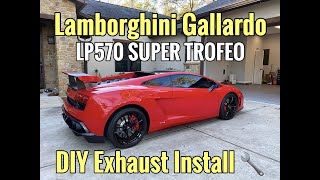
Replacing the exhaust on a Gallardo is a complex job. Access is tight due to the mid-engine layout. The basic procedure involves lifting the vehicle, removing the rear wheels, rear fender liners, rear bumper cover, and various heat shields to gain access. The bumper cover is known to be fragile and expensive, requiring great care during removal and installation. 🎬 Watch: This DIY walkthrough shows the full exhaust installation process. After removing the old system, the new one is bolted in place, and all components are reinstalled. Using penetrating oil on old, heat-cycled bolts is highly recommended.
Frequently Asked Questions (FAQ)
Is an aftermarket exhaust better than the OEM one?
In many cases, yes. High-quality aftermarket exhausts for the Gallardo often use more durable metallic-core catalytic converters (or eliminate them entirely for off-road use) which solves the main failure point of the OEM system. They can also offer significant weight savings (over 50 lbs in some cases) and a more aggressive sound.
Will a bad exhaust pipe cause a Check Engine Light?
Yes, it can. A leak before the O2 sensors or a failing catalytic converter can trigger various trouble codes and illuminate the Check Engine Light. Removing the catalytic converters will almost certainly cause a CEL unless the car's ECU is tuned to ignore it.
What's the difference between the 2004-05 and 2006-08 exhausts?
The main difference is that 2006-2008 models feature an 'active exhaust' system with vacuum-controlled valves in the mufflers. These valves open at higher RPMs (around 3,500-4,000 RPM) to provide a louder, more aggressive exhaust note. The 2004-2005 systems are passive and have a consistent sound profile.
Can I just bypass the active exhaust valves to make my 2006-2008 Gallardo louder?
Yes. The valves are normally open and are closed by vacuum pressure at low RPMs. By simply disconnecting and plugging the vacuum line to the control solenoid, the valves will remain open at all times, making the exhaust louder at idle and low speeds.
🎬 Watch: How to perform the active exhaust vacuum solenoid modification.Helpful Videos
Technical Specifications
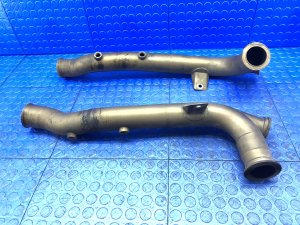
Fits 5.0L V10 engine only. 2006-2008 models include vacuum-actuated valves for an active exhaust system.
We Have This Part in Stock

The information in this article is provided for general reference and educational purposes only. Vehicle specifications, procedures, and part compatibility can vary by production date, trim level, and region. Always consult your vehicle's factory service manual and verify part numbers before purchasing or performing repairs. Safety-critical components such as airbags, seat belts, and braking systems should be installed by a qualified professional.
- Lamborghini Gallardo:
- 🎬 Helpful Videos
- 🛍️ Shop This Part
- Symptoms of a Failing Gallardo Exhaust Pipe
- Rattling or Clunking Noises
- Loud or Raspy Engine Noise
- Exhaust Fumes
- Reduced Performance and Fuel Economy
- Check Engine Light
- Known Issues, Recalls, and TSBs
- Catalytic Converter Disintegration
- Rusted Misfire Tubes (2004-2005)
- Buying a Used 2004-2008 Gallardo Exhaust: What to Check
- 1. Check the Catalytic Converters (CRITICAL)
- 2. Inspect All Welds and Flanges
- 3. Check for Physical Damage
- 4. Verify Compatibility
- Cost Comparison
- Installation Overview
- Frequently Asked Questions (FAQ)
- 🎟️ Get 5% Off