

2023-2025 Toyota Prius Front Exhaust Pipe: A Guide to FWD, AWD, and Prime Fitment
This guide covers the critical differences between the FWD, AWD, and Prime exhaust pipes, and how to diagnose, replace, and buy the correct used part for your 2023-2025 Prius.
- The single most critical factor is compatibility: FWD, AWD, and Prius Prime models all use different, non-interchangeable front exhaust pipes.
- Before buying a used part, verify it came from a vehicle with the identical drivetrain and inspect it for cracks at the welds and flanges.
- Common failure symptoms are a loud rumbling noise, the smell of fumes, and reduced fuel economy.
- Always use new gaskets (parts 17451-24010 & 17451-24020) during installation to prevent leaks.
Fitment Warning: FWD, AWD, and Prime Models Use Different Pipes
Warning: Fitment for the 2023-2025 Toyota Prius is complex. The standard Front-Wheel Drive (FWD) hybrid, All-Wheel Drive (AWD) hybrid, and Prius Prime (PHEV) models each use a unique front exhaust pipe. These parts are not interchangeable. Before ordering, you must verify that the part number matches your vehicle's specific configuration. Installing the wrong pipe will lead to incorrect alignment, clearance issues, and exhaust leaks.
Variant Differences Explained
The reason for the different pipes comes down to vehicle architecture. Understanding these differences is key to ordering the correct part.
- Front-Wheel Drive (FWD) Hybrid: This is the standard configuration. The exhaust path is relatively straightforward. It uses front pipe assembly part number 17410-24440.
- All-Wheel Drive (AWD) Hybrid: The Prius AWD system uses an additional electric motor to power the rear wheels. This requires a different exhaust pipe routing to provide clearance for the rear drivetrain components. While the specific front pipe part number for AWD is not explicitly detailed in search results, parts diagrams show a different rear muffler assembly for AWD (17430-24470) versus FWD (17430-24450), confirming a different overall system. You must source a pipe specifically from an AWD model.
- Prius Prime (PHEV): The Plug-in Hybrid Electric Vehicle (PHEV) model has a larger battery and different powertrain components compared to the standard hybrid. This necessitates a different front pipe, part number 17410-24580.
Most Common Symptoms of a Failing Exhaust Pipe
A failing front exhaust pipe will make itself known through several distinct symptoms. Since this generation of Prius is still very new, widespread failures are not yet common, but these are the signs to watch for based on typical exhaust issues.
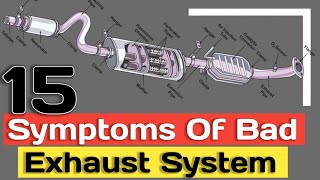
- Loud Rumbling or Roaring Noise: 🎬 Listen to what a typical exhaust leak sounds like here. This is the most common symptom. A crack or hole in the pipe or a failed gasket will allow exhaust gases to escape before they reach the muffler, causing a loud noise that gets worse during acceleration.
- Exhaust Fumes: You may smell exhaust fumes inside or outside the vehicle. This is a serious safety concern, as the fumes contain poisonous carbon monoxide. If you smell fumes in the cabin, the vehicle should be inspected immediately.
- Rattling or Banging Noises: A metallic rattle or a banging sound from under the car can indicate a broken or loose exhaust hanger, allowing the pipe to vibrate against the vehicle's underbody.
- Reduced Fuel Economy and Power: An exhaust leak can disrupt the precise readings of oxygen sensors, causing the engine's computer to deliver an incorrect air-fuel mixture. This can lead to a noticeable drop in MPG and sluggish acceleration.
- Check Engine Light: A leak near an oxygen sensor can cause it to send faulty data to the engine control unit (ECU), triggering a Check Engine Light.
Known Issues, TSBs, and Recalls (2023-2025)
As of early 2026, there are no active recalls or widespread Technical Service Bulletins (TSBs) specifically for the exhaust pipe on the 2023-2025 Toyota Prius. The most prominent recalls for this generation involve rear door latch switches that can short circuit.
Pro Tip: Previous generation (2016-2019) Prius models had a known issue where the heat exchanger integrated into the front pipe could crack internally, leaking engine coolant into the exhaust and causing white smoke (steam). 🎬 Watch how a cracked heat exchanger leaks coolant into the exhaust. While not yet reported on the 2023-2025 models, it is a potential failure point to be aware of as these vehicles accumulate mileage.
Buying a Used 2023-2025 Prius Exhaust Pipe
A used OEM exhaust pipe can be an excellent value, offering perfect fitment and factory-grade materials for significantly less than a new part. However, careful inspection is critical.
Physical Inspection Checklist
- Verify Part Number and Origin: This is the most important step. Ensure the part came from a vehicle with the exact same drivetrain (FWD, AWD, or Prime) as yours. If possible, match the stamped part number.
- Check for Cracks: Carefully inspect all welded joints, especially where the pipe meets the flanges. This is the most common failure point. Also check the flexible mesh joint (if equipped) for any tearing or unraveling.
- Inspect Flanges: The flat, metal surfaces that bolt to the rest of the exhaust must be perfectly flat and free of heavy rust or pitting. A warped flange will never seal properly.
- Look for Heavy Rust or Damage: Surface rust is normal, but avoid pipes with deep, flaky rust that compromises the metal's integrity. Check for any dents or crimps that could restrict exhaust flow.
- Confirm Hangers are Intact: Make sure all mounting brackets and hangers are present and are not bent or broken. Bending them back can be difficult and may compromise their strength.
Replacement Overview
Replacing the front exhaust pipe is a moderately difficult job that can be done by a skilled DIY mechanic. The primary challenges are safely lifting and supporting the vehicle and dealing with rusted bolts.
- Difficulty: 3 out of 5
- Tools Required: Jack and jack stands, socket set (metric), wrenches, penetrating oil, torque wrench, wire brush.
- Essential Supplies: Always use new gaskets when replacing an exhaust component. The gaskets for this pipe are part numbers 17451-24010 and 17451-24020. You may also need new spring bolts.
| Part/Service | Estimated Cost |
|---|---|
| New OEM Front Pipe (FWD/AWD) | $850 - $1,190 |
| New OEM Front Pipe (Prime/PHEV) | $830 - $1,160 |
| New Aftermarket | Not widely available as of early 2026 |
| Used OEM | $200 - $500+ (depending on condition and source) |
| Shop Labor | $180 - $270 |
Frequently Asked Questions (FAQ)
Can I use a FWD pipe on my AWD Prius?
No. The parts are physically different to accommodate the rear drive motor on AWD models. You must use a pipe from another AWD model for it to fit correctly.
Do I have to replace the gaskets?
Yes. Exhaust gaskets are single-use crush gaskets. Reusing an old gasket will almost certainly result in an exhaust leak. 🎬 See how to detect leaks and replace an exhaust gasket. Always install new gaskets (part numbers 17451-24010 and 17451-24020) with a replacement pipe.
Can I just weld a crack in my old pipe?
Sometimes. A small crack on a straight section of pipe can often be welded by a competent exhaust shop as a temporary, low-cost repair. However, if the pipe is rusted through or cracked at a complex joint or flange, replacement is the only reliable solution.
Why is the OEM part so expensive?
The front pipe assembly is a complex component that often includes a flexible joint and an integrated exhaust gas heat exchanger. It is made from high-quality stainless steel to withstand extreme temperatures and corrosion for many years. This complexity and material quality contribute to its high cost.
Helpful Videos




Technical Specifications
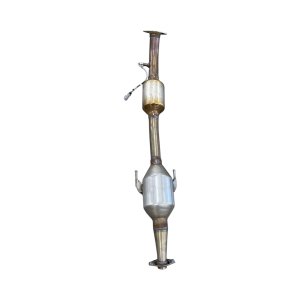
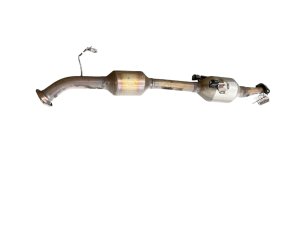
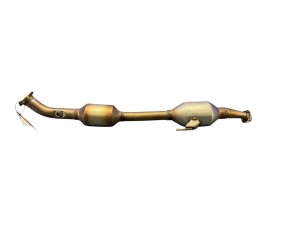
OEM Part Numbers: 17410-24440 17410-24580
Material: Stainless Steel. May include an integrated exhaust gas heat exchanger.
We Have This Part in Stock

The information in this article is provided for general reference and educational purposes only. Vehicle specifications, procedures, and part compatibility can vary by production date, trim level, and region. Always consult your vehicle's factory service manual and verify part numbers before purchasing or performing repairs. Safety-critical components such as airbags, seat belts, and braking systems should be installed by a qualified professional.
- Toyota Prius:
- 🎬 Helpful Videos
- 🛍️ Shop This Part
- Fitment Warning: FWD, AWD, and Prime Models Use Different Pipes
- Variant Differences Explained
- Most Common Symptoms of a Failing Exhaust Pipe
- Known Issues, TSBs, and Recalls (2023-2025)
- Buying a Used 2023-2025 Prius Exhaust Pipe
- Physical Inspection Checklist
- Replacement Overview
- Frequently Asked Questions (FAQ)
- 🎟️ Get 5% Off