

2012-2016 Porsche 911 Exhaust Tip Guide: Standard vs. PSE Fitment and Recall AD01
This guide covers the critical differences between standard and Sport Exhaust (PSE) tips and details a key safety recall for 2012-2013 models.
- A critical safety recall (NHTSA 13V058000) exists for 2012-2013 models with standard exhausts, where the tailpipe can detach. Verify this has been performed.
- Fitment is highly specific; you must know if you have the 'Standard' exhaust (four outlets total) or the optional 'Porsche Sport Exhaust' (PSE) (two outlets total) before buying.
- Failure is usually physical: a broken clamp band causing a loose/rattling tip is the most common issue.
- Installation is a simple DIY job, requiring only basic tools and careful alignment.
NHTSA Safety Recall AD01: Exhaust Pipe Separation
Important Safety Recall: Porsche issued a recall for certain 2012-2013 Porsche 911 Carrera and Carrera 4 models equipped with the standard (non-sport) exhaust system. The recall is identified as NHTSA Campaign ID 13V058000 and Porsche campaign number AD01.
The issue involves the potential for the exhaust tailpipe to fracture at the weld to the rear muffler and completely detach from the vehicle while driving. This can create a significant road hazard for other drivers, increasing the risk of a crash. The recall applies to 2,263 vehicles manufactured between March 7, 2012, and November 12, 2012. The remedy was for Porsche dealers to replace the rear mufflers with an updated part, free of charge. Before purchasing a vehicle in this range, or if you own one, it is critical to verify with a Porsche dealer that this recall service has been completed.
Symptoms of a Failing or Damaged Exhaust Tip
Since exhaust tips are not complex mechanical parts, failure is typically physical or cosmetic.
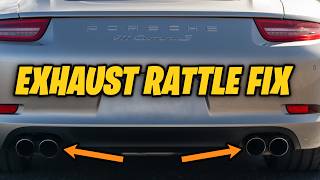
- Rattling Noises: A rattling or buzzing sound from the rear of the car, especially at idle or certain RPMs, can indicate a loose tip or a broken internal component within the muffler. 🎬 See this video for a common Porsche exhaust rattle solution
- Loose or Angled Tip: The tip may appear crooked, hang lower than the other side, or seem pushed in or pulled out. This is often caused by a broken clamp band that holds the tip to the muffler pipe.
- Physical Damage: Dents, deep scratches, and scrapes from impacts with curbs or road debris are common.
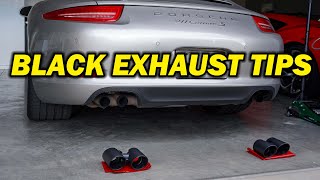
- Corrosion or Discoloration: While OEM tips are made from high-quality stainless steel, they can still show signs of age. Look for pitting, rust spots (especially at weld points), or excessive "bluing" from heat. 🎬 Watch: See how black tips look on a Carrera S
- Complete Detachment: In the case of the recalled models, the most severe symptom is the entire tailpipe falling off the vehicle.
Compatibility: The Biggest Challenge with 991.1 Exhaust Tips
Fitment for Porsche 911 exhaust components is extremely specific. The single biggest mistake buyers make is purchasing tips that do not match their vehicle's exhaust system. For the 2012-2016 (991.1 generation) Carrera models, there are two distinct systems.
Standard Exhaust vs. Porsche Sport Exhaust (PSE)
You must identify which exhaust system your vehicle has before purchasing tips. They are not directly interchangeable without modifications.
- Standard Exhaust: Found on Carrera and Carrera S models, these feature a dual-tip design on each side (four outlets total). They connect to a single pipe from each muffler.
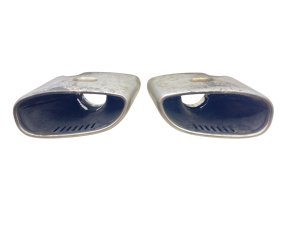
- Porsche Sport Exhaust (PSE): This was an optional upgrade that includes a button on the center console to open valves for a louder sound. PSE systems use a single, larger, oval-shaped tip on each side (two outlets total). These tips are designed for a dual-inlet connection from the PSE muffler.
Pro Tip: The easiest way to identify a PSE-equipped car is to look for the exhaust symbol button on the center console. If that button is present, the car has PSE. If not, it has the standard exhaust.
Submodel Exclusions
These exhaust tips are designed for Carrera, Carrera S, Carrera 4, and Carrera 4S models. They will NOT fit the 911 Turbo or GT3 models, which use entirely different exhaust systems and rear bumpers.
Buying a Used 2012-2016 Porsche 911 Exhaust Tip
A used OEM exhaust tip can be a great value, especially considering the high cost of new parts. However, careful inspection is key.
What to Inspect Before You Buy
- Verify the Type: First and foremost, confirm if the tip is for a Standard or PSE system. Ask the seller for photos of the inlet pipes; a standard tip has one inlet, while a PSE tip has two.
- Check the Clamp Area: The most common failure point is the integrated clamp band. Inspect this band for cracks, especially near the tightening bolt. A broken clamp may require welding to repair or a new clamp assembly.
- Inspect for Cracks and Dents: Carefully check all welds for stress fractures. Look for any significant dents or curb rash that may have distorted the shape.
- Examine the Finish: Look for deep scratches, peeling, or pitting in the chrome or polished surface. Minor discoloration can often be polished out, but physical damage to the finish is permanent.
- Confirm Part Numbers: If possible, match the part number stamped on the part to the list in this guide to ensure you are buying the correct item.
Cost Comparison for 991.1 Exhaust Tips
| Part Type | Cost Range (per tip) | Notes |
|---|---|---|
| New OEM (Standard) | $530 - $730 | Part numbers 99111146101 (Left) and 99111146201 (Right). |
| New OEM (PSE) | $1,280 - $1,710 | Significantly more expensive. Part number 99111146605. |
| New Aftermarket | $300 - $900+ | Prices vary widely by brand (e.g., Fabspeed, Soul). Quality and fit can also vary. |
| Used OEM | $150 - $600 | Highly dependent on condition and type (Standard vs. PSE). |
| Shop Labor (Installation) | $75 - $150 | Most shops will charge 0.5 to 1.0 hour of labor for a simple tip swap. |
Installation Guide
- Difficulty: 1 out of 5 (Very Easy)
- Estimated Time: 0.5 hours
- Tools Required: Ratchet, extension, E-Torx socket (E12 for standard, E14 for PSE reported), microfiber towel.
Step-by-Step Process
- Safety First: Ensure the exhaust is completely cool to the touch.
- Loosen the Clamp: Using a ratchet and the appropriate E-Torx socket, locate the clamp bolt on the top or side of the exhaust tip's inlet. Loosen it until the tip can be moved.
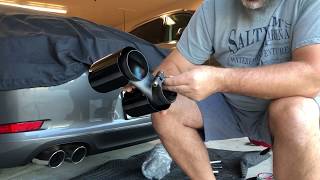
- Remove the Old Tip: The tip may be stuck on due to carbon buildup. Gently wiggle and pull it straight back. A rubber mallet can be used to lightly tap it loose if needed, but use a towel to protect the finish. 🎬 Watch: A quick walkthrough of the exhaust tip installation process
- Install the New Tip: Slide the new tip onto the muffler outlet pipe.
- Align the Tip: This is the most important step. Adjust the tip so it is centered in the bumper opening and sticks out to the desired depth. Use the other side as a reference to ensure they are symmetrical. This can take a few minutes of small adjustments.
- Tighten the Clamp: Once you are happy with the alignment, hold the tip firmly in place and tighten the clamp bolt. It should be snug and secure; there is no official torque spec, so use common sense. Re-check the tightness after a few drives as the metal can settle.
Frequently Asked Questions (FAQ)
Can I install Porsche Sport Exhaust (PSE) tips on my standard exhaust?
No, not without modification. The inlet pipes are different. A standard exhaust has a single outlet pipe per muffler, while the PSE muffler has a dual-outlet design that matches the dual-inlet of the PSE tip.
How do I know if my 2012-2013 911 is affected by the exhaust recall?
The recall (AD01 / 13V058000) affects 2012-2013 Carrera and Carrera 4 models with the standard exhaust system built between March 7, 2012, and November 12, 2012. The best way to be certain is to contact a Porsche dealer with your vehicle's VIN and ask them to check the service history for this campaign.
Why is one side of my exhaust tip hanging lower than the other?
This is almost always caused by a loose or broken clamp. The clamp band that secures the tip to the muffler pipe can fracture over time. You can attempt to realign and tighten it, but if the band is broken, it will need to be replaced.
Is a used OEM tip better than a new aftermarket one?
It depends. A used OEM tip in good condition guarantees perfect fitment and factory-grade materials. Some aftermarket tips are excellent, but cheaper options may use lower-grade stainless steel that can rust or have a finish that deteriorates quickly. For this part, a quality used OEM tip is often a safer and more cost-effective choice than a cheap aftermarket alternative.
Helpful Videos
Technical Specifications
OEM Part Numbers: 99111146101 99111146201 99111146605 99111146100 99111146200 99111146601 99111146602 99111146603 99111146604
Material: Stainless Steel. Attachment: E-Torx clamp (E12 or E14 socket typically required).
We Have This Part in Stock

The information in this article is provided for general reference and educational purposes only. Vehicle specifications, procedures, and part compatibility can vary by production date, trim level, and region. Always consult your vehicle's factory service manual and verify part numbers before purchasing or performing repairs. Safety-critical components such as airbags, seat belts, and braking systems should be installed by a qualified professional.
- Porsche 911:
- 🎬 Helpful Videos
- 🛍️ Shop This Part
- NHTSA Safety Recall AD01: Exhaust Pipe Separation
- Symptoms of a Failing or Damaged Exhaust Tip
- Compatibility: The Biggest Challenge with 991.1 Exhaust Tips
- Standard Exhaust vs. Porsche Sport Exhaust (PSE)
- Submodel Exclusions
- Buying a Used 2012-2016 Porsche 911 Exhaust Tip
- What to Inspect Before You Buy
- Cost Comparison for 991.1 Exhaust Tips
- Installation Guide
- Step-by-Step Process
- Frequently Asked Questions (FAQ)
- 🎟️ Get 5% Off