

2012-18 Focus & 2018-22 EcoSport 2.0L Fuel Injector: Failure Symptoms, Fire Risk, and Replacement
A detailed guide to diagnosing failing GDI fuel injectors on the Ford Focus and EcoSport, including critical information on related fire-risk recalls and replacement costs.
- This injector fits the 2.0L non-turbo engine in both the 2012-18 Focus and 2018-22 EcoSport. For the Focus, confirm the 8th VIN digit is '2'.
- A leaking or cracked injector can cause a strong fuel smell and poses a serious fire risk, a known issue on similar Ford GDI engines.
- Replacement is a moderately difficult (4/5) DIY job that requires removing the intake manifold and special tools for installing the one-time-use Teflon seals.
- A stuck-open GDI injector can cause severe engine damage by diluting engine oil with fuel or causing hydro-lock; do not ignore symptoms.
Symptoms of a Failing Fuel Injector
A faulty fuel injector on your Ford Focus or EcoSport can cause a range of problems, from annoying drivability issues to severe engine damage. Because these are GDI engines, the symptoms can be more pronounced than on older vehicles.
Common Symptoms:
- Rough Idle and Engine Vibration: An injector that is clogged or not spraying correctly will cause an imbalance in the engine, leading to a rough or shaky feeling when the car is stopped.
- Engine Misfires and Hesitation: You may feel the engine stumble or hesitate during acceleration. This happens when a cylinder doesn't get the right amount of fuel to fire properly.
- Check Engine Light: A malfunctioning injector will almost always trigger the check engine light. Common codes include cylinder-specific misfire codes (P0300, P0301, P0302, etc.), injector circuit codes (P0201-P0204), or fuel mixture codes (P2188, P0172).
- Poor Fuel Economy: If an injector is stuck open or leaking, it will dump excess fuel into the engine, causing your miles-per-gallon (MPG) to drop significantly.
- Fuel Smell: A strong gasoline odor inside or outside the vehicle can be a sign of a leaking injector or a cracked injector body. This is a serious safety concern.
- Hard Starting: A leaking injector can drip fuel into the cylinder after the engine is shut off, leading to a flooded condition that makes the engine difficult to start.
- Engine Damage (Severe Cases): A severely leaking GDI injector can lead to catastrophic failure. It can wash lubricating oil off the cylinder walls or dilute the engine oil with gasoline, leading to bearing damage. In the worst-case scenario, enough fuel can leak into the cylinder to cause hydro-lock when you try to start the engine, which can bend or break internal engine components.
Known Issues, Recalls, and Technical Service Bulletins (TSBs)
While the 2012-2018 Focus and 2018-2022 EcoSport with the 2.0L engine have not been directly recalled for fuel injector failure, Ford has issued recalls for other models with similar GDI engines for a critical issue.
Warning: Related Recall for Cracked Injectors & Fire Risk
Ford has recalled numerous vehicles, including the Bronco Sport and Escape (NHTSA recalls 22V859, 24V187), for a defect where the fuel injectors can crack. A cracked injector can leak fuel at a high rate, and if it accumulates near a hot surface like the exhaust manifold, it can cause an under-hood fire. The official remedy from Ford involves a software update to detect a pressure drop and the installation of a drain tube to divert leaking fuel away from hot surfaces. However, the National Highway Traffic Safety Administration (NHTSA) has opened an investigation into the adequacy of this remedy, noting that it does not fix the root cause of the leak. Owners of the Focus and EcoSport with the 2.0L GDI engine should be aware of this potential failure mode.
Ford Focus Fuel System Recall (18S32)
Many 2012-2018 Ford Focus models were recalled for an issue with the canister purge valve sticking open. This could cause an excessive vacuum in the fuel tank, leading to the tank deforming, inaccurate fuel gauge readings, and potential stalling. While this is not an injector issue, it is a significant fuel system problem on the Focus that owners should be aware of and ensure has been addressed.
🎬 Watch this video to learn how to replace the purge valve.Buying a Used Fuel Injector: A Buyer's Guide
Given the high cost of new OEM injectors, a quality used part can be a great value. However, GDI injectors are precise components, and buying used requires careful consideration.
- Why Used OEM is Often Better: For a complex part like a GDI injector, a used original equipment (OEM) part from a low-mileage vehicle is often a more reliable choice than a cheap, new aftermarket part. OEM parts are built to the manufacturer's exact specifications for flow rate and spray pattern, which is critical for engine performance and longevity.
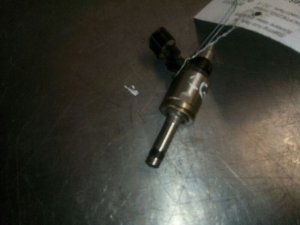
- Physical Inspection: Before purchasing, inspect the used injector closely. Look for any cracks in the plastic body or damage to the electrical connector. Check the nozzle tip for excessive carbon buildup, although some is normal. Ensure the O-rings are present, but plan on replacing them regardless.
- Compatibility Verification: Always double-check the part number. The correct OEM part number for this application is CP9Z-9F593-B. This may be stamped on the injector itself. For Ford Focus vehicles, you must also verify that the 8th digit of your Vehicle Identification Number (VIN) is '2' to ensure you have the correct 2.0L non-turbo engine.
- Mileage Matters: Try to source injectors from a vehicle with the lowest possible mileage. Fuel injectors are a wear item, and their performance can degrade over time.
- Replace the Seals: This is not optional. GDI injectors use one-time-use Teflon seals at the tip and rubber O-rings at the top. These MUST be replaced whenever an injector is removed or installed. Special tools are required to resize the Teflon seal after it is installed on the injector. Failure to replace these seals will result in a dangerous fuel or compression leak.
Replacement Overview and Difficulty
Replacing the fuel injectors on the 2.0L GDI engine is a moderately difficult job that requires care and the right tools. It is more involved than replacing injectors on an older, port-injected engine.
- Installation Difficulty: 4/5
- Estimated Time: 2.5 - 4 hours for a DIY mechanic
- DIY Feasible: Yes, for an experienced DIYer. Not recommended for beginners.
The basic process involves:
- Depressurizing the fuel system.
- Disconnecting the battery.
- Removing the intake manifold to access the fuel rail.
- Disconnecting the high-pressure fuel line, electrical connectors, and removing the fuel rail mounting bolts.
- Carefully prying the entire fuel rail with injectors out of the cylinder head.
- Replacing the injectors on the rail, ensuring new seals are installed correctly.
- Re-installing in reverse order, using the correct torque specifications and tightening sequence for the fuel rail bolts.
Pro Tip: The fuel rail bolts are often torque-to-yield and require a specific multi-stage tightening process, including a final angle-tightening step. Consult a service manual for the exact procedure to avoid fuel leaks or damage.
Cost Breakdown
Prices can vary by supplier and location, but this provides a general estimate of what to expect.
| Part Type | Cost (Per Injector) | Notes |
|---|---|---|
| New OEM | $80 - $140 | Highest quality and guaranteed fit. |
| New Aftermarket | $25 - $70 | Quality can vary significantly. May not match OEM flow rates precisely. |
| Used OEM | $30 - $60 | Good value, but source from a reputable seller with low mileage. |
| Remanufactured | $40 - $80 | Professionally cleaned and tested, often with new seals. A good compromise. |
| Shop Labor (All 4) | $350 - $700 | Typically a 2.5-4 hour job. Rates vary by shop. |
Frequently Asked Questions (FAQ)
Can I replace just one bad fuel injector?
Yes, you can replace only the faulty injector. However, if the vehicle has high mileage, the other injectors may be in similar condition and could fail soon. For this reason, many mechanics recommend replacing all four injectors as a set to ensure balanced fuel delivery and prevent future repairs.
Do I need special tools to replace these injectors?
Yes. Besides standard mechanic's tools, you will need a tool kit specifically for installing the Teflon GDI injector seals. These seals must be stretched to fit over the injector tip and then compressed back to the correct size. Attempting this without the proper tools will damage the seals and cause leaks.
Is carbon buildup a problem on these engines?
Because this is a GDI engine, the fuel is not sprayed over the back of the intake valves. This means the cleaning detergents in gasoline do not wash carbon deposits off the valves. Over time, carbon can build up, restricting airflow. While some owners report no issues, it is a known characteristic of all GDI engines. Regular, high-quality oil changes and using Top Tier gasoline may help slow the process.
What does the 8th digit of the VIN mean for my Ford Focus?
The 8th character of the VIN identifies the engine installed from the factory. For 2012-2018 Ford Focus models, a '2' in the 8th position confirms the vehicle has the 2.0L GDI non-turbo engine that this fuel injector fits. Other numbers or letters indicate a different engine (like the 1.0L EcoBoost or 2.0L ST turbo) which uses different parts.
Helpful Videos

Technical Specifications
OEM Part Numbers: CP9Z-9F593-B CM5E-9F593-BB CM5E-9F593-BA CM5201
Engine Application: Ford 2.0L DOHC GDI I-4 (Non-Turbo). VIN Confirmation (Focus): 8th digit must be '2'.
We Have This Part in Stock

The information in this article is provided for general reference and educational purposes only. Vehicle specifications, procedures, and part compatibility can vary by production date, trim level, and region. Always consult your vehicle's factory service manual and verify part numbers before purchasing or performing repairs. Safety-critical components such as airbags, seat belts, and braking systems should be installed by a qualified professional.
- Ford EcoSport:
- Ford Focus:
- 🎬 Helpful Videos
- 🛍️ Shop This Part
- Symptoms of a Failing Fuel Injector
- Common Symptoms:
- Known Issues, Recalls, and Technical Service Bulletins (TSBs)
- Ford Focus Fuel System Recall (18S32)
- Buying a Used Fuel Injector: A Buyer's Guide
- Replacement Overview and Difficulty
- Cost Breakdown
- Frequently Asked Questions (FAQ)
- 🎟️ Get 5% Off