

Hyundai & Kia 2.4L/3.5L Fuel Injector Guide (1999-2006): Misfires, Leaks, and Replacement
Diagnosing and replacing the tricky 35310-38010 fuel injector in your Sorento, Santa Fe, Sonata, and other models from this era.
- You MUST verify if your vehicle has the 2.4L 4-cylinder or 3.5L V6 engine before buying, as part number 35310-38010 is listed for both.
- Symptoms of failure include rough idle, engine misfires, poor gas mileage, and a check engine light (P030x, P020x codes).
- A strong fuel smell is a critical danger sign of a leak and a fire hazard; do not drive the vehicle.
- Replacing all injectors at once with a used or remanufactured OEM set is the most reliable and cost-effective repair strategy.
A Critical Compatibility Warning: 2.4L I4 vs. 3.5L V6
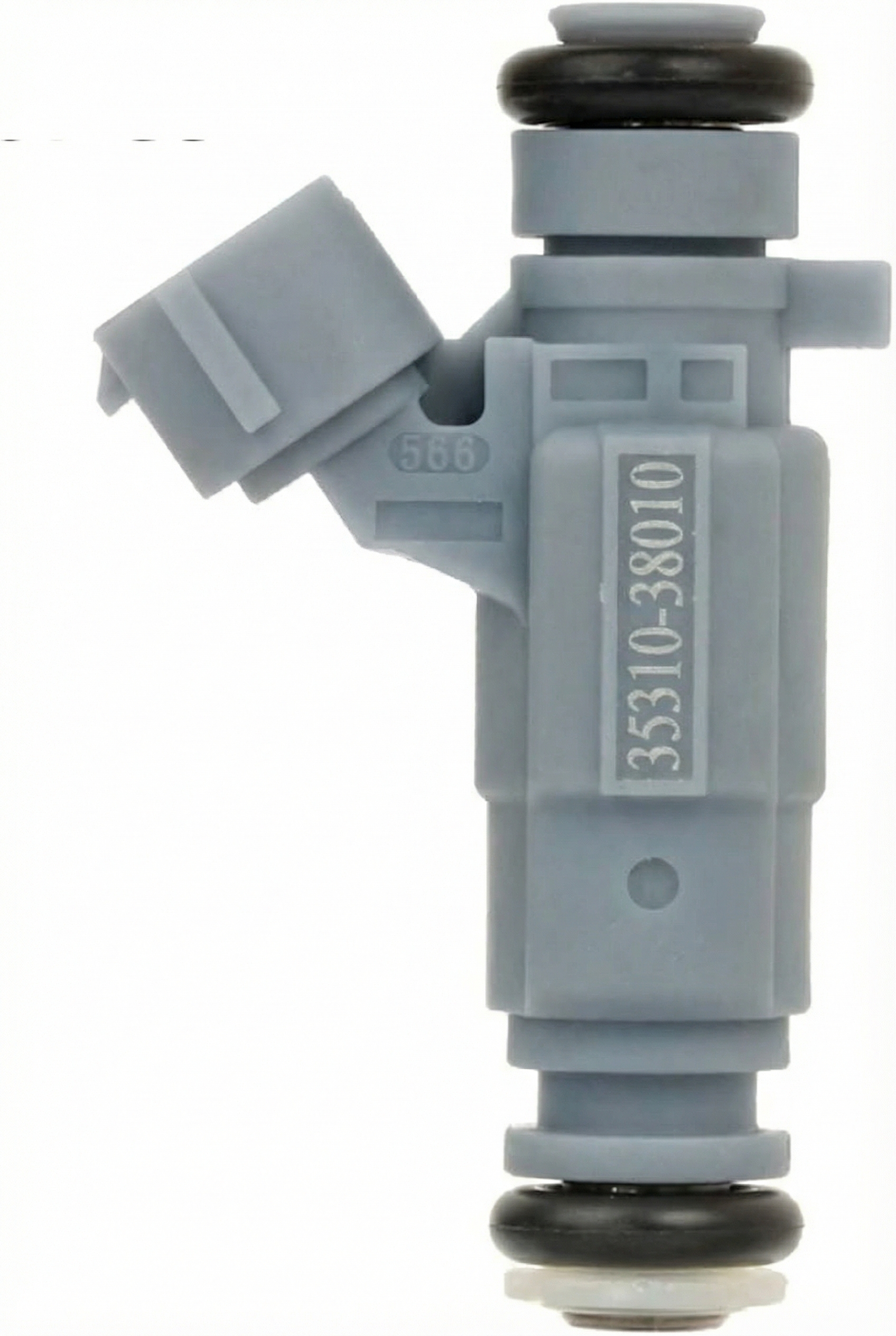
Warning: Before purchasing, you MUST confirm which engine your vehicle has. The primary replacement part number, 35310-38010 (also sold as 35310-38010-D or Kefico 9260930003), is widely listed as fitting both the 4-cylinder and 6-cylinder engines covered in this guide. While the injector itself may be the same, you will need a different quantity (4 for the I4, 6 for the V6) and the replacement procedure is different. Do not rely on the part number alone.
Check the emissions label under your hood or the 8th digit of your Vehicle Identification Number (VIN) to confirm your engine size. This guide covers the following applications for this injector:
| Vehicle | Years | Engine |
|---|---|---|
| Hyundai Santa Fe | 2001-2006 | 2.4L I4 or 3.5L V6 |
| Hyundai Sonata | 1999-2005 | 2.4L I4 |
| Hyundai XG300 | 2001 | 3.0L V6 (Note: Check compatibility carefully) |
| Hyundai XG350 | 2002-2005 | 3.5L V6 |
| Kia Amanti | 2004-2006 | 3.5L V6 |
| Kia Magentis | 2001-2006 | 2.4L I4 |
| Kia Optima | 2001-2006 | 2.4L I4 |
| Kia Sedona | 2002-2005 | 3.5L V6 |
| Kia Sorento | 2003-2006 | 3.5L V6 |
For the 2006 Kia Optima, there was a mid-year body style change. The engine is identified by the 8th digit of the VIN, not the 5th. A '6' in the 8th position typically indicates the 2.4L I4 engine. Always verify your specific vehicle's engine before ordering parts.
Symptoms of a Failing Fuel Injector
Fuel injector problems usually start small but can lead to serious issues if ignored. Here are the most common signs that one or more of your injectors are failing.
- Rough Idle: The engine may shake, sputter, or vibrate while stopped at a light or in park. This happens because one cylinder isn't receiving the correct amount of fuel, throwing the engine out of balance.
- Engine Misfires and Hesitation: You may feel the vehicle jerking, stumbling, or hesitating during acceleration. This is a classic symptom of a clogged or failing injector that isn't delivering enough fuel for combustion.
- Check Engine Light: A failing injector will almost always trigger a Check Engine Light. Common codes include cylinder-specific misfires (P0301, P0302, etc.), injector circuit malfunctions (P0201, P0202, etc.), or fuel trim codes 🎬 See: How to diagnose specific cylinder misfire codes on your Kia. like P0172 (System Too Rich) if an injector is stuck open.
- Poor Fuel Economy: If an injector is leaking or stuck open, it dumps excess fuel into the engine, causing your gas mileage to drop noticeably.
- Fuel Smell: A strong smell of raw gasoline inside or outside the car is a serious warning sign. It often points to an external leak from a cracked injector body or a bad O-ring seal at the fuel rail. This is a significant fire hazard and should be addressed immediately.
- Hard Starting: If an injector leaks fuel into a cylinder after the engine is shut off, it can create a rich condition that makes the engine difficult to start.
Diagnosing a Faulty Fuel Injector
Before you buy parts, you can perform a few simple tests to help confirm if an injector is the problem.
- The Screwdriver Test: With the engine running, carefully place the tip of a long screwdriver on the top of each fuel injector and press your ear to the handle. 🎬 Watch: Five simple ways to test your fuel injectors at home. A healthy injector makes a distinct, rhythmic clicking sound. If one injector is silent or sounds different from the others, it's likely the culprit.
- The Resistance Test: Disconnect the electrical connector from the injector. Set a multimeter to the Ohms setting (Ω). Touch one probe to each of the two metal pins on the injector. A good injector for these vehicles should read around 14.2 Ohms. More importantly, all injectors should have a very similar resistance (within about 0.5 Ohms of each other). A reading of infinity (OL) means the injector's internal coil is broken; a reading near zero means it has shorted out.
- Noid Light Test: A 'noid light' is a special test light that plugs into the injector's wiring harness. When you crank or start the engine, the light should flash, indicating the computer is sending a signal. If the light doesn't flash, the problem is in the wiring or the engine computer, not the injector itself.
Buying a Used Fuel Injector: What to Look For
For these vehicles, a quality used OEM injector is often a smarter choice than a cheap new aftermarket part. Original Equipment (OEM) injectors made by Kefico are built to a higher standard for flow rate and durability. Here’s what to check when buying used:
- Verify the Part Number: Insist on matching the OEM part number: 35310-38010, 35310-38010-D, or Kefico 9260930003.
- Inspect the Body: Check the plastic body of the injector for any cracks, especially around the electrical connector. A cracked injector can leak fuel and is a fire risk.
- Check the Connector Pins: Look at the two metal pins inside the electrical connector. They should be straight and free of corrosion.
- Buy a Complete Set: It's highly recommended to replace all injectors at the same time, especially on higher-mileage vehicles. If one has failed, others are likely not far behind. Buying a flow-matched set ensures that each cylinder gets the same amount of fuel, which is critical for smooth engine operation.
- Check for Included Seals: A reputable seller will include new O-rings and seals. These are one-time-use items and must be replaced. If they aren't included, you will need to purchase a separate seal kit.
- Ask About Testing: Ask the seller if the injectors have been cleaned and tested. Professional recyclers often perform resistance tests and ultrasonic cleaning to ensure the parts are ready for installation.
Known Issues, TSBs, and Recalls
While there are no major recalls specifically for fuel injector failure on these 1999-2006 models, it's a common wear item. Searches for official Technical Service Bulletins (TSBs) related to injector failure on this specific vehicle group did not yield specific results. However, Kia has issued general service information advising against aggressive 'fuel system flushes' but does recommend using a quality fuel system cleaner like Techron Concentrate Plus at each oil change if you are not regularly using Top Tier detergent gasoline. This can help prevent the formation of deposits that clog injectors.
Cost to Replace Fuel Injectors (2026 Estimates)
Prices can vary by location and which engine you have (a V6 job costs more in labor). Here is a general cost breakdown:
| Part or Service | Estimated Cost |
|---|---|
| New OEM Injector (1) | $115 - $170 |
| New Aftermarket Injector (1) | $40 - $75 |
| Remanufactured OEM Injector (1) | $25 - $40 |
| Used OEM Injector (1) | $20 - $35 |
| Shop Labor (I4 Engine) | $120 - $200 |
| Shop Labor (V6 Engine) | $180 - $350 |
Pro Tip: Given the low cost of remanufactured or used OEM injectors, it is highly cost-effective to replace all four or six at once. The labor cost is the most significant part of the job, and replacing them all prevents you from having to pay for the same job again in a few months when another original injector fails.
Replacement Overview & Difficulty
Replacing these injectors is a feasible DIY job for someone with moderate mechanical experience, but the difficulty varies greatly by engine.
- Difficulty Rating (2.4L I4): 2 out of 5. Access is relatively open.
- Difficulty Rating (3.5L V6): 3.5 out of 5. The upper intake manifold must be removed to access the rear three injectors, adding complexity and time.
- Estimated Time: 1-1.5 hours for I4; 2-3 hours for V6.
General Steps:
- Safety First: Work in a well-ventilated area. Disconnect the negative battery terminal. Relieve the fuel system pressure by removing the fuel pump fuse and briefly starting the engine until it stalls.
- Access the Fuel Rail: Remove any plastic engine covers. For V6 models, you will need to remove the air intake assembly and then unbolt and remove the upper intake manifold 🎬 Watch: A step-by-step guide to removing the 3.5L intake manifold. to access the rear fuel rail.
- Disconnect: Unplug the electrical connectors from each injector. Disconnect the main fuel line from the fuel rail. Have a rag ready to catch any residual gasoline.
- Remove the Rail: Unbolt the fuel rail from the lower intake manifold. Gently but firmly, pull the entire rail with the injectors attached upwards to free them from their ports.
- Swap Injectors: Remove the small retaining clips that hold each injector to the rail. Pull the old injectors out. Lightly lubricate the new O-rings with clean engine oil and press the new injectors into the rail. Secure them with the clips.
- Reassembly: Carefully guide the new injectors into their ports in the manifold and bolt the fuel rail back down. Reassemble all other components in the reverse order of removal. Use new gaskets for the intake manifold if it was removed.
- Check for Leaks: Reconnect the battery. Turn the key to the 'On' position (without starting) a few times to let the fuel pump prime the system. Carefully inspect the fuel rail and each injector for any signs of fuel leaks before starting the engine.
Can I replace just one bad fuel injector?
Yes, you can, but it's not recommended. Fuel injectors wear out at a similar rate. If one has failed due to high mileage, the others are likely degraded as well. Replacing them all at once as a flow-matched set ensures balanced performance and prevents you from having to do the same labor-intensive job again soon.
Do I need to get the computer reprogrammed after installing new injectors?
No. For these specific vehicles with these multi-port fuel injectors (MFI), no programming or calibration is required. The engine computer will adapt to the new injectors on its own.
Is a leaking fuel injector dangerous?
Yes, extremely. An externally leaking injector that is dripping fuel onto a hot engine or exhaust manifold is a major fire hazard and the vehicle should not be driven. An internally leaking (stuck open) injector can, in severe cases, fill a cylinder with raw fuel, which can cause catastrophic engine damage (hydrolock) when you try to start it.
What are the O-rings and seals for? Do I have to replace them?
Fuel injectors have rubber O-rings at the top to seal against the fuel rail and seals at the bottom to seal against the intake manifold. These prevent fuel leaks and air (vacuum) leaks. They become hard and brittle over time and must always be replaced with new ones when an injector is removed or installed.
Helpful Videos

Technical Specifications
OEM Part Numbers: 35310-38010 35310-38010-D 9260930003
Orifice Type: 4-hole disc, Electrical Connector: 2-pin, Coil Resistance: ~14.2 Ohms, Fuel Type: Gasoline
We Have This Part in Stock

The information in this article is provided for general reference and educational purposes only. Vehicle specifications, procedures, and part compatibility can vary by production date, trim level, and region. Always consult your vehicle's factory service manual and verify part numbers before purchasing or performing repairs. Safety-critical components such as airbags, seat belts, and braking systems should be installed by a qualified professional.
- Kia Sorento:
- Hyundai Santa Fe:
- Hyundai Sonata:
- Hyundai XG300:
- Hyundai XG350:
- Kia Amanti:
- Kia Magentis:
- Kia Optima:
- Kia Sedona:
- 🎬 Helpful Videos
- 🛍️ Shop This Part
- A Critical Compatibility Warning: 2.4L I4 vs. 3.5L V6
- Symptoms of a Failing Fuel Injector
- Diagnosing a Faulty Fuel Injector
- Buying a Used Fuel Injector: What to Look For
- Known Issues, TSBs, and Recalls
- Cost to Replace Fuel Injectors (2026 Estimates)
- Replacement Overview & Difficulty
- 🎟️ Get 5% Off