

2002-2003 Silverado & Sierra Fuel Pump: Decoding Federal Emissions and Compatibility
This guide covers the specific gasoline fuel pump for 2002-2003 GM trucks, focusing on common failure symptoms, diagnostic procedures, and critical compatibility details to ensure you get the right part.
- Compatibility is critical: This pump ONLY fits gasoline, non-Flex Fuel trucks with Federal emissions (codes NF2, NF4, NT9).
- Common symptoms include hard starting, stalling, loss of power, and a loud whine from the fuel tank.
- Diagnosis is best confirmed with a fuel pressure test; pressure should be 55-62 PSI for these models.
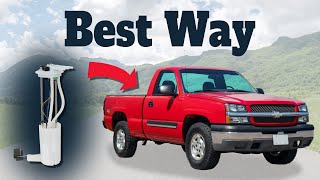
- Replacement can be done by lifting the truck bed, which is often easier than dropping the fuel tank.
Symptoms of a Failing Fuel Pump
A weak or failing fuel pump on your 2002-2003 Silverado or Sierra will give you some clear warning signs. Because the pump is responsible for delivering fuel, most symptoms are related to engine performance and starting issues.
- Engine Cranks but Won't Start: This is a classic sign of a dead fuel pump. You'll hear the starter turning the engine over, but it won't fire up because it's not getting any fuel. You might hear the pump prime (a faint hum from the tank area) for a few seconds when you first turn the key; if that sound is absent, the pump or its relay is a likely culprit.
- Hard Starting: If the truck takes longer than usual to start, especially when cold, it could be a weak pump that's struggling to build enough pressure. You might have to crank the engine for several seconds or cycle the key a few times to get it to fire.
- Engine Sputtering or Stalling: If the truck stalls unexpectedly, especially under load (like accelerating or going uphill), it's a strong indicator that the fuel pump can't keep up with the engine's demand for fuel. It might feel like you're running out of gas.
- Loss of Power and Poor Acceleration: A noticeable decrease in power, hesitation, or a sluggish feeling when you press the gas pedal points to insufficient fuel delivery. The engine may stumble at higher RPMs.
- Loud Whining or Humming Noise: A loud whine coming from the fuel tank area is a common symptom of a fuel pump motor that is working too hard and about to fail. A healthy pump makes a quiet hum for a few seconds when the key is turned on, but a continuous, loud noise is a bad sign.
- Flashing Check Engine Light: A severe engine misfire caused by a lack of fuel can trigger a flashing Check Engine Light. Common trouble codes associated with fuel pump issues include P0627 (Fuel Pump Control Circuit) and P0230 (Fuel Pump Primary Circuit).
Diagnosing the Problem
Before replacing the pump, it's wise to confirm it's the true cause of your issues.
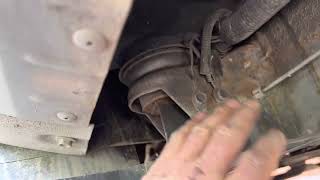
- Check the Fuel Pump Relay and Fuse: The simplest first step is to check the fuel pump relay and its 20-amp fuse, located in the under-hood fuse box. 🎬 Watch: How to locate and test the fuel pump relay. A bad relay or blown fuse will prevent the pump from getting power.
- Listen for the Pump: In a quiet environment, turn the ignition key to the 'On' position (without starting the engine). You should hear a faint 2-3 second hum from the fuel tank area as the pump primes the system. If you hear nothing, the pump is likely not receiving power or has failed completely.
- Perform a Fuel Pressure Test: This is the most definitive way to diagnose a bad fuel pump. For these gasoline V8 trucks, the fuel pressure specification is typically between 55 and 62 PSI. You'll need a fuel pressure test gauge, which connects to the Schrader valve on the engine's fuel rail. With the key on and engine off, the pressure should jump to spec and hold. While the engine is running, the pressure should remain steady. If the pressure is low, drops off, or never builds, the pump is likely faulty.
Warning: Working with gasoline and the fuel system is dangerous. Always work in a well-ventilated area, away from any open flames or sparks. Wear safety glasses and have a Class B fire extinguisher nearby. Relieve fuel system pressure before disconnecting any lines.
Critical Compatibility & Part Numbers
This specific fuel pump module (OEM part numbers ACDelco MU1090 and GMC 25345028) has very strict compatibility requirements. Installing the wrong pump will result in a no-start condition or poor performance. Before purchasing, you must verify your vehicle's specifications.
- Gasoline Engines Only: This pump is NOT for vehicles that can use Flex Fuel (E85).
- Federal Emissions Only: It fits trucks with Federal emissions systems, identified by option codes NF2, NF4, or NT9 on the service parts identification sticker (usually in the glove box). It will NOT work on vehicles with California emissions (NC1).
- No Evaporative Emissions System: This pump is for models without a complex evaporative emissions system.
- 2002 Models: For the 2002 model year, this part fits vehicles WITHOUT the identification code 'TCU' on the service parts sticker.
- 1500 Models: This part does NOT fit Crew Cab configurations.
- 3500 Models: This part does NOT fit Chassis Cab configurations.
Always double-check the electrical connectors on top of your existing pump module. This pump has two electrical connectors. Taking a clear picture of the top of your current pump before ordering a replacement is a great way to ensure a match.
Buying a Used Fuel Pump: What to Look For
A quality, low-mileage used OEM fuel pump can be a reliable and cost-effective alternative to expensive new parts. Cheap aftermarket pumps have a reputation for premature failure, making a tested OEM unit a smarter choice. Here’s what to check:
- Verify Compatibility: This is the most important step. Ensure the donor vehicle has the exact same engine, emissions system (Federal), and cab/chassis configuration as your truck. Get the donor vehicle's VIN if possible to cross-reference its build sheet.
- Inspect the Assembly: Look for any signs of physical damage, heavy corrosion, or cracking on the plastic housing. Check that the electrical connectors and fuel line ports are clean and intact. Avoid any units that look like they've been sitting in water or are covered in rust.
- Check the Wiring Harness: Ensure the short wiring pigtail on the pump is not cut, frayed, or damaged. Bad wiring is a common failure point.
- Look at the Fuel Level Sender: The fuel level sender (the arm with the float) is part of the assembly. Make sure it moves freely and isn't bent or damaged. A faulty sender is a common reason for inaccurate fuel gauge readings.
- Ask About Mileage: While not always possible, try to get a pump from a lower-mileage vehicle. Modern fuel pumps are durable, but wear is inevitable. A pump from a truck with 80,000 miles is a better bet than one from a truck with 200,000 miles.
Replacement Overview & Difficulty
Replacing the fuel pump on these trucks is a significant job, but it is manageable for an experienced DIYer. There are two main methods:
- Dropping the Fuel Tank: This is the traditional method. The truck is lifted, the tank straps are removed, and the tank is carefully lowered to access the pump on top. This is more difficult if the tank is full of fuel.
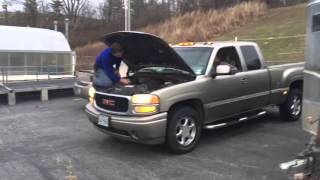
- Lifting the Truck Bed: Many mechanics and DIYers prefer this method. You remove the eight bolts holding the bed to the frame, disconnect the fuel filler neck, and then lift one side or the entire bed off the frame to get direct access to the top 🎬 See this step-by-step guide for replacing the pump yourself. of the fuel tank. This avoids the danger and difficulty of handling a heavy fuel tank.
Regardless of the method, you will need to disconnect fuel lines and electrical connectors, remove a locking ring, and then pull the old pump assembly out. It's highly recommended to clean the area around the pump thoroughly before removing it to prevent dirt from falling into the tank.
Pro Tip: When replacing the fuel pump, it's also a great time to replace the external fuel filter if your truck has one (typically found on 1999-2003 models). A clogged filter can strain a new pump and cause it to fail prematurely.
Cost Comparison
| Part Type | Estimated Cost |
|---|---|
| New OEM (ACDelco) | $280 - $450 |
| New Aftermarket | $75 - $200 |
| Used OEM | $50 - $125 |
| Shop Labor Cost | $262 - $537 |
Known Issues, Recalls & TSBs
While there are no major recalls specifically for the 2002-2003 fuel pump on these models, some related issues are worth noting:
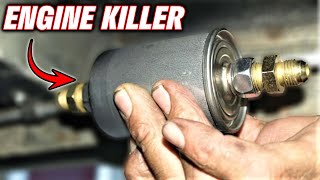
- Grounding Issues: A common failure point in the fuel pump circuit is not the pump itself, but the ground wire. A corroded or broken ground wire, often located on the frame rail near the driver's side front wheel, 🎬 Watch: How to find and fix bad fuel pump grounds. can prevent the pump from running. Always check for good power and ground at the pump connector before condemning the pump.
- Fuel Level Sending Unit Failure: The fuel gauge sending unit, which is part of the pump module, is known to fail, causing erratic or incorrect fuel gauge readings. This is often the first part of the assembly to have problems.
Searches for official NHTSA recalls for this specific part and year range did not yield any results at the time of writing. A recall for a similar issue (NHTSA N262544420) affects much newer 2025-2026 models.
Frequently Asked Questions
Do I have to drop the fuel tank to replace the pump?
No, you don't have to. An alternative and often easier method is to unbolt and lift the truck's bed to access the pump from above. This avoids the hassle and danger of lowering a heavy, fuel-filled tank.
Why does my truck start fine sometimes but not others?
Intermittent starting problems are a common sign of a failing fuel pump. The internal check valve may be failing, allowing fuel pressure to bleed off while the truck sits. Or, the electric motor inside the pump could have a 'dead spot' that only causes issues sometimes.
Can I just replace the pump motor instead of the whole assembly?
While it is sometimes possible to buy just the motor, it is not recommended. The complete module includes the pump, housing, fuel level sender, and strainer. These components are designed to work together, and replacing the entire assembly is more reliable and often solves other potential issues, like a faulty fuel gauge.
My fuel gauge is acting crazy. Is that the fuel pump?
Yes, most likely. The fuel level sending unit is part of the fuel pump module. An erratic or inaccurate fuel gauge is a very common symptom that the sending unit has failed. Replacing the entire fuel pump module will fix this problem.
Helpful Videos
Technical Specifications
OEM Part Numbers: MU1090 25345028
Required Fuel Pressure: 55-62 PSI
We Have This Part in Stock

The information in this article is provided for general reference and educational purposes only. Vehicle specifications, procedures, and part compatibility can vary by production date, trim level, and region. Always consult your vehicle's factory service manual and verify part numbers before purchasing or performing repairs. Safety-critical components such as airbags, seat belts, and braking systems should be installed by a qualified professional.
- Chevrolet Silverado 1500:
- GMC Sierra 1500:
- Chevrolet Silverado 2500:
- Chevrolet Silverado 3500:
- GMC Sierra 2500:
- GMC Sierra 3500:
- GMC Sierra Denali: