

2011-2019 Volt & Ampera Fuse Box: Decoding Failures, TSBs, and Programming Myths
This guide covers the underhood fuse box for the Chevrolet Volt and Opel Ampera, explaining common failures, critical TSBs, and why it doesn't need dealer programming.
- The underhood fuse box does NOT require dealer programming, making a used OEM part a simple, plug-and-play, and highly cost-effective repair.
- Before replacing the fuse box, rule out more common issues: a weak 12V battery, a parasitic drain from the OnStar module (pull fuse F9 to test), or a faulty Battery Energy Control Module (BECM) on 2016-2019 models.
- Several TSBs exist for loose battery cables (Service Update 16017) and shorts causing blown fuses (TSB 21-NA-116). Inspect for arcing or melting at the main terminals.
- Compatibility is critical. Gen 1 (2011-15), Gen 2 (2016-19), and California PZEV (RPO code NU6) models use different fuse boxes. Match your original part number.
Symptoms of a Failing Fuse Box
Diagnosing a faulty fuse box can be tricky, as symptoms often mimic other electrical problems. It's important to distinguish between a single blown fuse and a failure of the entire fuse box assembly.
Symptoms of a Bad Fuse Box Assembly:
- Multiple, Unrelated Electrical Failures: Several different systems acting up at once (e.g., radio, lights, and power windows failing intermittently) can point to a problem with the main power distribution in the fuse box.
- Repeatedly Blowing Fuses: If a specific fuse blows repeatedly even after replacing it, it could indicate a short circuit in that component's wiring. However, if multiple different fuses blow, it may suggest an internal short within the fuse box itself.
- Visible Damage or Corrosion: A visual inspection is key. Look for signs of melting plastic around the fuse terminals, discoloration, or a white or greenish powder (corrosion) on the contacts. This can be caused by water intrusion or a loose connection creating heat.
- Burning Smell or Clicking Sounds: A strong plastic or electrical burning smell from under the hood is a serious red flag. Rapid clicking sounds from the fuse box can indicate a relay is failing or chattering due to unstable voltage.
- Sudden Loss of Power While Driving: A critical internal failure can cause the vehicle to lose all 12V electrical power suddenly, potentially leading to a stall or a no-start condition.
Symptoms of a Single Blown Fuse:
If only one specific component has stopped working, it is more likely a single fuse has blown. This is a protective measure. Common examples include:
- Headlights or taillights not working.
- Radio or infotainment screen is dead.
- Power windows, door locks, or power outlets are non-functional.
- The HVAC blower fan won't turn on.
Known Issues, TSBs, and Recalls
Several official service bulletins and customer satisfaction programs relate to the fuse box and associated electrical systems in the Chevrolet Volt. These are critical for diagnosis.
Generation 2 (2016-2019 Chevrolet Volt)
Differential Diagnosis: Battery Energy Control Module (BECM) Failure: Many 2016-2019 Volts suffer from a well-known failure of the Battery Energy Control Module (BECM). Symptoms include sudden loss of propulsion, reduced power mode, and no-start conditions. These symptoms can be mistaken for a fuse box issue. This problem has led to an NHTSA investigation. The fix is a replacement and reprogramming of the BECM, which is a separate and more complex job.
- TSB 21-NA-116: MIL Illuminated and Open Fuse: This bulletin addresses an issue where a short circuit in the Exhaust Gas Recirculation (EGR) valve or its wiring can cause fuse F3UA in the underhood fuse block to blow. This will illuminate the Malfunction Indicator Lamp (MIL) and may set codes like P0030.
- Service Update 16017: Misaligned Battery Cable: On some 2016-2017 Volts, the positive battery cable was misaligned at the underhood fuse block. This poor connection could lead to electrical arcing, heat, and potential damage to the fuse block terminal. The fix involves inspecting and properly seating the cable.
Generation 1 (2011-2015 Volt & 2012 Ampera) and General Issues
- Customer Satisfaction Program 16185 (2017 Models): Though for early Gen 2, this is relevant. A faulty high-voltage interlock connector or a blown 15A fuse in the high-voltage disconnect relay assembly could cause a no-start or loss of propulsion. The fix involved reprogramming the control module and replacing the fuse if needed.
- Parasitic Battery Drain from OnStar: On Gen 1 models, a common cause of a dead 12V battery is a malfunctioning OnStar module that fails to shut down. Before replacing the fuse box for battery drain issues, try pulling the OnStar fuse (typically F9 in the driver-side instrument panel fuse box) to see if the drain stops. 🎬 See: How to test parasitic draw using voltage drop
Programming, VIN Matching, and Immobilizer
Pro Tip: The main underhood fuse box assembly does NOT require programming, VIN-matching, or any special dealer tools for installation. It is a direct, plug-and-play replacement.
This is the most important factor for buyers of used parts. You can safely install a compatible used fuse box without worrying about anti-theft systems or dealer visits. The vehicle's immobilizer system is tied to the Body Control Module (BCM) and Engine Control Module (ECM), not the fuse box.
Warning: Be certain your diagnosis is correct. If your problem is actually a faulty Body Control Module (BCM), that part ABSOLUTELY REQUIRES programming. A new or used BCM will not allow the car to start until it is programmed to your vehicle's VIN and keys by a dealer or a specialized shop with GM software.
Buying a Used Fuse Box: What to Look For
A used OEM fuse box is an excellent, cost-effective choice for this repair. Since it doesn't require programming, it's a simple swap. Here’s what to inspect:
- Match the Part Number: This is the most critical step. There are different fuse boxes for Gen 1 and Gen 2, and special versions for California PZEV (NU6) models. Ensure the part number on the used unit matches your original exactly.
- Inspect for Physical Damage: Check for any cracks in the plastic housing or broken clips.
- Check for Heat Damage or Arcing: Look closely at the main battery connection stud and all fuse terminals. There should be no signs of melting, black marks from arcing, or discoloration. Evidence of heat points to a previous issue that may have damaged the internal circuits of the box.
- Examine for Corrosion: Look for any white, green, or blue crusty buildup on the terminals or internal pins. A clean, corrosion-free fuse box is essential for reliable performance.
- Buy from a Reputable Source: Purchase from a recycler who offers a warranty and has inspected the part.
Vehicle and Part Number Compatibility
Fitment is split between two generations and special emissions packages. Always confirm your vehicle's year and options before buying. The RPO code 'NU6' for PZEV California Emissions can be found on the silver Service Parts Identification sticker, usually located in the glove box or trunk.
| Generation / Model | Years | Known Part Numbers | Notes |
|---|---|---|---|
| Gen 1 Chevrolet Volt & Opel Ampera |
2011–2015 | 20889114, 22753454, 23142124, 25977158 | Standard models. The Opel Ampera is a direct equivalent of the Gen 1 Volt. |
| Gen 1 (PZEV) Chevrolet Volt |
2013–2015 | 22870070, 23301690 | Fits models with California (PZEV / NU6) emissions only. |
| Gen 2 Chevrolet Volt |
2016–2019 | 84016065, 84240071, 84336871, 84442255 | Fits second-generation models. |
This list is not exhaustive. Part numbers can be superseded. Always verify compatibility by matching your original part number or consulting a dealer with your VIN.
Replacement Cost
Replacing the underhood fuse box can vary in cost depending on the source of the part. Since no programming is required, DIY or using an independent shop are great options.
🎬 Watch: How to remove a Gen 1 fuse box| Item | Estimated Cost |
|---|---|
| New OEM Fuse Box (Dealer) | $400 - $700+ |
| New Aftermarket | Not commonly available |
| Used OEM (Recycled) | $75 - $200 |
| Shop Labor | $120 - $250 (1-1.5 hours) |
| TOTAL (Using Used OEM) | $195 - $450 |
| TOTAL (Using New OEM) | $520 - $950+ |
Frequently Asked Questions (FAQ)
Does the Chevy Volt fuse box need to be programmed?
No, the main underhood fuse box (Engine Junction Block) does not require any programming or flashing. It is a plug-and-play component, which makes a used part a very cost-effective repair.
How many fuse boxes are in a 2011-2019 Chevrolet Volt?
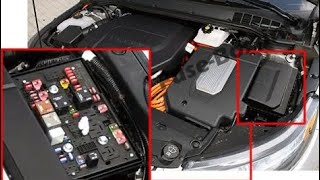
There are typically three or four fuse box locations: the main one in the engine compartment, one on the driver's side of the instrument panel, sometimes one on the passenger's side, and one in the rear cargo area near the 12V battery.
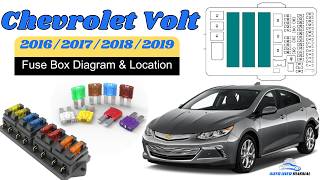
🎬 Watch: Gen 2 fuse box locations and diagramsMy Volt is dead. Is it the fuse box or the 12V battery?
It is most likely the 12V auxiliary battery. These batteries have a finite life and can cause a wide range of electrical issues when they fail. Always test or replace the 12V battery before suspecting a more complex component like the fuse box. If the battery drains repeatedly, investigate common parasitic draw issues like the OnStar module before condemning the fuse box.
Can water damage the Volt's fuse box?
Yes. The underhood fuse box has a cover, but it is not perfectly waterproof. High-pressure water from a pressure washer or deep puddles can potentially cause water intrusion, leading to corrosion and electrical shorts. Always inspect for signs of water entry if you are experiencing strange electrical problems.
Helpful Videos

Technical Specifications
OEM Part Numbers: 20889114 22753454 23142124 25977158 22870070 23301690 84016065 84240071 84336871 84442255 22785253 22803988 25977157
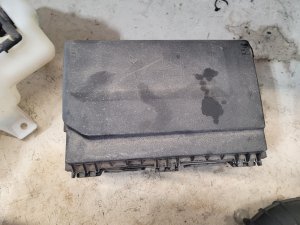
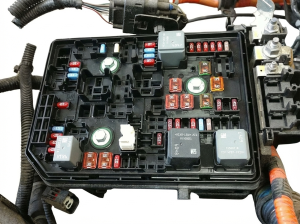
Houses a combination of Mini, J-Case, and other blade-style fuses, as well as various relays. Connects directly to the 12V auxiliary battery positive terminal.
We Have This Part in Stock

The information in this article is provided for general reference and educational purposes only. Vehicle specifications, procedures, and part compatibility can vary by production date, trim level, and region. Always consult your vehicle's factory service manual and verify part numbers before purchasing or performing repairs. Safety-critical components such as airbags, seat belts, and braking systems should be installed by a qualified professional.
- Chevrolet Volt:
- Opel Ampera:
- 🎬 Helpful Videos
- 🛍️ Shop This Part
- Symptoms of a Failing Fuse Box
- Symptoms of a Bad Fuse Box Assembly:
- Symptoms of a Single Blown Fuse:
- Known Issues, TSBs, and Recalls
- Generation 2 (2016-2019 Chevrolet Volt)
- Generation 1 (2011-2015 Volt & 2012 Ampera) and General Issues
- Programming, VIN Matching, and Immobilizer
- Buying a Used Fuse Box: What to Look For
- Vehicle and Part Number Compatibility
- Replacement Cost
- Frequently Asked Questions (FAQ)
- 🎟️ Get 5% Off