

2014-2023 Dodge Challenger Fuse Box: Solving Electrical Issues and Finding the Right Part
This guide covers the engine bay fuse box (PDC) for the 2014-2023 Dodge Challenger, explaining common failures, how to choose the correct used part, and why programming is not required.
- The engine fuse box (PDC) does NOT require programming; it is a plug-and-play part.
- You must match the OEM part number from your old fuse box exactly, as there are many variations based on engine and options.
- Used fuse boxes are sold as housings only; you must carefully transfer all fuses and relays from your old unit.
- Inspect any used fuse box carefully for signs of melting or corrosion before installation, as these are common failure modes.
Symptoms of a Failing 2014-2023 Challenger Fuse Box

A problem with the engine bay fuse box, or Power Distribution Center (PDC), can cause some of the most confusing and frustrating issues a car owner can face. Because it controls so many different systems, symptoms are often widespread and seem unrelated.
- Multiple, Unrelated Electrical Failures: This is the most common sign. You might experience issues like one headlight not working, the radio cutting out, and the windshield wipers failing all at once. When multiple, random systems fail simultaneously, the PDC is a primary suspect.
- Engine Cranks but Won't Start: The PDC contains critical relays and fuses for the fuel pump, starter solenoid, and engine control module (ECM). A failure within the PDC can prevent fuel delivery or spark, resulting in a crank-no-start condition. 🎬 See how to diagnose a crank but no start issue
- Specific Systems Are Dead: A single circuit within the PDC might fail, leading to a specific component not working, such as the cooling fans, horn, or power steering. While this could be a simple blown fuse, it can also indicate a problem with the fuse box terminal itself.
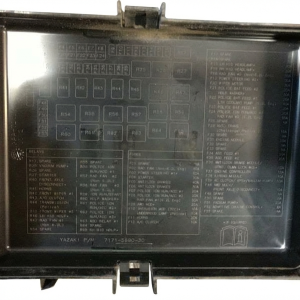
- Visible Damage: A physical inspection may reveal obvious signs of failure. Look for melted plastic around a specific fuse or relay socket, green or white crusty corrosion on the terminals, or signs of water intrusion under the cover.
- Burning Plastic Smell: A strong electrical burning smell from the engine bay can indicate a short circuit is occurring within the PDC, causing it to overheat and melt.
Known Issues, Recalls, and Technical Service Bulletins (TSBs)

While there are no widespread recalls specifically for the fuse box assembly on the 2014-2023 Dodge Challenger, there are related issues to be aware of when diagnosing electrical problems.
- Alternator Recalls: Several recalls were issued for 2011-2014 Challengers concerning failing alternators (NHTSA Recalls T36, T75, P60). A failing alternator can cause the battery to drain and lead to a host of electrical problems, including stalling, which can mimic a faulty fuse box. If you are experiencing electrical issues, it is wise to have your alternator tested first.
- Water Intrusion: The owner's manual specifically warns that the PDC cover must be fully latched to prevent water from entering. Water can cause short circuits, corrosion, and terminal damage inside the fuse box, leading to unpredictable failures. Forum users have reported issues with water getting into the trunk area, highlighting the importance of keeping electrical centers dry.
Pro Tip: Before condemning the fuse box, always check for blown fuses and swap a suspect relay with a known good one of the same type from a non-critical circuit (like the horn) to see if the problem moves. This simple diagnostic step can save you from replacing a perfectly good PDC.
Buying a Used Challenger Fuse Box: What You Must Know

Buying a used engine fuse box is an excellent way to save money, especially since quality aftermarket replacements are not readily available. However, success depends entirely on buying the correct part and inspecting it properly.
1. Match the Part Number EXACTLY
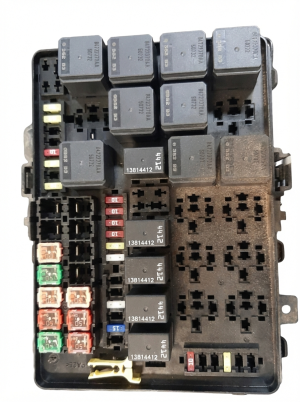
This is the most critical rule. The Challenger was offered with multiple engines (3.6L, 5.7L, 6.2L, 6.4L), drivetrains (RWD, AWD), and options like HID vs. halogen headlamps, remote start, and adaptive cruise control. Each of these configurations can use a different PDC with a unique internal wiring layout. Do not buy a fuse box based on looks alone. The part number is printed on a sticker on the side of the unit. You must match this number to your original part to ensure compatibility.
2. It's a Housing, Not a Complete Kit
Recycled OEM fuse boxes are almost always sold as the housing with the internal wiring bus bar. They do not include the fuses and relays. You will need to carefully remove every fuse and relay from your old fuse box and transfer them to the corresponding positions in the replacement unit. Take a clear, high-resolution photo of your original fuse box before you start removing components to use as a reference map.
3. Physical Inspection is Key
When you receive the used fuse box, inspect it thoroughly before installation:
- Check for Melting: Look closely at every single terminal slot. Any signs of melted plastic, discoloration, or widened terminals indicate a previous short circuit or overheating issue. Do not use a box with this kind of damage.
- Look for Corrosion: Check the external connector pins and internal terminal slots for any green or white crusty buildup. This is a sign of water damage, which can cause intermittent connections and future problems.
- Inspect for Cracks: Ensure the plastic housing and mounting tabs are not cracked or broken. The cover must be able to latch securely to keep moisture out.
Programming and Installation Guide
Does the fuse box need to be programmed?
No. The engine bay Power Distribution Center (PDC) on a 2014-2023 Dodge Challenger does not contain a computer and does not need to be programmed, flashed, or coded to the vehicle. It is a "plug-and-play" component. As long as you have purchased a used unit with the exact same part number as your original, you will not need a trip to the dealer for programming.
Replacement Steps
Replacing the PDC is a straightforward job that is feasible for a DIY mechanic with basic tools. The main challenge is the tedious process of transferring the fuses and relays.
- Disconnect the Battery: The battery is located in the trunk on the passenger side. Disconnect the negative battery terminal to prevent electrical shorts.
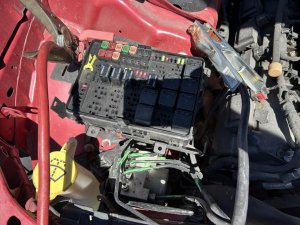
- Access the PDC: Open the hood. The PDC is the large black box located in the engine compartment. 🎬 Watch: Locate your fuse box and see the full diagram
- Photograph the Layout: Open the PDC cover and take a very clear picture of the layout of all fuses and relays. This is your map for reassembly.
- Disconnect Harnesses: Press the release tabs on the large wiring harnesses connected to the sides of the PDC and pull them away.
- Unbolt the PDC: Remove the nuts or bolts securing the PDC to the vehicle's chassis. The entire unit can now be lifted out.
- Transfer Components: One by one, carefully transfer each fuse and relay from your old box to the exact same location in the new box. A fuse puller tool is highly recommended. 🎬 Watch: How to find and replace the engine starter fuse Ensure each component is fully seated.
- Install the New PDC: Bolt the new, populated PDC into place. Reconnect the wiring harnesses, ensuring they click securely. Re-latch the cover, making sure it is sealed tight.
- Reconnect Battery: Reconnect the negative battery terminal in the trunk. Start the vehicle and test all electrical functions.
Cost Comparison: 2014-2023 Challenger Fuse Box
| Part Type | Estimated Cost | Notes |
|---|---|---|
| New OEM | $400 - $700+ | Price varies significantly by part number. Must be purchased from a dealer. |
| New Aftermarket | Not Available | Major aftermarket brands do not currently offer a complete replacement assembly. |
| Used OEM | $75 - $250 | A cost-effective, plug-and-play solution. Price depends on condition and specific part number. |
| Shop Labor | $180 - $350 | Typically 1.5-2.0 hours of labor. The job is simple but transferring components is time-consuming. |
Frequently Asked Questions (FAQ)
Is this part the same as a TIPM?
No. While they serve a similar function, the term TIPM (Totally Integrated Power Module) refers to a more complex, often computer-integrated fuse box used in other Chrysler/Dodge/Jeep vehicles that frequently required programming. The engine bay fuse box in the 2014-2023 Challenger is a simpler Power Distribution Center (PDC) and is not considered a TIPM.
Do I need to buy new fuses and relays for my replacement fuse box?
Not usually. If your old fuses and relays are in good condition and not the cause of the failure, you can transfer them to the new housing. However, if the original fuse box failed due to a major short that melted a fuse or relay, you must replace those specific components with new ones of the exact same amperage rating.
Can I use a fuse box from a Challenger with a different engine?
No. The internal wiring of the fuse box is specific to the vehicle's engine, drivetrain, and options. You must use a replacement that has the identical OEM part number as your original unit to ensure all circuits are correct.
What OBD-II codes are caused by a bad fuse box?
A failing fuse box typically does not generate a specific trouble code for itself. Instead, you will likely see a variety of codes for the components it powers. These can include communication codes (U-codes) if modules lose power, or fault codes for things like the fuel pump, cooling fans, or lighting circuits. A wide array of unrelated electrical codes is a strong clue that the PDC may be the root cause.
Helpful Videos

Technical Specifications
OEM Part Numbers: 68044658AA 68223923AA 68226280AD 68226281AD 68304212AA 68359033AA 68378638AA 68384601AC 68430148AA 68498588AB 68498619AB
Also known as the Power Distribution Center (PDC) or Integrated Power Module (IPM). Contains various Mini, J-Case, and Cartridge style fuses, as well as micro relays.
We Have This Part in Stock

The information in this article is provided for general reference and educational purposes only. Vehicle specifications, procedures, and part compatibility can vary by production date, trim level, and region. Always consult your vehicle's factory service manual and verify part numbers before purchasing or performing repairs. Safety-critical components such as airbags, seat belts, and braking systems should be installed by a qualified professional.
- Dodge Challenger:
- 🎬 Helpful Videos
- 🛍️ Shop This Part
- Symptoms of a Failing 2014-2023 Challenger Fuse Box
- Known Issues, Recalls, and Technical Service Bulletins (TSBs)
- Buying a Used Challenger Fuse Box: What You Must Know
- 1. Match the Part Number EXACTLY
- 2. It's a Housing, Not a Complete Kit
- 3. Physical Inspection is Key
- Programming and Installation Guide
- Does the fuse box need to be programmed?
- Replacement Steps
- Cost Comparison: 2014-2023 Challenger Fuse Box
- Frequently Asked Questions (FAQ)
- 🎟️ Get 5% Off