

2007-2018 Ford Edge & Lincoln MKX Fuse Box: Water Leaks, Electrical Problems, and Replacement
This guide details the common failures, symptoms, replacement costs, and critical compatibility warnings for the underhood fuse box in the Ford Edge and Lincoln MKX.
- The primary cause of failure is water intrusion from an improperly sealed cover, leading to internal corrosion. Always check for signs of moisture.
- The underhood Battery Junction Box (BJB) does NOT require programming, making a used OEM part a viable and cost-effective replacement.
- Compatibility is critical. You must match the part number exactly to your vehicle's options (engine, headlights, tow package).
- Symptoms are often widespread and confusing, including no-starts, a dead battery, or the engine not shutting off.
Key Symptoms of a Failing Fuse Box (BJB)
A failing Battery Junction Box (BJB) in a Ford Edge or Lincoln MKX can cause a wide and often confusing array of electrical issues. Because the BJB is a central power hub, a failure in one internal circuit can affect seemingly unrelated components. The most common cause of failure is internal corrosion from water intrusion.
- No-Start or No-Crank: You may hear a single click or complete silence when trying to start the engine. This can happen if the internal circuits that power the starter relay, fuel pump, or powertrain control module have failed. 🎬 Watch: Troubleshooting a Ford Edge that won't crank or start.
- Engine Will Not Shut Off: In some cases, a short circuit within the BJB can keep the ignition relay energized, preventing the engine from turning off even after the key is removed.
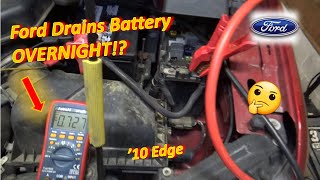
- Dead Battery: A fault inside the BJB can create a parasitic drain, causing the battery to go dead, often overnight. This happens when a relay is stuck on or a short circuit continuously draws power. 🎬 See how a faulty fuse box can drain your battery overnight.
- Multiple, Intermittent Electrical Failures: You may experience random issues like headlights not working, power windows failing, the radio cutting out, or dashboard warning lights appearing without a clear cause.
- Visible Corrosion or Melting: A physical inspection of the BJB may reveal a white or greenish powdery substance on the terminals, which is a clear sign of water damage and corrosion. You might also see melted plastic around specific high-load fuses (like for the fuel pump), indicating a poor connection and overheating.
- Burning Smell: A strong burning plastic or electrical smell from the engine bay is a serious red flag that the fuse box may be overheating.
Known Issues, Recalls, and Technical Service Bulletins
The most significant and well-documented issue for the Edge and MKX fuse box is water intrusion, which Ford has addressed through Customer Satisfaction Programs.
Water Intrusion and Corrosion (2011-2013 Models)
Ford issued Customer Satisfaction Programs 17B16 and 22N11 for 2011-2013 models due to a known defect. An improper seal between the BJB cover and its base allows water, often containing road salt, to drip from the cowl area directly into the fuse box. This moisture causes severe corrosion on the internal circuit boards, leading to the symptoms listed above. The dealer procedure involves cleaning the BJB, applying a special sealing foam, and replacing any corroded terminals, fuses, or relays. While the programs targeted these specific years, the design makes all 2007-2018 models susceptible to the same type of water damage if the cover is not perfectly seated.
Pro Tip: After any service, or if you are inspecting a used vehicle, always double-check that the BJB cover is fully clipped down on all sides. An improperly latched cover is the number one cause of a premature fuse box failure.
Related Recalls
While no recalls target the fuse box directly for all years, a few related electrical recalls are worth noting:
- NHTSA 19V805: Affects 2016-2017 Lincoln MKX models with the 3.7L engine. The battery cable harness could rub against the transmission shifter cable bracket, leading to a short circuit and potential fire risk.
- NHTSA 18V567: A small number of 2018 Ford Edge and Lincoln MKX vehicles were recalled for improperly secured power cables at the starter and alternator, which could cause electrical arcing.
Buying a Used Fuse Box: What to Look For
Because a new OEM fuse box can be expensive and this part does not require programming, a used OEM unit is a very popular and cost-effective solution. However, you must buy the correct part and inspect it carefully.
- Verify the Part Number: This is the most critical step. The correct fuse box depends on your vehicle's engine, headlight type (standard Halogen vs. HID/Xenon), and whether it has a factory tow package. Match the part number from your original fuse box to the used one. Do not rely on visual appearance alone.
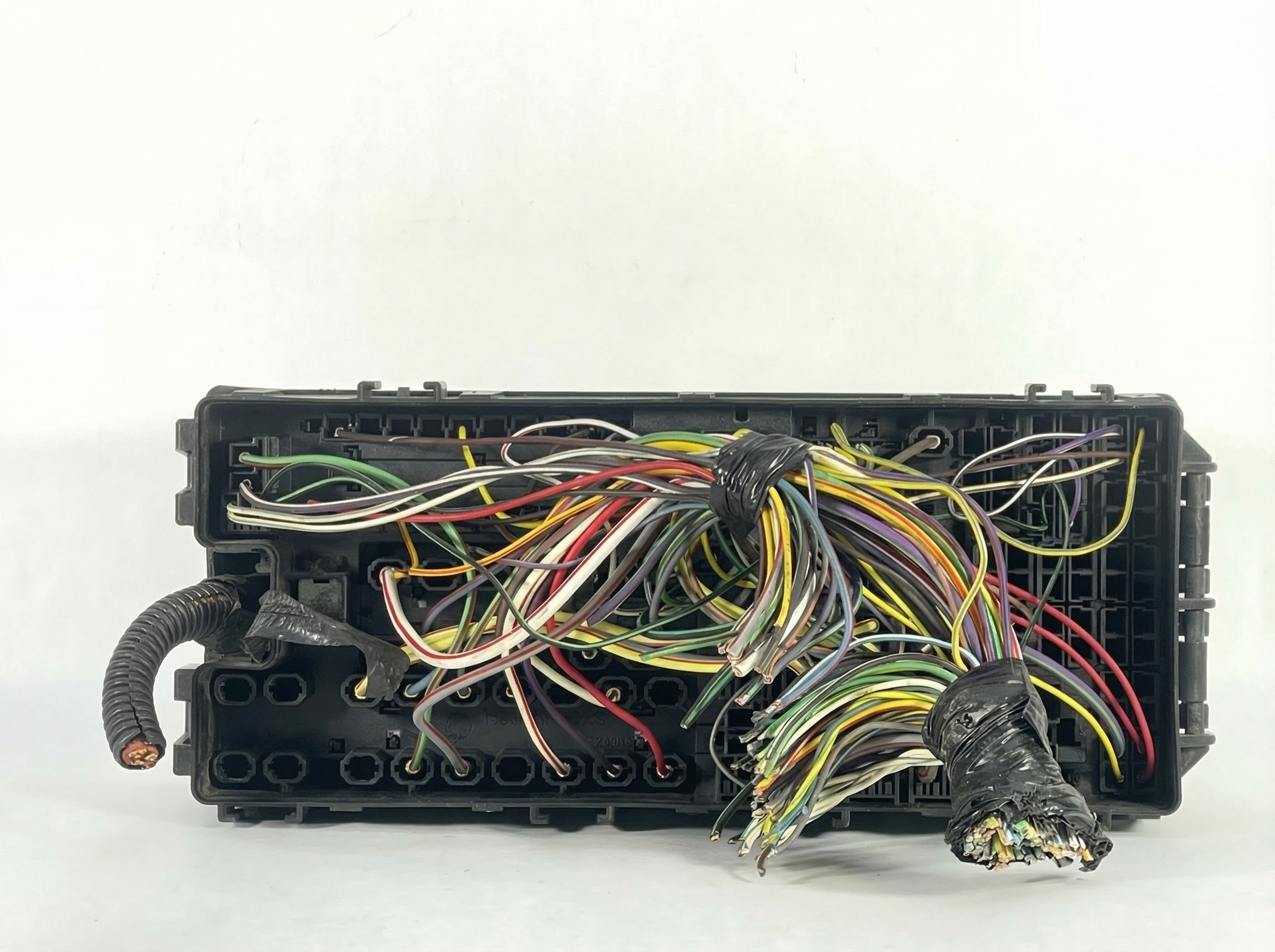
- Thoroughly Inspect for Corrosion: Do not buy a fuse box with any signs of water damage. Look for white or green powder on the terminals, any rust on the fuse blades, or discoloration on the plastic. Open the cover and, if possible, inspect the underside where the main harnesses connect.
- Check for Melted Plastic: Pay close attention to the sockets for high-amperage fuses like the fuel pump and cooling fans. Any melting or distortion of the plastic indicates the box has already experienced an overload or a high-resistance failure.
- Ensure the Cover is Intact: Make sure the used fuse box comes with its cover and that all locking tabs are present and functional. A broken cover will lead to the same water intrusion problem you are trying to solve.
- Why Used OEM is a Good Choice: For a complex electrical part like the BJB, a used OEM unit is often superior to a new, cheap aftermarket alternative (which are rare for this part anyway). The OEM part was designed to integrate perfectly with your vehicle's systems. Since no programming is needed, it's a plug-and-play replacement as long as the part number is correct.
Compatibility Warning: The initial data provided highlights several specific compatibility rules that are crucial for ordering the correct part. For example, some fuse boxes fit 3.5L models with halogen headlamps and no tow package, while others are for 3.7L models with HID headlamps AND a tow package. Always confirm your vehicle's exact options before purchasing.
Programming and Installation
Does the fuse box need to be programmed?
No, the underhood Battery Junction Box (BJB) for the 2007-2018 Ford Edge and Lincoln MKX does not need to be programmed, flashed, or coded to the vehicle. It is a power distribution module, not a control module that stores VIN data. This makes it an ideal part for DIY replacement with a used unit.
Note: This does not apply to the interior fuse panel (Smart Junction Box), which is a separate part and does require programming.
Replacement Walkthrough
Replacing the BJB is a moderately difficult job that is feasible for a DIYer with basic tools. The process takes about 1-2 hours.
- Disconnect the Battery: Always disconnect the negative battery terminal first.
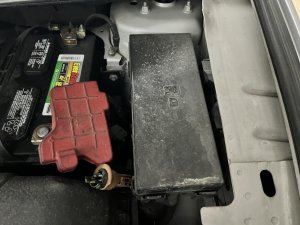
- Access the BJB: The BJB is in the engine bay, next to the battery. 🎬 Watch: Locate all fuse boxes on 2015-2024 Ford Edge models. On some models, you may need to remove the air filter housing cover for better access.
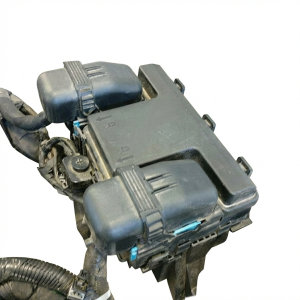
- Release the BJB Assembly: The box is often a two-piece or multi-tiered assembly. Release the side latches to lift the top section. On 2015-2018 models, the entire top section must be unclipped and flipped over to access the lower mounting bolts and connectors.
- Disconnect Harnesses: Unplug the large electrical connectors from the bottom and sides of the BJB. They have locking tabs that must be pressed or pulled to release.
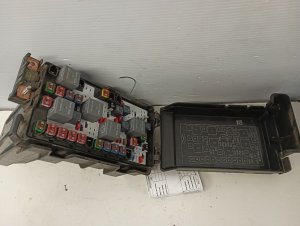
- Transfer Fuses and Relays: This is a critical step. Most used fuse boxes are sold as empty shells. You must carefully remove every fuse and relay from your old box and install them into the identical positions in the new one. Take a clear photo of your original fuse box layout before you start.
- Install the New Box: Bolt the new BJB in place, reconnect all harnesses, and secure the top portion of the box. Ensure the cover is sealed tightly.
- Reconnect the Battery: Connect the positive terminal first, followed by the negative terminal.
Cost of Replacing the Fuse Box
| Part Type | Estimated Cost |
|---|---|
| New OEM | $400 - $700+ |
| New Aftermarket | Not commonly available |
| Used OEM | $75 - $250 |
| Shop Labor | $150 - $300 |
Cost estimates are approximate and can vary based on location and vehicle specifics.
Frequently Asked Questions (FAQ)
Can I drive my Ford Edge or Lincoln MKX with a bad fuse box?
No, it is not recommended. A failing BJB can cause the engine to stall while driving, fail to start, or disable critical safety systems like headlights and airbags, making the vehicle unsafe.
Why are there so many different part numbers for the same fuse box?
The part number varies based on the vehicle's specific options. Factors like the engine (2.0L, 3.5L, 3.7L), headlight type (halogen, HID/Xenon), presence of a factory tow package, and other features determine which internal circuits are included in the BJB. You must match the part number exactly.
My mechanic says the fuse box needs to be programmed. Are they wrong?
They may be confusing the underhood Battery Junction Box (BJB) with the interior Smart Junction Box (SJB). The BJB (under the hood) does not require programming. The SJB (inside the cabin, usually by the driver's footwell) is a control module that does require programming. Clarify which fuse box they are referring to.
What OBD-II codes are caused by a bad fuse box?
A bad BJB typically does not set a single code that says 'bad fuse box'. Instead, it causes other codes by cutting power to various modules. You may see communication loss codes (U-codes) like U0100 (Lost Communication with ECM/PCM), or circuit-specific codes for the components that have lost power, such as the fuel pump or cooling fans.
Helpful Videos



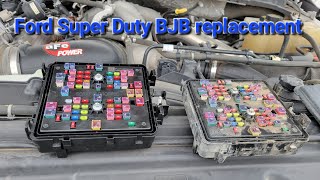
Technical Specifications
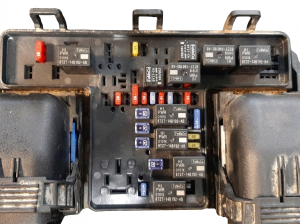
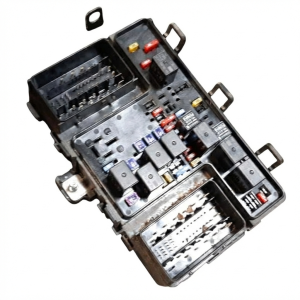
OEM Part Numbers: 37LCA1T14290FF 7T4T14A003AA 7T4Z14A003A 7T4Z14A067A CA1T14290AA CA1T14290AB CA1T14290AC CA1T14290AD CA1T14290AE CA1T14290AF CA1T14290AG CA1T14290AH CA1T14290AJ CA1T14290AK CA1T14290JA BT4T-14290-BE G2GT14A067BD
Located in the engine compartment, typically on the driver's side near the battery. Contains a multi-layer printed circuit board with fuses, relays, and fusible links.
We Have This Part in Stock

The information in this article is provided for general reference and educational purposes only. Vehicle specifications, procedures, and part compatibility can vary by production date, trim level, and region. Always consult your vehicle's factory service manual and verify part numbers before purchasing or performing repairs. Safety-critical components such as airbags, seat belts, and braking systems should be installed by a qualified professional.
- Ford Edge:
- Lincoln MKX:
- 🎬 Helpful Videos
- 🛍️ Shop This Part
- Key Symptoms of a Failing Fuse Box (BJB)
- Known Issues, Recalls, and Technical Service Bulletins
- Water Intrusion and Corrosion (2011-2013 Models)
- Related Recalls
- Buying a Used Fuse Box: What to Look For
- Programming and Installation
- Does the fuse box need to be programmed?
- Replacement Walkthrough
- Cost of Replacing the Fuse Box
- Frequently Asked Questions (FAQ)
- 🎟️ Get 5% Off