

2005-2014 F-250 & F-350 Super Duty Engine Fuse Box: A Guide to Failures and Compatibility
This guide covers the common failures, engine-specific compatibility, and replacement nuances for the engine bay fuse box in 2005-2014 Ford F-250 and F-350 Super Duty trucks.
- Compatibility is critical and is determined by your truck's specific engine and year range; gas and diesel boxes are not interchangeable.
- Water intrusion from leaking windshields is the number one killer of fuse boxes on 2005-2010 models.
- The engine bay fuse box (BJB) does NOT require programming, but the interior fuse box (SJB) does.
- For 2011-2014 trucks with the 6.7L Power Stroke diesel, the fuse box is part of the engine wiring harness and is not a simple standalone replacement.
2005-2014 Ford F-250 & F-350 Super Duty Engine Fuse Box Guide

Warning: The single most important factor when replacing this fuse box is matching it to your truck's specific engine. The fuse boxes for gasoline and diesel engines are NOT interchangeable, and there are different versions for specific engines and year ranges within this generation. Always verify the part number and engine application before purchasing.
Distinguishing the Engine Fuse Box from the Cabin Fuse Box
These trucks have two main fuse boxes. This guide covers the engine compartment fuse box, often called the Battery Junction Box (BJB). This is where the high-amperage fuses and relays for major systems are located. There is also a fuse panel inside the passenger compartment, often called the Smart Junction Box (SJB), which handles interior electronics. The interior SJB often requires programming after replacement, but the engine bay BJB typically does not.
Compatibility and Known Issues by Engine Type

The 2005-2014 model years span two major Super Duty platform updates, with significant changes to powertrains and electronics. It's crucial to identify your truck's specific engine and year to find the correct fuse box.
2005-2010 Gas Engines: 5.4L V8 & 6.8L V10
Trucks with the 5.4L and 6.8L gas engines are highly susceptible to fuse box failure caused by water intrusion. A common and well-documented issue is a leaking windshield seal, which allows rainwater to drip directly onto the engine bay fuse box and the interior fuse box. This leads to corrosion on the internal circuits and connector pins, causing a host of electrical gremlins.
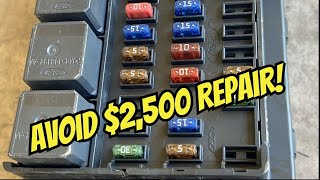
🎬 Watch: How to save thousands by repairing your fuse panel- Known Part Numbers: 6C3Z12A581AB (2005-2007), 9C3Z12A581E (2008-2010)
- Primary Issue: Water intrusion from leaking windshield seals or improperly seated cowl panels.
- Symptoms: Random electrical issues (lights, radio, windows), no-start conditions, visible green or white corrosion on fuses and terminals.
2008-2010 Diesel Engines: 6.4L Power Stroke
The fuse box for the 6.4L diesel engine is specific to this powertrain. While also susceptible to water damage, it can suffer from issues related to vibration and heat from the diesel engine, leading to internal connection failures or problems with the main power relays.
- Known Part Numbers: 8C3Z12A581E
- Primary Issue: Failures of critical relays, like the PCM power relay, can cause no-start or intermittent stalling conditions.
- Symptoms: Engine cranks but won't start, sudden stalling, loss of communication with the PCM (U-codes).
2011-2014 Diesel Engines: 6.7L Power Stroke
Important: For trucks with the 6.7L Power Stroke diesel, the engine bay fuse box is serviced as an integral part of the main engine wiring harness. It is not a simple, standalone bolt-in component. Replacement is a much more involved and expensive job.
🎬 See this walkthrough on 6.7L Power Stroke fuse box repair- Known Part Numbers: AC3Z12A581E, BC3Z12A581SA (These are often numbers for the complete harness assembly)
- Primary Issue: A faulty wire or internal connection within the fuse box section requires replacing a large portion of the engine harness. Water intrusion is also a concern, with a TSB issued for later models due to improperly seated covers.
- Symptoms: No-crank/no-start, dead battery, multiple warning lights, and communication error codes.
Symptoms of a Failing Fuse Box

A failing fuse box can cause a wide and often confusing array of symptoms. Because it's the hub for so many circuits, a single internal fault can affect multiple, seemingly unrelated systems.
- Multiple Electrical Failures: One of the most common signs is when several unrelated components stop working at once, such as the radio, power windows, and interior lights.
- Engine No-Start or Stalling: If the relays or circuits for the fuel pump or Powertrain Control Module (PCM) fail, the engine may crank but not start, or it may stall unexpectedly while driving.
- Fuses Blow Repeatedly: A short circuit inside the fuse box can cause a specific fuse to blow immediately after being replaced.
- Visible Corrosion or Melting: A physical inspection may reveal a white or greenish powder (corrosion) on the terminals or melted plastic around a fuse or relay socket, indicating a severe overload or water damage.
- Diagnostic Trouble Codes (DTCs): You may see communication codes like U0100 (Lost Communication with ECM/PCM) or power relay codes like P068A, indicating the PCM is not receiving power correctly.
Buying a Used Fuse Box: What to Look For

A used OEM fuse box can be a cost-effective solution, often providing better quality and longevity than a cheap aftermarket alternative. However, careful inspection is key.
- Verify the Part Number and Engine: This is the most critical step. Double-check that the part number on the used fuse box matches your original and that it came from a vehicle with the exact same engine.
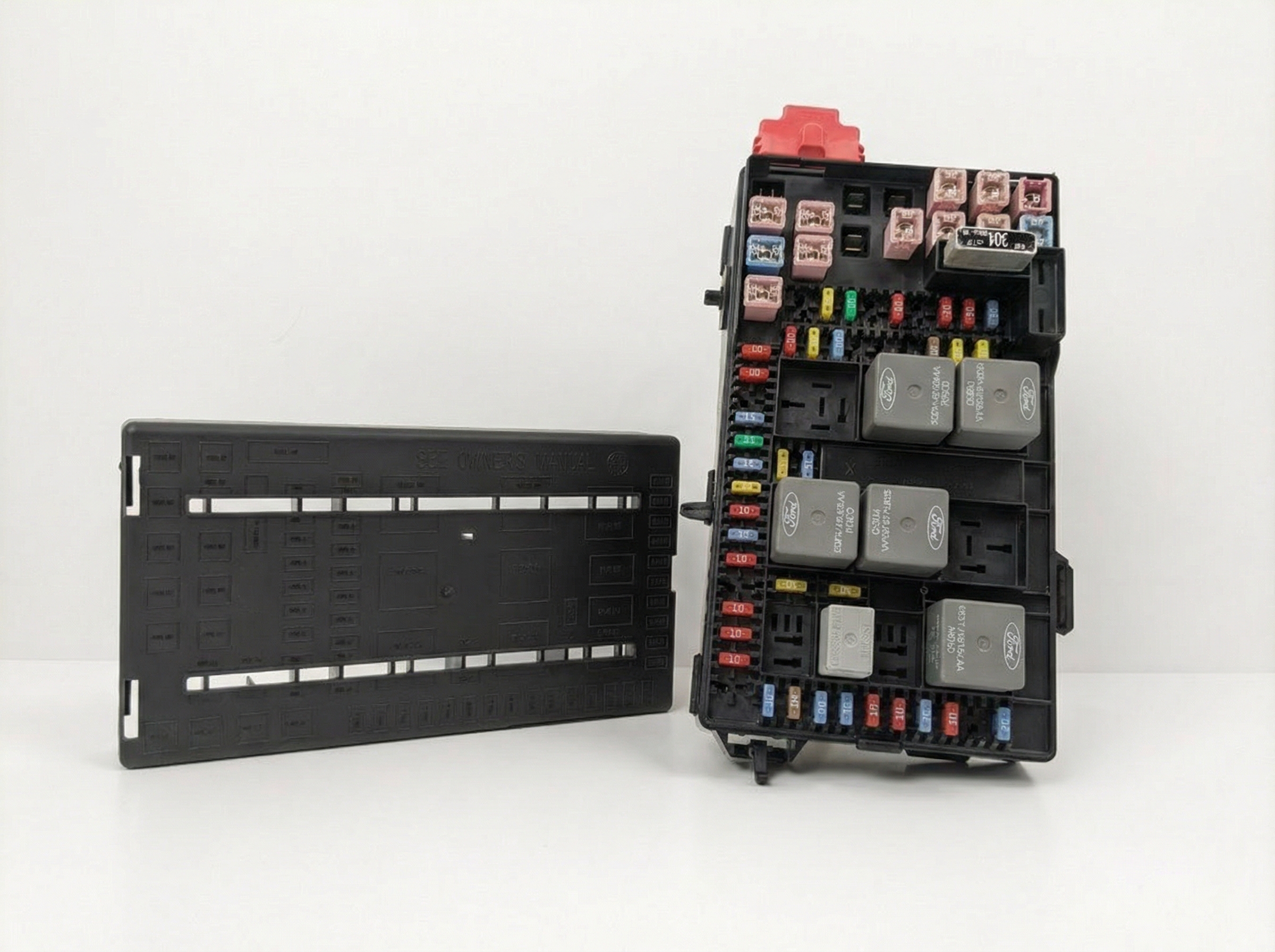
- Inspect for Corrosion: Look closely at all connector pins on the top and, more importantly, the bottom of the box. There should be no signs of green or white crusty residue. Ask the seller for clear, well-lit photos of all connection points.
- Check for Physical Damage: Look for any signs of melting, burning, or cracked plastic. Pay special attention to the sockets for high-current fuses and relays.
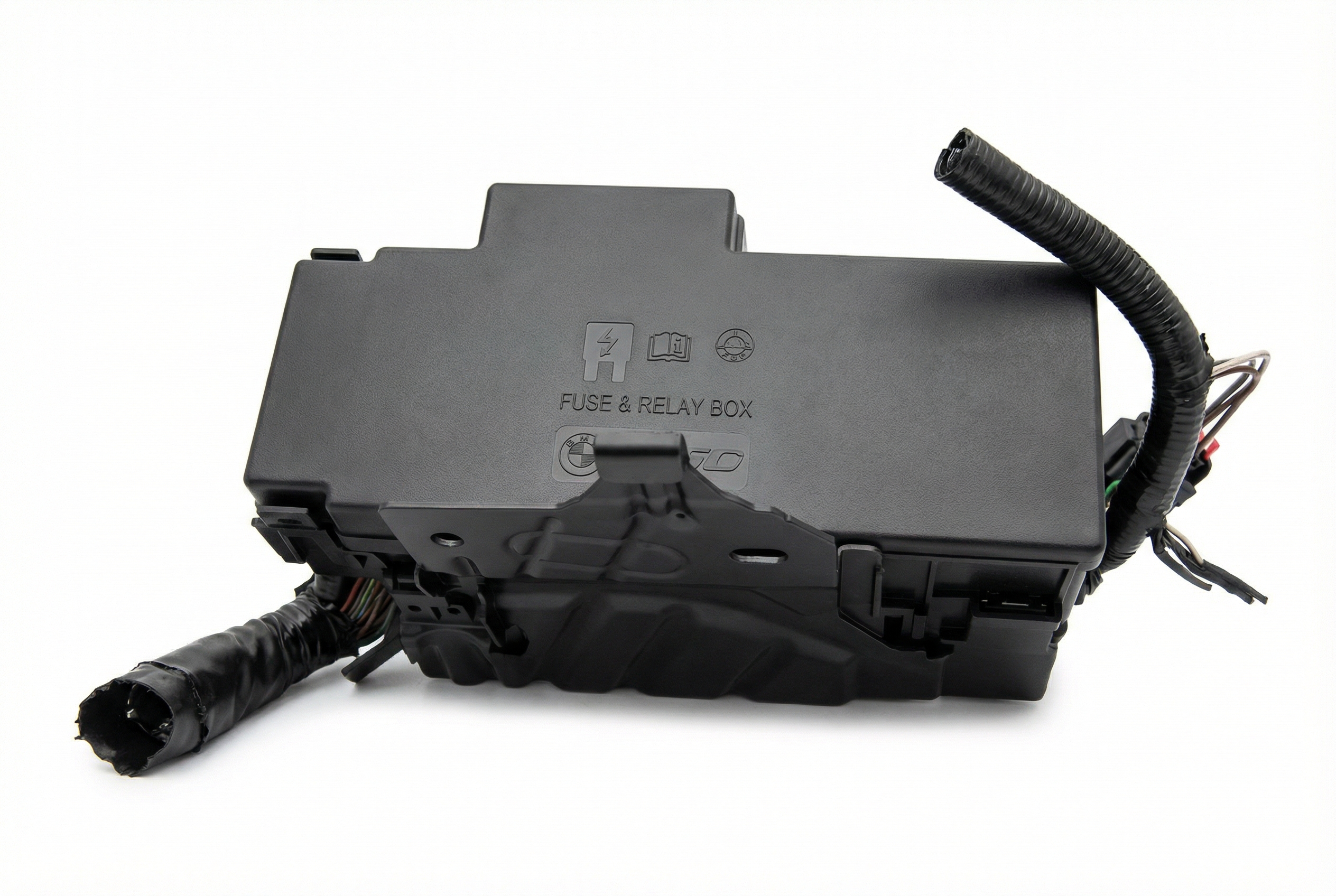
- Confirm the Lid is Intact: The cover is essential for protecting the fuses and relays from moisture and debris. Ensure it is included and all its locking tabs are intact.
Pro Tip: When you receive your used fuse box, take a moment to apply dielectric grease to the main connector seals. This adds an extra layer of protection against future moisture intrusion.
Cost of Replacement
The cost can vary significantly based on your truck's engine and whether you choose a new, used, or aftermarket part.
| Part Type | Estimated Cost |
|---|---|
| New OEM | $350 - $800+ (Significantly more for 6.7L harness assembly) |
| New Aftermarket | $200 - $400 |
| Used OEM | $100 - $250 |
| Shop Labor | $150 - $300 (For standalone box); $600+ (For 6.7L harness) |
Frequently Asked Questions (FAQ)
Does the engine fuse box need to be programmed?
No. For the 2005-2014 Ford F-250 and F-350, the engine bay fuse box (BJB) is a power distribution center and does not typically require any programming or flashing. It is a plug-and-play part, provided you have the correct one for your engine and year. This is different from the interior fuse box (SJB), which is a control module and often does require programming.
What is the main cause of fuse box failure on these trucks?
For the 2005-2010 models, especially with gas engines, the most common cause of failure is water intrusion. This is often due to a leaking windshield seal that allows water to drip directly onto the fuse box, causing corrosion and short circuits. For all models, an improperly seated fuse box cover can also allow moisture in.
Can I use a fuse box from a gas truck in my diesel truck?
No. The fuse boxes are specific to the engine type and are not interchangeable. The wiring, fuse ratings, and relay configurations are different to support the unique needs of gasoline and diesel engines. Using the wrong one will result in system malfunctions or a no-start condition.
My truck has a 6.7L diesel and the fuse box is bad. Can I just replace the box?
Unfortunately, no. On the 6.7L Power Stroke models from 2011-2014, the engine bay fuse box is integrated into the main engine wiring harness. It cannot be replaced as a separate component. You must replace the entire harness section, which is a more complex and expensive repair.
Helpful Videos

Technical Specifications
OEM Part Numbers: 6C3Z12A581AB 8C3Z12A581E 9C3Z12A581E AC3Z12A581E BC3Z12A581SA
Also known as the Battery Junction Box (BJB). Located in the engine compartment, typically on the driver's side.
We Have This Part in Stock

The information in this article is provided for general reference and educational purposes only. Vehicle specifications, procedures, and part compatibility can vary by production date, trim level, and region. Always consult your vehicle's factory service manual and verify part numbers before purchasing or performing repairs. Safety-critical components such as airbags, seat belts, and braking systems should be installed by a qualified professional.
- Ford F-250 Super Duty:
- Ford F-350 Super Duty:
- 🎬 Helpful Videos
- 🛍️ Shop This Part
- 2005-2014 Ford F-250 & F-350 Super Duty Engine Fuse Box Guide
- Distinguishing the Engine Fuse Box from the Cabin Fuse Box
- Compatibility and Known Issues by Engine Type
- 2005-2010 Gas Engines: 5.4L V8 & 6.8L V10
- 2008-2010 Diesel Engines: 6.4L Power Stroke
- 2011-2014 Diesel Engines: 6.7L Power Stroke
- Symptoms of a Failing Fuse Box
- Buying a Used Fuse Box: What to Look For
- Cost of Replacement
- Frequently Asked Questions (FAQ)
- 🎟️ Get 5% Off