

2010-2021 Hyundai Tucson Fuse Box & Junction Block: Fire Recalls and Replacement Guide
A crucial guide to understanding the major fire-risk recalls, common electrical failures, and complex compatibility of Hyundai Tucson fuse boxes for two different generations.
- A critical fire risk recall exists for both generations (2010-2015 and 2016-2021) related to the ABS module causing a short in the fuse box. Park outside until repaired.
- Part compatibility is extremely complex. You MUST match the OEM part number exactly, as it depends on generation, engine, and vehicle options.
- The interior fuse box (Smart Junction Box) is a computer module that will likely require programming by a dealer or specialist when a used unit is installed.
- Symptoms of failure often involve multiple, unrelated electrical systems malfunctioning at once, which is a key indicator of a junction box problem over an individual component failure.
Understanding the Generations: 2010-2015 vs. 2016-2021

The 2010-2021 Hyundai Tucson spans two distinct vehicle generations, and their electrical systems, including the fuse boxes, are not interchangeable. It is critical to identify your vehicle's generation before diagnosing issues or ordering parts.
- 2nd Generation (LM): 2010-2015 Hyundai Tucson
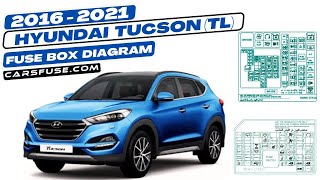
- 3rd Generation (TL): 2016-2021 Hyundai Tucson
This guide will specify which issues, recalls, and part types apply to each generation.
CRITICAL SAFETY RECALL: FIRE RISK
Both generations of the 2010-2021 Hyundai Tucson are under recall for separate issues that can cause an engine compartment fire, even when the vehicle is turned off. Owners are strongly advised to park their vehicles outside and away from structures until the recall repair has been performed.
🎬 Watch: News report on the massive Hyundai fire risk recallKnown Issues, Recalls, and Technical Service Bulletins (TSBs)

Recall: 2010-2013 Tucson ABS Module Fire Risk (2nd Gen)
NHTSA Recall No. 23V651000 (Hyundai Campaign 251): This major safety recall affects 2010-2013 Hyundai Tucson models. The Anti-Lock Brake System (ABS) module can leak brake fluid internally. This fluid can cause an electrical short on the module's circuit board, leading to a significant risk of an engine compartment fire while driving or parked.
- Symptoms: A burning/melting odor, smoke from the engine bay, or illumination of the ABS or Malfunction Indicator Light (MIL) can signal a problem.
- Remedy: Dealers will replace the ABS multi-fuse in the fuse block free of charge to prevent the over-current condition that leads to a fire.
Recall: 2016-2021 Tucson HECU Fire Risk (3rd Gen)
NHTSA Campaign 195 (related to recalls 20V520, among others): This recall targets certain 2016-2021 Tucson models. The Anti-lock Brake Hydraulic Electronic Control Unit (HECU) can corrode internally, causing an electrical short and creating a fire risk. This issue has led to a massive recall campaign affecting hundreds of thousands of vehicles.
- Symptoms: Similar to the 2nd generation recall, warnings include a burning smell, smoke, and various dashboard warning lights (ABS, Tire Pressure).
- Remedy: The official fix involves dealers installing a new, lower-amperage fuse kit in the engine compartment junction box. For some 2019-2021 models, an Electronic Stability Control (ESC) software update is also performed.
Symptoms of a Failing Fuse Box or Smart Junction Box

Aside from the specific recall issues, the fuse box or internal Smart Junction Box (SJB) can fail on its own. Symptoms are often confusing because they can appear in multiple, seemingly unrelated systems.
- Multiple Electrical Failures: Several components stop working at once, such as power windows, radio, interior lights, and dashboard gauges.
- Intermittent Problems: Functions work one moment and not the next. This can be caused by cracked solder joints or corrosion on the SJB's internal circuit board.
- Specific Functions Inoperative: A single circuit, like the turn signals or power outlets, may stop working even with a good fuse. This points to a failure within the junction box itself.
- Burning Smell or Visible Damage: A distinct plastic burning smell or visible melting/corrosion on the fuse box or its connectors are clear signs of a serious electrical short and imminent failure.
- Battery Drain: A faulty SJB can fail to shut down completely, causing a parasitic draw that drains the battery when the vehicle is off.
- No-Start Condition: The SJB is often tied into the ignition and anti-theft systems. A failure can prevent the vehicle from starting, often accompanied by clicking sounds from relays.
Buying a Used Fuse Box: What You MUST Know

Due to the high cost of new OEM fuse boxes, a used part from a reputable recycler is a cost-effective option. However, extreme care is required to get the right part.
1. Match the Part Number EXACTLY
This is the single most important rule. Hyundai uses dozens of different fuse boxes and SJBs across this model run. Compatibility depends entirely on your vehicle's:
- Model Year & Generation (2010-2015 vs. 2016-2021)
- Engine Size (e.g., 2.0L vs. 2.4L)
- Transmission Type (Automatic vs. Manual)
- Vehicle Options (e.g., with or without keyless entry, sunroof, etc.)
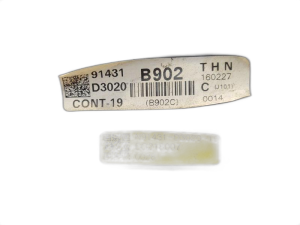
Do not buy a fuse box based on appearance alone. You must physically remove the original part and match the OEM part number printed on its label with the used part you intend to purchase. For example, part number 91950-2S501 is for 2011-2013 models, while 91950-D3230 is for 2016-2018 models with a 2.0L engine. Using the wrong part number will result in features not working or the vehicle not starting.
2. Physical Inspection is Key
When you receive the used fuse box, inspect it carefully before installation:
- Check for Corrosion: Look for any white or green crust on the electrical pins or connectors. This is a sign of water damage, which is a common cause of failure.
- Look for Melted Plastic: Inspect the housing and around the fuse/relay sockets for any signs of melting or discoloration from heat. This indicates a past short circuit.
- Ensure All Tabs are Intact: Check that all plastic mounting tabs and connector clips are present and not broken.
3. Programming May Be Required
Warning: The interior Smart Junction Box (SJB) is an electronic module, not just a simple fuse holder. Many used part sellers note that these units may need to be programmed to your vehicle's VIN by a dealer or a qualified independent shop with advanced diagnostic tools. Failure to program a replacement SJB can result in anti-theft system activation, incorrect feature operation, or a no-start condition. Always verify this possibility before purchasing.
4. Aftermarket vs. Used OEM
New aftermarket fuse boxes are not widely available for these models. When they are, they are often just as expensive as used OEM units. For a complex electronic component like an SJB that integrates with many other vehicle modules, a used OEM part with the correct part number is almost always a safer choice than a new aftermarket part of unknown quality and compatibility.
Cost of Replacement
The cost to replace a Hyundai Tucson fuse box can vary significantly based on the part's location (engine vs. interior) and the vehicle generation.
| Part Type | Estimated Cost |
|---|---|
| New OEM (Dealer) | $450 - $1,100+ |
| New Aftermarket | $150 - $400 (Limited availability, mostly for individual components like relays or multi-fuses) |
| Used OEM (Recycled) | $75 - $250 |
| Shop Labor Cost | $100 - $250 (Higher for interior SJB which requires dashboard disassembly) |
Frequently Asked Questions (FAQ)
Does a used Hyundai Tucson fuse box need to be programmed?
The simple engine compartment fuse/relay box typically does not require programming. However, the interior Smart Junction Box (SJB) very likely does. It is a control module that communicates with other computers in the car. It's best to assume programming by a dealer or specialized shop will be necessary when replacing the SJB with a used unit.
Can I drive my Tucson if it has a fuse box recall?
No. Due to the risk of fire even when the vehicle is parked and turned off, Hyundai and the NHTSA strongly advise owners to park their vehicles outside and away from buildings or other vehicles until the recall repair is completed.
Why are there so many different part numbers for the same fuse box?
The part number changes based on the vehicle's specific configuration. Factors like the engine (2.0L vs. 2.4L), model year, and electronic features (keyless start, premium audio, etc.) all require a specific junction box programmed to control them. This is why matching the part number is not optional.
Where are the fuse boxes located on a Hyundai Tucson?
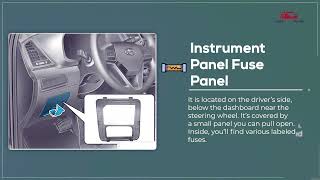
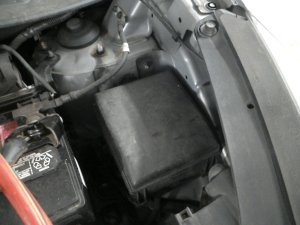
All 2010-2021 Tucson models have two fuse box locations. The first is in the engine compartment, typically on the driver's side near the battery. The second is inside the cabin, on the driver's side, behind a removable panel on the lower part of the dashboard.
Helpful Videos


Technical Specifications
OEM Part Numbers: 91250D3200V5AH 914022S094 914022S182 914022S183 914022S184 914022S251 914022S252 914022S253 914022S254 914022S272 91941D3020 91941D3021 91941D3023 919502S501 91950D3230 91950-D3560 91950-D3600 91951-D3670
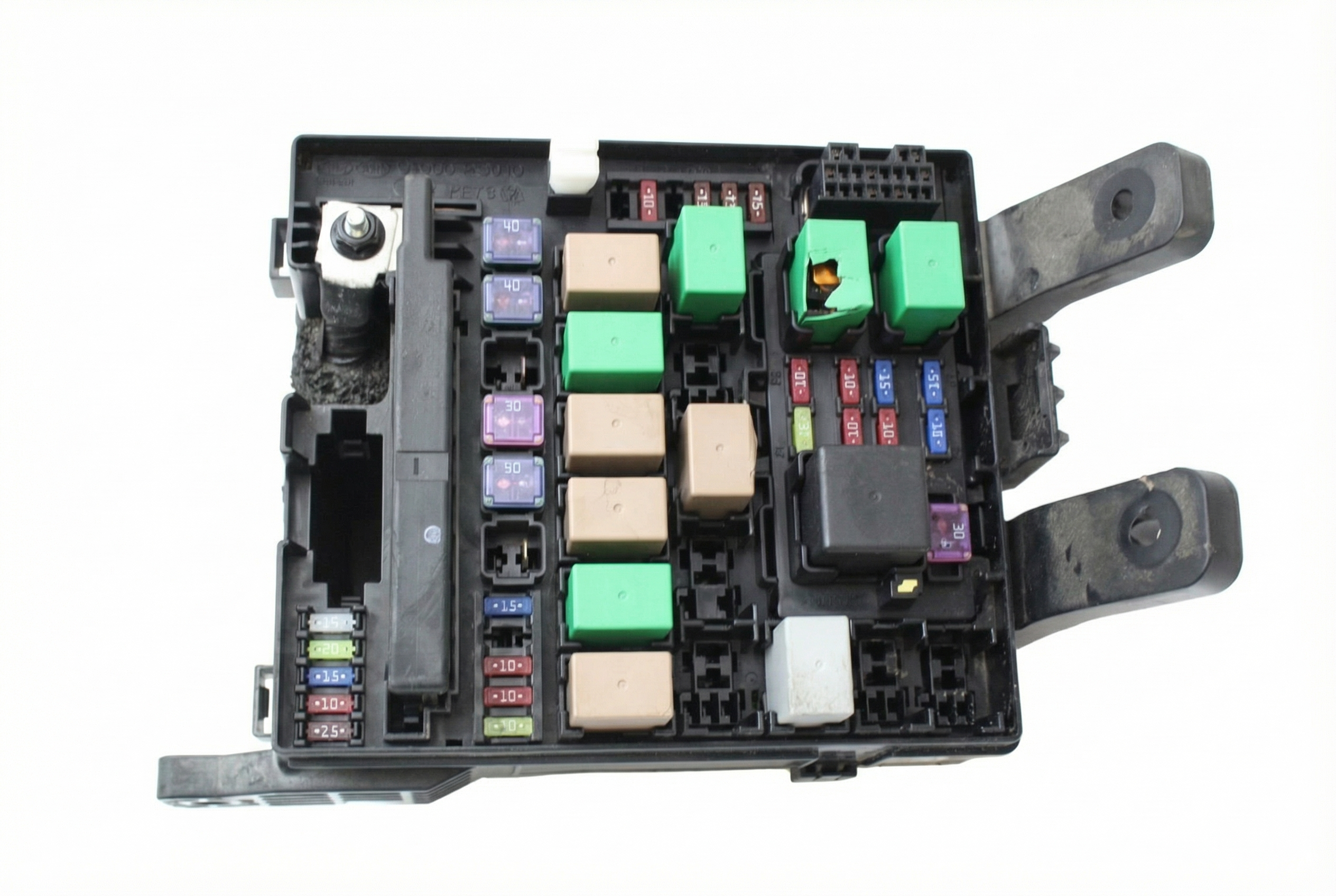
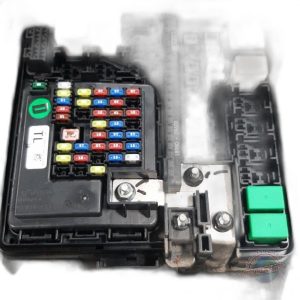
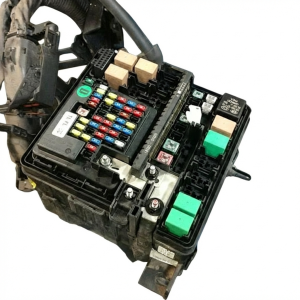
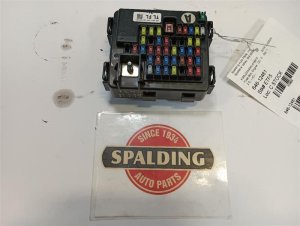
Fuse boxes in the Tucson consist of two main parts: an engine compartment fuse/relay panel and an interior Smart Junction Box (SJB) / Body Control Module (BCM). Locations are under the hood near the battery and inside the cabin on the driver's side dash panel.
We Have This Part in Stock

The information in this article is provided for general reference and educational purposes only. Vehicle specifications, procedures, and part compatibility can vary by production date, trim level, and region. Always consult your vehicle's factory service manual and verify part numbers before purchasing or performing repairs. Safety-critical components such as airbags, seat belts, and braking systems should be installed by a qualified professional.
- Hyundai Tucson:
- 🎬 Helpful Videos
- 🛍️ Shop This Part
- Understanding the Generations: 2010-2015 vs. 2016-2021
- Known Issues, Recalls, and Technical Service Bulletins (TSBs)
- Recall: 2010-2013 Tucson ABS Module Fire Risk (2nd Gen)
- Recall: 2016-2021 Tucson HECU Fire Risk (3rd Gen)
- Symptoms of a Failing Fuse Box or Smart Junction Box
- Buying a Used Fuse Box: What You MUST Know
- 1. Match the Part Number EXACTLY
- 2. Physical Inspection is Key
- 3. Programming May Be Required
- 4. Aftermarket vs. Used OEM
- Cost of Replacement
- Frequently Asked Questions (FAQ)
- 🎟️ Get 5% Off