

2007-2013 Mazda 3 Fuse Box (PJB) Failure: A Guide to Symptoms, Part Numbers, and Programming
This in-depth guide covers the common electrical failures of the Mazda 3 cabin fuse box, known as the Passenger Junction Box (PJB), and explains the critical programming required for replacement.
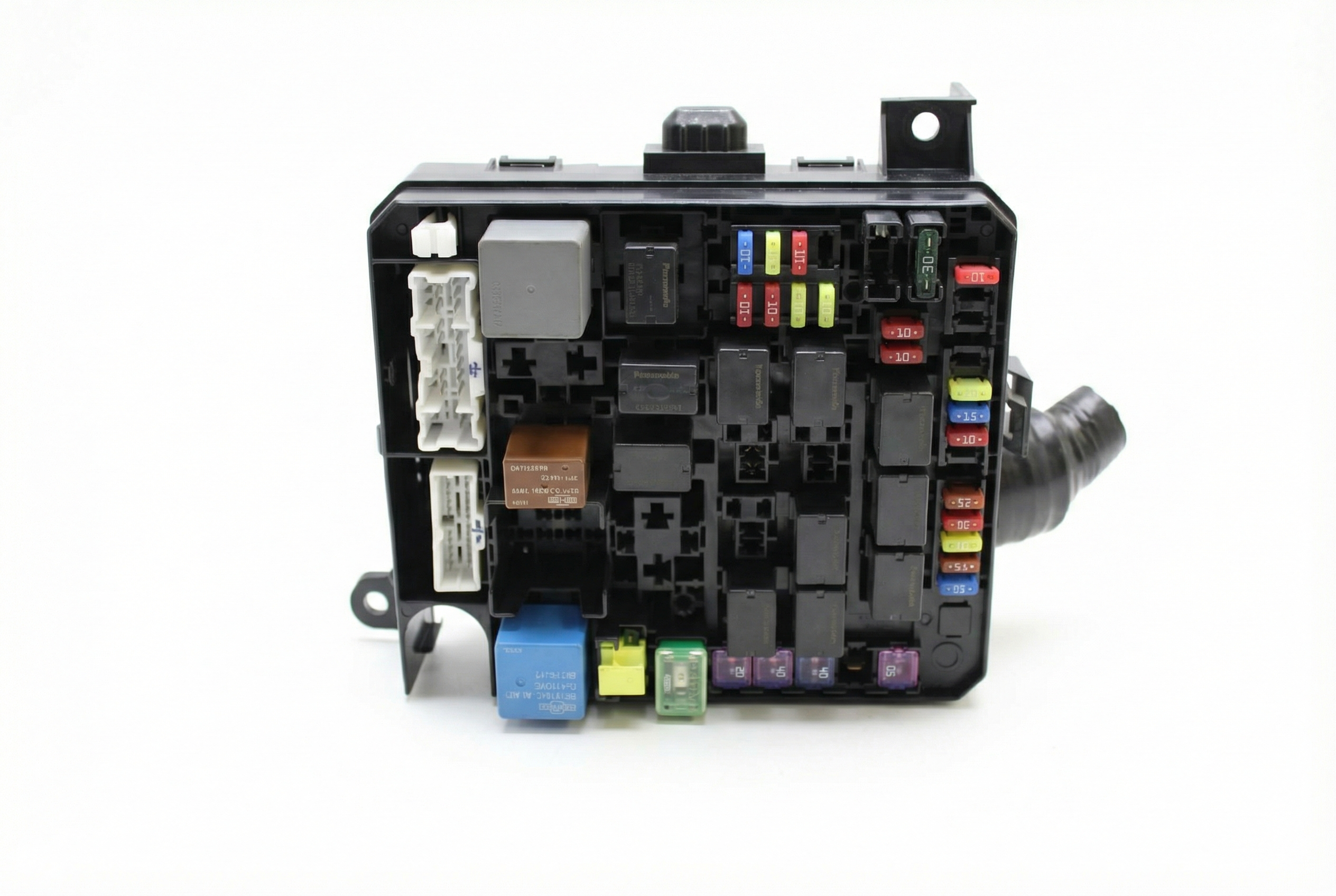
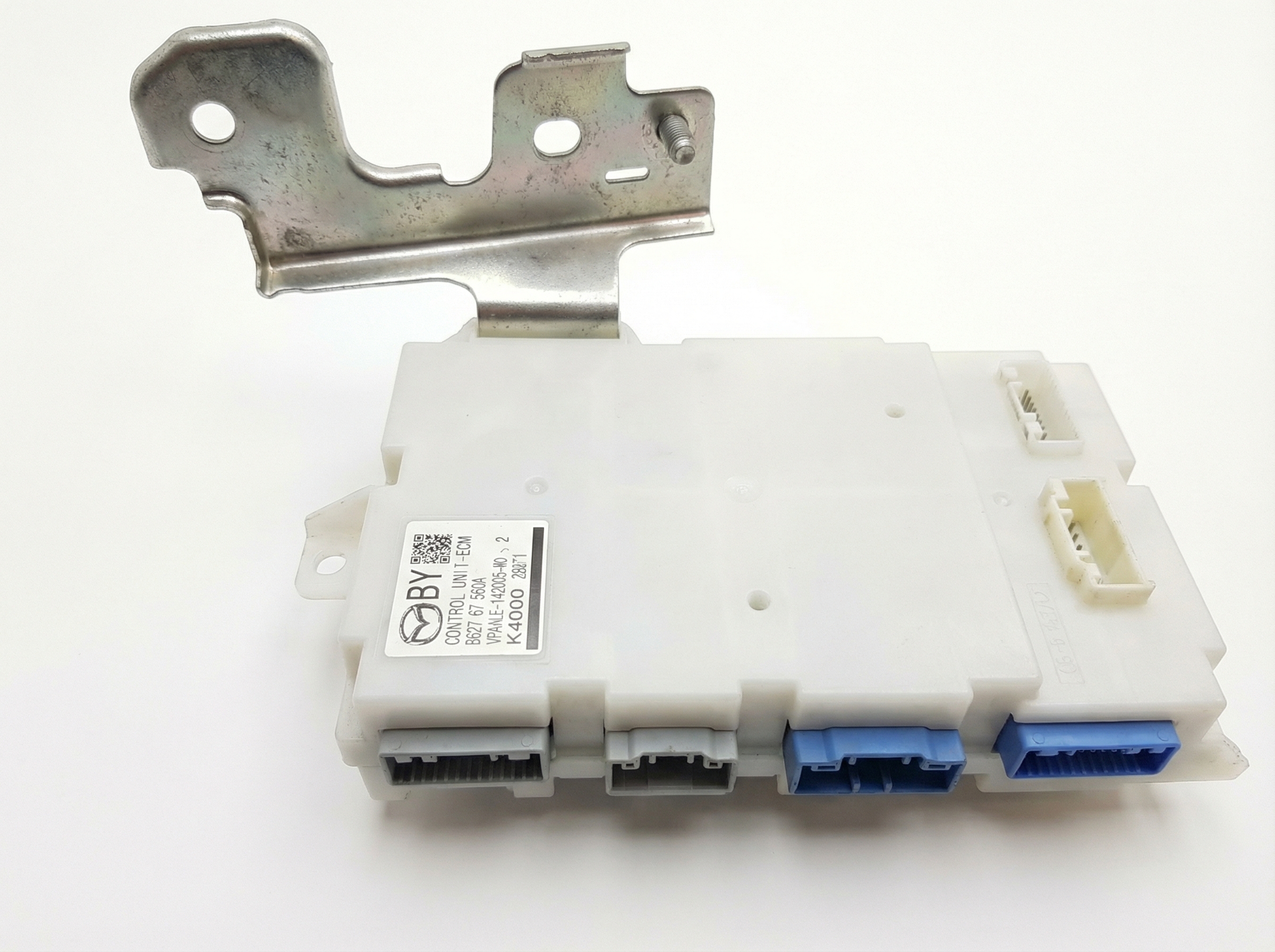
- This part is called the Passenger Junction Box (PJB) and combines the fuse box with the Body Control Module (BCM).
- Replacement is NOT plug-and-play. The PJB must be programmed to the vehicle's VIN and immobilizer system, or the car will not start.
- Part number compatibility is critical. You must match the part number from your original unit, paying close attention to generational divides (2007-09 vs. 2010-13) and engine options (Skyactiv).
- The most common failure is from internal, non-replaceable relays, causing flickering dash lights and other electrical gremlins. Water damage is also a known issue on 2007-2009 models.
Is My 2007-2013 Mazda 3 Fuse Box Failing? Common Symptoms

A failing Passenger Junction Box (PJB) in a Mazda 3 often creates bizarre electrical issues that can be mistaken for other problems. Because the PJB contains internal, non-serviceable relays soldered directly to its circuit board, these relays are a frequent point of failure. Watch for these specific symptoms:
- Flickering or Dead Instrument Cluster Lights: The most widely reported symptom is the dashboard illumination flickering erratically or going out completely while driving, especially when the headlights are on.
- Malfunctioning Exterior Lights: Taillights, parking lights, or license plate lights may not turn on, even with good bulbs and fuses.
- Intermittent Power Locks and Key Fob: The remote key fob may stop working, and the power door lock switches inside the car may become unresponsive.
- Radio and Clock Resets: The stereo and clock may lose power and reset themselves every time the car is turned off.
- A/C Control Issues: The air conditioning system may reset its settings after the car is shut down.
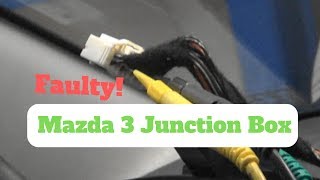
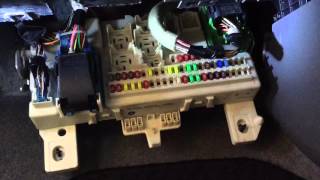
Pro Tip: A common diagnostic trick is to gently tap or wiggle the PJB, which is located behind the glove compartment. 🎬 Watch: How to locate and access the cabin fuse box If tapping the module causes the symptoms to appear or disappear, it's a strong indicator of an internal failure, such as a bad solder joint or a failing relay.
Known Issues and Causes of Failure

Internal Relay Failure
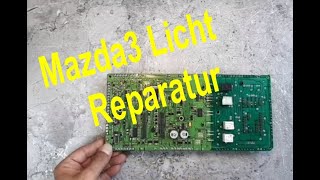
The most common cause of PJB failure is one or more of the internal relays that are permanently soldered to the main circuit board. The 'TNS' relay, which controls the Tail, Number (license plate), and Side marker lights, as well as dashboard illumination, is a frequent culprit. These relays are not designed to be replaced individually, which is why the entire PJB module must be swapped.
🎬 See a detailed look at the internal TNS relay failureWater Intrusion (2007-2009 Models)
A known design flaw in first-generation Mazda 3 models can lead to PJB failure. Condensation from an air conditioning line located above the PJB can drip down onto the module and its wiring connectors. Over time, this moisture causes corrosion on the electrical pins, leading to poor connections and eventual failure. When inspecting or replacing a PJB on these models, check for any signs of greenish corrosion or water stains on the housing and connectors.
Critical Compatibility Warnings: Read This Before Buying

There are several different versions of the PJB for the 2007-2013 Mazda 3. Ordering the wrong one will result in features not working or the part being incompatible. You must verify the part number from your original unit before ordering a replacement.
Warning: A PJB from a 2007-2009 model is NOT interchangeable with one from a 2010-2013 model. They are completely different electrical platforms.
Generation 1 (2007-2009) Mazda 3
Part numbers for this generation often begin with BN8D, BAN6, or BAP8. There was a mid-cycle update, and newer part numbers can sometimes replace older ones, but not the other way around. For example, a 2007 PJB (like BAN6 or BAP8) might work in a 2006 vehicle, but a 2005 PJB should not be installed in a 2007 vehicle. Always match the part number exactly or confirm supersession with a reliable source.
- BN8D-66-730J
- BAN6-66-730F / BAN6-66-730H
- BAP8-66-730E / BAP8-66-730F
Generation 2 (2010-2013) Mazda 3
Compatibility for this generation is further complicated by the introduction of the Skyactiv engine in 2012. The PJB may differ between vehicles with and without Skyactiv technology. Part numbers often begin with BBM or similar prefixes. Again, matching the part number on your original unit is the only way to guarantee compatibility.
Programming and Installation Requirements

Warning: This is NOT a plug-and-play part. A replacement PJB, whether new or used, must be programmed to your vehicle's VIN and specific configuration. It is also linked to the immobilizer system. If it is not programmed correctly, your car will not start.
Why is Programming Necessary?
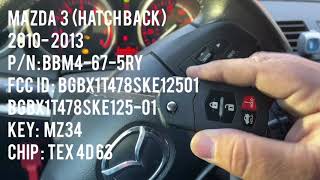
Programming, often called 'as-built' configuration, syncs the PJB with the specific options your car came with from the factory (e.g., automatic headlights, keyless entry, etc.). It also involves programming at least two keys to the new module so the immobilizer system recognizes them and allows the engine to start.
🎬 Watch: How to program your keys and remote to the moduleWho Can Program the PJB?
- Mazda Dealership: The dealer has the factory equipment (Mazda Modular Diagnostic System - MMDS) to perform the programming. This is the most straightforward but often most expensive option. Expect to pay a flat rate of 1-1.5 hours of labor for programming.
- Independent Mechanic with Specialized Tools: Many independent shops that specialize in specific makes have dealer-level tools and subscriptions to perform module programming.
- DIY with FORScan: For advanced DIY mechanics, it is possible to program a used PJB using a laptop, a compatible OBD2 adapter, and FORScan software. This method requires an inexpensive extended license for the software and careful adherence to the procedure, which includes saving the 'as-built' data from your original module before removing it.
Buying a Used 2007-2013 Mazda 3 Fuse Box
Given that a new OEM PJB can cost over $800, a used OEM unit is a very popular and cost-effective solution. Since reliable aftermarket versions are not available, a quality used part is often the best choice. Here’s what to look for:
- Match the Part Number Exactly: This is the most important step. Find the part number on the sticker of your original PJB and match it precisely.
- Inspect for Corrosion: Carefully examine the photos of the used part, focusing on the electrical pins in the connectors. Look for any green or white crusty buildup, which indicates water damage. Avoid any unit that shows signs of moisture.
- Check the Casing: Ensure the plastic housing and all mounting tabs are intact and not cracked or broken.
- Buy from a Reputable Seller: Purchase from a seller that offers a warranty and has good reviews. This gives you protection in case the part is defective.
Replacement Cost Breakdown
The cost to fix a failed PJB can vary significantly based on the parts and labor source.
| Item | Estimated Cost |
|---|---|
| New OEM PJB | $800 - $1,200 |
| New Aftermarket PJB | Not Available |
| Used OEM PJB | $75 - $200 |
| Shop Labor (Installation) | $150 - $250 (1.5-2.5 hours) |
| Shop Labor (Programming) | $135 - $250 |
| Total Estimated Cost (Used Part + Pro Install) | $360 - $700 |
Frequently Asked Questions (FAQ)
What's the difference between the engine fuse box and the cabin fuse box (PJB)?
The engine bay fuse box primarily handles high-current systems related to the engine, such as the starter, cooling fans, and fuel pump. The cabin fuse box, or PJB, manages most of the interior body electronics like lights, locks, windows, and the radio.
Can I just replace a single bad relay inside the PJB?
No, not easily. The relays are soldered directly onto the internal circuit board. While someone with advanced electronics and soldering skills could theoretically replace a relay, it is not a standard repair. For most people, replacing the entire PJB module is the only practical solution.
Will a used PJB work without programming?
No. The car's immobilizer system is tied to the PJB. If you install a used PJB without programming your keys to it, the car will not start. Additionally, features specific to your car's trim level may not work correctly without programming the 'as-built' data.
Is there a recall for the Mazda 3 PJB?
There are no specific recalls for the PJB module itself. However, there was a safety recall (NHTSA Campaign ID: 09V142000, Mazda recall 5409D) for some 2010 Mazda 3 models where a wiring harness could short against the starter motor, potentially blowing the main fuse and causing the engine to stall.
Helpful Videos
Technical Specifications
OEM Part Numbers: BAN666730F BAN666730H BAP866730E BAP866730F BN8D66730J BBM666760
Integrates Body Control Module (BCM) functions. Controls interior lighting, power accessories, and keyless entry. Linked to vehicle immobilizer system.
We Have This Part in Stock

The information in this article is provided for general reference and educational purposes only. Vehicle specifications, procedures, and part compatibility can vary by production date, trim level, and region. Always consult your vehicle's factory service manual and verify part numbers before purchasing or performing repairs. Safety-critical components such as airbags, seat belts, and braking systems should be installed by a qualified professional.
- Mazda MAZDA 3:
- 🎬 Helpful Videos
- 🛍️ Shop This Part
- Is My 2007-2013 Mazda 3 Fuse Box Failing? Common Symptoms
- Known Issues and Causes of Failure
- Internal Relay Failure
- Water Intrusion (2007-2009 Models)
- Critical Compatibility Warnings: Read This Before Buying
- Generation 1 (2007-2009) Mazda 3
- Generation 2 (2010-2013) Mazda 3
- Programming and Installation Requirements
- Why is Programming Necessary?
- Who Can Program the PJB?
- Buying a Used 2007-2013 Mazda 3 Fuse Box
- Replacement Cost Breakdown
- Frequently Asked Questions (FAQ)
- 🎟️ Get 5% Off