

2012-2013 Toyota Prius C Fuse Box: Decoding Electrical Failures and the Critical Production Date Split
This guide covers common failures, programming needs, and the crucial pre-January 2013 manufacturing date requirement for the engine bay fuse box assembly.
- This fuse box only fits 2012 and 2013 Prius C models built BEFORE January 2013. Always check your vehicle's door jamb sticker.
- Failure causes widespread, random electrical problems, not just simple blown fuses. Multiple warning lights are a key symptom.
- This part does NOT require programming or dealer initialization, making a used part a viable DIY replacement.
- When buying used, inspect carefully for corrosion on the connectors (water damage) and melted plastic (heat damage).
Critical Compatibility Warning: Production Date is Key

Warning: This part fits 2012 Toyota Prius C models and 2013 Toyota Prius C models manufactured through December 2012 only. A different part was used starting in January 2013. You must verify your vehicle's production date before ordering. This date can be found on the sticker inside the driver's door jamb. Ordering the wrong part will result in incompatibility.
Symptoms of a Failing Prius C Fuse Box
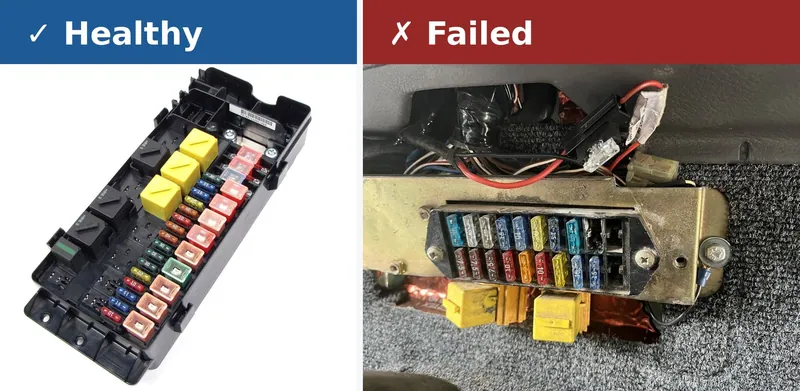

A failing fuse box in a Prius C often causes symptoms that seem random and unrelated. This is because the internal circuitry of the box itself can fail, not just the individual fuses. 🎬 Watch: A quick guide on how to replace individual fuses. Instead of a single component not working, you might experience a variety of electrical gremlins.
- Multiple Warning Lights: The dashboard may light up with various warnings, such as 'Check Hybrid System', ABS, or traction control lights, even if those systems are mechanically sound.
- Intermittent or Dead Circuits: You may lose power to multiple components at once. This could include headlights, radio, power windows, or windshield wipers not working intermittently or at all.
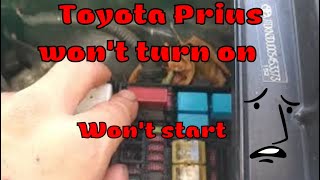
- No-Start Condition: The car may refuse to enter 'Ready' mode. You might hear a click, but the hybrid system won't engage. This can sometimes be mistaken for a weak 12V auxiliary battery. 🎬 See what happens when a Prius refuses to turn on.
- Burning Smell or Visible Damage: A distinct plastic or electrical burning smell from the engine bay is a serious sign. Upon inspection, you might see melted plastic, scorch marks, or corrosion around the fuse box terminals.
- Repeatedly Blowing Fuses: If a specific fuse blows immediately after being replaced, it can indicate a short circuit within the fuse box itself.
Known Issues, TSBs, and Recalls

While there are no specific recalls for the fuse box assembly itself on the 2012-2013 Prius C, the vehicle is part of broader Toyota recalls and service campaigns that involve electrical components. For instance, issues with the Intelligent Power Module (IPM) in the inverter can cause a 'Check Hybrid System' message, a symptom also common with fuse box failure. It's crucial to rule out these other potential causes. There are no widespread Technical Service Bulletins (TSBs) pointing to a design flaw in the fuse box for these model years, suggesting that failures are typically due to age, environmental factors like moisture, or isolated electrical faults.
Programming and Installation Requirements
A key question for any modern electronic module is whether it needs programming. For the 2012-2013 Prius C engine bay fuse box, the answer is generally no. This component is typically considered a 'plug-and-play' part. It does not store the vehicle's VIN or link to the immobilizer system. Therefore, a replacement unit, whether new or used, should not require special programming or a visit to the dealer for initialization. The primary challenge is ensuring you have the correct part for your vehicle's specific production date.
Buying a Used 2012-2013 Prius C Fuse Box
Purchasing a used OEM fuse box is a cost-effective way to get your Prius C back on the road. Here’s what to look for to ensure you get a quality part:
- Confirm the Production Date: This is the most important step. Re-verify that the donor vehicle was manufactured before January 2013. Ask the seller to confirm the date from the door jamb sticker if possible.
- Thorough Physical Inspection: When you receive the part, inspect it carefully. Look for any signs of green or white crusty corrosion on the pins and connectors. This is a tell-tale sign of water damage, and the part should be rejected.
- Check for Heat Damage: Examine the plastic housing for any signs of melting, warping, or discoloration, especially around the larger fuses and relays. This indicates the box has been subjected to a severe overload.
- Match Part Numbers: While there are several compatible part numbers (e.g., 82631-52050, 82741-52100), the most critical factor is the pre-2013 production window.
- Why Used OEM is a Smart Choice: For a complex electrical distribution part like this, a used original Toyota part is often superior to a new, unbranded aftermarket clone. The OEM part was designed and tested for the vehicle's specific electrical loads and provides a level of quality and reliability that cheap aftermarket versions often can't match.
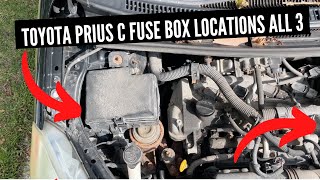
Pro Tip: There are three fuse box locations on a Prius C: two under the hood and one inside the car under the driver's side dashboard. 🎬 Watch: See exactly where all three fuse boxes are located. This guide refers to the main engine compartment fuse and relay block, which is the most common one to fail with the symptoms described.
Cost Comparison
| Part Type | Estimated Cost |
|---|---|
| New OEM (Dealer) | $700 - $1050 |
| New Aftermarket | Not commonly available |
| Used OEM | $75 - $200 |
| Shop Labor Cost | $100 - $200 |
Frequently Asked Questions (FAQ)
Does a replacement fuse box need to be programmed?
No. For the 2012-2013 Prius C, the main engine compartment fuse box is a non-programmable part. It does not need to be coded to the vehicle's VIN or immobilizer system.
Why are all my fuses good but things still don't work?
This is a classic symptom of internal fuse box failure. The problem isn't the individual fuses, but the printed circuits or integrated relays inside the box that connect them. Power isn't reaching the fuse sockets, or it isn't being sent out correctly after the fuse.
What's the difference between the pre- and post-January 2013 fuse boxes?
The exact engineering change is not publicly detailed by Toyota, but it likely corresponds to a mid-cycle refresh that altered wiring harnesses or the electrical demands of certain components. The physical connectors or internal circuitry are different, making them incompatible.
Can I replace just a relay inside the fuse box?
Some relays are plug-in and can be replaced individually. However, many modern fuse boxes, including this one, have relays that are soldered directly onto the internal circuit board. If one of these integrated relays fails, the entire fuse box assembly must be replaced.
Helpful Videos


Technical Specifications
OEM Part Numbers: 8263152050 8263152060 8266252740 8274152100
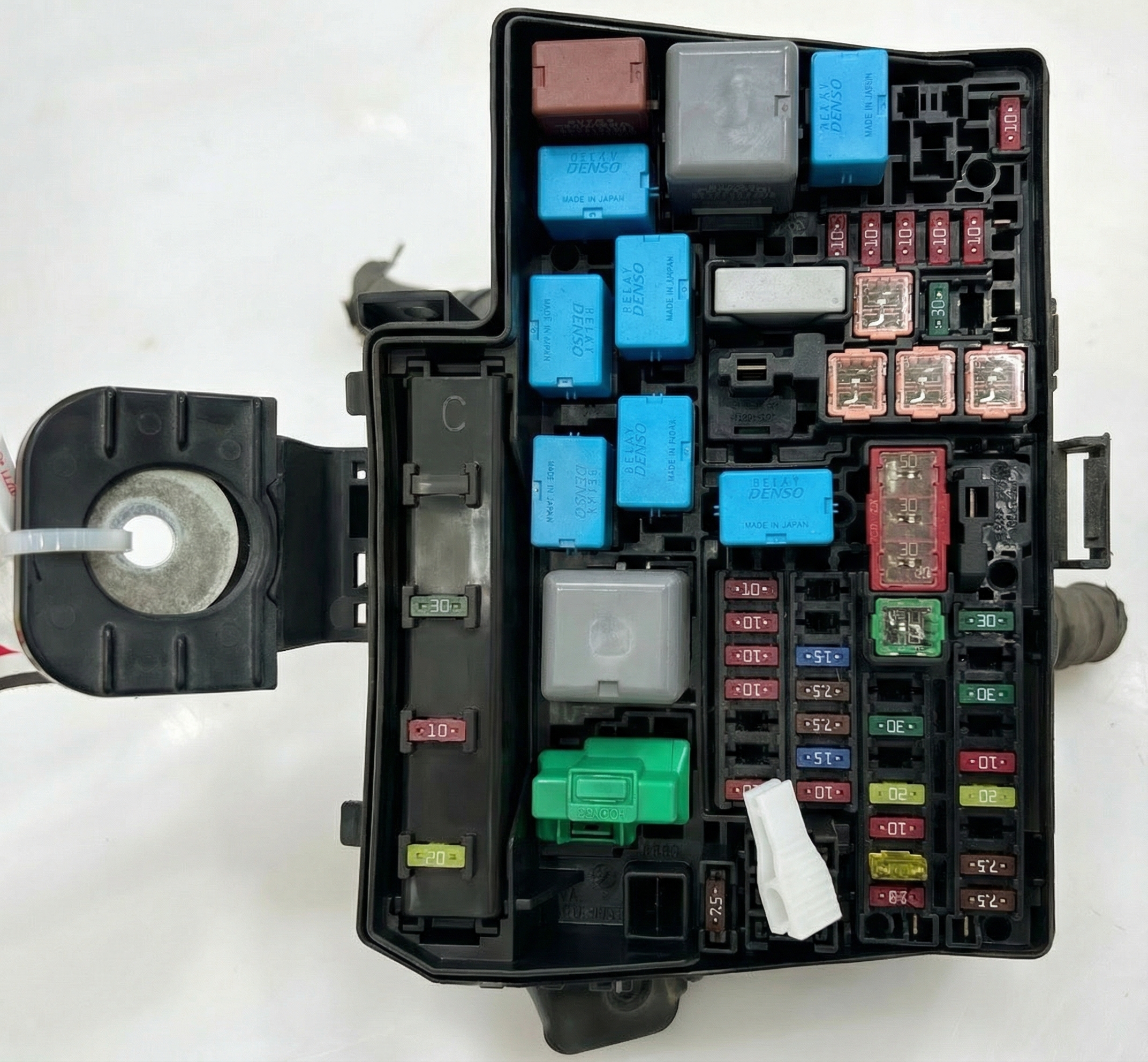
The part is the main Engine Room Junction Block assembly. There are two fuse boxes under the hood; this refers to the larger primary box.
We Have This Part in Stock

The information in this article is provided for general reference and educational purposes only. Vehicle specifications, procedures, and part compatibility can vary by production date, trim level, and region. Always consult your vehicle's factory service manual and verify part numbers before purchasing or performing repairs. Safety-critical components such as airbags, seat belts, and braking systems should be installed by a qualified professional.
- Toyota Prius C:
- 🎬 Helpful Videos
- 🛍️ Shop This Part
- Critical Compatibility Warning: Production Date is Key
- Symptoms of a Failing Prius C Fuse Box
- Known Issues, TSBs, and Recalls
- Programming and Installation Requirements
- Buying a Used 2012-2013 Prius C Fuse Box
- Cost Comparison
- Frequently Asked Questions (FAQ)
- 🎟️ Get 5% Off