

2019-2022 Toyota Prius & Prius AWD-e Engine Fuse Box: A Guide to Part Numbers & HUD Compatibility
This guide covers how to diagnose a faulty engine fuse box, identify the correct replacement part for your vehicle, and avoid common compatibility issues like the Head-Up Display (HUD) variation.
- The most critical compatibility factor is whether your Prius has a Head-Up Display (HUD); they use different fuse boxes.
- This part does NOT require programming. It is a plug-and-play replacement, making it a DIY-friendly job.
- Used fuse boxes are sold bare. You must transfer all fuses, relays, and fusible links from your old unit to the new one.
- A failing fuse box often causes multiple, unrelated electrical problems at the same time.
Symptoms of a Failing Fuse Box
A problem with the engine fuse box can be difficult to diagnose because it can cause issues in many different, seemingly unrelated systems. Instead of a single component failing, you might experience a cluster of problems. The fuse box itself does not generate OBD-II trouble codes; however, its failure can cause multiple other modules to report codes due to loss of power.
- Multiple Unrelated Electrical Failures: This is the most common sign. For example, the radio, headlights, and power windows may stop working simultaneously.
- No-Start Condition: The vehicle may be completely dead, with no power to the dashboard or starter, even with a known-good 12-volt battery. This can happen if a main fusible link inside the box fails.
- Intermittent Electrical Gremlins: Components may work one moment and not the next. This can be caused by loose connections or corrosion within the fuse box terminals, leading to poor contact.
- Visible Damage or Burning Smell: A strong smell of burnt plastic from the engine bay is a serious red flag. Upon inspection, you may see melted plastic around a fuse or relay socket, or discoloration on the fuse box housing itself.
- Corrosion: White or green crusty deposits on the fuse terminals or connector pins indicate water intrusion, which can disrupt electrical flow and cause permanent damage.
- Frequently Blowing Fuses: If a specific fuse blows repeatedly, it usually points to a problem in that circuit. However, if multiple different fuses blow over time, it could indicate an internal short or issue within the fuse box assembly.
Known Issues, Recalls, and TSBs
As of early 2026, there are no specific recalls or Technical Service Bulletins (TSBs) issued by Toyota for the engine fuse box assembly on the 2019-2022 Prius and Prius AWD-e. The part is generally considered reliable.
However, some related TSBs exist for electrical diagnosis:
- TSB T-TT-0687-22: Provides dealers with diagnostic guidance for no-start or dead 12-volt battery concerns, which could be related to a fuse box issue.
- ECU Recall: A recall was issued for the main Engine Control Unit (ECU) on some 2022 models, which could cause a loss of drive power. This is not a fuse box failure but involves a related electrical component.
Pro Tip: The lack of specific recalls or widespread complaints suggests that when problems do occur, they are often due to external factors like water damage, physical damage from an accident, or the failure of an individual fuse or relay rather than a manufacturing defect in the fuse box itself.
Decoding Part Numbers & Vehicle Options
The "Engine Fuse Box" is not a single part but an assembly of several components. When buying a used unit, you are typically getting the main plastic housing with its internal wiring. The most important variations relate to the upper cover, which is different for vehicles equipped with a Head-Up Display (HUD).
| Part Number | Description | Compatibility Notes |
|---|---|---|
| 82662-47250 | Upper Cover / Cover Relay Block | Fits vehicles WITHOUT Head-Up Display (HUD). This is the most critical compatibility check. |
| 82663-47070 | Lower Cover | Common to most 2019-2022 Prius models. |
| 82666-47610 | Connector Holder | An internal component of the assembly. |
Warning: If your Prius has the Head-Up Display (HUD) option, you need a different fuse box upper cover. Part number 82662-47250 will NOT be compatible. Always verify the part number on your original fuse box cover before purchasing a replacement.
Buying a Used 2019-2022 Prius Fuse Box
A used OEM fuse box is an excellent, cost-effective solution for a damaged or corroded unit. Since this part is not a common failure item, a used part from a low-mileage vehicle is likely to provide many years of service. Here’s what to look for:
Physical Inspection Checklist
- Check for Corrosion: Carefully inspect all electrical terminals, both where the fuses/relays plug in and where the main harnesses connect. Avoid any unit with signs of white or green powder, which indicates corrosion from moisture.
- Look for Heat Damage: Check for any melted plastic, especially around the sockets for high-current fuses and relays. This indicates a past major short circuit, and the box should be avoided.
- Inspect for Cracks: Ensure the plastic housing is free of cracks, especially around the mounting tabs. A cracked housing can allow moisture and dirt to enter, leading to future problems.
- Verify Connector Pins: Look at the large connector ports on the bottom and sides. All pins should be straight and clean. Bent or pushed-in pins will prevent the wiring harness from connecting properly.
Important Compatibility Notes
The single most important factor is the Head-Up Display (HUD). Confirm whether your vehicle has this feature and order the correct corresponding fuse box. Using the wrong one can result in certain features not working.
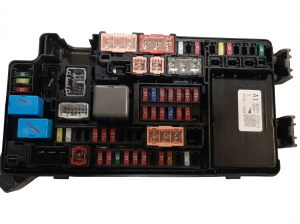
Remember that a used fuse box assembly is typically sold as the bare housing. It does not include any fuses, relays, or fusible links. You must carefully transfer all of these components from your old fuse box to the replacement unit. It's a good idea to take a clear photo of your original fuse box before you start removing components to ensure you put everything back in the correct spot.
Programming and Installation
The engine fuse box assembly on the 2019-2022 Toyota Prius and Prius AWD-e does not require any programming, coding, or flashing after installation. It is a direct-replacement, plug-and-play part. The vehicle's anti-theft or immobilizer system is not tied to the fuse box itself, so a dealer visit is not necessary for the replacement.
The replacement process is straightforward for a DIY mechanic with basic tools. It involves disconnecting the battery, unplugging the main wiring harness connectors, unbolting the assembly, and swapping it with the new unit. The most time-consuming part is carefully transferring all the fuses and relays from the old box to the new one.
Cost Comparison
Replacing the engine fuse box can be expensive if you buy new OEM components from a dealer, making a used OEM part a very attractive alternative.
| Part Source | Estimated Cost | Notes |
|---|---|---|
| New OEM | $180 - $250+ | This is the combined cost of purchasing the individual covers and holders from a dealer. |
| New Aftermarket | Not Widely Available | Complex assemblies like this are rarely produced by aftermarket companies. |
| Used OEM | $60 - $125 | Offers the best value, providing an original factory part at a significant discount. |
| Shop Labor | $100 - $200 | Most shops will charge for 1.0 to 1.5 hours of labor for diagnosis and replacement. |
Frequently Asked Questions (FAQ)
Does the 2019-2022 Prius engine fuse box need to be programmed?
No. The engine fuse box is a non-intelligent part that simply distributes power. It does not contain software and does not need to be programmed or coded to the vehicle. It is a plug-and-play replacement.
What's the difference between the fuse box in the engine bay and the one inside the car?
The engine bay fuse box handles high-power systems essential for the car to run, such as the ECU, fuel pump, and cooling fans. The interior fuse panel (usually under the dashboard) handles lower-power, cabin-related accessories like the radio, interior lights, and power outlets.
Will a used fuse box come with fuses and relays?
No, almost all used fuse boxes are sold as bare assemblies. You will need to transfer all the fuses, relays, and fusible links from your original fuse box into the replacement unit. This is why it's important that your original box is mostly intact, even if it's corroded or damaged.
How do I know if I have a Head-Up Display (HUD)?
A Head-Up Display projects information, such as your speed, onto the windshield in your line of sight. If you see a small projector embedded in the top of your dashboard just behind the instrument cluster, your vehicle is equipped with HUD and requires the specific fuse box variant.
Technical Specifications
OEM Part Numbers: 82662-47250 (Upper Cover, without HUD) 82663-47070 (Lower Cover) 82666-47610 (Connector Holder)
Mounts in the engine compartment on the driver's side, next to the 12V auxiliary battery.
We Have This Part in Stock

The information in this article is provided for general reference and educational purposes only. Vehicle specifications, procedures, and part compatibility can vary by production date, trim level, and region. Always consult your vehicle's factory service manual and verify part numbers before purchasing or performing repairs. Safety-critical components such as airbags, seat belts, and braking systems should be installed by a qualified professional.
- Toyota Prius:
- Toyota Prius AWD-e:
- 🛍️ Shop This Part
- Symptoms of a Failing Fuse Box
- Known Issues, Recalls, and TSBs
- Decoding Part Numbers & Vehicle Options
- Buying a Used 2019-2022 Prius Fuse Box
- Physical Inspection Checklist
- Important Compatibility Notes
- Programming and Installation
- Cost Comparison
- Frequently Asked Questions (FAQ)
- 🎟️ Get 5% Off