

2013-2020 Honda Civic Grille Guide: Decoding Generations, Trims, and Sensor Compatibility
This guide details the critical differences between 9th and 10th generation Honda Civic grilles, helping you avoid common purchasing and installation mistakes.
- The 2013-2020 Civic spans two generations (9th: 2013-15, 10th: 2016-20) with completely non-interchangeable grilles.
- For 10th gen (2016-20) models with Honda Sensing, you MUST use a radar-compatible grille and emblem or safety systems will be disabled.
- When buying a used grille, the most critical inspection is checking for broken or cracked mounting tabs on the back.
- Compatibility is complex; you must match the grille to your car's specific year (especially the 2019 facelift), body style (Sedan/Coupe/Hatch), and trim level (LX/Sport/Si).
Critical Alert: Two Generations, Zero Interchangeability

The 2013-2020 year range for the Honda Civic covers two completely different vehicle generations, and their grilles are not interchangeable. Before purchasing a replacement grille, you must correctly identify your vehicle's generation.
- 9th Generation: 2013-2015 model years
- 10th Generation: 2016-2020 model years
Warning: Installing a grille from the wrong generation will not work. The mounting points, size, and shape are completely different. This guide is divided into sections for each generation to ensure you find the correct information.
9th Generation Honda Civic Grille (2013-2015)


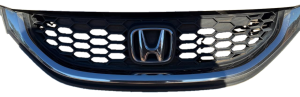
After a 2012 model that was poorly received, Honda issued a significant refresh for the 2013 Sedan, which included a new grille design featuring a honeycomb mesh pattern and chrome accents to give the car a more premium look. This design carried through the 2015 model year for most sedans.
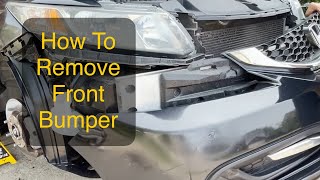
🎬 Watch: Step-by-step front bumper removal for 9th Gen Civics.Variant & Trim Differences (9th Gen)
For the 2013-2015 models, grille differences are primarily between body styles (Sedan vs. Coupe) and the Si performance model.
- Sedan (DX, HF, LX, Natural Gas, SE): These trims generally share the same grille design. A common part number for the base front grille is 71121-TR3-A01. This grille often features a black or gray honeycomb pattern with a prominent chrome bar across the top.
- Coupe: Coupe models may have slight stylistic variations from the sedan. Always verify fitment by body style.
- Si Models: The Si grille is distinct, often featuring a blacked-out design and a signature red "Si" badge.
10th Generation Honda Civic Grille (2016-2020)
The 10th generation Civic brought a more aggressive design and a huge variety of grilles. Compatibility is complex, depending on year, body style, trim, and whether the car has Honda Sensing.
The 2019 Facelift: A Major Change
The most significant change occurred with the 2019 model year facelift. Grilles are generally not interchangeable between pre-facelift and post-facelift models without swapping the entire bumper.
- Pre-Facelift (2016-2018): These models are known for the large, chrome "wing" that dominates the upper grille. Many owners swap this for a gloss black version from later models or aftermarket kits.
- Post-Facelift (2019-2020): Honda replaced the chrome wing with a gloss black version and updated the lower grille openings.
Honda Sensing Radar Compatibility (10th Gen)
Warning: Many 2016-2020 Civics are equipped with the Honda Sensing suite, which uses a radar unit mounted in the grille area. Grilles for these cars have a special, radar-transparent front "H" emblem. Using a grille or emblem not designed for Honda Sensing will block the radar signal, disabling safety features like Adaptive Cruise Control (ACC) and the Collision Mitigation Braking System (CMBS), and will likely trigger warning lights on your dashboard.
Known Issues (10th Gen)
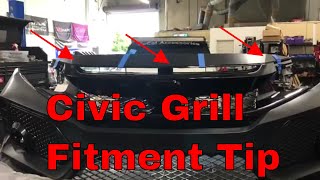
A common complaint on 10th generation Civics is a gap forming between the top of the bumper/grille assembly and the headlights or hood. This can be caused by warping of the internal bumper structure or broken clips. While sometimes considered "normal" due to its prevalence, it indicates a fitment issue. Additionally, the plastic clips 🎬 See this pro tip for fixing 10th Gen grille fitment. holding the grille assembly can become brittle and break during removal or from minor impacts.
Symptoms of a Damaged Grille

- Visible Damage: The most obvious symptom is physical damage like cracks, holes, or missing sections from road debris or a minor collision.
- Loose Fitment or Rattling: Broken mounting tabs can cause the grille to become loose and rattle, especially while driving.
- Peeling or Faded Finish: The chrome or painted finish can chip, peel, or fade over time due to sun exposure and road debris.
- Honda Sensing Errors (10th Gen): For models with this feature, a damaged, misaligned, or incorrect grille can cause system errors and warning lights for the ACC and CMBS systems.
Buying a Used 2013-2020 Honda Civic Grille

Purchasing a used OEM grille is often a smart choice over cheap aftermarket alternatives that frequently suffer from poor fitment. However, careful inspection is key.
- Confirm the Generation and Trim: First, be absolutely sure if you need a 9th gen (2013-15) or 10th gen (2016-20) grille. Then, match the style to your trim (LX, Sport, Si, etc.) and body style (Sedan, Coupe, Hatchback). Use photos of your own car to compare against the seller's part.
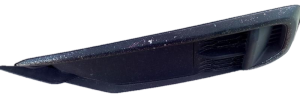
- Inspect ALL Mounting Tabs: This is the most critical inspection point. Turn the grille over and carefully check every single plastic tab and clip location. Even one broken tab can prevent a secure fit. The initial prompt noted a part with broken tabs, which is a common issue.
- Check for Cracks and Warping: Look for hairline cracks, especially around screw holes. Lay the grille on a flat surface to check for any warping that could cause fitment gaps.
- Verify Honda Sensing Compatibility (10th Gen): If your car has Honda Sensing, ensure the used grille is from a vehicle with the same feature. The front emblem must be the correct, radar-compatible type. Do not try to use a standard emblem on a Sensing-equipped car.
- Examine the Finish: Check any chrome or gloss black surfaces for deep scratches, peeling, or pitting. Minor scuffs may be acceptable, but significant cosmetic damage defeats the purpose of the replacement.
Replacement Information
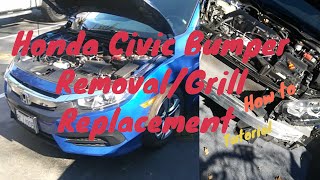
Replacing the grille on a Honda Civic almost always requires removing the front bumper cover. While not overly complex, it involves removing numerous clips and screws and can be intimidating for beginners.
- Difficulty: 3 out of 5
- DIY Time: 1.5 - 2.5 hours
- Tools Needed: Ratchet and sockets, Phillips screwdriver, flathead screwdriver, plastic trim removal tools, clip puller.
Cost Comparison
| Part Type | Estimated Cost |
|---|---|
| New OEM | $110 - $225 |
| New Aftermarket | $70 - $150 |
| Used OEM | $50 - $120 |
| Shop Labor | $150 - $300 |
Note: Prices are estimates and can vary based on specific trim, year, and supplier. Honda Sensing components are significantly more expensive.
Frequently Asked Questions (FAQ)
Can I install a Si or Type R grille on my base model Civic?
Often, yes, but it depends on the generation. For 10th gen Civics, swapping to a Sport, Si, or Type R style grille is a popular modification. However, you must ensure the new grille is compatible with your model year (pre- or post-facelift) and body style. Sometimes the entire bumper cover must be changed to accommodate a different grille style.
Will a grille from a Coupe fit my Sedan?
Generally, no. While they may look similar, the bumper shapes and mounting points for Coupes, Sedans, and Hatchbacks are often different, even within the same model year. Always purchase a grille that is specified for your exact body style.
What happens if I use the wrong grille on my car with Honda Sensing?
Using a non-compatible grille or emblem will obstruct the radar sensor. This will disable your Adaptive Cruise Control and Collision Mitigation Braking System, and your dashboard will display error messages. There is no workaround; you must use the correct radar-compatible parts.
🎬 Learn how to troubleshoot Honda Sensing radar obstruction messages.My bumper was removed to replace the grille. Do I need an ADAS recalibration?
This is a point of debate. Some shops insist on a recalibration any time the bumper is removed, which can cost several hundred dollars. However, if the radar sensor itself was not unbolted, moved, or impacted, a recalibration is often not necessary for a simple grille swap. If you get ADAS errors after the repair, a recalibration is required.
Helpful Videos

Technical Specifications
OEM Part Numbers: 71121-TR3-A01 71102-TBA-A00 71102-TBA-A5 71102-TBF-A00 71121TGHA01 71122TR3A01 75700TGHA01
Material: Primarily ABS Plastic. Finishes vary by trim and include matte black, gloss black, chrome, and paint-matched.
We Have This Part in Stock

The information in this article is provided for general reference and educational purposes only. Vehicle specifications, procedures, and part compatibility can vary by production date, trim level, and region. Always consult your vehicle's factory service manual and verify part numbers before purchasing or performing repairs. Safety-critical components such as airbags, seat belts, and braking systems should be installed by a qualified professional.
- Honda Civic:
- 🎬 Helpful Videos
- 🛍️ Shop This Part
- Critical Alert: Two Generations, Zero Interchangeability
- 9th Generation Honda Civic Grille (2013-2015)
- Variant & Trim Differences (9th Gen)
- 10th Generation Honda Civic Grille (2016-2020)
- The 2019 Facelift: A Major Change
- Honda Sensing Radar Compatibility (10th Gen)
- Known Issues (10th Gen)
- Symptoms of a Damaged Grille
- Buying a Used 2013-2020 Honda Civic Grille
- Replacement Information
- Cost Comparison
- Frequently Asked Questions (FAQ)
- 🎟️ Get 5% Off