

Mazda HID Headlight Problems: Fixing Ballast & Moisture Issues on Mazda6, CX-7, Mazda5 & More
This guide diagnoses the common HID ballast failures and moisture intrusion affecting 2004-2012 Mazda headlights, and explains why the bulb is often not the problem.
- The HID ballast is the most common failure point, causing flickering or total failure; it's often not the bulb.
- Moisture inside the headlight is a known TSB issue that destroys the ballast; check rear seals after any bulb change.
- Replacing the ballast or assembly on most of these models requires removing the front bumper, which is labor-intensive.
- Always diagnose by swapping parts from the working side to the non-working side before buying replacements.
The Critical Misconception: Shared Parts, Not Shared Assemblies
While the 2006-2008 Mazda6, 2007-2009 CX-7, 2006-2010 Mazda5, 2004-2006 MPV, and 2006-2012 MX-5 Miata are all included in this guide, it is crucial to understand that their complete headlight assemblies are NOT interchangeable. The housings are shaped specifically for each vehicle's body. However, when equipped with the optional HID Xenon headlights, these models often share the same family of electronic ballasts and igniters, and as a result, they share the same common failures. This guide focuses on diagnosing and repairing these shared HID system issues.
Halogen vs. HID/Xenon: What's the Difference?
These Mazda models came with two possible headlight types. It's important to identify which system your car has, as the parts are not interchangeable.
- Halogen: The base-model system. Uses a simple filament bulb (like a household light bulb) that glows yellow-white. It's less bright and has a shorter lifespan.
- HID/Xenon: The premium/optional system. Uses a ballast to send high voltage to a bulb filled with xenon gas, creating a bright, blue-white arc of light. When you turn them on, they may flicker or take a second to reach full brightness. If your car has these, it likely has a small "D2S" or similar marking on the headlight lens.
Warning: You cannot install HID bulbs in a halogen headlight housing, or vice-versa, without extensive and complex wiring modifications. The systems are completely different.
Symptoms of a Failing Mazda HID System
A failing headlight is often misdiagnosed. While bulbs do burn out, the electronic ballast is a more frequent culprit in these Mazda systems. Look for these specific symptoms:
- Flickering or Strobing: The light flutters, especially on startup or when going over bumps. This almost always points to a failing ballast or a poor connection.
- Delayed or No Ignition: One headlight takes several seconds to turn on, or doesn't turn on at all, while the other works fine.
- Lights Turn Off While Driving: A headlight works for a few minutes and then suddenly shuts off. This is a classic sign of an overheating, failing ballast.
- Color Shift to Pink or Purple: As an HID bulb nears the end of its life, the chemical salts inside change, often causing the light to turn a distinct pink or purplish color. If you see this, the bulb is the likely problem.
- One Light is Dimmer: If one headlight is noticeably dimmer than the other, it can be a sign of a failing bulb or a ballast that isn't providing enough power.
How to Diagnose the Problem: The Swap Test
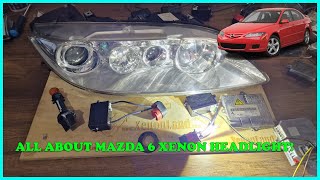
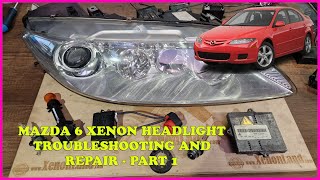
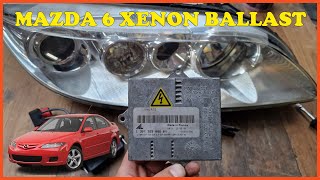
Before you buy any parts, perform this simple test to pinpoint the failure. The goal is to determine if the fault is with the Bulb, the Igniter 🎬 Watch: Step-by-step troubleshooting for Mazda 6 HID bulbs and ballasts. (the component the bulb plugs into), or the Ballast (the metal box on the bottom of the headlight).
- Swap the Bulbs: Move the known good bulb from the working headlight to the non-working headlight. If the problem moves with the bulb (i.e., the good side goes dark and the bad side lights up), you need a new bulb.
- Swap the Ballasts: If swapping the bulb didn't change anything, the ballast is the next suspect. This is more difficult as it often requires removing the headlight assembly. Swap the ballast from the working side to the non-working side. If the problem moves to the other side, you have confirmed a bad ballast.
Pro Tip: More than 90% of the time, if a new bulb doesn't fix the issue, the ballast has failed. The igniter is a less common failure point.
Known Issue: Moisture & Condensation (Mazda TSB 09-001/17)
A major problem affecting all the vehicles in this guide is moisture getting inside the headlight assembly. Mazda issued a Technical Service Bulletin (TSB) for this exact issue.
Minor fogging in corners can be normal and will burn off. However, large water droplets or pooling water at the bottom of the lens is not normal. This water eventually drips down onto the electronic ballast mounted on the bottom of the housing, shorting it out and causing the failures described above.
Cause: The TSB states the most common cause is missing or improperly installed rear bulb covers/seals, often after a bulb was replaced or from a body shop repair. The seals are meant to be transferred to the new assembly but are often forgotten.
Fix:
- Remove the headlight assembly.
- Drain any water and use a hair dryer on a low/cool setting to gently dry the inside.
- Inspect and replace the failed component (usually the water-damaged ballast).
- Before reinstalling, ensure all rear bulb covers and seals are present and correctly seated to prevent the problem from recurring.
Vehicle-Specific Replacement & Access Notes
Replacing the ballast or the entire assembly is mechanically simple, but access is the main challenge. On most of these models, you must remove the front bumper cover.
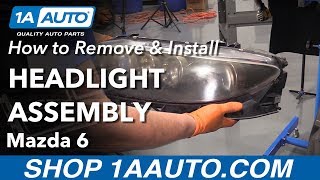
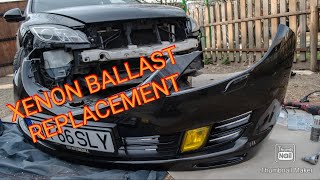
- 2006-2008 Mazda6: Access is very difficult. Full replacement requires removing the front bumper. 🎬 See this walkthrough on replacing the entire Mazda 6 headlight assembly. Some owners manage to change bulbs by removing the fender liner and reaching up, but this is challenging. Also, check the main ground connector located under the battery tray for corrosion, as it's a known cause of headlight issues on this model.
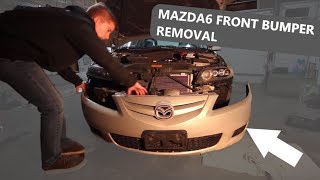
- 2007-2009 Mazda CX-7: Bumper removal is mandatory to access the headlight mounting bolts. There are no shortcuts. 🎬 Watch: How to safely remove the front bumper for headlight access.
- 2006-2010 Mazda5: Famous for being frustrating. Bumper removal is the recommended method to avoid breaking tabs or struggling for hours.
- 2004-2006 Mazda MPV: For models with the bar-style grille, access is similar to the other vehicles, often requiring at least partial bumper and grille removal.
- 2006-2012 Mazda MX-5 Miata: Like its siblings, bumper removal is the standard procedure for removing the headlight assembly.
Buying a Used Headlight Assembly: What to Check
A used OEM headlight is often a better choice than a cheap, new aftermarket unit, which can have poor beam patterns and leak moisture. When buying used, inspect these key areas:
- All Mounting Tabs Intact: Check for broken or repaired tabs. The plastic tabs are brittle and often break during removal if not done carefully. A broken tab means the headlight will vibrate or be misaligned.
- Lens Condition: Look for deep scratches, cracks, or "crazing" (a network of fine cracks) from UV damage. Check for yellowing or hazing, though this can often be polished out.
- No Internal Moisture: Look for a visible water line or signs of dried mineral deposits inside the lens. This indicates a bad seal and potential damage to the internal chrome and electronics.
- Ballast Included: If you're buying a complete HID assembly, confirm that the ballast and igniter are included. They are often sold separately.
Headlight Aiming After Installation
Anytime you replace a headlight assembly, you MUST aim it. Failure to do so can blind oncoming drivers and reduce your own visibility.
- Park the car on a level surface, 10-15 feet from a flat wall or garage door.
- Turn on the low beams. You will see a distinct cutoff line in the beam pattern.
- Locate the adjustment screws on the back of the headlight assembly. There is usually one for vertical (up/down) and sometimes one for horizontal (left/right) adjustment.
- Turn the vertical adjustment screw (usually with a Phillips screwdriver or 8mm socket) to move the beam cutoff up or down. The goal is to have the cutoff line on both sides be at the same height and slightly below the level of the headlight bulb centers.
Cost Breakdown
| Part/Service | Estimated Cost |
|---|---|
| New OEM HID Ballast | $400 - $550+ |
| New Aftermarket HID Ballast | $45 - $100 |
| Used OEM HID Ballast | $50 - $150 |
| Used OEM Complete HID Assembly | $150 - $400 (per side) |
| New Aftermarket Complete Assembly | $120 - $250 (per side) |
| Shop Labor (Bumper R&R + Install) | $200 - $400 |
Frequently Asked Questions (FAQ)
My new bulb didn't fix the problem. What's next?
This is a very common situation. If a new bulb doesn't work, the next most likely culprit is the HID ballast. It's the electronic box that powers the bulb. Use the 'Swap Test' described above to confirm the ballast is bad before ordering a replacement.
Can I fix a foggy or hazy headlight lens?
Yes. If the haziness is on the outside of the lens, you can use a headlight restoration kit to sand and polish the plastic, which makes a huge difference in appearance and light output. If the fogging is condensation on the inside, you must remove the assembly, dry it out, and find the source of the leak, which is usually a bad rear bulb seal.
Can I upgrade my halogen headlights to HID or LED?
Plugging an HID or LED bulb into a halogen housing is illegal and dangerous. The reflector and lens are not designed for that light source, resulting in a scattered, uncontrolled beam that blinds other drivers. A proper conversion requires replacing the entire headlight assembly with an OEM HID unit or a purpose-built aftermarket projector headlight, along with necessary wiring adapters.
Why did both of my headlights stop working at the same time?
If both lights fail simultaneously, it's unlikely to be a bulb or ballast issue. The problem is further up the circuit. Check the headlight fuses and the main headlight relay in the under-hood fuse box.
Helpful Videos

Technical Specifications
OEM Part Numbers: LE46-51-680 LE46-51-680A LE46-51-680B LE46-51-680C
Bulb Type (HID): D2S
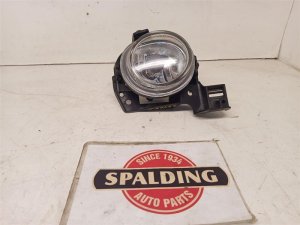
We Have This Part in Stock

The information in this article is provided for general reference and educational purposes only. Vehicle specifications, procedures, and part compatibility can vary by production date, trim level, and region. Always consult your vehicle's factory service manual and verify part numbers before purchasing or performing repairs. Safety-critical components such as airbags, seat belts, and braking systems should be installed by a qualified professional.
- Mazda Mazda6:
- Mazda CX-7:
- Mazda Mazda5:
- Mazda MPV:
- Mazda MX-5 Miata:
- 🎬 Helpful Videos
- 🛍️ Shop This Part
- The Critical Misconception: Shared Parts, Not Shared Assemblies
- Halogen vs. HID/Xenon: What's the Difference?
- Symptoms of a Failing Mazda HID System
- How to Diagnose the Problem: The Swap Test
- Known Issue: Moisture & Condensation (Mazda TSB 09-001/17)
- Vehicle-Specific Replacement & Access Notes
- Buying a Used Headlight Assembly: What to Check
- Headlight Aiming After Installation
- Cost Breakdown
- Frequently Asked Questions (FAQ)
- 🎟️ Get 5% Off