

2019-2025 Nissan Altima Hood Hinge: A Guide to Collision Repair and Alignment
This guide covers how to identify bent or damaged hood hinges on your Altima, the replacement process, and the critical steps for achieving perfect hood alignment.
- Hood hinge failure on 2019-2025 Altimas is almost always due to collision damage, not a manufacturing defect.
- This model is NOT part of the major hood latch recall that affected 2013-2018 Altimas.
- Replacement is a two-person job; one person must support the hood to prevent damage during installation.
- Careful alignment after installation is the most critical step to ensure even panel gaps and proper latching.
Vehicle-Specific Issues and Recalls

It is important to distinguish between the hood hinges on the 2019-2025 Altima and the hood latch on the previous generation. A widely publicized recall (NHTSA Campaign Number 20V315) concerned a faulty secondary hood latch on 2013-2018 Nissan Altimas, which could allow the hood to fly open while driving. This recall does NOT apply to the 2019-2025 Altima model years.
For the 2019-2025 generation, there are no major recalls or Technical Service Bulletins (TSBs) related to the hood hinges themselves. These components are generally robust and reliable. Failure is almost exclusively caused by physical damage from a front-end collision or from the hood being hyperextended by wind.
Symptoms of a Failing Hood Hinge

A damaged hood hinge will almost always present visible or physical symptoms. Here’s what to look for:
- Hood Misalignment: This is the most common symptom. Look for uneven gaps between the hood and the fenders. One side might be tighter or wider than the other. The hood may also sit higher or lower than the fender line.
- Difficulty Opening or Closing: You may feel resistance, binding, or a popping/creaking sound when you operate the hood. This indicates the hinge is bent and not moving along its intended path.
- Hood Doesn't Close Securely: A bent hinge can prevent the hood from aligning properly with the latch, making it difficult to close or causing it to pop back up.
- Hood Shakes or Flutters: If the hood is not held down tightly due to misalignment from a bad hinge, it may flutter or shake at highway speeds.
Pro Tip: Before blaming the hinges for a hood that sits slightly high, check the adjustable rubber stoppers (bumpers) located on the radiator support. Turning these stoppers clockwise or counter-clockwise raises or lowers the front corners of the hood when it's closed. This simple adjustment can often fix minor height issues without needing new parts.
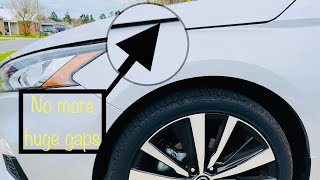
🎬 Watch: How to level and align your hood using rubber stoppers.Buying a Used Hood Hinge: What to Check

Since hinge failure is typically from collisions, inspecting a used part carefully is critical. A damaged used hinge is no better than the one you are replacing.
- Check for Straightness: Lay the hinge on a flat surface. It should sit perfectly flat with no twisting or bending. Look down its length from every angle. Even a slight bend will make proper hood alignment impossible.
- Inspect the Pivot Points: The rivets that hold the hinge together should be tight. Try to wiggle the two halves of the hinge; there should be minimal play or looseness. The pivot action should be smooth and free of any grinding or binding.
- Look for Stress Marks: Examine the paint around the pivot points and mounting holes. Cracks, flaking, or stretch marks in the paint are clear signs the hinge was stressed in an accident. Reject any hinge with these marks.
- Compare Price vs. New Aftermarket: Used OEM hinges are often priced similarly to new aftermarket ones. While a used OEM part can be a great value, a new aftermarket part guarantees it is straight and unworn. For a part this critical to alignment, a new part may be the safer bet if the cost is comparable.
Replacement and Alignment Overview

Replacing a hood hinge is a two-person job. One person must support the weight of the hood while the other unbolts the hinge. Failure to support the hood can result in damage to the fenders, windshield, or the hood itself.
Installation Difficulty: 2/5 (Requires a helper and careful alignment)
Estimated Time: 1-1.5 hours
Basic Steps:
- Mark the Position: Before loosening any bolts, use a marker or scribe to trace the outline of the old hinges on both the hood and the vehicle body. This gives you a starting point for aligning the new hinge.
- Support the Hood: Have a helper hold the hood securely in its open position. Do not rely solely on the hood prop rod, as the hood will shift once a hinge is removed.
- Remove the Old Hinge: Unbolt the hinge from the vehicle body first, then from the hood. Sockets (typically 10mm or 12mm) and a ratchet are the primary tools needed.
- Install the New Hinge: Loosely bolt the new hinge to the hood and body, aligning it with your marks.
- Align the Hood: This is the most critical step. With the bolts slightly loose, gently lower the hood to check its position. Adjust the hood forward/backward and side-to-side to get even panel gaps. 🎬 See how to align car hood gaps for a perfect fit. Once the gaps are correct, have your helper hold the hood in place while you tighten the bolts.
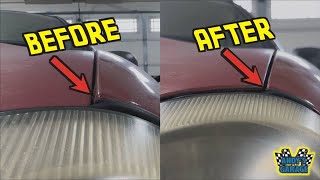
- Check and Re-Check: Close the hood slowly, watching all corners to ensure it doesn't hit the fenders. It may take several small adjustments to get the alignment perfect. Finally, adjust the rubber bumpers for final height. 🎬 Watch: A quick guide to 2020 Altima hood height adjustments.
Cost to Replace a 2019-2025 Altima Hood Hinge
| Part Type | Estimated Cost (Pair) |
|---|---|
| New OEM | $100 - $150 |
| New Aftermarket | $30 - $60 |
| Used OEM | $80 - $100 |
| Shop Labor | $100 - $300 |
Frequently Asked Questions (FAQ)
Is my 2019 Altima affected by the hood latch recall?
No. The major recall for hood latches that could open while driving was for the previous generation, the 2013-2018 Nissan Altima. The 2019-2025 models are not included in that specific safety recall.
Can I just bend my old hinge back into shape?
This is not recommended. Bending the metal back and forth weakens it, and it's nearly impossible to get it perfectly straight by hand. A compromised hinge may fail during a future impact and will make proper hood alignment extremely difficult.
Do I need to paint the new hinges?
Most replacement hinges, both OEM and aftermarket, come with a black protective coating (e-coat). This is sufficient to prevent rust. Since the hinges are not highly visible, painting them to match the body color is optional and typically not done unless you are performing a high-end restoration.
Can I replace just one hood hinge?
Yes, if only one hinge is damaged, you can replace just that one. However, hinges are often sold in pairs. If the vehicle was in a collision, it's wise to inspect the 'good' hinge carefully, as it may have hidden stress or damage. Replacing them in pairs ensures even wear and movement.
Helpful Videos
Technical Specifications
OEM Part Numbers: 654006CA0A 654016CA0A
Material: Steel. Attachment: Bolt-on.
We Have This Part in Stock

The information in this article is provided for general reference and educational purposes only. Vehicle specifications, procedures, and part compatibility can vary by production date, trim level, and region. Always consult your vehicle's factory service manual and verify part numbers before purchasing or performing repairs. Safety-critical components such as airbags, seat belts, and braking systems should be installed by a qualified professional.
- Nissan Altima: