

Mercedes & Aston Martin Horn Guide (2015-2023): Diagnosing High/Low Tone vs. Alarm Siren Failure
This guide covers the common dual-horn system and separate alarm siren found in the C-Class, E-Class, S-Class, A-Class, and Aston Martin Vantage, explaining why your horn might sound weak or not work at all.
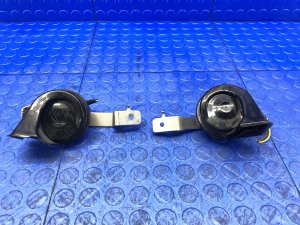
- These vehicles have three horns: a high-tone and low-tone driving pair, plus a separate alarm siren (A2138201101). A weak sound means one driving horn failed.
- On newer models (like the W205 C-Class), the horn is often controlled by the Front SAM module, not a simple fuse/relay, making diagnosis more complex.
- Replacement requires removing the front bumper or wheel/fender-liner, making it a moderately difficult DIY job (3/5).
- The 2019+ Aston Martin Vantage uses these exact Mercedes horns, making used OEM Mercedes parts a smart, cost-effective repair option for Vantage owners.
Driving Horns vs. Alarm Siren: What's the Difference?
Before troubleshooting, it's critical to identify which horn has failed. The parts covered in this guide are used across the 2015-2021 Mercedes-Benz C-Class, 2019-2023 Aston Martin Vantage, 2017-2023 Mercedes-Benz E-Class, 2019-2022 Mercedes-Benz A-Class, and 2015-2020 Mercedes-Benz S-Class.
- Driving Horns (Fanfare Horns): This is a pair of horns (high-tone and low-tone) located at the front of the vehicle, usually behind the bumper cover. They activate together when you press the horn pad on your steering wheel. If one fails, the horn will sound weak or 'hoarse'. If both fail, you'll get silence.
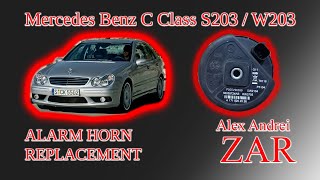
- Alarm Siren (Part A2138201101): This is a single, separate unit tied to the anti-theft system. It chirps when you lock/unlock the doors and sounds continuously if the alarm is triggered. A failure here will not affect the driving horns.
Pro Tip: The 2019-2023 Aston Martin Vantage uses a Mercedes-AMG V8 engine and many of its electronic components, including this horn system. This is a major advantage for Vantage owners, as replacement parts are identical to their Mercedes counterparts and are often more affordable and widely available.
Symptoms of Failure
Horn problems can manifest in several ways. Pinpointing the symptom is the first step to a correct diagnosis.
- Weak or Hoarse Sound: This is the most common symptom and almost always means one of the two driving horns has failed. The remaining horn works, but the sound is thin and lacks its usual authority. 🎬 Watch: Why your horn sounds weak and how to fix it.
- Complete Silence: If nothing happens when you press the horn, the cause could be a blown fuse, a bad relay, a failure in the steering wheel's clock spring, an issue with the Front SAM module, or both horn units failing simultaneously (which is rare).
- Clicking Noise Only: If you hear a 'click' from the engine bay or fuse box when you press the horn, but there's no sound, it's a good sign. This typically means the steering wheel switch and the horn relay are working, and the problem is likely the horn units themselves or the wiring to them.
- Intermittent Operation: A horn that works sometimes but not others often points to a loose electrical connection at the horn itself or a failing relay.
- Alarm Doesn't Chirp: If your car is silent when you lock it with the key fob, the anti-theft alarm siren (A2138201101) has likely failed.
Diagnosing the Problem: A Step-by-Step Guide
Before you buy any parts, follow these steps to isolate the fault. You will need a multimeter for some tests.
Step 1: Check the Fuse and Relay
The location of the fuse and relay varies by model and year.
- For the 2017-2023 E-Class (W212/W213): The horn fuse (often labeled F31A/F31B) and relay are typically located in the main fuse box in the engine compartment. You can test the relay by swapping it with an identical one from a non-essential system.
- For the 2015-2021 C-Class (W205) and other modern models: This is more complex. Some W205 models have a dedicated horn fuse (F115) in the engine bay fuse box. 🎬 Watch: Locate the horn fuse and relay on your C-Class. However, many newer vehicles integrate horn control into the Front Signal Acquisition Module (SAM). In this case, there is no separate, user-serviceable relay to swap. A failure of the SAM itself can cause the horn to stop working.
Warning: If your vehicle's horn is controlled by the Front SAM, diagnosis becomes more complex. The SAM is a computer that requires professional diagnostic tools to check and must be programmed (SCN Coded) if replaced. If you suspect a SAM issue, professional diagnosis is recommended.
Step 2: Test the Horn Directly
If the fuse is good and you hear a relay click (or have a SAM-controlled system), the next step is to test the horn unit itself. This bypasses all vehicle wiring.
- Access the horn: This usually requires removing the front bumper cover or the driver-side front wheel and fender liner. The horns are typically mounted low down, ahead of the front wheel.
- Disconnect the electrical connector: Press the tab and pull the connector off the horn.
- Provide 12V power: Use jumper wires to connect the two terminals on the horn directly to a 12V car battery. If the horn sounds, the horn itself is good, and the problem is in the vehicle's wiring or control module. If it remains silent, the horn unit has failed and needs to be replaced.
Buying a Used Horn: What to Look For
A used OEM horn is an excellent, cost-effective alternative to expensive new parts. Since horns are simple and durable, a recycled part from a low-mileage vehicle is often just as reliable as a new one. Here’s what to check:
- Verify the Part: Make sure you are buying the correct part. Do you need the high-tone horn, the low-tone horn, or the alarm siren (A2138201101)? They are not interchangeable. Many sellers offer high and low-tone horns as a matched pair.
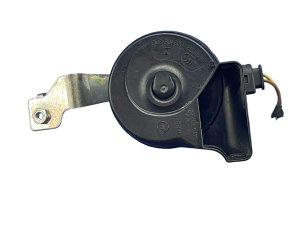
- Inspect the Connector: Check the electrical connector pins. They should be clean, straight, and free of any green or white corrosion. Corroded pins are a major red flag.
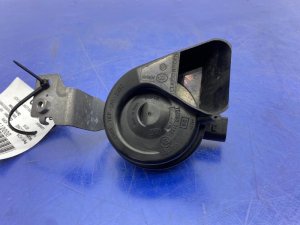
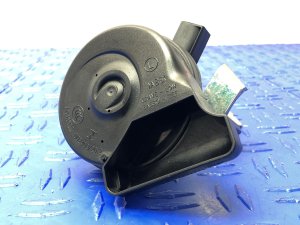
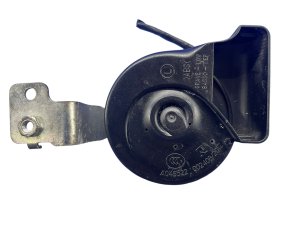
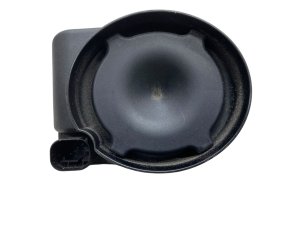
- Check for Physical Damage: Inspect the plastic 'snail' housing for any cracks or significant damage. While cosmetic scuffs are fine, cracks can allow water inside, which is the number one killer of horns.
- Ask for a Test: If possible, ask the seller if the part was tested. Reputable recyclers test components before listing them for sale.
Replacement Overview & Difficulty
- Difficulty: 3/5 (Moderate)
- Estimated Time: 1.5 - 2.5 hours
- DIY Feasible: Yes, for those comfortable with removing body panels.
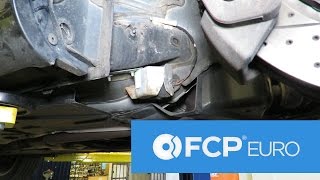
The primary challenge in replacing these horns is access. On most of the covered models, the horns are located behind the front bumper cover. While some owners have reported success by removing the front wheel and fender liner, the most straightforward method involves removing the entire front bumper assembly. 🎬 See this walkthrough for removing the front bumper safely. This requires basic hand tools (sockets, Torx bits, trim removal tools) and careful work to avoid scratching the paint or breaking plastic clips.
Known Issues, Recalls, and TSBs
There are no specific recalls or widespread Technical Service Bulletins (TSBs) issued by Mercedes-Benz or Aston Martin for premature horn failure on these models in the North American market. Failures are typically isolated incidents due to age, water intrusion, or electrical faults in the specific vehicle.
Cost Comparison
| Part Type | Estimated Cost |
|---|---|
| New OEM (Driving Horn, each) | $85 - $110 |
| New OEM (Alarm Siren) | $150 - $250 |
| New Aftermarket (Driving Horn Pair) | $20 - $45 |
| Used OEM (Driving Horn Pair) | $40 - $75 |
| Shop Labor Cost | $180 - $300 |
Frequently Asked Questions (FAQ)
Why does my horn sound weak and high-pitched?
This is the classic symptom of the low-tone horn failing. Your vehicle has two driving horns, and when only the high-tone one is working, the sound is noticeably weaker and has a different pitch. You will need to identify and replace the failed low-tone unit.
Can I replace just one of the driving horns?
Yes, you can replace only the failed unit. However, since they are the same age and have been exposed to the same conditions, many mechanics recommend replacing them as a pair. If one has failed, the other may not be far behind. Used horns are often sold as a pair, making this an easy and cost-effective choice.
Is the horn on my Aston Martin Vantage really a Mercedes part?
Yes. The 2019 and newer Aston Martin Vantage uses a 4.0L twin-turbo V8 engine sourced from Mercedes-AMG, and it shares many electronic components, including the horn system. This means you can often use a Mercedes-branded part, which is typically much less expensive and easier to find than a part in an Aston Martin box.
Do I need to program a new horn?
No. The horn units themselves (both driving and alarm) are simple electrical components and do not require programming. They are plug-and-play. However, if the root cause of your problem is a failed Front SAM (Signal Acquisition Module), the replacement SAM *will* require professional programming to work with your vehicle.
Helpful Videos
Technical Specifications
OEM Part Numbers: A2138201101 (Alarm Siren) 2138201101 (Alarm Siren) A2055421420 (Driving Horn) A2055420920 (Driving Horn) A2055420820 (Driving Horn)
System uses a dual-tone setup for the driving horns, typically a 410Hz (low-tone) and a 510Hz (high-tone) horn. Operates on a 12V system.
We Have This Part in Stock

The information in this article is provided for general reference and educational purposes only. Vehicle specifications, procedures, and part compatibility can vary by production date, trim level, and region. Always consult your vehicle's factory service manual and verify part numbers before purchasing or performing repairs. Safety-critical components such as airbags, seat belts, and braking systems should be installed by a qualified professional.
- Mercedes-Benz C-Class:
- Aston Martin Vantage:
- Mercedes-Benz E-Class:
- Mercedes-Benz A-Class:
- Mercedes-Benz S-Class:
- 🎬 Helpful Videos
- 🛍️ Shop This Part
- Driving Horns vs. Alarm Siren: What's the Difference?
- Symptoms of Failure
- Diagnosing the Problem: A Step-by-Step Guide
- Step 1: Check the Fuse and Relay
- Step 2: Test the Horn Directly
- Buying a Used Horn: What to Look For
- Replacement Overview & Difficulty
- Known Issues, Recalls, and TSBs
- Cost Comparison
- Frequently Asked Questions (FAQ)
- 🎟️ Get 5% Off