

2001-2003 Acura CL Rear Hub Assembly: Diagnosing Humming, Grinding, and Roaring Noises
Learn to identify a failing rear wheel bearing on your Acura CL, understand the risks of driving with a bad hub, and see what's involved in replacement.
- The most common symptom of failure is a humming or roaring noise from the rear that gets louder with speed.
- This is a bolt-on hub assembly; the internal bearing cannot be replaced separately.
- Using the correct torque (134 lb-ft) on the new spindle nut and staking it properly is critical to prevent premature failure and ensure safety.
- All 2001-2003 CLs are subject to a critical Takata airbag recall; owners should verify this free repair has been done.
Symptoms of a Failing Rear Hub Assembly
A bad wheel hub bearing usually gives you plenty of warning before a critical failure. The most common sign is noise. Listen for these specific sounds coming from the rear of your car:
- Humming or Roaring: This is the classic symptom. It's a low-pitched drone that starts faint and gets progressively louder as you increase speed. The noise is often compared to loud tire noise or a plane taking off.
- Grinding or Growling: As the bearing deteriorates further, the noise can become a rough grinding or growling sound, indicating significant internal damage. This sound also intensifies with vehicle speed.
- Clicking or Popping: While less common for a straight-line failure, clicking or popping sounds when turning can sometimes be associated with a very worn bearing.
- Noise Changes When Turning: A good way to isolate a bad bearing is to notice if the noise changes during turns. For example, when turning left, the vehicle's weight shifts to the right-side wheels. If the noise gets louder during a left turn, the right-side bearing is likely the culprit, and vice-versa.
In addition to noise, you might experience:
- Vibration: A shaky or vibrating steering wheel, or a vibration felt through the floor or seat, can be a sign of a failing hub assembly.
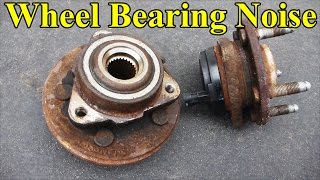
- ABS Light: Since the hub assembly houses the ABS tone ring, damage to the hub or excessive play can disrupt the wheel speed sensor's reading, triggering the ABS warning light on your dashboard. 🎬 Watch: How to check for bearing noise, play, and ABS issues.
- Wheel Looseness (Play): In advanced stages of failure, the wheel may feel loose. You can check for this by jacking up the rear of the car and trying to wiggle the tire from top to bottom (12-and-6 o'clock position). Any noticeable play or clunking is a definite sign of a bad bearing. 🎬 See a pro demonstrate the shake and spin diagnostic test.
Warning: A severely worn wheel bearing can lead to wheel separation, which is extremely dangerous and can cause a complete loss of vehicle control. Do not ignore the symptoms of a bad hub assembly.
Known Issues, TSBs, and Recalls
While the 2001-2003 Acura CL was a generally reliable vehicle, it is subject to a critical safety recall that all owners must be aware of.
Recalls
Takata Airbag Inflator Recall: This is a major, urgent safety recall affecting millions of vehicles, including the 2003 Acura CL. The driver-side airbag inflators, known as "Alpha" inflators, have a very high risk of rupturing during deployment, even in a minor crash. This rupture can send sharp metal fragments toward the driver, potentially causing serious injury or death. The NHTSA has issued a "Do Not Drive" warning for affected vehicles until this free repair is performed by a dealer. While this recall does not involve the hub assembly, its severity warrants mention for any owner of this vehicle.
Technical Service Bulletins (TSBs)
Searches did not reveal any Technical Service Bulletins issued specifically for the rear hub assemblies on the 2001-2003 Acura CL. Most issues are related to normal wear and tear over time and mileage.
Buying a Used Hub Assembly
For a vehicle of this age, a quality used OEM hub assembly can be a smart, cost-effective choice. New aftermarket parts can vary wildly in quality, and a low-mileage original Acura/Honda part is often made from superior materials. Here’s what to look for:
- Verify Compatibility: Ensure the part is from a 2001-2003 Acura CL or a cross-compatible Honda model. The key is that it must be a rear hub for a vehicle with ABS. The OEM part number is 42200S3MA51.
- Check for Smoothness: This is the most important test. Hold the hub and spin the bearing by hand. It should rotate smoothly and silently. If you feel any roughness, grinding, or catching, the bearing is bad.
- Inspect for Physical Damage: Check the hub flange for any signs of warping or damage from an accident. Ensure all wheel studs are present, straight, and have good threads.
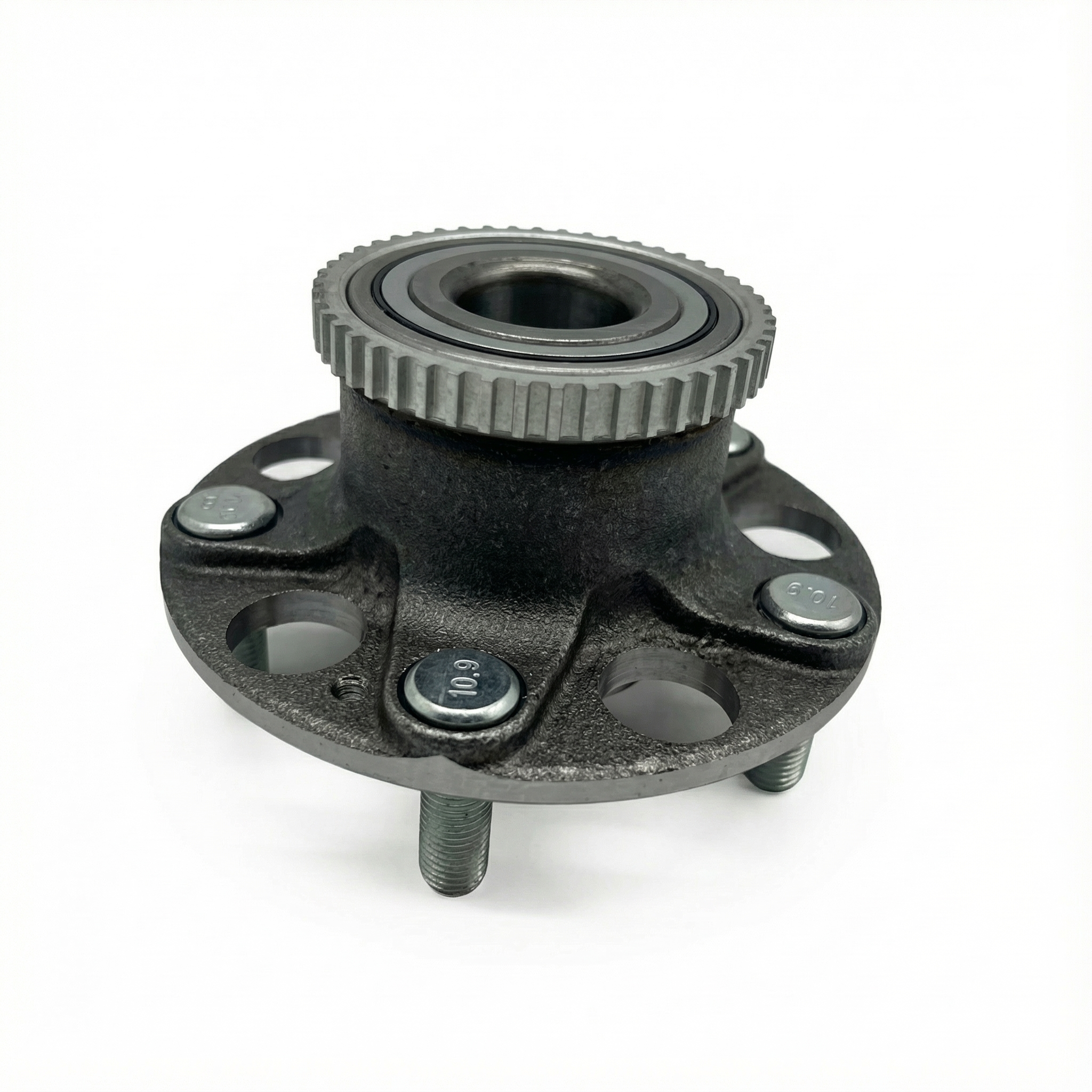
- Examine the ABS Sensor Area: The hub has an integrated magnetic ring that the ABS sensor reads. Inspect this area for cracks or damage. Ensure the electrical connector for the ABS sensor (if included) is not broken or corroded.
- Consider Mileage: While condition is more important than mileage, a part from a lower-mileage vehicle is generally preferable. Bearings are wear items, so failure is more common on higher-mileage cars.
Pro Tip: When replacing one rear hub assembly, it's a good practice to inspect the other side carefully. Often, wheel bearings wear at similar rates, so if one has failed, the other may not be far behind.
Replacement Overview & Special Procedures
Replacing the rear hub assembly on a 2001-2003 Acura CL is a feasible DIY project for someone with the right tools and mechanical experience. The hub is a bolt-on unit, which is simpler than designs that require a hydraulic press.
Key steps include:
- Safely jack up the vehicle and remove the wheel.
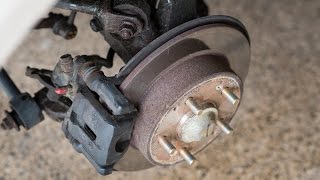
- Remove the brake caliper and caliper bracket, and hang the caliper securely to avoid straining the brake hose.
- Remove the brake rotor. You may need to use two 8mm bolts in the threaded holes on the rotor face to push it off the hub.
- Remove the hub dust cap and then unstake and remove the large spindle nut (axle nut). This typically requires a 32mm or 36mm socket and significant force.
- From behind the knuckle, remove the four bolts that secure the hub assembly.
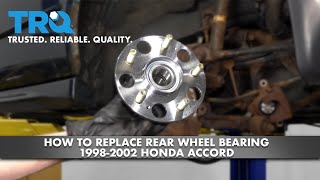
- The hub assembly should now come off the spindle. 🎬 Watch this step-by-step walkthrough for replacing Honda and Acura rear bearings.
Torque Specs & Critical Notes
Proper torque is essential for the safety and longevity of the new bearing.
- Spindle Nut (Axle Nut) Torque: The spindle nut torque specification is critical. Sources indicate a torque value of approximately 181 Nm or 134 lb-ft. Always use a new spindle nut, as they are designed for one-time use. After torquing, the nut must be staked into the groove on the spindle to prevent it from backing off. Over- or under-torquing this nut is a primary cause of premature bearing failure.
| Part | Torque Spec |
|---|---|
| Rear Spindle Nut | 134 lb-ft (181 Nm) |
Cost Comparison
Prices can vary based on brand, location, and supplier. The following is an estimated breakdown:
| Part/Service | Estimated Cost |
|---|---|
| New OEM (Dealer) | $330 - $480 |
| New Aftermarket | $50 - $150 |
| Used OEM | $40 - $100 |
| Shop Labor | $150 - $300 per side |
Frequently Asked Questions (FAQ)
Can I just replace the bearing inside the hub assembly?
No. For the 2001-2003 Acura CL, the rear wheel bearing is part of a sealed hub assembly. It is not designed to be pressed out and replaced separately. The entire hub unit must be replaced.
Do I need to replace the hub assemblies in pairs?
It is not strictly necessary, but it is often recommended. Wheel bearings on the same axle experience similar wear. If one has failed due to age and mileage, the other side may fail soon after. Replacing both at the same time can save you from doing the same job twice.
What happens if I don't stake the new axle nut?
Staking the nut involves deforming a small section of the nut's collar into a groove on the spindle. This acts as a mechanical lock to prevent the nut from loosening due to vibration and the rotational forces of the wheel. Failing to stake the nut could allow it to back off, leading to a loose wheel and catastrophic failure.
Will I need a wheel alignment after replacing a rear hub assembly?
Generally, no. Replacing the rear hub assembly on this vehicle does not typically affect the alignment angles. The hub bolts directly to the knuckle, and its position is fixed.
Helpful Videos

Technical Specifications
OEM Part Numbers: 42200S3MA51 42200-S87-A51 42200-S87-C51 42200-S87-C52
Rear Spindle Nut Torque: 134 lb-ft (181 Nm). The assembly is a sealed unit with an integrated ABS tone ring.
We Have This Part in Stock

The information in this article is provided for general reference and educational purposes only. Vehicle specifications, procedures, and part compatibility can vary by production date, trim level, and region. Always consult your vehicle's factory service manual and verify part numbers before purchasing or performing repairs. Safety-critical components such as airbags, seat belts, and braking systems should be installed by a qualified professional.
- Acura CL:
- 🎬 Helpful Videos
- 🛍️ Shop This Part
- Symptoms of a Failing Rear Hub Assembly
- Known Issues, TSBs, and Recalls
- Recalls
- Technical Service Bulletins (TSBs)
- Buying a Used Hub Assembly
- Replacement Overview & Special Procedures
- Torque Specs & Critical Notes
- Cost Comparison
- Frequently Asked Questions (FAQ)
- 🎟️ Get 5% Off