

2011-2019 Ford Fiesta Rear Hub Noise: Diagnosis & Replacement Guide
This guide covers how to diagnose failing rear wheel bearings on your 2011-2019 Ford Fiesta, with a critical warning about ST vs. non-ST model differences.
- This rear hub assembly is for non-ST models ONLY. The Fiesta ST has a different rear suspension and requires a press-in bearing.
- The most common failure symptom is a humming or growling noise that gets louder as you drive faster.
- A failing bearing can trigger the ABS warning light because the wheel speed sensor relies on a magnetic ring integrated into the hub.
- Replacement is DIY-friendly on non-ST models and does not require a press, but a torque wrench and E12 socket are necessary.
Compatibility Warning: Does NOT Fit Fiesta ST
Critical Fitment Information: This rear hub assembly (part numbers like AE812C299AA, BE8Z-1109-A, and Motorcraft HUB-226) fits all 2011-2019 Ford Fiesta models equipped with rear drum brakes. It does NOT fit the high-performance ST trim, which uses rear disc brakes and a different suspension design. The ST model does not use a bolt-on hub assembly; its rear wheel bearing must be pressed into the knuckle, which is a more involved repair. Attempting to install a non-ST hub on an ST model will fail. 🎬 Watch: How to replace the pressed-in bearing on ST models Always verify your vehicle's trim level before purchasing.
Symptoms of a Failing Rear Hub Assembly
A bad wheel bearing typically fails gradually. The first sign is almost always an unusual noise coming from the rear of the car.
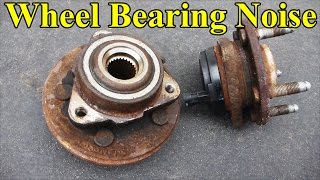
- Humming, Growling, or Grinding Noise: The most common symptom is a noise that sounds like a low growl, a hum, or metal grinding. This noise will start faint and get progressively louder over weeks or months. It is directly related to vehicle speed—the faster you drive, the louder the noise gets.
- Noise Changes When Turning: You can often identify which side is bad by performing a 'swerve test' while driving. When you steer to the left, the vehicle's weight shifts to the right-side wheels. If the noise gets louder when turning left, the right-side bearing is likely the culprit. If the noise gets louder when turning right, the left-side bearing is probably failing.
- Vibration: In more advanced stages of failure, you might feel a slight vibration in the floor or seat of the car. This can be caused by the wheel wobbling slightly as it rotates on the worn-out bearing.
- ABS Light On: The rear hub assembly has a magnetic encoder ring on the back that the ABS wheel speed sensor reads. If the bearing becomes loose and develops excessive play, it can alter the gap between the sensor and the ring, creating an erratic signal. This can trigger the ABS and traction control warning lights on your dashboard, often with fault codes related to a wheel speed sensor signal.
Pro Tip: To confirm a bad bearing, safely jack up the rear of the vehicle so the wheel is off the ground. Place your hands at the 12 and 6 o'clock positions on the tire and try to rock it. If you feel any play or clunking, the bearing is worn and needs replacement. You can also spin the wheel by hand and listen for grinding or feel for roughness.
🎬 Watch: How to check for noise, play, and ABS issuesKnown Issues, TSBs, and Recalls
Searches of the National Highway Traffic Safety Administration (NHTSA) database do not show any specific recalls or widespread Technical Service Bulletins (TSBs) for the rear hub assemblies on the 2011-2019 Ford Fiesta. While recalls have been issued for this generation of Fiesta for other issues like door latches and brake components, the hub bearings are generally considered a standard wear-and-tear item. Failure is common with age and mileage but is not considered a manufacturing defect by Ford.
Buying a Used Hub Assembly
A used OEM hub assembly can be a smart purchase, offering the quality and durability of a genuine Ford part at a significant discount. However, since this is a wear item, careful inspection is key.
- Mileage Consideration: Wheel bearings can fail at a wide range of mileages, but they become more common after 80,000 miles. When buying used, look for a part from a lower-mileage vehicle if possible. However, a well-maintained part from a higher-mileage car can still have plenty of life left.
- Physical Inspection: The most important check is for the bearing's condition. Hold the hub flange and the stationary part of the assembly and try to feel for any play or looseness between them. There should be zero. Spin the hub by hand. It should rotate smoothly and silently. If you hear any grinding, feel any notchiness, or detect any roughness, the bearing is bad—do not buy it.
- Check the ABS Ring: Inspect the magnetic encoder ring on the back of the hub. Ensure it is clean, free of damage, and has no metal debris stuck to it, as this can cause ABS sensor issues.
- Inspect Mounting Points and Studs: Check the four threaded mounting holes and the wheel studs. Ensure none of the threads are stripped or damaged.
- OEM vs. Cheap Aftermarket: A used OEM Ford or Motorcraft hub is often a better choice than a new, cheap aftermarket part. The quality of the steel, the precision of the manufacturing, and the durability of the bearing itself are typically superior in genuine OEM parts. Cheap aftermarket bearings can fail prematurely, sometimes in less than a year, making a quality used part a more reliable and cost-effective long-term solution.
Replacement Overview (Non-ST Models)
Replacing the rear hub assembly on a non-ST Fiesta is a straightforward job for a DIY mechanic with the right tools. It does not require a hydraulic press.
- Difficulty: 2/5
- Estimated Time: 1-1.5 hours per side
- Special Tools: E12 External Torx socket, 30mm socket for the axle nut, torque wrench.
Key Steps:
- Safely jack up the vehicle, secure it on jack stands, and remove the wheel.
- Pry off the central dust cap and use a 30mm socket to remove the main axle nut.
- Remove the brake drum. It may be stuck; some have threaded holes you can use a bolt to push it off.
- Locate the ABS wheel speed sensor on the back of the knuckle. Unplug its connector and remove the single 8mm bolt holding it in place, then carefully pull the sensor out.
- Using an E12 external Torx socket, remove the four bolts on the back side of the axle beam that hold the hub assembly in place. You will access them through the holes in the hub flange.
- With the bolts removed, the hub assembly will come off. Clean the mounting surface on the axle beam before installing the new part.
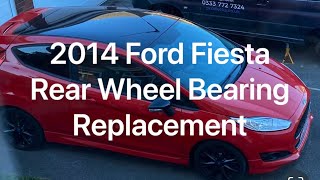
- Installation is the reverse of removal. It is highly recommended to use a new axle nut. 🎬 See this step-by-step rear wheel bearing replacement walkthrough
Important Torque Specs
Torque specs are critical for wheel bearings. Over or under-tightening the axle nut can cause premature failure of the new bearing. While sources vary, a common torque value cited for the main axle nut on these Fiestas is very high, around 235 Nm (173 ft-lbs). The four E12 mounting bolts have a much lower torque spec. Always consult the specific factory service manual for your model year to confirm the correct procedure and values.
Cost Comparison
| Part Type | Estimated Cost (Part Only) |
|---|---|
| New OEM (Ford/Motorcraft) | $165 - $280 |
| New Aftermarket | $50 - $150 |
| Used OEM | $40 - $90 |
| Shop Labor | $140 - $250 per side |
Frequently Asked Questions (FAQ)
Is it safe to drive with a bad wheel bearing?
It is not recommended. While the initial noise is just an annoyance, a completely failed bearing can cause the wheel to wobble excessively or even separate from the vehicle in a worst-case scenario, leading to a total loss of control. It also puts extra stress on other suspension components.
Why won't this hub assembly fit my Fiesta ST?
The Fiesta ST has a different rear suspension and brake setup. It uses rear disc brakes and a torsion beam where the bearing is pressed into the knuckle, rather than a self-contained, bolt-on hub assembly like the standard models with drum brakes.
Can I just replace the bearing instead of the whole hub assembly?
On non-ST models, the bearing is integrated into the hub assembly as a sealed, non-serviceable unit. It is designed to be replaced as a single component, which simplifies the repair and eliminates the need for a hydraulic press.
My ABS light is on. Could it be the wheel bearing?
Yes. A loose or failing wheel bearing can cause the integrated ABS magnetic ring to send an erratic signal to the wheel speed sensor. This is a common cause for an ABS light when the sensor itself is not actually faulty. If you have a bearing noise and an ABS light, the bearing is the most likely root cause.
Helpful Videos
Technical Specifications
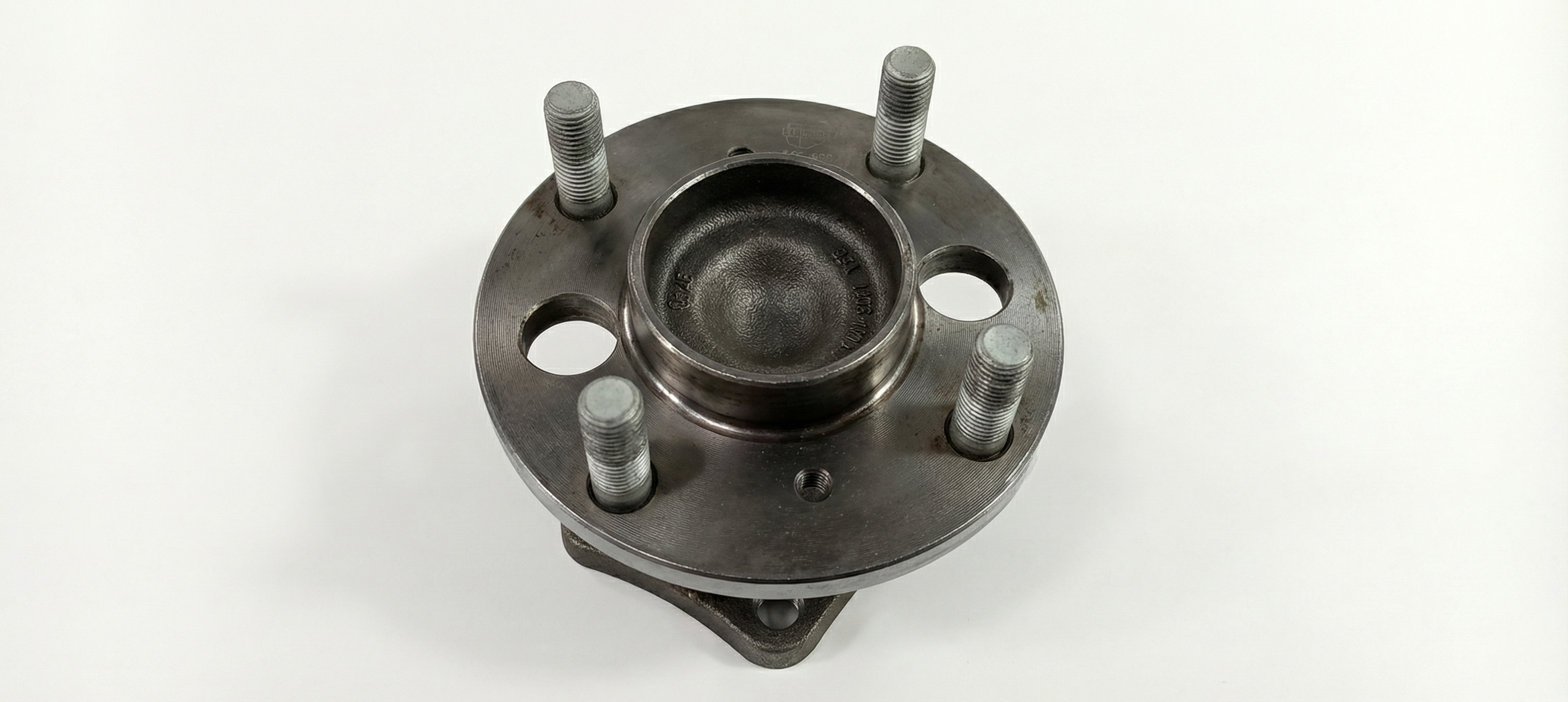
OEM Part Numbers: AE812C299AA AE812C299AB BE8Z-1109-A DCP12C299A1B DCPZ1104A HUB-226
Fits non-ST models with rear drum brakes. Includes integrated ABS sensor ring. 4-lug bolt pattern.
We Have This Part in Stock

The information in this article is provided for general reference and educational purposes only. Vehicle specifications, procedures, and part compatibility can vary by production date, trim level, and region. Always consult your vehicle's factory service manual and verify part numbers before purchasing or performing repairs. Safety-critical components such as airbags, seat belts, and braking systems should be installed by a qualified professional.
- Ford Fiesta:
- 🎬 Helpful Videos
- 🛍️ Shop This Part
- Compatibility Warning: Does NOT Fit Fiesta ST
- Symptoms of a Failing Rear Hub Assembly
- Known Issues, TSBs, and Recalls
- Buying a Used Hub Assembly
- Replacement Overview (Non-ST Models)
- Key Steps:
- Important Torque Specs
- Cost Comparison
- Frequently Asked Questions (FAQ)
- 🎟️ Get 5% Off